[pageLogInLogOut]

#Raw Materials

The first batch of superfine Argentinian Vicuna is born
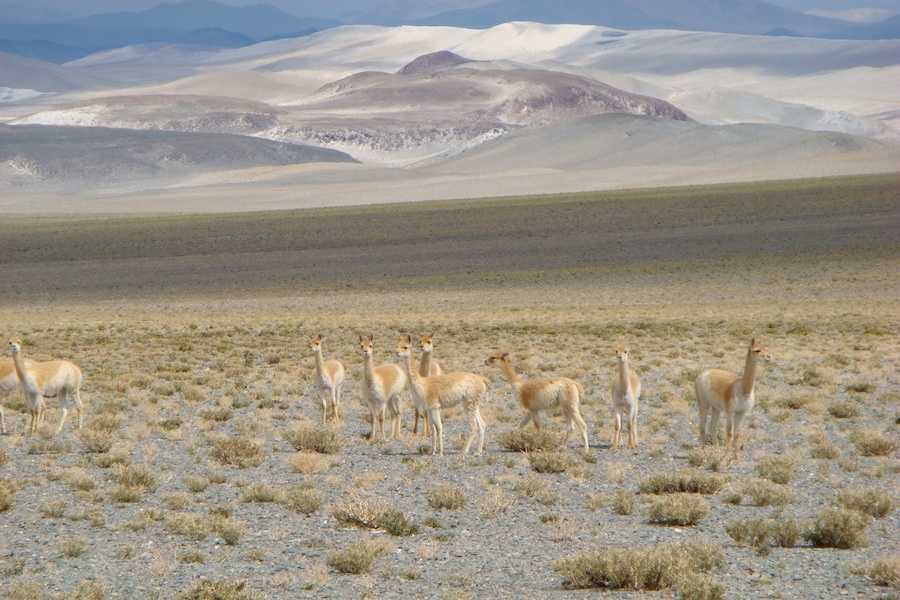
The Schneider Group proudly announces an unprecedented milestone in the fine fibre sector: 18 years of patience, research and dedication have given life to the first bale of Superfine Argentinian Vicuna, a masterpiece of beauty and quality that has never been achieved before, a unique result difficult to replicate.
© 2025 Schneider Group


Vicuna has always been considered the ultimate luxury among fine fibres, even more than cashmere, for its softness, lightness, warmth and resistance. It’s characterized by an impalpable fineness and at the time of the Incas it was reserved exclusively to the nobility and defined the “Fiber of the Gods”, also because it came from an animal considered sacred. Today, for the lucky ones who can afford it and the connoisseurs who recognize its quality, vicuna offers a sensorial experience of unparalleled luxury, a cloud of softness that envelops, caresses and warms.

This exclusive batch of divine wool is the result of meticulous and patient work by expert craftsmen and professionals who, every year, for years, have manually selected the finest fibres, using special lights and lenses to identify those with the optimum fineness and length in an extraordinarily elaborate process that over the years has been increasingly refined with passion and love.

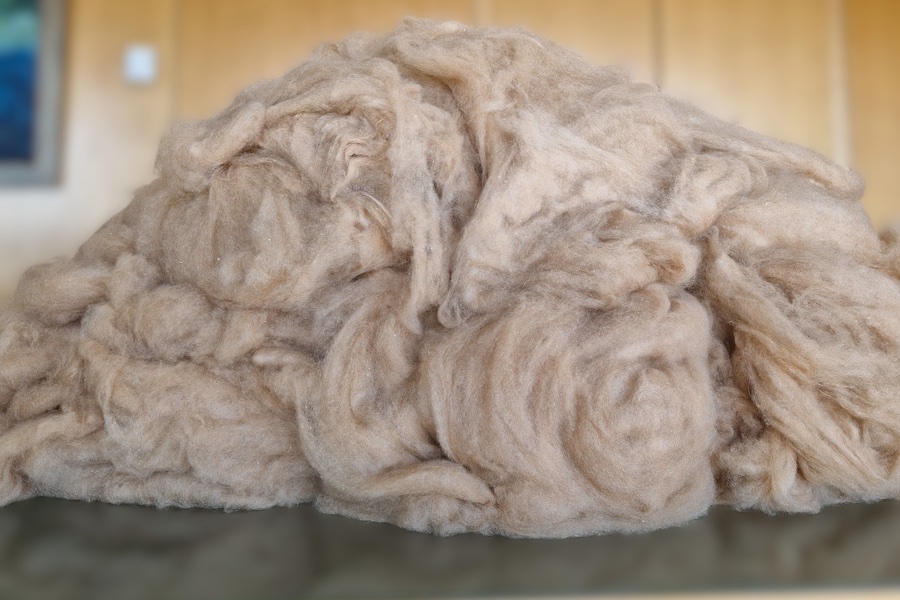
The result of this truly amazing work is a unique fibre, which actually establishes an unprecedented world record and marks a new era of textile excellence and sustainability: a fineness of just 11.7 microns (even finer than the traditional 12-13 microns achieved so far) and a length of 29.3 millimetres, for a fibre with a delicate light fawn colour.
© 2025 Schneider Group


But behind this incredible result there is a deep commitment to ethics and sustainability, typical of the Schneider Group, which first thought of protecting and preserving an endangered species like the vicuna, helping increase its population in the managed area in Argentina from less than 800 to over 5,000 specimens. At the same time, it has worked side by side with local communities, teaching them how to manage vicunas in a sustainable way and donating part of the collected fibre to the province itself, to support local artisans, thus strengthening local textile traditions.

“With this record-breaking lot, we are not only offering an unparalleled fibre, but we are also demonstrating what it means to be a responsible global citizen. Every step of our work is aimed at creating an exceptional product while respecting the environment and the local community. This bale of Superfine Argentinian Vicuna is the result of 18 years of uncompromising commitment. Each fibre is the fruit of work that took time, passion and a long-term vision. It’s not a product that can be easily replicated, it’s a true masterpiece,” says the Schneider Group. “We have worked in harmony with people and the environment, and today we can present to the world a fibre that represents the pinnacle of excellence and sustainability.”
© 2025 Schneider Group


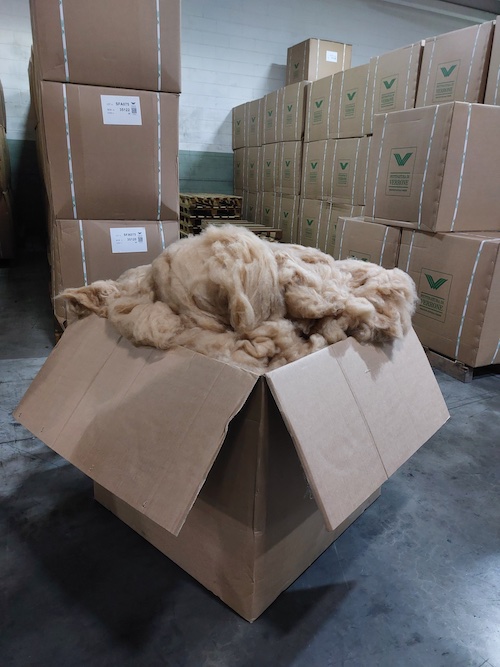
With the creation of this unique bale of Superfine Argentinian Vicuna not only does the Schneider Group set a world record never achieved before but also redefines the concept of excellence in the textile industry with new standards of quality, innovation and ethics, with a real and verifiable commitment to sustainability and social responsibility.

More News from THE SCHNEIDER GROUP

More News on Raw Materials

#Raw Materials

New study shows low environmental impact by Cotton made in Africa Organic Cotton from Tanzania

Today, the Aid by Trade Foundation (AbTF) is announcing the results of a comprehensive life-cycle analysis (LCA) for cotton produced in Tanzania under the Cotton made in Africa Organic (CmiA Organic) standard. The study emphasises the small ecological footprint of CmiA Organic verified cotton. This can largely be traced back to the absence of synthetic pesticides, artificial fertilisers, and artificial irrigation. Consequently, CmiA Organic cotton can help the textile industry meet regulatory requirements as well as science-based targets. The results also show that the consequences of climate change threaten the livelihoods of these cotton farmers, even though the type of agriculture they practise barely contributes to climate change.

#Raw Materials

Better Cotton Initiative strengthens regenerative focus in standard update

The Better Cotton Initiative (BCI) has strengthened the regenerative focus of its field-level standard with the launch of a new version of its Principles & Criteria (P&C), which marks the next step in the organisation’s journey to becoming a regenerative standards system.

#Raw Materials

Global production expected to decline in 2026/27 as policy shifts and weak demand reshape trade

Early projections for the 2026/27 season indicate that global cotton lint production will decline by 4% to 24.9 million tonnes, while world consumption is expected to remain stable at approximately 25 million tonnes, according to the April 2026 issue of Cotton This Month.

#Raw Materials

Textile Exchange publishes cotton Life Cycle Assessment study to strengthen impact data

Textile Exchange has published the first in a series of seven Life Cycle Assessment (LCA) studies designed to improve the quality and robustness of environmental impact data for raw material production across the fashion, textile, and apparel industry. The first LCA study focuses on cotton and addresses critical data gaps and methodology variability through new high-quality data across key producing countries. The study includes organic, regenerative, recycled, and country averages for conventional cotton production systems, providing a clearer picture of the associated environmental impact.

Latest News

#Man-Made Fibers

Selenis and Kintra Fibers partner to scale 100% bio-based synthetic fiber technology

Selenis, a leading global specialty polyester manufacturer, today announced a strategic manufacturing partnership with materials science company Kintra Fibers to scale Kintra’s patented fiber-grade PBS resin - a 100% bio-based and biodegradable material designed for textile applications.

#Functional Fabrics

PERFORMANCE DAYS proves its relevance as the industry’s key meeting point

Held on March 18–19, 2026, PERFORMANCE DAYS once again confirmed its position as a leading international platform for functional textiles. A total of 3.366 trade visitors and around 560 exhibitors gathered in Munich, with the event already kicking off successfully on DAY 0, which received highly positive feedback for its interactive format. Despite challenging conditions caused by the public transport strike in Munich, the event saw strong attendance and a consistently high level of activity across both exhibition days.

#Recycling / Circular Economy

Reju secures €135 Million in Dutch NIKI Funding for industrial-scale textile-to-textile regeneration hub at Chemelot Industrial Park, the Netherlands

Reju™, the progressive textile-to-textile regeneration company, has been awarded €135 million in funding under the Netherlands’ Nationale Investeringsregeling Klimaatprojecten Industrie (NIKI) program. The funding will support Reju’s planned industrial-scale Regeneration Hub at Chemelot Industrial Park in Sittard-Geleen, covering both the investment phase and ongoing operations, and represents a critical milestone on the path toward final investment decision.

#Techtextil 2026

TTL showcases nonwoven and needlefelt solutions at Techtextil 2026

Technische Textilien Lörrach GmbH & Co. KG (TTL), part of the Yanpai Group, will present its latest nonwoven and needlefelt solutions for industrial applications at Techtextil 2026 in Frankfurt.

TOP