[pageLogInLogOut]

#Raw Materials

Aid by Trade Foundation announces new transparency standard
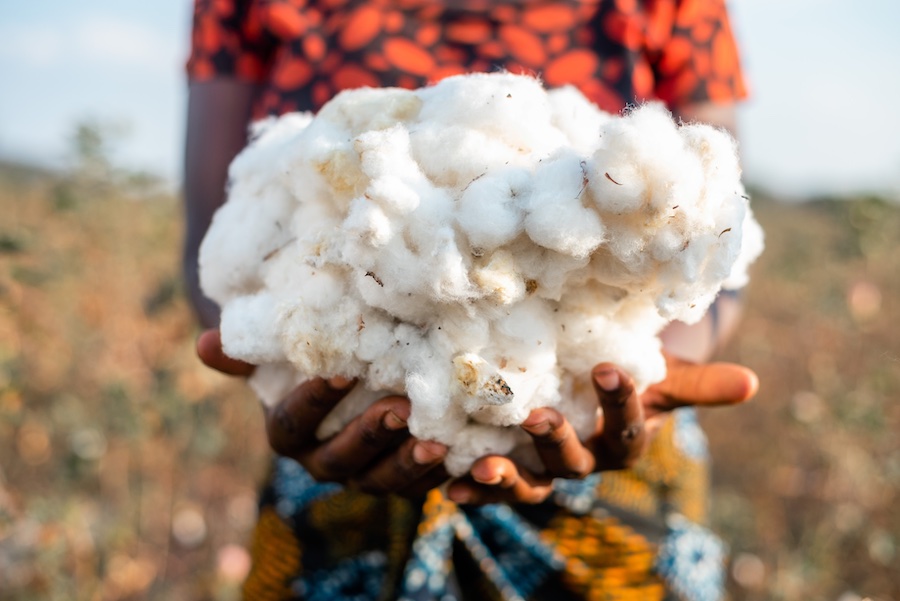
The Aid by Trade Foundation (AbTF) will be introducing a new transparency standard. Regulating the use and traceability of sustainable cotton verified under Cotton made in Africa® (CmiA) or the Regenerative Cotton Standard® (RCS), the AbTF Transparency Standard will ensure its transparency, safety, and reliability around the world and throughout the textile supply chain, from the cotton field to the finished product. Through this independently verified standard, AbTF will reinforce its existing tracking systems for tracing sustainable cotton in the supply chain. The AbTF Transparency Standard is set to be introduced in the first quarter of 2025.
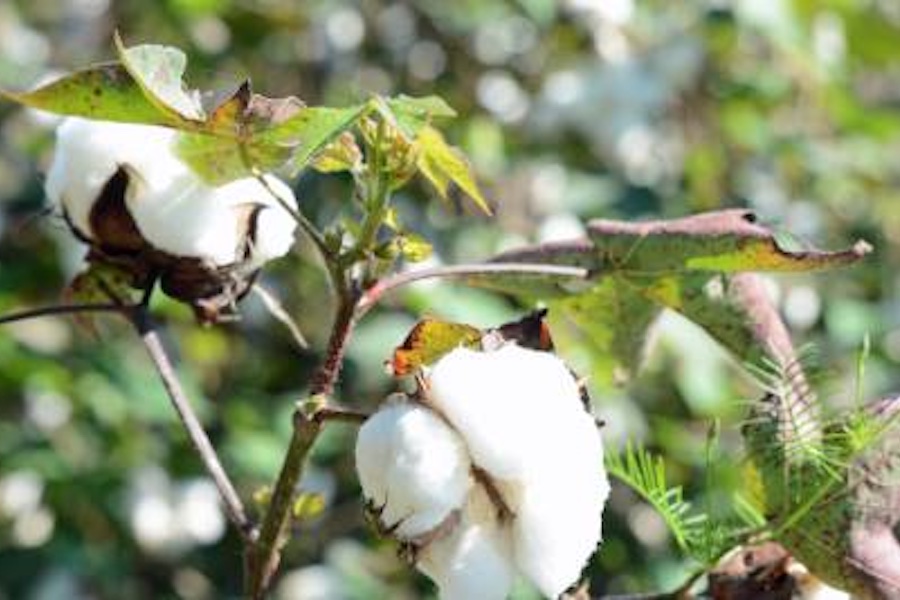
Harvested CmiA organic cotton, Credit: Malicky Stanley Boaz for CmiA


“The AbTF Transparency Standard sets a new benchmark for reliability and traceability in the textile industry,” says Gerlind Bäz, a senior project manager at the Aid by Foundation who is responsible for integrating CmiA- and RCS-verified cotton into global supply chains. She adds, “While brands and retailers can already rely on our current tracking system, which was established in 2018 and monitors whether yarns, fabrics, and textiles were produced using exclusively cotton verified under Cotton made in Africa® or the Regenerative Cotton Standard®, we are now going one step further. In future, independent auditors will regularly check whether the transparency requirements of the new standard are reliably adhered to in the supply chain.”

Prof. Dr Tobias Wollermann, Vice President Corporate Responsibility of the Otto Group, underlines that this step comes at exactly the right time, saying, “Our global trading operations will benefit from the increased safety and reliability the new standard offers in the use and promotion of cotton verified under Cotton made in Africa; it represents a major building block for due diligence in our supply chains.”

The new AbTF Transparency Standard will be available for products that have been proven to contain cotton verified under Cotton made in Africa® or the Regenerative Cotton Standard®. An essential aspect of the new standard is the implementation of risk-based desktop audits by independent auditors, which will review both tracking-system data for all production stages and associated documents, such as production reports and delivery notes. In this way, they will ensure compliance with the requirements of the standards while generating additional confidence in the integrity of the system and the transparency of CmiA- and RCS-labelled products.

Another central element of the new standard are digital transaction documents (DTDs). Created digitally and validated regularly by independent auditors, DTDs can be used to trace CmiA and RCS cotton back through the supply chain, making it much easier to prove that CmiA- or RCS-verified cotton was used. Since a single missed step, such as one missing data input in the supply chain, means that the DTD can no longer be created and that this proof of the cotton’s origin is not present, DTDs represent an additional level of assurance in the system.

Regular self-assessment questionnaires for all stages of the supply chain are also included in the standard, as are on-site onboarding audits for spinning mills, conducted by independent audit companies. “The AbTF Transparency Standard strengthens the position of Cotton made in Africa® and of the Regenerative Cotton Standard® as internationally sought-after and reliable standards whose sustainability requirements in cotton production have always been independently verified. Being able to prove where a product’s raw materials come from—and being able to trace them throughout the textile production process, back to the cotton field—is essential for companies and brands today,” summarises Tina Stridde, the managing director of the Aid by Trade Foundation, adding, “The Aid by Trade Foundation’s new transparency standard provides solutions to this challenge, which textile companies and brands have no choice but to face due to increased political and social pressure at the international level.”


More News from Aid by Trade Foundation (AbTF)

#Natural Fibers

Cashmere producers stress the importance of The Good Cashmere Standard®

At the invitation of the Aid by Trade Foundation (AbTF), over 70 experts from the cashmere production and supply chain, as well as other specialists, met at the GCS Unit Meeting in Shanghai, China to discuss the progress and new objectives of The Good Cashmere Standard (GCS). The meeting focused on implementation and verification of the standard, important aspects of animal welfare and the importance of the standard in the global textile market.

#Natural Fibers

Aid by Trade Foundation publishes 2024 annual report: Growing impact for environment and people

The Aid by Trade Foundation (AbTF) is on a growth track. Despite a challenging global economy, AbTF increased its income by six percent from 2023 to 2024, reaching a total of EUR 8.6 million. This revenue has been invested in comprehensive measures for the sustainable production of cotton and cashmere as well as for expanded measures to ensure transparency in global value chains. In addition to gaining new partners in 2024—including big names like Mango, Nordstrom, and CWS Workwear—AbTF was able to expand its global stakeholder network active in the production of raw materials or textiles.

#Raw Materials

Aid by Trade Foundation receives Honorary Award of the German Africa Foundation 2025

On the evening of 25 June, the Hamburg-based Aid by Trade Foundation (AbTF) received the Honorary Award of the German Africa Foundation 2025. Prof. Dr Michael Otto, the foundation’s founder and a prominent entrepreneur, accepted the award at a ceremony held at the German Bundestag. The Parliamentary State Secretary to the Federal Minister for Economic Cooperation and Development (BMZ), Dr Bärbel Kofler, presented the award in the presence of guests from politics, business and civil society as well as representatives of African embassies.

#Sustainability

Aid by Trade Foundation turns 20, invests half a million Euros in new biodiversity fund

To effectively promote nature conservation and biodiversity, the Aid by Trade Foundation (AbTF) announced at the second Hamburg Sustainability Conference (HSC) that it would be investing 500,000 euros in the ‘AbTF Biodiversity Fund’ to mark the foundation's 20th anniversary. Since it was established in 2005 by the entrepreneur Prof. Dr Michael Otto, AbTF has been committed to transforming the textile and fashion industries.

More News on Raw Materials

#Raw Materials

Cotton production continues to exceed consumption, some growers shift away from cotton

World cotton lint production in the 2025/26 season is currently estimated at 26 million tonnes, continuing to exceed world consumption, which is estimated at 25.2 million tonnes, according to the February 2026 edition of Cotton This Month. Global production is estimated to be 1% higher than the previous season, while consumption is estimated to be 0.4% higher, resulting in a continued supply surplus in the world cotton market.

#Raw Materials

Better Cotton Initiative opens enrollment in the US with promising opportunities for producers

Producer enrollment for the US Program of the Better Cotton Initiative (BCI) is open until May 15 for the 2026-2027 season. With over 2,600 members spanning the cotton supply chain and more than 11,000 users of its Better Cotton Platform (BCP) as of 2025, BCI’s standard is implemented in 15 countries and covers one fifth of global cotton production.

#Natural Fibers

Modern testing methods for raw cotton

The 38th International Cotton Conference Bremen will take place from 25 to 27 March 2026 at the Bremen Parliament. This conference has traditionally stood for in-depth expertise and international exchange. The program will focus on technical innovations, market trends, and regulatory frameworks across the entire value chain – from agriculture to the circular economy. With high-profile speakers, the conference is regarded as the key meeting point for the global cotton industry. Today’s focus: Cotton quality and testing methods.

#Natural Fibers

38th International Cotton Conference Bremen: Let´s Talk about Cotton!

The 38th International Cotton Conference Bremen, to be held on 25-27 March 2026 in Bremen’s parliament building on market square, once again sends a powerful signal for professional excellence and international dialogue. The focus is on the latest market trends and technical innovations throughout the entire value chain – from agriculture and quality assurance to processing and the circular economy. With its high-calibre speakers, the conference remains an indispensable forum for anyone involved in shaping the cotton industry scientifically, technically, or economically.

Latest News

#Dyeing, Drying, Finishing

Orthopac RVMC-20 plus: German Engineering for Smarter Weft Straightening

In times of rising cost pressure and growing quality demands, textile producers worldwide are searching for solutions that combine precision, efficiency, and sustainability. With its latest innovation, the Orthopac RVMC-20 plus, Mahlo once again demonstrates the strength of German engineering: improving proven technology to meet today’s challenges.

#Knitting & Hosiery

KARL MAYER and Lenzing partner to advance warp knitting with scalable cellulose fiber solutions

The Lenzing Group, a leading supplier of regenerated cellulosic fibers for the textile and nonwovens industries, together with KARL MAYER, the global market leader in warp knitting machines and warp preparation systems, debut a joint innovation project during Premiere Vision, Paris.

#Textile chemistry

RUDOLF gets the exclusive global distribution rights for Sanitized® textile technologies

With effect from today, RUDOLF officially assumes exclusive global distribution rights for Sanitized® textile technologies from SANITIZED AG. This is the next milestone in the strategic collaboration announced in 2025, with the partnership between the two companies now fully implemented and expanded worldwide.

#Europe

ICAC to support European Commission on pending PEF legislation

The International Cotton Advisory Committee (ICAC) is proud to announce that it has been included as a member of the European Commission’s Technical Advisory Board (TAB) on the Product Environmental Footprint methodology. The Commission developed the Product Environmental Footprint (PEF) to assess and communicate the life cycle environmental performance of products and organizations.

TOP