[pageLogInLogOut]

#Raw Materials

Teijin Frontier announces global availability of biodegradable BIOFRONT® PLA resin
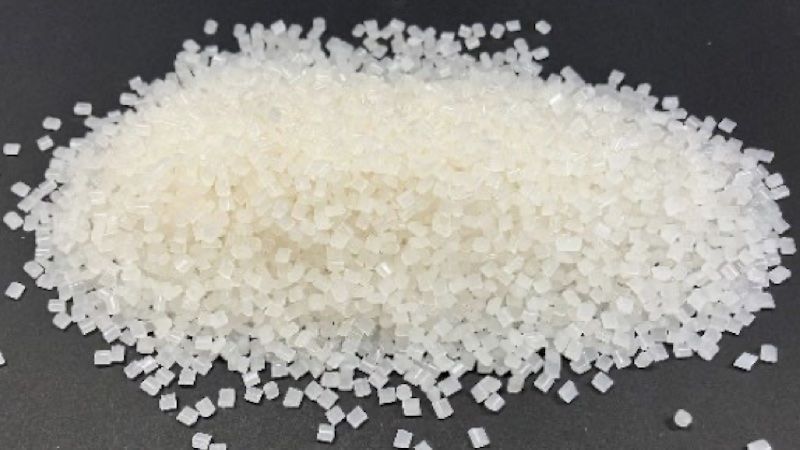
Teijin Frontier Co., Ltd., today announced the global availability of its BIOFRONT® polylactic acid (PLA) resin, which biodegrades faster in oceans, rivers and soil compared to conventional PLA products. Incorporation of a novel biodegradation accelerator in the polymer can enhance its decomposition rate without significantly compromising strength, crystallinity or moldability. This resin, named to signify cutting-edge biotechnology, is now fully commercialized in Japan and internationally.
BIOFRONT® resin pellets © 2024 Teijin Frontier


BIOFRONT® resin aligns with Teijin Frontier’s THINK ECOR environmental strategy and joins the company’s wide range of sustainable materials and products. Teijin Frontier plans to continue developing biodegradable materials to help reduce the environmental impact of plastics.

Features and benefits of BIOFRONT® resin

The resin’s biodegradation accelerator promotes hydrolysis and speeds up material consumption and decomposition by bacteria and fungi compared to PLA polymers without additives. BIOFRONT® resin exhibits rapid biodegradation performance even in marine, riverine and soil environments, where there are fewer bacteria and fungi than in high- temperature, high-humidity composting systems. Further, the decomposition period can be controlled by adjusting the loading and incorporation parameters of the accelerator. Accordingly, the decomposition period can be adjusted to the required lifetime.

Another advantage of BIOFRONT® resin is its ability to be processed like conventional PLA polymer resins used in films and injection-molded and extruded products. It can also be used for fibers in textiles and non-woven fabrics.

From the standpoint of sustainability, BIOFRONT® PLA resin is expected to help reduce microplastics, thanks to its accelerated biodegradation rate, and to reduce CO2 emissions during the product lifecycle since it is made from plant-derived raw materials.

More News from Teijin Frontier

#Man-Made Fibers

Teijin and Asahi Kasei to merge textile subsidiaries into joint venture

Teijin Limited and Asahi Kasei Corporation have signed a definitive agreement to integrate their textile subsidiaries Teijin Frontier Co., Ltd. and Asahi Kasei Advance Corporation. The announcement was approved by Teijin’s Board of Directors on 1 December 2025 and marks a significant consolidation move within Japan’s advanced materials and textile sector.

#Yarn & Fiber

Teijin Frontier develops a next-generation stretch fabric

Teijin Frontier Co., Ltd., announced today that it has developed a next-generation stretch fabric made of an extra-fine three-dimensional structure with randomly sized crimps. The newly developed fabric combines exceptional elasticity with a soft, airy texture and a natural uneven surface that helps make the fabric lightweight while providing quick drying and moisture wicking performance.

#Man-Made Fibers

New high-performance polyester fabric with a natural fiber-like texture and appearance

Teijin Frontier Co., Ltd., announced that it has developed a new high-performance polyester fabric, which combines the elegant appearance and texture of natural fibers made of yarns of random thickness with advanced functionalities such as cool touch, anti-stickiness, quick dry, opacity and ultraviolet (UV) protection.

#Sustainability

Nantong Teijin’s efforts to reduce water usage certified as model activities for supporting the environment in the Yangtze River Delta Region

Teijin Frontier Co., Ltd., announced today that its group company, Nantong Teijin Co., Ltd., has been recognized by China’s Jiangsu Provincial Department of Ecology and Environment for reducing water usage by approximately 300,000 tons/year. Nantong Teijin, which manufactures polyester long-fiber woven and knitted fabrics in Jiangsu Province, independently developed equipment and systems for analyzing, recovering, storing and reusing wastewater from its water-intensive dyeing process.

More News on Raw Materials

#Natural Fibers

38th International Cotton Conference Bremen launches registration and unveils key topics

Participants can now register online for the 38th International Cotton Conference Bremen, which will be held on 25-27 March 2026 at the Haus der Bürgerschaft parliament building on market square. All visitors can look forward to a high-calibre conference programme, numerous additional meetings and a valuable exchange of knowledge and information. The comprehensive range of topics covering the entire value chain will provide practical expertise, address current developments, answer key industry questions, and provide new impetus for the future.

#Natural Fibers

ICAC to collaborate with Uzbekistan and Bizpando on regenerative agriculture

The Government of Uzbekistan has allocated 55,000 hectares of land to implement a regenerative agriculture program for cotton as part of a collaborative project with the International Cotton Advisory Committee (ICAC) and Bizpando, a company with a a blockchain-based internet platform designed to ensure supply chain compliance.

#Natural Fibers

World Cotton Trade declined 4.1% in 2024/25, according to ICAC's 2025 World Cotton Trade Report

Washington, DC — The International Cotton Advisory Committee (ICAC) has released the 2025 World Cotton Trade Report, which covers trade developments in raw cotton since 1980. An annual publication, it provides analysis of world trade by region; import/export projections by country; matrices of trade flows; and seasonal estimates of export commitments to date.

#Natural Fibers

BCI warns against ‘dangerous dilution’ of EU corporate directives

The approval of the European Commission’s Omnibus I proposal by the European Parliament’s Committee on Legal Affairs, accepting controversial changes to key sustainability directives is of great concern. These changes, namely to the Corporate Sustainability Reporting Directive (CSRD) and the Corporate Sustainability Due Diligence Directive (CSDDD), threaten to significantly dilute business reporting and due diligence obligations.

Latest News

#Recycling / Circular Economy

Advanced Recycling Conference 2025 fuels innovation across key waste streams

The Advanced Recycling Conference (ARC) 2025 brought together nearly 220 experts from 28 countries to spotlight pioneering advancements and foster industry collaboration in recycling across diverse waste streams including plastics, textiles, automotive and other materials.

#Dyeing, Drying, Finishing

Navis TubeTex announces U.S. partnership with Icomatex

Navis TubeTex, a global leader in advanced dyeing and finishing machinery solutions, is pleased to announce a new partnership with Icomatex (www.icomatex.com), a respected European manufacturer of high-quality stenters and textile finishing equipment. Under this agreement, Navis TubeTex will exclusively represent the Icomatex stenter line in the United States.

#Recycling / Circular Economy

ADVANSA launches ADVA®tex: A new step toward textile-to-textile recycling

ADVANSA has introduced ADVA®tex, a new filling fibre made entirely from recycled pre-consumer textile waste, positioning the material as a significant step forward in textile-to-textile (T2T) recycling. The fibre is designed for use in duvets, pillows, mattresses, and furniture applications and is available in three versions.

#Knitting & Hosiery

KARL MAYER celebrates 35 years of EL pattern drive

KARL MAYER is celebrating an anniversary this year: on 30 November 1990, the first warp knitting machine with electronic guide bar control, the KS 4 EL, was delivered – another milestone for patterning. As early as 1980, the SU gearbox with the MRS42SU had initiated the transition from mechanical chains to digital data.

TOP