[pageLogInLogOut]

#Sustainability

Nantong Teijin’s efforts to reduce water usage certified as model activities for supporting the environment in the Yangtze River Delta Region

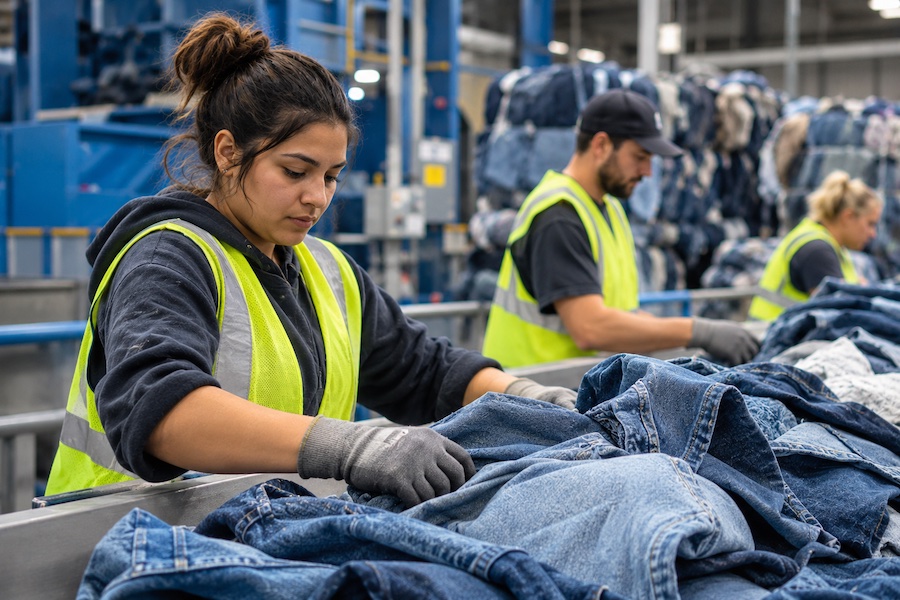
Teijin Frontier Co., Ltd., announced today that its group company, Nantong Teijin Co., Ltd., has been recognized by China’s Jiangsu Provincial Department of Ecology and Environment for reducing water usage by approximately 300,000 tons/year. Nantong Teijin, which manufactures polyester long-fiber woven and knitted fabrics in Jiangsu Province, independently developed equipment and systems for analyzing, recovering, storing and reusing wastewater from its water-intensive dyeing process.

This initiative, which began in 2022, has also resulted in a 4 percent reduction in CO2 emissions, based on a third-party lifecycle assessment review conducted according to ISO14040. As a result, Nantong Teijin has been certified as a company promoting environmental initiatives in the Yangtze River Delta region.

The certification of model activities for supporting the environment was implemented to strengthen ecological and environmental protection in the Yangtze River Delta area. The Nantong City Bureau of Ecology and Environment in Jiangsu Province evaluated companies subjected for certification based on their self-reported efforts to reduce environmental impacts and on onsite inspections and recommended selected companies to the Jiangsu Provincial Department of Ecology and Environment. Out of a total of 164 companies recommended, 30 were selected by the Jiangsu Provincial Department of Ecology and Environment. Among this group, five companies, including Nantong Teijin, were particularly highly rated.

Nantong Teijin is the only Japanese company, and the only one in the textile industry, among these five companies.

The Teijin Frontier Group promotes environmentally friendly manufacturing and systems under its environmental strategy, THINK ECOR. Using this certification as an opportunity, Nantong Teijin aims to further promote environmentally friendly manufacturing by expanding its water usage reduction initiatives to other group companies.


More News from Teijin Frontier

#Man-Made Fibers

Teijin Frontier and Asahi Kasei Advance complete business integration and launch TA Frontier Co., Ltd.

Teijin Frontier Co., Ltd., and Asahi Kasei Advance Co., Ltd., completed the integration of their business operations effective today, and have launched the new entity as TA Frontier Co., Ltd. This integration combines the customer bases and business platforms that the two companies have developed, with the goals of building greater competitiveness, responding more effectively to rapidly changing market conditions and achieving sustainable growth.

#Man-Made Fibers

Teijin Frontier announces new Stretch Polyester yarn offering exceptional compatibility with high-performance Polyester materials

Teijin Frontier Co., Ltd. announced today that it has developed a new stretch polyester yarn that offers new opportunities to create comfortable, all- polyester fabrics for sports and outdoor wear. The new polyester yarn demonstrates exceptional compatibility with high-performance polyester materials. Further, Teijin Frontier’s proprietary polymer design and spinning technology impart excellent elasticity to the new yarn. In turn, this yarn adds stretchability and recovery to the advanced functionality and excellent texture of high-performance polyester materials.

#Man-Made Fibers

Teijin and Asahi Kasei to merge textile subsidiaries into joint venture

Teijin Limited and Asahi Kasei Corporation have signed a definitive agreement to integrate their textile subsidiaries Teijin Frontier Co., Ltd. and Asahi Kasei Advance Corporation. The announcement was approved by Teijin’s Board of Directors on 1 December 2025 and marks a significant consolidation move within Japan’s advanced materials and textile sector.

#Yarn & Fiber

Teijin Frontier develops a next-generation stretch fabric

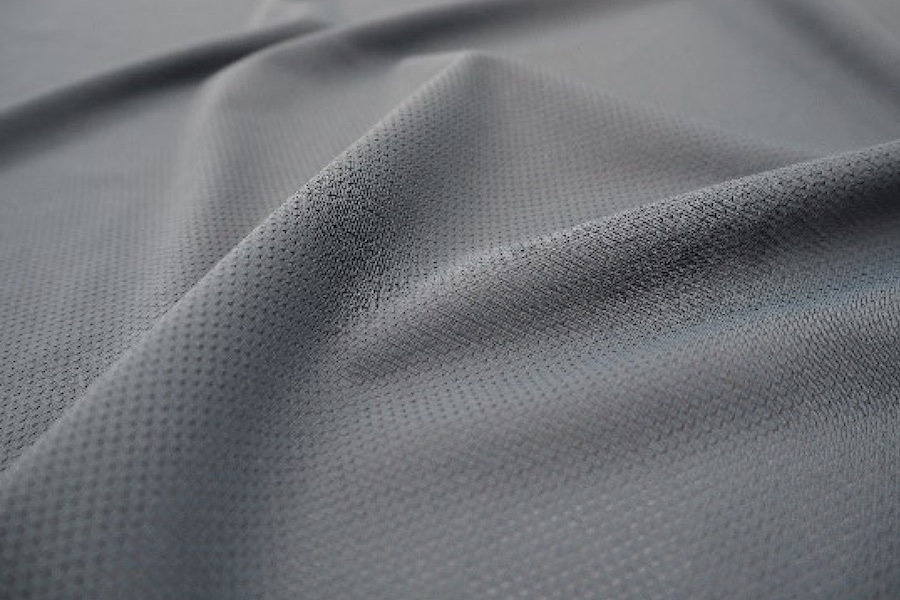
Teijin Frontier Co., Ltd., announced today that it has developed a next-generation stretch fabric made of an extra-fine three-dimensional structure with randomly sized crimps. The newly developed fabric combines exceptional elasticity with a soft, airy texture and a natural uneven surface that helps make the fabric lightweight while providing quick drying and moisture wicking performance.

More News on Sustainability

#Sustainability

Inside the Making at Ecomondo 2026: Textile supply chain calls for transparency and measurable sustainability

Transparency, verifiable environmental claims and closer cooperation across the textile value chain were the central themes of the “Inside the Making: The Power of the Process” panel at Ecomondo 2026 in Rimini. Representatives from denim and sportswear manufacturing, textile finishing, digital printing and branding discussed how technological innovation and supply chain collaboration can help companies meet new European regulatory requirements while making sustainability economically viable.

#Recycling / Circular Economy

H&M Foundation highlights economic barriers to scaling circular textile systems

Discussions at Textile Exchange 2026 underline the need for coordinated investment, reliable material flows and a fair distribution of costs and risks across the textile recycling value chain.

#Recycled Fibers

C&A and Zalando join Altag® Fiber Club to accelerate adoption of agricultural waste-based fibres

Fashion for Good and AltMat announced today that C&A and Zalando have joined the Altag® Fiber Club as its first brand signatories, marking a critical commercial milestone in the journey to mainstream adoption of next-generation fibres derived from agricultural waste.

#Industry 4.0 / Digitalization

Jeanologia and BCome connect factory data with Life Cycle Assessment and Digital Product Passports

A new white paper by EIM by Jeanologia and BCome demonstrates how primary environmental data from denim finishing processes can be integrated into a garment's Life Cycle Assessment (LCA) and prepared for use in a Digital Product Passport (DPP). A comparative case study highlights significant improvements at the production stage while also showing how these translate into the environmental performance of the finished garment.

Latest News

#India ITME 2026

India’s textile industry: Current position, growth targets and industrial development

With ambitious export targets, major investments in manufacturing infrastructure and new international trade agreements, India is pursuing a comprehensive development strategy for its textile and apparel industry. An overview of the industry’s current position, government initiatives, progress achieved and challenges ahead.

#Weaving

“A complex design is only useful if the machine can reproduce it consistently”

Andreas Schnabel, Head of R&D for Technical Weaving Systems at Stäubli, discusses how 3D weaving can create textile reinforcements tailored to the loads within a composite component, where near-net-shape weaving can reduce processing steps and material waste, and what it takes to produce complex structures reliably and economically. He also explains how manufacturers can adapt Stäubli’s modular TF weaving platforms to new applications and how the company’s centre of excellence in Bayreuth supports the transition from research to industrial production.

#India ITME 2026

India ITME 2026: Textile technology meets India's investment ambitions

With ambitious growth targets, government incentive programmes and industrial development initiatives already underway, India is preparing for the next stage of its textile transformation. Against this backdrop, the 12th India ITME, taking place in Greater Noida from 4 to 9 December 2026, arrives at a particularly important moment for machinery manufacturers and textile producers alike.

#ITMA Asia + CITME 2026

ITMA ASIA + CITME 2026: Shanghai prepares for a record edition

With record demand for exhibition space, a strong presence of international technology suppliers and growing interest in automation and intelligent manufacturing, ITMA ASIA + CITME 2026 will provide an important overview of technological developments in the world’s largest textile producing region.

TOP