[pageLogInLogOut]

#Raw Materials

Groundbreaking AI satellite project by GOTS and Marple Revolutionises organic cotton detection
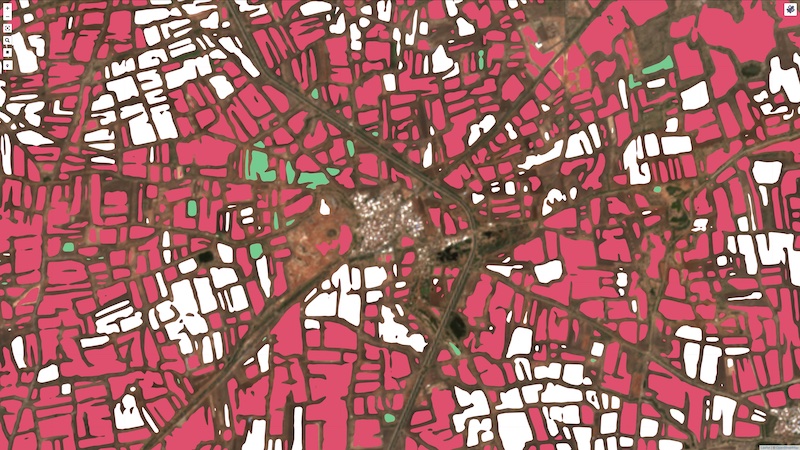
In a pioneering move that could reshape sustainable agriculture, the Global Organic Textile Standard (GOTS) and AI firm Marple have unveiled the results of their revolutionary Satellite Cotton Monitoring Project in India, demonstrating a 97% accuracy rate in detecting cotton fields and over 80% accuracy in determining their organic status. Addressing critical challenges in the industry, this innovative project aims to increase organic cotton availability and secure fibre integrity, building on GOTS's existing robust measures.
SatelliteMap Overlay: CropFields cotton and organic © 2024 GOTS


Global Standard is a trailblazer, solution provider and thought leader in the voluntary sustainability standards space, and the Satellite Cotton Monitoring Project continues this tradition of innovation and creative thinking.

How it Works

Co-financed by Global Standard, the non-profit behind GOTS, and the European Space Agency’s (ESA) Business Applications and Space Solutions (BASS) programme, the project leverages the Cotton Cultivation Remote Assessment (CoCuRA) software developed by Marple.

Field teams visited over 6,000 fields in India, across the states of Gujarat, Haryana, Madhya Pradesh and Maharashtra, collecting data on crops, soil types and cultivation status. This data was then used by Marple to refine the CoCuRA algorithm for cotton specifics in India. Once the algorithm was trained, it was applied to the entire agricultural area of India, covering a staggering 2.7 million square kilometres. Within seconds, CoCuRA detected all organic and conventional cotton fields with remarkable accuracy. A project of this magnitude is only possible with CoCuRA with no other comparable project or data in existence.

Enhancing Organic Cotton Availability

The technology's ability to pinpoint cotton fields where farmers use near-organic or uncertified organic methods can ensure a steady increase in certified organic cotton by facilitating their certification process.

Jeffrey Thimm, organic production specialist at Global Standard, said, "This technology identifies farmers who use sustainable methods that meet organic standards but lack certification. By integrating these farms into conversion projects, it boosts organic cotton supply, promotes sustainable farming practices and enables farmers to access premiums on their supplies."

Securing Organic Fibre Integrity

Building on GOTS's robust integrity measures, the CoCuRA software integrates AI technology with satellite data to verify cultivation practices meticulously. The data collected also contributes to Global Standards’ Global Fibre Registry, consolidating comprehensive data on raw material production before entering the GOTS value chain, further adding to fraud detection and prevention.

Sustainability in Textiles

Global Standard is recognised for its comprehensive approach to sustainability. From promoting human rights along the value chain to banning harmful chemicals in certified textiles, GOTS sets a benchmark for integrity and sustainability. In addition, GOTS certification is a powerful tool that helps companies comply with legal requirements globally.

"For over 20 years, we have been pioneering solutions to help the industry on its journey towards sustainability,” said Claudia Kersten, managing director of Global Standard. “This project is a game changer, combining satellite technology with AI to meet the growing demand for genuine organic cotton. In addition, this eye in the sky will prevent fraud by allowing us to crosscheck locations and field sizes in a very cost-efficient way. It's a win-win-win situation: farmers have an incentive to grow organic and improve their lives, the industry can secure its supply and meet its sustainability goals, and consumers have a greater choice of organic textiles."

Future Prospects and Global Impact

Following the successful pilot in India, the project aims to expand globally.

Daniel Lanz, managing partner at Marple, said, "India faces unique challenges in the satellite-based detection of agricultural fields. Firstly, the country is extremely large and spans several climate zones. Secondly, field sizes are very small, and thirdly, field boundaries are often indistinguishable, with one field merging into the next. Despite these challenges, CoCuRA has achieved astonishing accuracy in detecting cotton fields and assessing their cultivation methods. This breakthrough provides a pioneering overview of cotton production in India that would be impossible to achieve on the ground. CoCuRA will help protect the integrity of organic farmers and may facilitate more smallholders transitioning to organic farming by simplifying the certification process."

Guillaume Prigent, a business developer and partnership officer in ESA’s Applications Projects and Studies Division said, “The potential impact of the solution lies in its ability to be scaled and this is exactly what we are working on. We are looking to deliver a solution that could have a global impact for the benefit of all."

Global Standard is eager to see this technology extend to other regions and additional fibres, which could revolutionise how crops are monitored.

Watch a short video about the project and find a media kit with images and videos here.

GOTS: The Future of Organic Cotton with AI & satellite Tech #BehindTheSeams


More News from Global Standard (GOTS)

#Sustainability

Global Standards establishes new non-profit foundation to strengthen governance

Global Standards gGmbH, the nonprofit organisation behind the globally recognised Global Organic Textile Standard (GOTS), announced a new governance structure designed to support its long-term mission and reinforce organisational autonomy of its Voluntary Sustainability Standards and programmes.

#Sustainability

Number of GOTS-certified facilities grow 15% globally as demand for credible sustainability standards continues to strengthen

Global Organic Textile Standard (GOTS) certification continued to grow in 2025, with nearly 18,000 certified facilities worldwide, despite ongoing geopolitical uncertainty and rapidly evolving regulatory requirements across global textile supply chains.

#Natural Fibers

Global Standard gGmbH launches second public consultation for GRTS Draft 2 for the textile industry (1–30 April 2026)

Global Standard gGmbH is pleased to announce the release of Draft 2 of the Global Responsible Textile Standard (GRTS) for its second public consultation. The consultation will be open from 1 April 2026 to 30 April 2026, inviting stakeholders across the textile and apparel value chain to provide input and contribute to the further development of this new Standard.

#Sustainability

GOTS version 8.0 released: advanced supply chain accountability, from fibre to finished product

Global Standard is pleased to announce the release of GOTS Version 8.0, the latest update to the world's leading processing standard for organic textiles. The updated Standard strengthens requirements for air emissions and waste management, as well as criteria for product safety. It introduces new provisions on circularity, microfibre management and updates in residue testing. Version 8.0 also elevates due diligence obligations and formalises governance requirements, including ESG disclosure, anti-corruption policies and conflict-of-interest safeguards, to support credible, responsible business conduct.

More News on Raw Materials

#Raw Materials

AMSilk and Ajinomoto Foods Europe expand partnership to enable industrial-scale production of silk proteins

AMSilk GmbH (“AMSilk”), a global leader leader in biotech produced silk materials, today announced a significant expansion of its partnership with Ajinomoto Foods Europe (AFE), marking a key step in scaling the industrial production of its silk proteins. Building on the collaboration first established in 2023, the two companies have now entered into a long-term manufacturing and supply agreement, enabling the transition from industrial validation to dedicated, large-scale production.

#Natural Fibers

Global cotton trade poised for recovery as India and China drive import demand

The July 2026 issue of Cotton This Month highlights a changing global cotton market, with consumption and trade expected to strengthen despite a modest decline in production during the 2026/27 season. The next issue of Cotton This Month will be released on August 1, 2026.

#Natural Fibers

Cotton made in Africa partners receive top marks in independent verifications

Cotton made in Africa® (CmiA) and CmiA Organic are two internationally recognised standards that aim to promote sustainable development in the African cotton sector south of the Sahara. To ensure the standards’ credibility among brands, retailers, and consumers, independent verifiers evaluate compliance on the ground. The verification results for 2025, now published in the Aggregated Verification & Implementation Report, were very strong: The verifiers awarded consistently very good remarks regarding management, people, prosperity, and the environment.

#Natural Fibers

Cotton ConneXions Insight to Impact brings supply chain leaders together around cotton innovation

Cotton Incorporated’s Cotton ConneXions Insight to Impact brought together more than 300 industry leaders from 140 companies across 10 countries, including more than 45 top global brands and sourcing organizations, underscoring strong global interest in cotton-rich product development, sourcing and supply chain collaboration.

Latest News

#Recycled Fibers

Recover™ and Ünteks Group partner to scale recycled cotton in knitwear

Recover(TM), a global producer of low‐impact, high‐quality recycled cotton fiber, announces a new partnership with Ünteks Group, a vertically integrated textile manufacturer based in Turkey. The collaboration focuses on the development of circular knit fabrics and garments, combining Recover’s recycled cotton fiber with Ünteks Group’s integrated capabilities across knitting, dyeing, printing, and garment production.

#Spinning

STEELTOP®: A new benchmark in flat tops for spinning preparation

Modern carding generations achieve higher production performance, placing significantly greater stress on flat tops. Higher cylinder speeds and increased fiber density, combined with tighter carding gaps, create more demanding operating conditions. At the same time, poorer raw material quality and the increased use of recycled materials further intensify these challenges. With STEELTOP®, Trützschler introduces a new full steel flat top series developed for these demanding modern carding processes.

#Textile processing

YKK develops concept EXCELLA® zipper tape using nonwoven fabric partially derived from used clothing

YKK Corporation has developed a concept version of its premium EXCELLA® zipper series made from nonwoven fabric sheets created by fiberizing used clothing and other textile materials. Based on a proposal by fashion designer Yuima Nakazato, this item was created as a result of collaboration between Nakazato, Seiko Epson Corporation and YKK. The concept zipper was incorporated as a material component for pieces in the newest YUIMA NAKAZATO Couture Collection, “INFERNO,” which was unveiled in Paris, France on July 8, 2026.

#Textiles & Apparel / Garment

Texworld Apparel Sourcing Paris highlights evolving global sourcing landscape

From 31 August to 2 September 2026, Texworld Apparel Sourcing Paris will bring together more than 1,000 international exhibitors at Paris-Le Bourget Exhibition Centre. This edition reflects the new global balance of textile and apparel sourcing, highlighting a strong diversity of sourcing countries — some unexpected.

TOP