[pageLogInLogOut]

#Raw Materials

Aid by Trade Foundation expands to India through Regenerative Cotton Standard
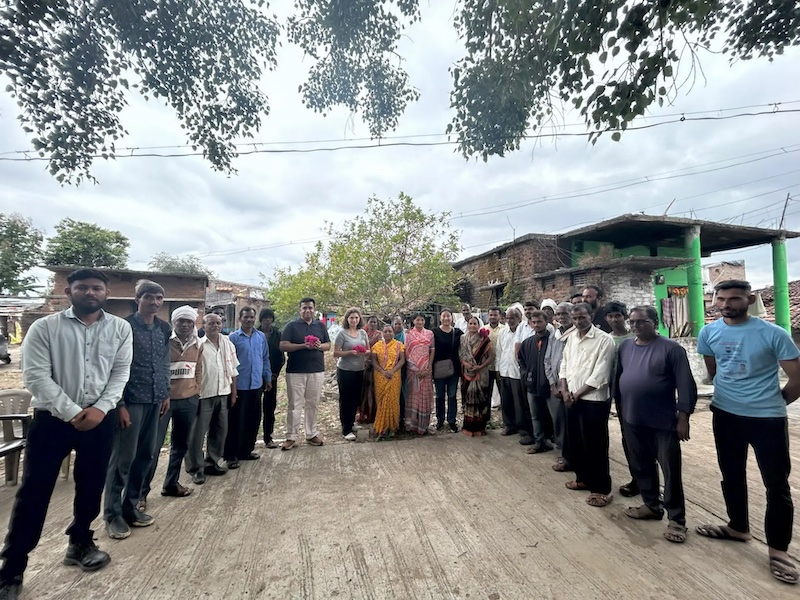
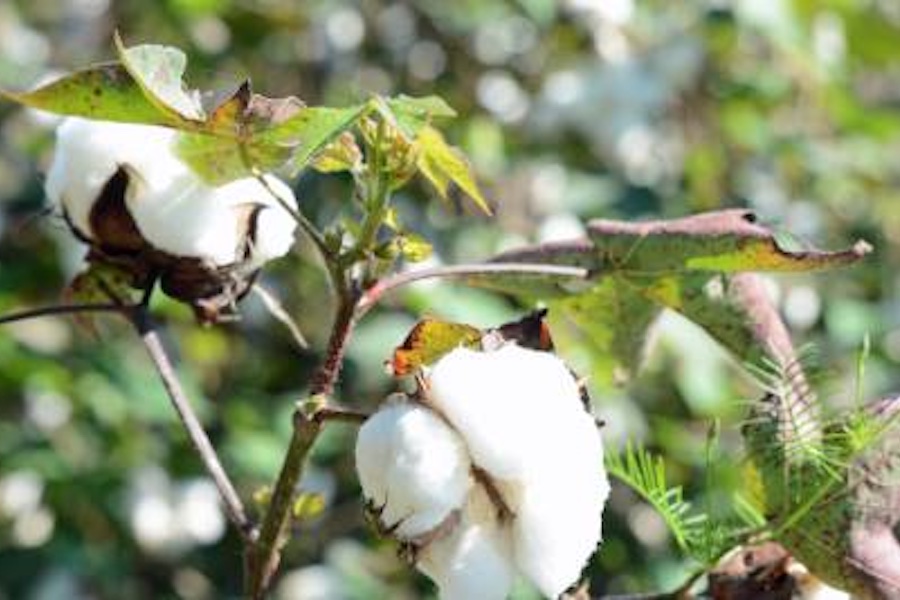
Through the Regenerative Cotton Standard (RCS), the Aid by Trade Foundation (AbTF) is now promoting sustainable cotton cultivation in the key cotton-producing country of India as well, expanding its scope of operations beyond Africa for the first time. The first pilot project for the sustainable cotton standard has been launched in collaboration with small-scale farmers in the Indian state of Maharashtra.
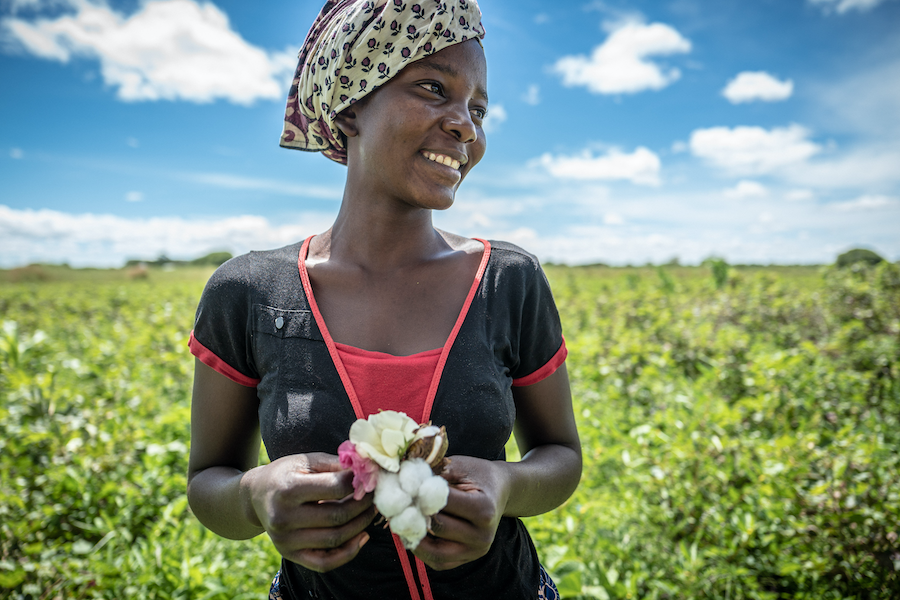
RCS farmer © 2024 CmiA


As the first regenerative cotton standard that explicitly prioritises the knowledge and interests of small-scale farmers, the Regenerative Cotton Standard is now being put into practice in India. The first cotton crops following the public announcement of RCS in autumn 2023 will be sown as part of an Indian pilot project this July. The Aid by Trade Foundation’s expansion to India, one of the world’s largest cotton producers, represents further progress towards AbTF’s objectives of providing sustainable cotton for global textile companies to purchase and of ensuring socially and environmentally sustainable production conditions in cotton-growing countries.

“We are happy to now be working in India as well and to use both our expertise in sustainable cotton cultivation and our global network for the benefit of Indian small-scale farmers. The first RCS pilot project is the result of productive collaboration between many partners who have set themselves ambitious and forward-looking goals in the field of sustainable cotton cultivation,” states the managing director of AbTF, Tina Stridde, commenting on AbTF’s geographic expansion.

RCS’s holistic approach pays off for both small-scale farmers and companies. On the one hand, it supports cotton farmers with practical and innovative approaches to building resilience against the effects of climate change; on the other, in addition to cotton of African provenance, it offers textile companies regenerative cotton from another cotton-growing region of key importance to the textile sector. Initially, 5,000 farmers in the Indian state of Maharashtra will grow cotton in accordance with RCS requirements.

To implement RCS in India, the Aid by Trade Foundation will work with its new Indian partner, Vijay Cotton & Fibre Co. LLP. Based in Mumbai, India, this family-run business has more than 75 years of experience in the cotton sector and significant expertise in the cultivation and worldwide trade of Indian cotton. “In a uniquely innovative and respectful way, the Regenerative Cotton Standard supports cotton farmers in India with applying climate-friendly agricultural practices,” states the company’s partner, Vijay Shah, adding, “The standard also has great potential to increase transparency within our supply chain so that we can trace the origin of our cotton and ensure that it is produced in accordance with environmentally and ethically verifiable standards.” To ensure transparency in the textile chain, AbTF has made RCS-verified fibres traceable by integrating its successful Hard Identity Preserved (HIP) tracking system.

In addition to India, the Regenerative Cotton Standard will also be implemented in Tanzania, where two RCS pilot projects are currently underway with two long-time AbTF partners from Tanzania: Alliance Ginneries Ltd. and Biosustain.
More News from Cotton made in Africa (CmiA)

#Natural Fibers

Human Rights Day: Cotton made in Africa reinforces its commitment to ensuring respect for human rights in cotton production

The sustainable cotton standard Cotton made in Africa (CmiA) has always focussed on respect for human rights, including by prohibiting child labour and discrimination. With the new version of the CmiA standard coming into force, AbTF raises requirements for due diligence in the areas of human rights and risk management.

#Natural Fibers

Cotton made in Africa launches public consultation for standard revision

The Aid by Trade Foundation (AbTF) is opening public consultation on its Cotton made in Africa standard today. Interested parties will have 60 days to provide feedback, helping shape the future of one of the world’s largest standards for sustainable cotton. The latest update to the standard, Version 5.0, focusses on increasing Cotton made in Africa’s effectiveness and adapting its criteria and indicators to external factors, which currently include biodiversity loss and a growing set of reporting requirements for companies.

#Raw Materials

EUR 2.8 million project for climate-resilient agriculture in Africa

Healthy soils, responsible water use, and biodiversity conservation are central to the efforts of the Aid by Trade Foundation (AbTF) to make African cotton production more resilient to climate change. AbTF has opened new doors for small-scale farming families in Africa through a EUR 2.8 million project for climate-resilient cotton cultivation. Over the last three years, more than 100,000 farmers in Africa were involved in testing various soil improvement measures, with encouraging results: yields on demonstration sites increased significantly, despite the effects of climate change.

#Raw Materials

Cotton farmers in Benin benefit from organic cotton cultivation

Launched three years ago with EUR 1 million in total volume, a project called “Growing Benin’s Organic Cotton Sector” aimed to support small-scale farmers in transitioning to organic cotton cultivation in accordance with the Cotton made in Africa Organic standard, to avoid the use of synthetic pesticides, and to further develop the organic cotton sector, thereby securing the future of farming communities. The project has proved a success as participating cotton farmers are benefiting from higher incomes.

More News on Raw Materials

#Natural Fibers

38th International Cotton Conference Bremen: Let´s Talk about Cotton!

The 38th International Cotton Conference Bremen, to be held on 25-27 March 2026 in Bremen’s parliament building on market square, once again sends a powerful signal for professional excellence and international dialogue. The focus is on the latest market trends and technical innovations throughout the entire value chain – from agriculture and quality assurance to processing and the circular economy. With its high-calibre speakers, the conference remains an indispensable forum for anyone involved in shaping the cotton industry scientifically, technically, or economically.

#Research & Development

How innovations drive BASF’s success

“Innovation has always been part of BASF’s DNA. Especially in these volatile times, it is crucial to leverage our innovative strength to develop competitive solutions that differentiate us as a company in our markets and give us a competitive edge,” said Dr. Stephan Kothrade, Member of the Board of Executive Directors of BASF and Chief Technology Officer, at the company’s Research Press Briefing held today. To achieve this, BASF implemented its “Winning Ways” strategy about a year ago with the clear goal of becoming the preferred chemical company to enable its customers’ green transformation.

#Natural Fibers

38th International Cotton Conference Bremen launches registration and unveils key topics

Participants can now register online for the 38th International Cotton Conference Bremen, which will be held on 25-27 March 2026 at the Haus der Bürgerschaft parliament building on market square. All visitors can look forward to a high-calibre conference programme, numerous additional meetings and a valuable exchange of knowledge and information. The comprehensive range of topics covering the entire value chain will provide practical expertise, address current developments, answer key industry questions, and provide new impetus for the future.

#Natural Fibers

ICAC to collaborate with Uzbekistan and Bizpando on regenerative agriculture

The Government of Uzbekistan has allocated 55,000 hectares of land to implement a regenerative agriculture program for cotton as part of a collaborative project with the International Cotton Advisory Committee (ICAC) and Bizpando, a company with a a blockchain-based internet platform designed to ensure supply chain compliance.

Latest News

#Fabrics

MUNICH FABRIC START: Between Attitude and Sensuality

The future begins where we reimagine it. After seasons of restraint, Spring.Summer 27 marks a conscious counter-trend: optimism, sensuality, and creative freedom are replacing pragmatism and neutrality. Physical presence and individuality are regaining importance – as a response to uncertainty, exhaustion, and algorithmic predictability. The overarching theme of PLEASURE stands for fashion as an emotional space, as an expression of attitude and cultural reflection. Colours, surfaces, and materials become vehicles for self-confidence and joie de vivre.

#Denim

organIQ seek: smart alternative to potassium permanganate

CHT Group announces new technical findings within its organIQ seek platform that significantly advance the transition toward permanganate-free denim bleaching. Through extensive industrial testing and application research, CHT confirms that organIQ seek can now be used with remarkable effectiveness as a substitute for potassium permanganate in spray bleach, while remaining aligned with sustainability expectations and cost realities in the European market. At the COLOMBIATEX in Medellín as well as at the Exintex in Puebla and the Kingpins Show in Amsterdam the CHT Group will present organIQ seek as an alternative to potassium permanganate.

#Functional Fabrics

PERFORMANCE DAYS: Focus topic shifts to the beginning of the value chain

Following the last Focus Topic in October 2025, which placed Textile-to-Textile Recycling at its core, PERFORMANCE DAYS continues to drive the conversation around circularity – this time with an expanded and more upstream perspective. The upcoming Focus Topic, “Textile to Textile: The Role of Collectors and Sorters,” presented during the spring edition on March 18–19, will spotlight one of the most essential yet often overlooked components of a functioning circular textile system: the efficient collection and sorting of post-consumer textiles.

#Knitting & Hosiery

Proven performance, optimised costs – the new RE 6 EL

Nowadays textile companies increasingly need to produce small production runs and respond to market changes with instantaneous pattern changes in order to operate profitably – meaning they require machines that offer maximum flexibility, reliability and cost efficiency. KARL MAYER understands the challenges of the market and is launching its new RE 6 EL. The Raschel machine offers the core strengths of the classic RSE 6 EL and essentially the same performance parameters, but has been further cost-optimised largely due to local production advantages. This makes the newcomer an efficiency champion in production, especially when it comes to frequent pattern changes.

TOP