[pageLogInLogOut]

#Raw Materials

Teijin Frontier develops practical, highly biodegradable PLA Resin that will help to reduce microplastics

Teijin Frontier Co., Ltd., the Teijin Group’s fibers and products converting company, announced today that it has developed a practical polylactic acid (PLA) resin that biodegrades faster in oceans, rivers and soil compared to conventional PLA products. By adding a new biodegradation accelerator to the polymer, Teijin Frontier has improved its biodegradation rate without impairing strength, moldability or other practical properties.

The new PLA resin is expected to help reduce microplastics thanks to its accelerated biodegradation rate as well as reduce CO2 emissions during product lifecycles since it is made from plant-derived raw materials.

Teijin Frontier will begin producing and selling pellets, injection- and extrusion-molded products, textiles and non-woven fabrics made with its new PLA resin in fiscal 2023 (ending in March 2024), targeting sales of several hundred million JPY by fiscal 2026.
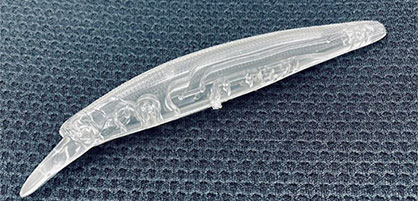
Fishing lure made with newly developed PLA resin © 2022 Nakahashi plastic plant pots


Teijin Frontier, under its THINK ECO® environmental initiative, is striving to improve its environmental value by developing greener materials and products for applications ranging from clothing to industrial materials.

Conventionally, when PLA polymer is hydrolyzed to less than 10,000Mn (average molecular weight) it can be broken down into carbon dioxide and water by bacteria and fungi. The biodegradation accelerator added by Teijin Frontier hastens hydrolysis to reduce the molecular weight more quickly than in the case of PLA polymers without such additives, thereby enabling faster biodegradation in oceans, rivers and soil. During product processing and storage, however, molecular weight decreases only slightly, similar to that of conventional PLA polymers, so Teijin Frontier’s new PLA resin is highly practical because its crystallinity and moldability are not impaired.
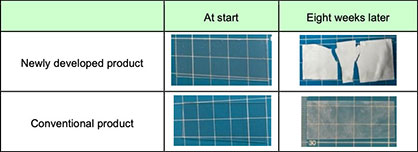
Teijin Frontier test in which colorless and Soil degradation of 300?m-thickness films - transparent films were buried in 10cm of soil for eight weeks (June to October 2022) in Japan © 2022 Teijin


The new PLA resin can be processed and molded in the same way as conventional versions for the production of resins, films, injection and extrusion molded products, textiles and non-woven fabrics. Also, the decomposition period—about six months to two years according to verification tests conducted by Teijin Frontier—can be controlled by adjusting addition conditions and the amount of biodegradation accelerator. Accordingly, decomposition can be adjusted to the life expectancy of specific items, such as agriculture and fishery products, for example.

PLA resins, which are generally made from plant-derived ingredients and are biodegradable, are used in a wide range of products due to their high crystallinity and practicality. Although biodegradation performance is acceptable under hot, humid compost conditions, the rate is slowed down greatly in oceans, rivers and soil, resulting in the presence of residual microplastics for long periods of time. Until now, attempts to improve biodegradability have impaired the strength and other practical properties of these products.


More News from Teijin Aramid

#Yarn & Fiber

Teijin Aramid: Taiichi Machida to succeed Peter ter Horst as CEO

Peter ter Horst will step down as Chief Executive Officer at the end of 2025, after 19 years of dedicated service. Effective October 1, 2025, Taiichi Machida will take over as CEO.

#Yarn & Fiber

Teijin announces availability of DPP-compliant products aligned with Europe’s ESPR Environmental Regulation

Teijin Limited announced today that it has started rolling out initiatives to enable aramid fibers and carbon fibers to be accompanied by Digital Product Passport (DPP) technology, which enhances supply chain transparency by verifying the origins of materials and supporting sustainability claims. The company is using the supply chain traceability system from Netherlands-based Circularise B.V., in which Teijin has invested since November 2024, to develop DPPs for each product.

#Composites

Teijin Carbon showcases new eco-friendly Tenax Next™ R2S 513 6mm short carbon fiber at JEC World 2025

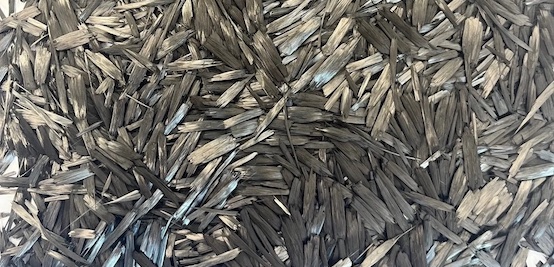
Teijin Carbon, a leading manufacturer of carbon fiber products, is presenting its latest development in sustainable materials at JEC World 2025 (hall 6, G22). New Tenax Next™ R2S 513 6mm is a short carbon fiber product in rice-shaped form for reinforcing thermoplastic compounds that not only offers exceptional performance characteristics but also reinforces the company’s commitment to environmental responsibility and circularity.

#Recycling / Circular Economy

Teijin to invest in Circularise B.V. and adopt its supply chain traceability platform to promote the Circular Economy

Teijin Limited announced today that it will invest in Circularise B.V., a company based in The Hague, Netherlands, which develops product traceability management systems using blockchain technology. Teijin will also implement Circularise’s software to improve visibility into its global supply chain. Circularise’s proprietary “Smart Questioning”(*) solution, which utilizes Zero-Knowledge Proof (ZKP) technology, provides both anonymity and transparency to ensure a highly reliable product traceability system.

More News on Raw Materials

#Natural Fibers

38th International Cotton Conference Bremen: Let´s Talk about Cotton!

The 38th International Cotton Conference Bremen, to be held on 25-27 March 2026 in Bremen’s parliament building on market square, once again sends a powerful signal for professional excellence and international dialogue. The focus is on the latest market trends and technical innovations throughout the entire value chain – from agriculture and quality assurance to processing and the circular economy. With its high-calibre speakers, the conference remains an indispensable forum for anyone involved in shaping the cotton industry scientifically, technically, or economically.

#Natural Fibers

Human Rights Day: Cotton made in Africa reinforces its commitment to ensuring respect for human rights in cotton production

The sustainable cotton standard Cotton made in Africa (CmiA) has always focussed on respect for human rights, including by prohibiting child labour and discrimination. With the new version of the CmiA standard coming into force, AbTF raises requirements for due diligence in the areas of human rights and risk management.

#Research & Development

How innovations drive BASF’s success

“Innovation has always been part of BASF’s DNA. Especially in these volatile times, it is crucial to leverage our innovative strength to develop competitive solutions that differentiate us as a company in our markets and give us a competitive edge,” said Dr. Stephan Kothrade, Member of the Board of Executive Directors of BASF and Chief Technology Officer, at the company’s Research Press Briefing held today. To achieve this, BASF implemented its “Winning Ways” strategy about a year ago with the clear goal of becoming the preferred chemical company to enable its customers’ green transformation.

#Natural Fibers

38th International Cotton Conference Bremen launches registration and unveils key topics

Participants can now register online for the 38th International Cotton Conference Bremen, which will be held on 25-27 March 2026 at the Haus der Bürgerschaft parliament building on market square. All visitors can look forward to a high-calibre conference programme, numerous additional meetings and a valuable exchange of knowledge and information. The comprehensive range of topics covering the entire value chain will provide practical expertise, address current developments, answer key industry questions, and provide new impetus for the future.

Latest News

#Fabrics

MUNICH FABRIC START: Between Attitude and Sensuality

The future begins where we reimagine it. After seasons of restraint, Spring.Summer 27 marks a conscious counter-trend: optimism, sensuality, and creative freedom are replacing pragmatism and neutrality. Physical presence and individuality are regaining importance – as a response to uncertainty, exhaustion, and algorithmic predictability. The overarching theme of PLEASURE stands for fashion as an emotional space, as an expression of attitude and cultural reflection. Colours, surfaces, and materials become vehicles for self-confidence and joie de vivre.

#Denim

organIQ seek: smart alternative to potassium permanganate

CHT Group announces new technical findings within its organIQ seek platform that significantly advance the transition toward permanganate-free denim bleaching. Through extensive industrial testing and application research, CHT confirms that organIQ seek can now be used with remarkable effectiveness as a substitute for potassium permanganate in spray bleach, while remaining aligned with sustainability expectations and cost realities in the European market. At the COLOMBIATEX in Medellín as well as at the Exintex in Puebla and the Kingpins Show in Amsterdam the CHT Group will present organIQ seek as an alternative to potassium permanganate.

#Functional Fabrics

PERFORMANCE DAYS: Focus topic shifts to the beginning of the value chain

Following the last Focus Topic in October 2025, which placed Textile-to-Textile Recycling at its core, PERFORMANCE DAYS continues to drive the conversation around circularity – this time with an expanded and more upstream perspective. The upcoming Focus Topic, “Textile to Textile: The Role of Collectors and Sorters,” presented during the spring edition on March 18–19, will spotlight one of the most essential yet often overlooked components of a functioning circular textile system: the efficient collection and sorting of post-consumer textiles.

#Knitting & Hosiery

Proven performance, optimised costs – the new RE 6 EL

Nowadays textile companies increasingly need to produce small production runs and respond to market changes with instantaneous pattern changes in order to operate profitably – meaning they require machines that offer maximum flexibility, reliability and cost efficiency. KARL MAYER understands the challenges of the market and is launching its new RE 6 EL. The Raschel machine offers the core strengths of the classic RSE 6 EL and essentially the same performance parameters, but has been further cost-optimised largely due to local production advantages. This makes the newcomer an efficiency champion in production, especially when it comes to frequent pattern changes.

TOP