[pageLogInLogOut]

#Raw Materials

“CmiA-labelled Textiles will offer consumers values-based purchasing options”
© 2022 Cotton made in Africa
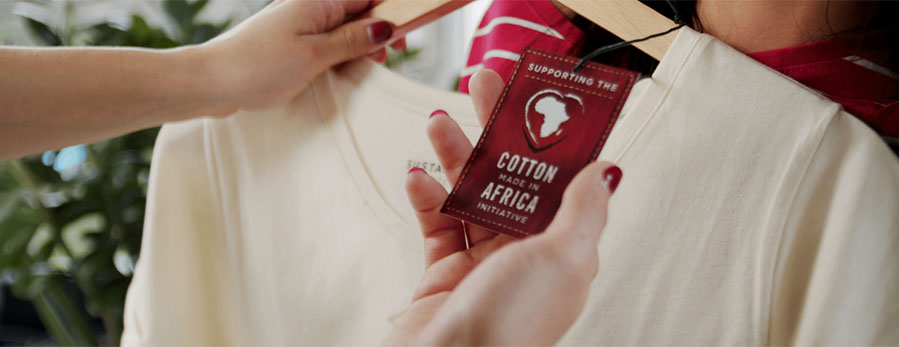
Shinsagae International, a South Korean retail company, and one of its lifestyle brands, JAJU, are the first CmiA partners in Asia. Lee Seock-koo, the co-CEO of Shinsegae International and the head of JAJU, is convinced that this co-operation puts them among the first to respond to the growing trend, especially apparent among the younger generation, of buying clothes with social and ecological value.

Mr Seock-koo, in which markets does Shinsegae International operate, and what products does JAJU sell?

Shinsegae International is an affiliate of the Shinsegae Group, a major distribution company in South Korea. JAJU is a lifestyle brand. Under the slogan of “the best of the things you often use”, it sells primarily clothing, bedding, daily necessities, and kitchenware online and in 260 stores offline. Our aim is to provide products consumers use every day, at the best quality and for a good price.

As the market leader for fashion and lifestyle in South Korea, you market international fashion brands as well as your own. How important is sustainability for your company?

The Shinsegae Group prioritises value creation and sustainable development. In keeping with these priorities, our company is actively practising sustainability management by introducing ethical management in Korea for the first time. Sustainability is also an important brand value for JAJU, which strives to produce products in a sustainable way.

More and more companies are prioritising and publicising sustainable production practices. How prevalent is the issue of sustainability in South Korea, and how important is it for your end consumers?

In Korea, sustainability has become an important factor in consumption and corporate management. Consumers are increasingly concerned about the impact that the products and services they buy now will have on society and the environment in the future. That’s why we hope the trend to buy sustainably produced products will further increase in the future. In particular, awareness of values-based consumption is becoming more popular in the younger generation, born between 1990 and the early 2000s. They are leading the eco-friendly consumption movement and have even created a new word for it, GREEN + CONSUMER.

You have been a partner of Cotton made in Africa since 2021. Why did you choose to reach your sustainability targets through CmiA?

As a lifestyle brand pursuing wellness, JAJU has been strengthening its eco-friendly product lineup since 2020. We paid attention to the value that CmiA places on sustainability, as we do not focus only on the environmental impact but also on the social and economic aspects of our work. By collaborating with CmiA, we would like to inform Korean consumers about products produced in a sustainable way and spread the broader meaning of values-based consumption.


What opportunities do you see arising for Shinsegae in the South Korean market from the sale of CmiA-labelled textiles?

JAJU is the first CmiA partner and the first brand to sell products with the CmiA label in Asia. CmiA-labelled textiles will offer consumers values-based purchasing options and differentiate us from other brands. Furthermore, I think it will be a good opportunity to demonstrate how we at JAJU and Shinsegae International put sustainable management into practice.

Lee Seock-koo, the co-CEO of Shinsegae International © 2022 Cotton made in Africa


How do you advertise and market Cotton made in Africa to your customers?

To inform the general public about our co-operation with Cotton made in Africa, we are planning to send out a press release about our newest partner and engagement. In addition, we plan to start a full-scale promotion for CmiA products and to advertise CmiA extensively in stores and our own online mall. We also plan to organise a sales campaign in connection with a future community project. By funding this project, we will be able to provide additional support to the farming communities from which we source our CmiA cotton.




More News from TEXDATA International

#Techtextil 2026

Textile Chemicals & Dyes: Innovation in Textile Chemistry moves into focus at Techtextil 2026

From PFAS-free finishes and water-saving dyeing technologies to advanced coatings and recycling-compatible formulations, innovation in textile chemistry is accelerating across the industry. Reflecting this development, Techtextil 2026 introduces Textile Chemicals & Dyes as a dedicated product segment, highlighting the growing role of chemical solutions in shaping the next generation of technical textiles.

#Recycling / Circular Economy

textile.4U publishes special edition “Top 100 Textile Recycling Companies 2025”

With a comprehensive 176-page special edition, textile.4U is dedicating its latest issue entirely to one of the most dynamic and influential topics in today’s textile industry: textile recycling. The new issue, published exclusively in high-quality print, presents the Top 100 textile recycling companies researched and selected by TexData – organizations that already play a key role in the transition to circular textiles or are expected to have a significant impact in the near future.

#Recycling / Circular Economy

Responsible Textile Recovery Act of 2024 signed by Governor

Senator Josh Newman (D-Fullerton) is proud to announce that Senate Bill 707 (SB 707), the Responsible Textile Recovery Act of 2024, has been signed into law by the Governor of California, Gavin Newsom. This groundbreaking legislation establishes the country’s first Extended Producer Responsibility (EPR) textile recycling program, marking a significant step forward in the state’s efforts to combat waste and promote sustainability.

#Textiles & Apparel / Garment

Modtissimo promotes sustainability with 28 coordinates in the Green Circle

Modtissimo is proving more and more to be a textile and clothing show that delivers the latest innovations in the area of sustainability, with the iTechStyle Green Circle being the main showcase for companies' creations. In this 60+4 edition, taking place on 12 and 13 September, 28 coordinates will be exhibited in a section organised by CITEVE and curated by Paulo Gomes.

More News on Raw Materials

#Raw Materials

Lenzing Group positions bio‑based materials as a strategic asset for Europe’s economic security

The Lenzing Group, a leading supplier of regenerated cellulose fibers for the textile and nonwovens industries, hosted a high‑level roundtable in Brussels to discuss how bio‑based materials can strengthen Europe’s economic security and support the shift toward a fossil‑free future. Organized in cooperation with Euractiv, the event brought together representatives of the European Commission, the UK Mission to the EU, academia, civil society, and industry.

#Natural Fibers

Beyond Cotton: Natural Fibres in the Spotlight at the Bremen Cotton Conference - Branded by DNFI

Climate targets, fragile supply chains, and rising regulatory requirements are fundamentally changing the perspective of the textile industry - the focus is increasingly shifting toward the base material. Not only cotton, but natural fibres are gaining significant importance: they stand out not only because of their outstanding functional properties, but also because they make a valuable contribution to the bioeconomy and responsible product development.

#Raw Materials

International Women’s Day: Cotton made in Africa strengthens equality for women through targeted investments

On the occasion of International Women’s Day—which will be observed on 8 March under the motto “Rights. Justice. Action. For ALL Women and Girls”—the Aid by Trade Foundation (AbTF), which is responsible for Cotton made in Africa® (CmiA), underlines its long-standing and ongoing commitment to the equality of women in African cotton production areas.

#Raw Materials

ICAC projects slight decline in production, relative stability for consumption

Global cotton production is projected to decline by 4% in the 2026/27 season to 24.8 million tonnes, while consumption is expected to remain relatively steady at 25.0 million tonnes, according to the March 2026 edition of Cotton This Month.

Latest News

#INDEX 2026

EDANA unveils nominees for INDEX™26 Awards: Highlighting the next generation of nonwoven excellence

EDANA is proud to unveil the highly anticipated nominees for the INDEX™26 Awards, the nonwoven industry’s highest accolade for technical and sustainable excellence. Out of a record-breaking field of entries, these finalists represent the cutting edge of material science—from bio-based hygiene fibers and PFAS-free protective textiles to revolutionary water-filtration machinery. Each nominee has been selected by a jury of industry experts for their ability to solve critical global challenges, including the transition to a circular economy and the pursuit of enhanced consumer performance.

#Textiles & Apparel / Garment

Coats to showcase innovative reinforcement and filler materials for leather goods and accessories at APLF 2026

Coats, a world-class Tier 2 manufacturer and trusted partner for the apparel and footwear industries, will be promoting four advanced materials from its ‘Lifestyle Solutions’ portfolio at APLF 2026 in Hong Kong in March. Each innovation has been specifically engineered to help luxury and premium brands elevate the craft, durability, sustainability and creative expression required in the manufacturing of handbags, purses, and other high-end designer accessories.

#Textiles & Apparel / Garment

Design, innovation and sustainability propel VIATT 2026’s expanding role in ASEAN textile sourcing

At its third edition, the Vietnam International Trade Fair for Apparel, Textiles, and Textile Technologies (VIATT) further reinforced its role as a key sourcing and business platform for ASEAN’s textile industry. The three-day fair welcomed over 17,000 visits from 54 countries and regions, and featured over 460 exhibitors from 21 countries and regions across 18,000 sqm. The 2026 edition was marked by the introduction of new international pavilions and zones, broadening the fair’s sourcing scope across new geographies and product categories. The fringe programme, headlined by the debut Trend Forum, further distinguished VIATT as the region’s most integrated textile trade platform – uniquely spanning the entire value chain.

#Nonwovens

Sandler turns financial stability into a catalyst for shaping the future

The Sandler Group has presented its financial figures for the past fiscal year (01/01/2025-12/31/2025). Like previous years, the year 2025 was also marked by industry-wide structural challenges and geopolitical uncertainties. Turnover was virtually stable at EUR 321 million (2024: EUR 326 million). High energy costs continue to weigh heavily on profitability. The number of employees was 975 (2024: 980). The family-owned company, which was founded in 1879 and has been run by the fifth generation since August 2025, continues to invest millions in its Schwarzenbach site despite the high production costs in Germany. As part of the long-term corporate strategy, the management team is focusing on strict cost management, further development of the product portfolio, and greater efficiency in production and administrative processes. The company does not expect a market recovery in 2026 and 2027.

TOP