[pageLogInLogOut]

#Raw Materials

Revival in world cotton production expected in 2021/22 Season

© 2021 ICAC
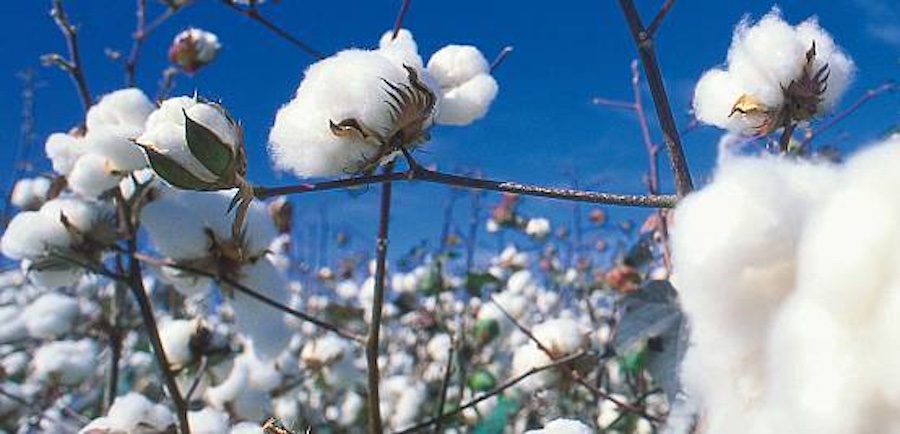
The coronavirus might have won the battle in 2020/21, driving down global cotton production to 24.2 million tonnes, a decline of 7% from the season before. But the industry is responding well and production is expected to rise by 3% in 2021/22 to reach 25 million tonnes.

Highlights from the August 2021 Cotton This Month include:

  • Global production is expected to increase by 3% to 25 million tonnes in 2021/22
  • Consumption posted a 12.4% increase to 25.5 million tonnes in 2020/21, with a similar performance expected in 2021/22
  • Concerns remain due to Covid-19's stubbornness, with threats from factory closings and logistical problems looming in Bangladesh and Vietnam


The increase will be led by:

The USA, which is projected to reach 3.8 million tonnes, up 22% from the season before,

India, whose production is expected to remain high in 2021/22 (5.9 million tonnes), and

Brazil, which hasn't publicly announced its production area and forecasts yet because sowing won't begin until November but still should reach about 2.3 million tonnes.


On the bright side, global cotton consumption and trade have seen a welcome recovery in the 2020/21 season, with consumption increasing by 12.4% to reach 25.5 million tonnes, with a similar trajectory projected for 2021/22. But Covid-19 has proven itself to be very stubborn; recent reports from Bangladesh and Vietnam indicates that Covid infections are on the rise, so lockdown-induced factory closures and shipping problems are still major threats, leaving manufacturers scrambling to fill their orders.


The Secretariat’s current price forecast of the season-average A index for 2021/22 ranges from 73 cents to 125 cents, with a midpoint at 95.43 cents per pound.

Cotton This Month is published at the beginning of the month with the Cotton Update published mid-month. The Cotton Update, which is included in the Cotton This Month subscription, is a mid-month report with updated information on supply/demand estimates and prices. The next Cotton Update will be released on 16 August 2021. The next Cotton This Month will be released on 1 September 2021.
More News from International Cotton Advisory Committee (ICAC)

#Raw Materials

Global cotton consumption to exceed production in 2026/27 as Asian demand remains resilient

Global cotton consumption is projected to exceed production in the 2026/27 season as output declines across several major producing countries while demand remains relatively stable, according to the November edition of Cotton This Month, published by the International Cotton Advisory Committee (ICAC).

#Natural Fibers

ICAC announces 84th Plenary Meeting in Egypt with focus on cotton industry resilience

Registration is now open for the International Cotton Advisory Committee’s 84th Plenary Meeting, which will take place from 24 to 26 March 2027 in Alexandria, Egypt. The conference will address climate resilience, technological developments, sustainability and competitiveness across the global cotton and textile value chain.

#Raw Materials

New Cotton Review examines competitiveness, market risk, and opportunities

From moving record volumes of Brazilian cotton to market, to managing price volatility, unlocking Ethiopia’s production potential, and strengthening African textile trade, the latest edition of Cotton: Review of the World Situation examines some of the most consequential opportunities and challenges facing the global cotton industry.

#Raw Materials

Redesigned World Cotton Day website offers tools, ideas and inspiration

With World Cotton Day just one month away, the International Cotton Advisory Committee (ICAC) has launched a completely redesigned www.WorldCottonDay.com, creating a new global home for everyone who wants to learn about, celebrate, and support cotton.

More News on Raw Materials

#Raw Materials

Cotton Brazil brings producers' perspective to EU textile sustainability debate

As the European Union develops new sustainability and circular economy policies, Brazilian cotton producers are seeking a stronger voice in the regulatory debate. From 16 to 18 November 2026, Cotton Brazil will hold a series of meetings in Brussels with European policymakers, industry representatives and agricultural stakeholders. The initiative aims to demonstrate how responsible cotton production can contribute to Europe's sustainability ambitions while ensuring that the perspectives of major producing countries are reflected in future policy frameworks.

#Natural Fibers

Better Cotton Initiative partners with FarmRaise to simplify data management for US cotton growers

The Better Cotton Initiative (BCI) has announced a partnership with agricultural technology company FarmRaise to simplify data collection, reporting and program participation for cotton growers in the United States. The digital platform will help farmers manage certification requirements, document agricultural practices and track progress towards regenerative agriculture goals while reducing administrative work. The solution is scheduled to become available in January 2027.

#Nonwovens

Lenzing invests EUR 27 million in US facility to expand specialty fibers for nonwovens

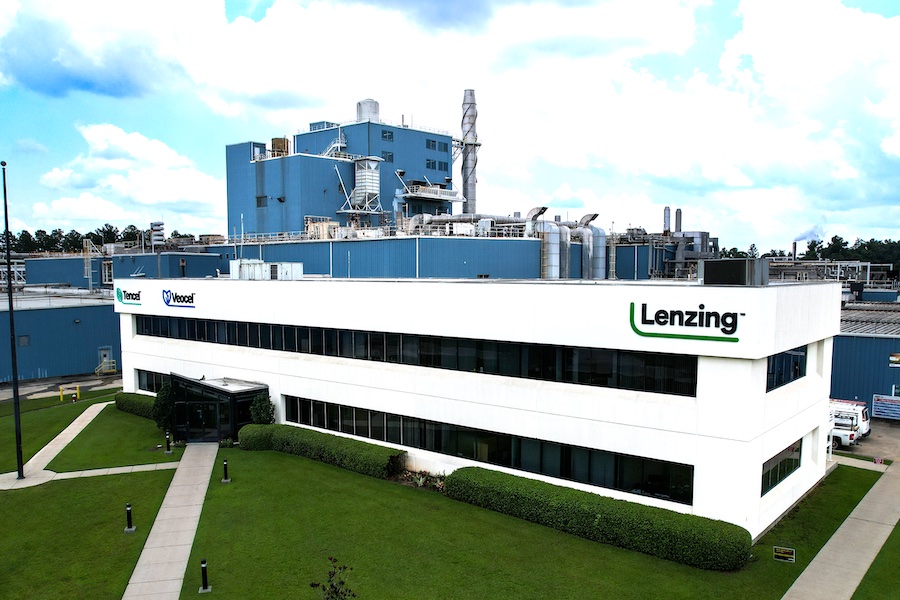
The Lenzing Group is investing EUR 27 million (USD 31 million) to expand specialty fiber production capabilities at its lyocell fiber site in Mobile, Alabama, USA. The investment forms part of the company’s “Grow NW. Reset TX.” strategy and will strengthen its global Nonwovens business, with a particular focus on short-cut fibers and customized wood-based solutions for specialty applications.

#Raw Materials

Kraig Labs ships first commercial spider silk yarn

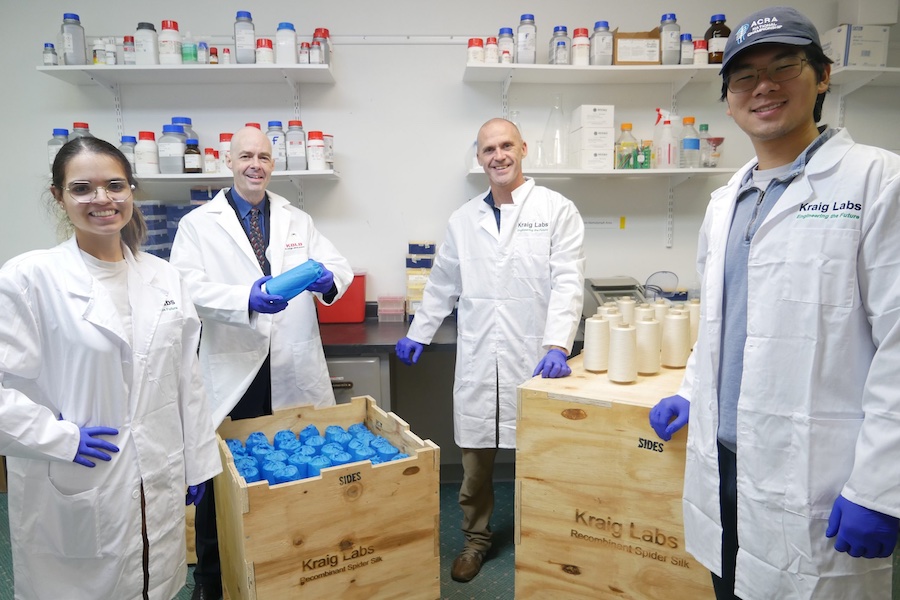
Kraig Biocraft Laboratories, Inc. (OTCQB: KBLB) (“the Company”, “Kraig Labs”, or “Kraig’s”), a world leader in spider silk technology*, today announced the shipment of its first commercial order of recombinant spider silk yarn. The custom-engineered yarn was produced to fulfill a purchase commitment from a globally recognized performance sports brand and is slated for development into a first-of-its-kind performance textile.

Latest News

#Digital Printing

From a bedroom startup to 3,000 designs: How Lonely Kids Club built its business with DTG printing

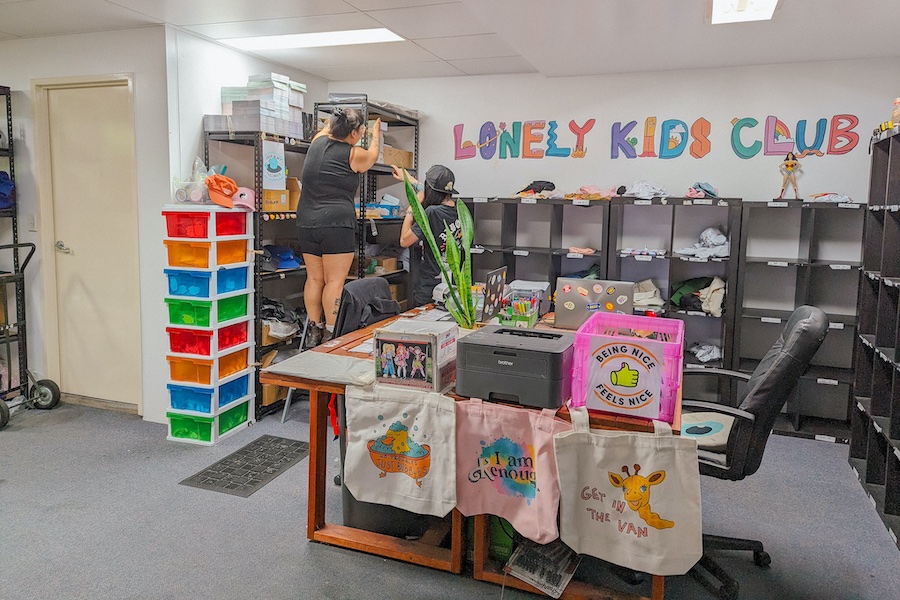
Founded in Sydney in 2011, independent clothing label Lonely Kids Club has grown from a bedroom startup into a business offering around 3,000 graphic T-shirt designs. With its own production studio, direct-to-garment printing and a demand-driven manufacturing model, the company demonstrates how smaller apparel brands can combine creative independence with flexible production – while navigating the everyday challenges of quality control, workflow efficiency and sustainability.

#Recycled Fibers

Recover and SUPIMA partner to develop recycled Pima cotton fibers and yarns

Recover and SUPIMA have partnered to turn waste from SUPIMA cotton production into a new line of recycled fibers and yarns. The collaboration will explore how recycled American-grown Pima cotton can be used in a wider range of yarns and garments for the premium market.

#India ITME 2026

India’s textile industry: Current position, growth targets and industrial development

With ambitious export targets, major investments in manufacturing infrastructure and new international trade agreements, India is pursuing a comprehensive development strategy for its textile and apparel industry. An overview of the industry’s current position, government initiatives, progress achieved and challenges ahead.

#Weaving

“A complex design is only useful if the machine can reproduce it consistently”

Andreas Schnabel, Head of R&D for Technical Weaving Systems at Stäubli, discusses how 3D weaving can create textile reinforcements tailored to the loads within a composite component, where near-net-shape weaving can reduce processing steps and material waste, and what it takes to produce complex structures reliably and economically. He also explains how manufacturers can adapt Stäubli’s modular TF weaving platforms to new applications and how the company’s centre of excellence in Bayreuth supports the transition from research to industrial production.

TOP