[pageLogInLogOut]

#Raw Materials

The Better Cotton Initiative launches in Greece

The Better Cotton Initiative (BCI) has announced that the Greek AGRO-2 Integrated Management Standards have been successfully benchmarked as equivalent to the Better Cotton Standard System.

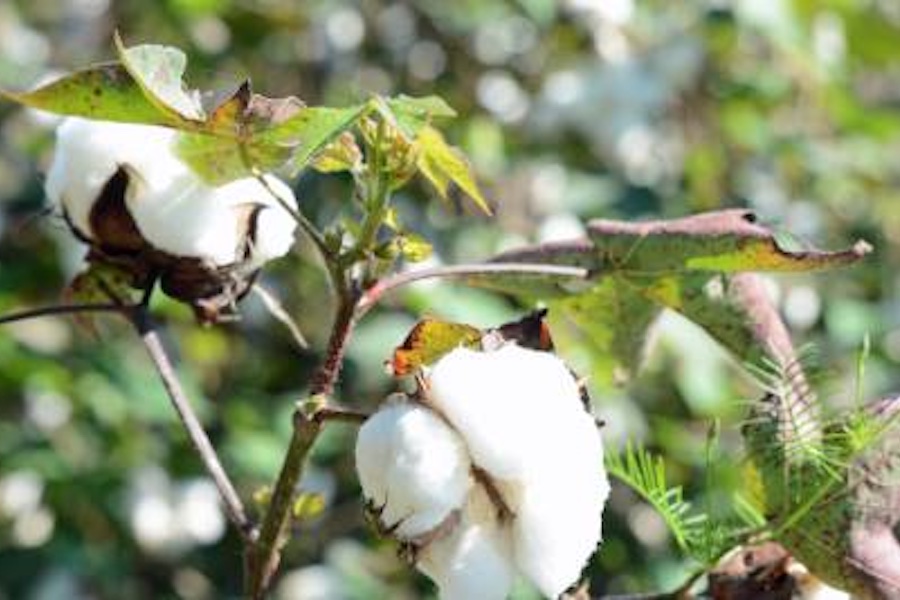
The recognition will promote more sustainable Greek cotton farming. Greece is the largest cotton-producing country in Europe, with more than 45,000 registered cotton farmers. Cotton is planted on approximately 270,000 hectares – 10% of the total agricultural land.
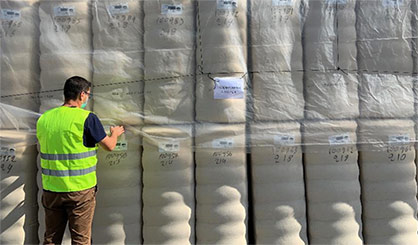
Photo: ELGO-DOV
Photo: ELGO-DOV


Farmers certified under the AGRO-2 standards who elect to participate in the BCI Programme will now be eligible to sell their cotton as Better Cotton from the 2020-21 cotton season. By the end of 2022, it is estimated that 5,000 farmers will be growing AGRO-2 licensed cotton (equivalent to Better Cotton), on 40,000 hectares, producing around 185,000 bales.

The AGRO-2 Integrated Management Standards were developed by the national Hellenic Agricultural Organisation, ELGO-DEMETER, a statutory body under the Ministry of Rural Development and Food. ELGO-DEMETER and the Inter-Branch Organization of Greek Cotton (DOV) – jointly ELGO-DOV – partnered to promote and implement the AGRO-2 standards for Greek cotton production.


“We are delighted to be working with ELGO-DOV as a strategic partner and welcome Greece as a new BCI equivalent standard. By bringing the two systems together, Greek cotton will be able to contribute to improved farmer livelihoods while increasing the profile of the country’s more sustainable cotton production.”?— Alan McClay, CEO, Better Cotton Initiative.

The benchmarking of the AGRO-2 standards to the Better Cotton Standard System is the culmination of several years of engagement and preparation. The process began in 2017 following interest expressed by Greek stakeholders.

BCI worked with IDH, the Sustainable Trade Initiative, to explore the possibility of a BCI programme in Greece. With initial funding from the Better Cotton Growth and Innovation Fund, a series of stakeholder consultations and assessments were conducted in line with BCI’s benchmarking and start-up process. After an independent comparison of the standards and a comprehensive gap analysis, a viable path towards benchmarking AGRO-2 with the Better Cotton Standard System (BCSS) was identified.

Following a thorough benchmarking review of the six components of the BCSS, modifications were made to the AGRO-2 standards to ensure alignment. Upon completion, Greece began the official BCI country start-up process, culminating in the signing of a Strategic Partnership Agreement between BCI and ELGO-DOV to recognise AGRO-2 certified cotton as equivalent to Better Cotton.

More News from TEXDATA International

#Texprocess 2026

Texprocess 2026: Automation, digitalisation and AI redefine textile processing

Making investment decisions in textile processing has become significantly more demanding. Increasing energy costs, a shortage of skilled labour and ongoing geopolitical uncertainties are compelling companies to focus on technologies that deliver clear gains in efficiency and process reliability. This applies equally to apparel manufacturing and to the processing of technical textiles and high-performance materials. As a result, modernisation initiatives are assessed more carefully – even as the need to upgrade production systems continues to intensify.

#Techtextil 2026

Techtextil 2026: Between innovation pressure & market reality

From 21 to 24 April 2026, Techtextil in Frankfurt am Main will once again become the central meeting point for the international technical textiles and nonwovens industry. Running in parallel, Texprocess will focus on the industrial implementation of textile processing technologies as the leading platform in this field. Together, the two trade fairs form a closely integrated presentation and working platform along the entire textile value chain – from material development to finished applications.

#Techtextil 2026

Between geopolitical pressure and industrial resilience

In this interview, Dr. Janpeter Horn (VDMA) discusses the current challenges facing textile machinery manufacturers, shaped by geopolitical tensions, regulatory developments and subdued investment. He also outlines why innovation strength, integrated solutions and strategic positioning remain key to global competitiveness.

#Texprocess 2026

Between investment restraint and modernization pressure

Texprocess 2026 takes place in a complex market environment shaped by uncertainty and innovation pressure. In this interview, Elgar Straub (VDMA) explains why the trade fair is particularly relevant this year and which technologies are driving efficiency and competitiveness.

More News on Raw Materials

#Raw Materials

ECCO introduces first shoe featuring innovative protein-based fibre

ECCO, in partnership with Spinnova, announces the launch of the limited edition ECCO BIOM® 720, a first-of-its-kind shoe utilising an often overlooked leather by-product, transformed into a protein-based fibre. The fibres are produced using patented technology that advances material innovation while reducing waste and supporting full resource use across the leather and textile industry.

#Raw Materials

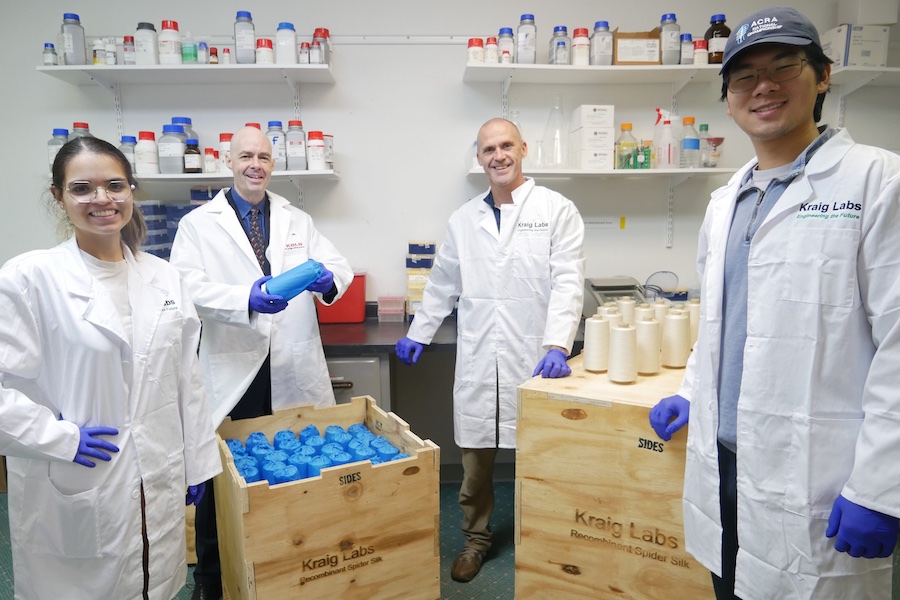
Kraig Biocraft Laboratories reports major progress converting record-setting spider silk cocoon production into reeled silk

Kraig Biocraft Laboratories, Inc. (OTCQB: KBLB) (“the Company”, “Kraig Labs”, or “Kraig’s”), a world leader in spider silk technology*, today announced significant progress in the processing of its recently produced recombinant spider silk cocoons into reeled silk.

#Textile processing

trinamiX mobile NIR spectroscopy: New applications for the footwear and textile industry

trinamiX GmbH expands its solution portfolio for the circular economy, now enabling the identification of materials used in the footwear and textile industries. With its mobile near-infrared (NIR) spectroscopy solutions, trinamiX supports manufacturers, sorters, recyclers, and brand owners in reliably identifying materials and improving transparency across increasingly complex value chains.

#Raw Materials

Fiber traceability - A vehicle to ensure sustainability or injustice?

The Bremen Cotton Exchange is making a new paper available for download. In this paper, analyst Veronica Bates Kassatly and statistician Terry Townsend examine the justifications behind this approach and assess the consequences for textile and apparel sustainability claims and global legislation.

Latest News

#Sustainability

Number of GOTS-certified facilities grow 15% globally as demand for credible sustainability standards continues to strengthen

Global Organic Textile Standard (GOTS) certification continued to grow in 2025, with nearly 18,000 certified facilities worldwide, despite ongoing geopolitical uncertainty and rapidly evolving regulatory requirements across global textile supply chains.

#Man-Made Fibers

The LYCRA Company strengthens sustainability leadership, appoints Alistair Williamson as VP of Product Sustainability

The LYCRA Company has appointed longtime executive Alistair Williamson as vice president of product sustainability, reaffirming its commitment to developing sustainable solutions for apparel and personal care products. In this role, he will guide the company’s next chapter of sustainability strategy and oversee all initiatives aimed at reducing environmental impact across products, operations, and innovation platforms.

#Sustainability

bluesign technologies introduces bluepass

bluesign technologies ag (www.bluesign.com) today announces the launch of bluepass, a new certification mark and product labeling system created to deliver clear, substantiated, and verifiable sustainability claims at scale.

#Texprocess 2026

Texprocess 2026: Style3D | ASSYST showcases AI, 3D, 2D and automation and meets strong industry response

Four days, countless discussions and a clear signal from the industry: the future of fashion is digital and AI-driven. At Texprocess 2026, Style3D | ASSYST demonstrated how AI, 3D and automation are already fundamentally transforming processes from design to production.

TOP