[pageLogInLogOut]

#Raw Materials

Cone Denim joins U.S. Cotton Trust Protocol furthering its commitment to a more sustainable and transparent cotton supply

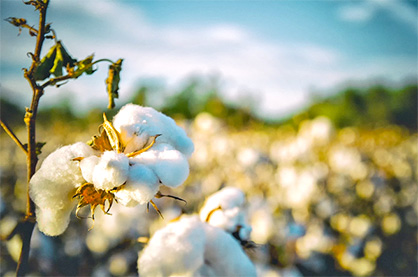
Cone Denim®, a global leader in denim authenticity and sustainable innovation, is proud to announce its membership with the U.S. Cotton Trust Protocol. Cone Denim joins as one of the first denim partners and a leading global provider of denim fabrics made from an ethically sourced and verifiable cotton supply.

Cone Denim’s participation in the U.S. Cotton Trust Protocol furthers its commitment to sustainability and transparency with continued investment in a verifiable supply chain, including Cone’s recently announced partnership with Oritain whose global technology combines forensic science and statistics to detect naturally occurring elements in the cotton itself to verify growth origin.
© 2020 Cone Denim
© 2020 Cone Denim


“As a leader in the global denim supply chain we are more committed than ever to promoting greater transparency and offering assurance to our customers and brands that Cone Denim fabrics are made with the greatest of integrity starting with cotton that is sustainably grown with lower environmental impact and greater social responsibility,” said Cone Denim President Steve Maggard. “The values and accountability of the U.S. Cotton Trust Protocol align with and complement Cone Denim’s ongoing sustainability initiatives including our pledge to the U.N.’s Sustainable Development Goals and commitment to source 80 percent verifiably sustainable cotton by 2025.”

Maggard continued, “Cone has used more than 261 million pounds of U.S. grown cotton over the last five years across our global manufacturing platform. The U.S. remains a key supply source for our cotton and the efforts and leadership of the Trust Protocol further increase the importance of cotton from this region in our journey as a responsible manufacturer and supply partner.”


As a Trust Protocol member, Cone Denim will be sourcing from participating growers and helping to drive continuous improvement among six key elements of sustainability including land use, soil carbon, water management, soil loss, greenhouse gas emissions and energy efficiency.

Mills and manufacturers who become members have access to the Trust Protocol credit system to validate consumption of cotton and associated credit. The Trust Protocol uses a combination of a unique credit accounting system and the Permanent Bale Identification (PBI) system that enables full transparency throughout the supply chain from cotton to finished product.

U.S. Cotton Trust Protocol President Dr. Gary Adams added, “One of our goals is to give brands and retailers greater confidence when including U.S. cotton in their sourcing mix. The Trust Protocol’s emphasis on measurement and independent verification can provide confidence and trust that a brand is using responsibly grown cotton and producing a product that consumers can believe in. We are delighted that Cone Denim has joined the Trust Protocol as that supports the much sought after supply chain transparency and helps us in our ambition of traceability.”



More News from TEXDATA International

#Texprocess 2026

Texprocess 2026: Automation, digitalisation and AI reshape textile processing

Investment decisions in textile processing have become increasingly complex. Rising energy prices, labour shortages and geopolitical uncertainties are forcing companies to prioritise technologies that deliver measurable improvements in efficiency and process stability. This applies not only to apparel production, but also to the processing of technical textiles and high-performance materials. Modernisation projects are therefore being evaluated more selectively – but the pressure to upgrade production systems continues to grow. Texprocess 2026 reflects this tension between cautious investment behaviour and increasing technological demand.

#Techtextil 2026

Textile Chemicals & Dyes: Innovation in Textile Chemistry moves into focus at Techtextil 2026

From PFAS-free finishes and water-saving dyeing technologies to advanced coatings and recycling-compatible formulations, innovation in textile chemistry is accelerating across the industry. Reflecting this development, Techtextil 2026 introduces Textile Chemicals & Dyes as a dedicated product segment, highlighting the growing role of chemical solutions in shaping the next generation of technical textiles.

#Recycling / Circular Economy

textile.4U publishes special edition “Top 100 Textile Recycling Companies 2025”

With a comprehensive 176-page special edition, textile.4U is dedicating its latest issue entirely to one of the most dynamic and influential topics in today’s textile industry: textile recycling. The new issue, published exclusively in high-quality print, presents the Top 100 textile recycling companies researched and selected by TexData – organizations that already play a key role in the transition to circular textiles or are expected to have a significant impact in the near future.

#Recycling / Circular Economy

Responsible Textile Recovery Act of 2024 signed by Governor

Senator Josh Newman (D-Fullerton) is proud to announce that Senate Bill 707 (SB 707), the Responsible Textile Recovery Act of 2024, has been signed into law by the Governor of California, Gavin Newsom. This groundbreaking legislation establishes the country’s first Extended Producer Responsibility (EPR) textile recycling program, marking a significant step forward in the state’s efforts to combat waste and promote sustainability.

More News on Raw Materials

#Raw Materials

A Powerful Opening: Global thought leaders launch the International Cotton Conference Bremen

The International Cotton Conference Bremen will open on 25 March 2026 in the Parliament building of the Free Hanseatic City of Bremen with a keynote session of exceptional calibre. Distinguished international experts will set the stage for the conference by offering incisive perspectives on the most pressing challenges and the defining trends shaping the future of the global cotton trade. Their insights will span a broad spectrum — from geopolitically driven disruptions affecting global supply chains to the opportunities emerging from innovation-led agriculture capable of supporting a growing world population. Together, these opening keynotes will frame the dialogue of the conference, highlighting both the complexity of today’s market environment and the pathways toward a resilient and forward-looking cotton sector.

#Raw Materials

Lenzing Group positions bio‑based materials as a strategic asset for Europe’s economic security

The Lenzing Group, a leading supplier of regenerated cellulose fibers for the textile and nonwovens industries, hosted a high‑level roundtable in Brussels to discuss how bio‑based materials can strengthen Europe’s economic security and support the shift toward a fossil‑free future. Organized in cooperation with Euractiv, the event brought together representatives of the European Commission, the UK Mission to the EU, academia, civil society, and industry.

#Natural Fibers

Beyond Cotton: Natural Fibres in the Spotlight at the Bremen Cotton Conference - Branded by DNFI

Climate targets, fragile supply chains, and rising regulatory requirements are fundamentally changing the perspective of the textile industry - the focus is increasingly shifting toward the base material. Not only cotton, but natural fibres are gaining significant importance: they stand out not only because of their outstanding functional properties, but also because they make a valuable contribution to the bioeconomy and responsible product development.

#Raw Materials

International Women’s Day: Cotton made in Africa strengthens equality for women through targeted investments

On the occasion of International Women’s Day—which will be observed on 8 March under the motto “Rights. Justice. Action. For ALL Women and Girls”—the Aid by Trade Foundation (AbTF), which is responsible for Cotton made in Africa® (CmiA), underlines its long-standing and ongoing commitment to the equality of women in African cotton production areas.

Latest News

#Europe

Commission presents proposal for EU Inc. - unlocking the full potential of the Single Market for Europe's entrepreneurs

Today, the European Commission presented its proposal for EU Inc., a new single set of corporate rules, building the cornerstone and starting point for the EU's 28th regime. EU Inc. is an optional, digital-by-default European corporate framework. It will make it easier for businesses to start, operate and grow across the EU – incentivising them to stay in Europe, and encourage those who once looked elsewhere to return.

#Man-Made Fibers

OnceMore® from Södra brings end-to-end traceability for circular Man-made Cellulosic Fibers (MMCF) using TextileGenesis

OnceMore® from Södra, the world’s first large-scale process for recycling blended fabrics into high‐quality dissolving pulp, will begin using TextileGenesis, a Lectra company, to strengthen traceability from raw material to retail across the value chain. OnceMore® produces dissolving pulp made from blended textile waste and wood sourced from responsibly managed Swedish forests. By integrating TextileGenesis, OnceMore® supports the growing need for verified data and secure, transparent tracking throughout increasingly complex supply chain.

#Sustainability

Experts publish APAC policy priorities

Cascale today announced the publication of its APAC Policy Priorities Paper, developed by the Asia-Pacific (APAC) Policy Member Expert Team (MET) to identify key regional sustainability challenges and provide practical, aligned recommendations for policymakers and industry stakeholders across Asia-Pacific.

#Spinning

Temco launches a new DTY all-in-one solution

Temco introduces the DTY All-in-One Solution – a fully harmonized set of components engineered to give customers a highly stable, low maintenance and reproducible process environment. The solution reduces interruptions, extends component lifetimes and supports consistent yarn quality across all machine positions. All-in-One Solution – a fully harmonized set of components engineered to provide maintenance and reproducible process environment.

TOP