[pageLogInLogOut]

#Raw Materials

A sustainable supply chain, from the ground up: a case study of CCI

Cotton Council International (CCI) is a global non-profit organisation, which promotes US cotton using their COTTON USA™ brand. While they have participated at previous editions of Intertextile, in 2019 they took part in Yarn Expo for the first time. Messe Frankfurt had a chance to sit down with Ms Karin Malmström, Director of CCI China & Northeast Asia, to discuss the benefits of using a sustainable raw material throughout the entire supply chain.

Messe Frankfurt: Thank you for meeting with us, Ms Malmström! Could you tell us more about what Cotton Council International represents?

Ms Karin Malmström: CCI’s main purpose is to promote the US cotton industry to overseas markets – like a matchmaking service. The US cotton industry is really one entity, because it is so strictly governed by the United States Department of Agriculture. We have 18,500 different farmers but only one set of standards for the whole country. This helps to set a benchmark for the best practices in sustainable cotton growth. Any of our farmers can be audited at any time, and if they don’t pass, they can’t sell their cotton, so the quality of US cotton is ensured and completely traceable.

MF: What made you decide to join Yarn Expo Spring this year?

KM: We want to share our sustainability efforts with people, so we are exhibiting at Yarn Expo because it’s the beginning of the supply chain. If you don’t get it right at the beginning, you’ll never get it right at the end. Your finished product is as good as the material you put into it. It’s that simple! We really start from the ground up. We have been working with Field to Market, who are a neutral third party, to measure our sustainability efforts over the last 35 years. Finally the results are out, and the US cotton industry has reduced its water usage by 82% and soil loss by 44%, which is amazing. We have goals to keep reducing environmental impact, and we use technology to achieve this. Some of our farmers use sensors, drones – all the equipment in the tool box.

One exciting thing we’ve just established this year is the US Cotton Trust Protocol, which will be our signature sustainability programme from now on. We’re here to give people a preview – it’s ready to roll out officially next year, in 2020. It’s a stringent system of checks and balances; independently, we can trace and test every single bale. In terms of environmental impact, this system makes sure that every bale of US cotton is traceable, transparent and measurable.

MF: And what kind of response have you had throughout the supply chain?

KM: Our partners are hearing clear messages from their customers. They are demanding traceability. So the beautiful advantage of using traceable cotton is that it’s easier for the brands and retailers to do their due diligence, by starting right from the origin. It also makes sense for business. You can reduce your costs when cotton is contamination-free, because the running is smoother, there’s less breakage; it really makes a difference at every single stage. We have the technical expertise now to help mills upgrade and improve their capabilities. So that’s really exciting now. And of course, at the end of the day, having a higher quality product means you can command a higher premium at retail. Everybody benefits, throughout the whole supply chain.


MF: Could you tell us more about consumers who look out for high-quality materials?

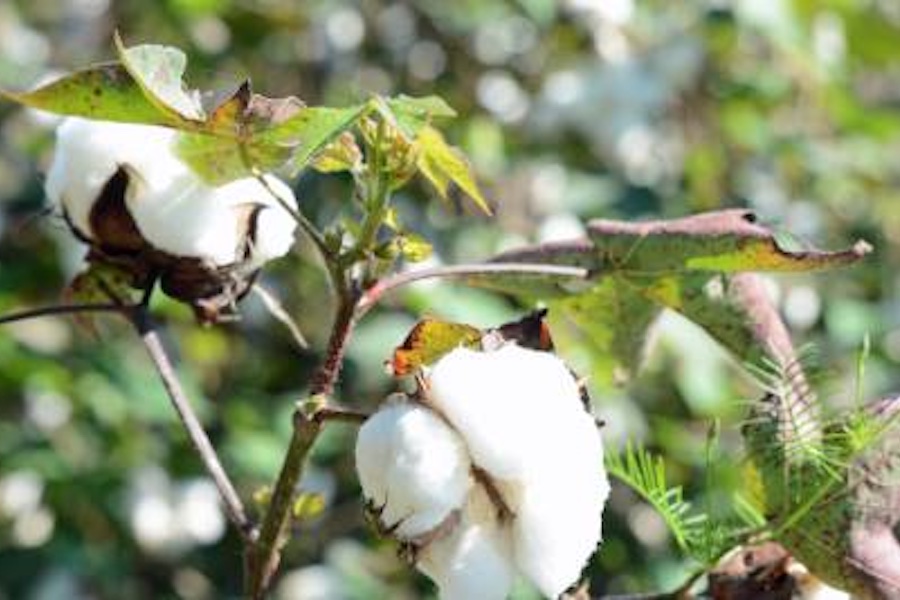
KM: There is more awareness of the environmental damage caused by microfibres. The world is overproducing synthetics, and only a tiny fraction is recycled. The rest ends up in landfill, or is burned, or contributes to plastic pollution in the oceans just through laundry alone. Cotton presents a naturally biodegradable alternative that can be produced with renewable energy.

People are consciously shopping and impulse-buying is declining, depending on demographics. Millennials in particular are really starting to see fast fashion, especially if synthetic, as completely unsustainable. They are becoming more interested in higher quality products that last longer and are more environmentally-friendly – and they are willing to pay more and proudly wear it often, like a statement. It’s the opposite of a trend. It’s a conscious lifestyle choice.

MF: Earlier you described your role as a matchmaker. What do you think is the key to building partnerships, and does exhibiting at Yarn Expo help?

KM: CCI has had very good response both here at Yarn Expo and at Intertextile. We don’t just sit at our booth, we have team members going out to connect with fellow exhibitors and look for potential partners – maybe we can help them to improve their business and upgrade their products. We can also connect with our existing accounts at this fair, because we always have new industry updates to offer.

Building partnerships is really about sharing industry intelligence, and we are a valuable source of information that covers the entire supply chain across the world. We feel very confident about our partnerships in China, because over many years we’ve built great relationships face-to-face. This is key to doing business in China, and you can do that here.

MF: It’s great to see passion for sustainability in the industry. Thank you for taking the time to speak to us!

Yarn Expo overview

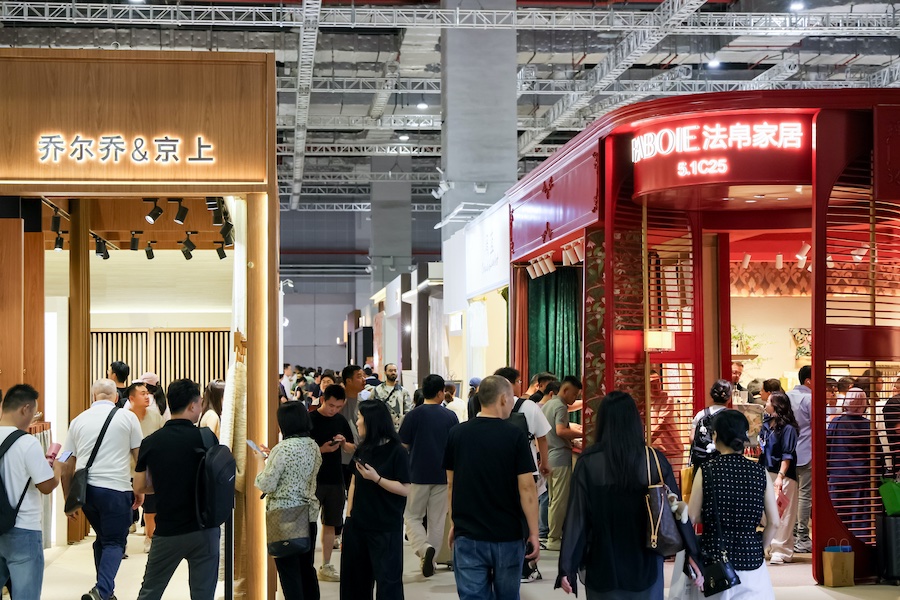
Yarn Expo Spring 2019 was held concurrently with Intertextile Shanghai Apparel Fabrics – Spring Edition, Intertextile Shanghai Home Textiles – Spring Edition, PH Value and the China International Fashion Fair (CHIC) from 12 – 14 March 2019, and featured 468 exhibitors and 28,302 trade buyers. The fair is organised by Messe Frankfurt (HK) Ltd and the Sub-Council of Textile Industry, CCPIT.

The next edition of Yarn Expo Autumn will take place from 25 – 27 September 2019, once again at the National Exhibition and Convention Center (Shanghai).

More News from Messe Frankfurt (HK) Ltd.

#Textiles & Apparel / Garment

Pets in fashion: functional and sustainable textiles find new market at Intertextile Apparel

China’s pet economy is booming, especially amongst younger generations, and pet apparel – from designer outfits to functional garments – was a RMB 3.5 billion (over USD 500 million) market in 2024, growing more than 20% annually¹. To help exhibitors harness this trend, Intertextile Shanghai Apparel Fabrics – Spring Edition 2026 will launch the Pet Boutique, presenting a range of innovative, sustainable materials that prioritise both functionality and comfort for pets.

#Home Textiles

‘Crucial for sourcing’ why buyers plan to return for Intertextile Shanghai Home Textiles – Spring Edition 2026

From 11 – 13 March 2026, Intertextile Shanghai Home Textiles – Spring Edition will return to National Exhibition and Convention Center, with a strong lineup of exhibitors set to present new products and collections. As one of the region’s key platforms for home textile trade, the fair attracts numerous buyers each spring who rely on the show to refresh assortments across contract spaces and every corner of the home, from bedroom and bathroom to living, dining, and outdoor.

#Technical Textiles

Cinte Techtextil China 2026: redefining business encounters for trending sub-sectors and cutting-edge technologies

The essence of a good trade fair is to create chance encounters to deliver tangible business value to its participants. Driven to stay ahead, Cinte Techtextil China is constantly seeking fresh strategies to keep the industry attuned to emerging trends, pinpointing high-potential segments for technical textiles and nonwovens. With a new zone and upgraded fringe events introduced, the last edition saw an impressive 17% increase in visiting numbers[1], and this year’s fair is set to leverage that success from 1 to 3 September at the Shanghai New International Expo Centre.

#Exhibitions & Events

Yarn Expo Spring 2026 to spotlight synthetic yarn innovation and eco-friendly yarn and fibre trends

The global synthetic yarn market is projected to reach USD 287 billion by 2030, growing at a CAGR of 4% from 2024 to 2030[1]. This growth is driven by synthetic yarn’s dominant position in the global textile industry, supported by its cost-effectiveness and unmatched functional versatility across end-use sectors. Demand remains strong for sustainable and high-performance fibres for sportswear, medical textiles, and home furnishings, many of which will be on show at Yarn Expo Spring 2026.

More News on Raw Materials

#Man-Made Fibers

Lenzing AG to become majority owner of TreeToTextile AB and accelerates industrialization of new fibers

The Lenzing Group is taking another strategic milestone by acquiring a controlling majority in the Swedish innovation company TreeToTextile AB. This step strengthens Lenzing’s position as a leading provider of sustainable, wood‑based specialty fibers and expands its innovation pipeline with a highly scalable, patent‑protected technology platform. The transaction is executed through the issuance of new shares.

#Raw Materials

Better Cotton Initiative marks certification anniversary with progress update and accreditation

One year since becoming a certification scheme, the Better Cotton Initiative (BCI) has announced that more than 3,000 supply chain actors have been certified. At farm level, more than 30% of farms and producer units supplying BCI Cotton have received a positive audit outcome.

#Raw Materials

Cotton Incorporated appoints Bev Sylvester as Chief Marketing Officer

Cotton Incorporated announces the appointment of Bev Sylvester as chief marketing officer. In this newly created role, Sylvester will oversee Cotton Incorporated’s marketing strategy, brand positioning, consumer engagement and global outreach to increase demand for cotton and strengthen its relevance in the marketplace.

#Sustainability

OEKO-TEX® chooses TextileGenesis to advance digital traceability for organic cotton

OEKO-TEX® today announced a full collaboration with TextileGenesis, a Lectra company, to digitally trace and authenticate organic cotton, strengthening fraud prevention across the supply chain. This announcement follows a successful pilot and brings together OEKO-TEX®’s certification expertise and closed testing system with TextileGenesis’ digital traceability platform to deliver a secure, end-to-end solution for managing certified organic cotton flows.

Latest News

#Functional Fabrics

“Action helps us change what we do!”

DAY 0 takes place deliberately before PERFORMANCE DAYS begins. It is conceived as a space for reflection, dialogue and active engagement — a moment to pause before the fair, rethink established systems and address sustainability not as a trend, but as a fundamental transformation challenge. Under the guiding metaphor “Turn the Tap Off”, DAY 0 focuses on root causes rather than symptoms, systemic change rather than isolated solutions, and collective responsibility rather than individual silos.

#Sustainability

VAUDE eliminates PFAS from all products

PFAS (per- and polyfluoroalkyl substances) are now detectable worldwide – in drinking water, soil and the human body. These so-called “forever chemicals” are considered hazardous to health and potentially carcinogenic, as they do not break down and remain in the environment permanently. Despite these risks, PFAS are still used in a wide range of products. More than 15 years ago, VAUDE made a strategic decision to gradually eliminate PFAS from all product categories.

#Composites

Alliance for European Flax-Linen & Hemp expands bio-materials presence at JEC World 2026

The Alliance for European Flax-Linen & Hemp is pleased to announce its participation at JEC World 2026, featuring a significantly expanded presence and an enhanced offering for the global composites industry.

#Europe

FITA, ABIT and EURATEX underline strategic importance of Mercosur – EU Partnership Agreement for the textile and apparel industry

The Argentine Textile Industry Federation (FITA), the Brazilian Textile and Apparel Industry Association (ABIT), and the European Apparel and Textile Confederation (EURATEX) continue to monitor the process of internalizing the Mercosur-European Union Partnership Agreement. This agreement is essential for the competitiveness of our industries, on both sides of the Atlantic.

TOP