[pageLogInLogOut]

#Spinning

India: Growing interest in Oerlikon Barmag industrial yarn systems
As a traditional textile country, India has also established a strong position in the field of manmade fiber production in recent decades. The West Asian country has now become the second largest polyester yarn manufacturer in the world. The Indian textile industry covers the entire value chain from the melt to the finished textile end product.
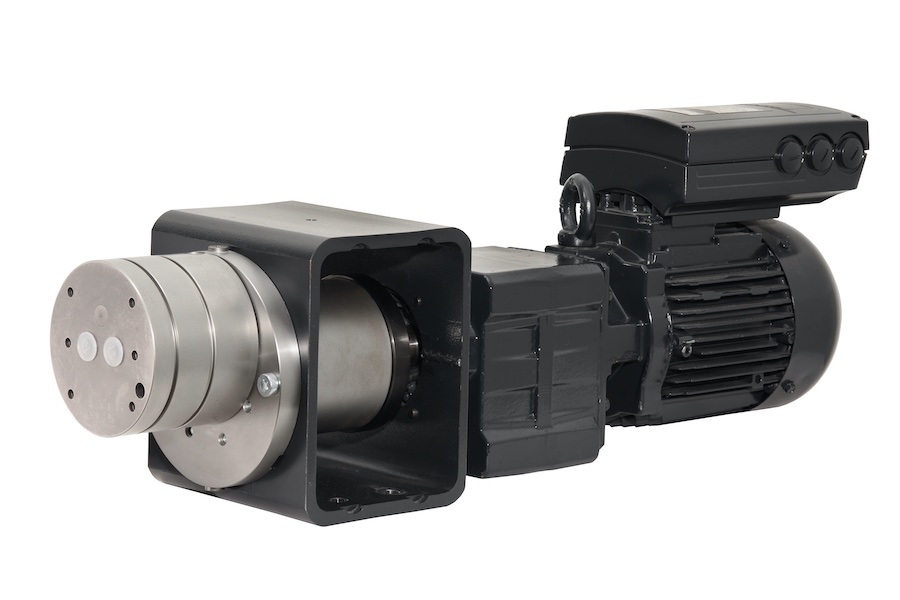
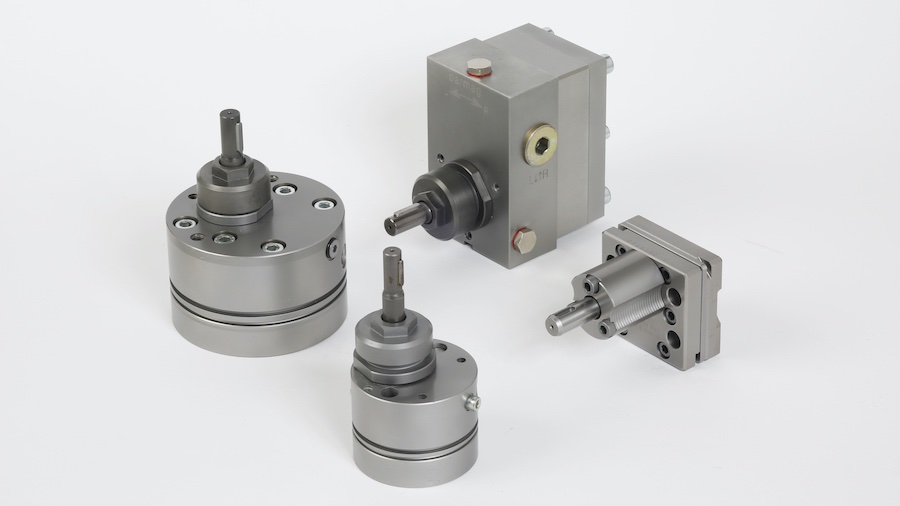
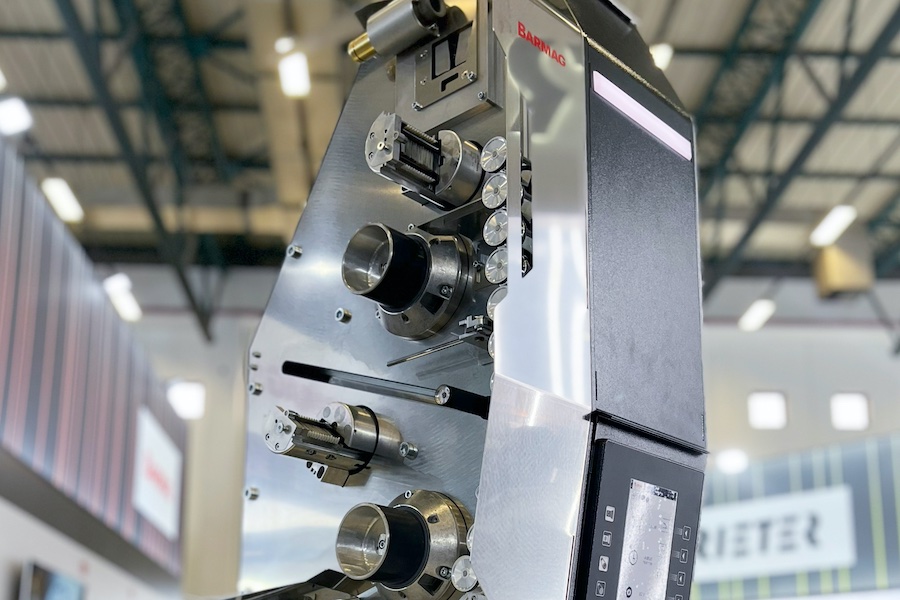
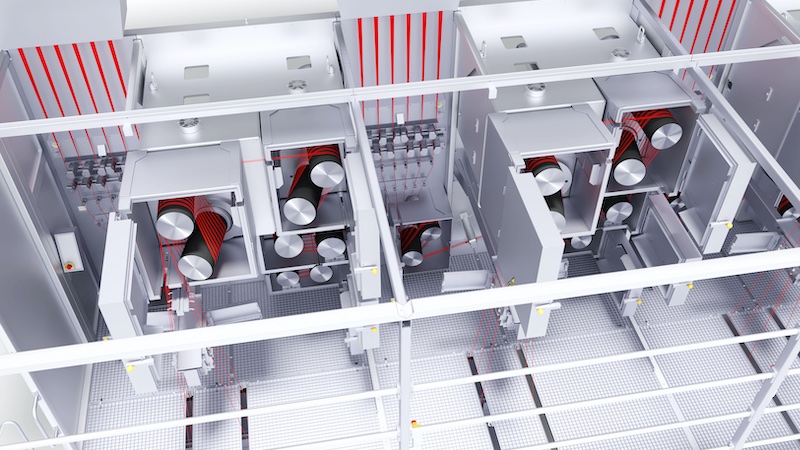
Oerlikon Barmag supplies its industrial yarn systems individually configured; the system concept for High Tenacity (HT) yarns and its unique properties on the market ensure the production of high-quality yarn for the manufacture of seat belts  © 2024 Oerlikon
Oerlikon Barmag supplies its industrial yarn systems individually configured; the system concept for High Tenacity (HT) yarns and its unique properties on the market ensure the production of high-quality yarn for the manufacture of seat belts © 2024 Oerlikon


Technical textiles on the rise

The technical textiles sector in particular is regarded as a future market. With an average growth rate of 12% since 2013, this dynamic sector accounts for around 13% of the entire Indian textile and clothing market, according to the government organization Invest India. The market volume has almost doubled in the past ten years. In India, the production of industrial yarn has so far relied heavily on polyamide. Oerlikon Barmag has a strong market position here. "In recent years, we have commissioned plants for numerous customers," says Dr. Wolfgang Ernst, Head of Sales of the Oerlikon Business Unit Manmade Fibers Solutions.

Increasing demand for industrial polyester yarns

The construction boom and the increasing use of geotextiles and industrial textiles in various infrastructure projects as well as in agriculture and aquaculture show enormous growth potential. This is supported by the government's 2021 industrial development program, which includes technical textiles as one of ten priority sectors. The program is based on reducing dependence on imports. Until now, a large proportion of the technical textiles and yarns required in the country have been imported. 

The trend towards high-quality technical textiles for the domestic market has also been noted by the Remscheid-based machine and plant manufacturer. "We are receiving more and more inquiries from Indian customers for spinning systems for industrial yarns," says Dr. Wolfgang Ernst. "What is new is the great interest shown by companies from downstream processes that are looking for backward integration. We attribute this to the stricter regulations of the Bureau of Indian Standards. Until now, industrial yarns were mainly imported from China. In order to guarantee the quality of the processed yarns, this has been strictly regulated by the government since last year. It therefore makes sense for Indian textile producers to enter the yarn manufacturing sector." This development was also noticeable at this year's Techtextil in Frankfurt, where the experts from Oerlikon Barmag were able to hold a disproportionately high number of technical discussions with Indian customers and interested parties. 

Oerlikon Barmag's industrial yarn technology offers an extensive process window - without compromising on yarn quality. The flexible spinning concepts enable a variety of possible yarn products for numerous applications. The portfolio includes processes for the production of polyamide and polyester yarns with the required physical properties for a wide range of end applications. Whether HMLS yarns for car tires, yarns for geotextiles, safety belts or even airbags - yarn producers will find a tailor-made concept for every end application at the Remscheid-based solution provider.

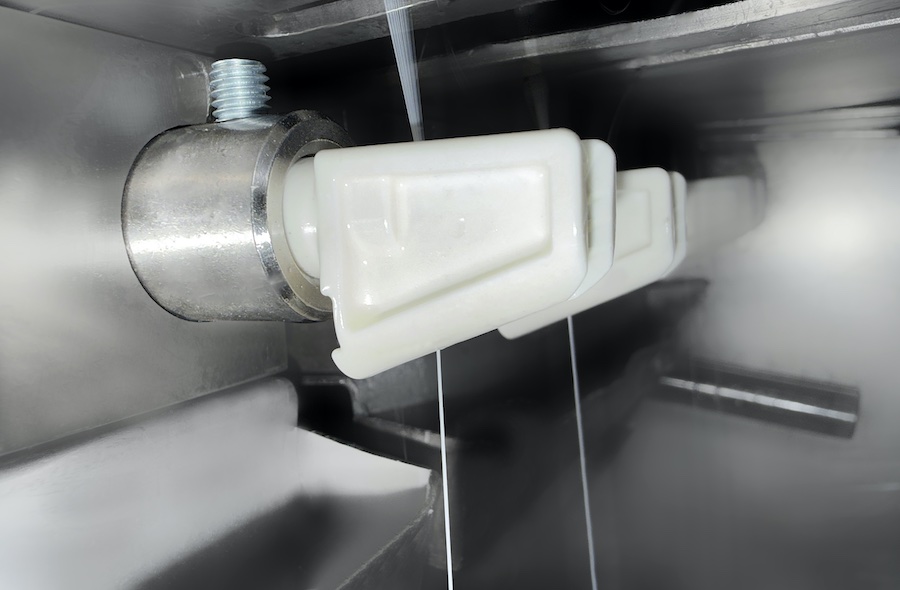
Seat belts need high-quality yarns  © 2024 Oerlikon
Seat belts need high-quality yarns © 2024 Oerlikon


More News from Barmag GmbH & Co. KG

#Nonwovens / Technical Textiles

Crimper repair workshop begins operations

Since the beginning of the year, Oerlikon Textile Inc. has been offering a crimper repair service, making it the company's first location worldwide to do so. The workshop in Charlotte specializes primarily in Fleissner and Neumag crimpers.

#Spinning

Oerlikon Manmade Fibers Solutions hosted successful Technology Day 2025 in India

Oerlikon Manmade Fibers Solutions recently hosted its highly anticipated Innovation and Technology Day at the Deltin Hotel in Daman by end of January 2025. The event attracted over 300 participants, including industry experts, partners, and stakeholders, who gathered to explore the latest advancements and trends in the manmade fibers industry in India.

#Spinning

Industrial yarn producer sees growth potential in tire cord sector

The Chinese Junma Group has expanded its HMLS capacities by 20 positions, hence becoming one of the largest tire cord manufacturers in China. At present, the company has 64 positions of HMLS systems, all of which are from Oerlikon Barmag.

#Spinning

Oerlikon reports third quarter 2024 results, highlights strong execution in a challenging market landscape

In the third quarter of 2024, Oerlikon reported a stable operational Group EBITDA margin, despite challenging market conditions, thanks to a focus on pricing, cost management, and efficiency across both divisions. Group order intake saw a 4% year-over-year decline at constant FX, attributed to temporary market softness in Surface Solutions, while orders in Polymer Processing Solutions showed signs of stabilization.

More News on Spinning

#ITM 2026

Marzoli promotes ‘Don’t Replace, Repower’ approach at ITM 2026

At ITM 2026 in Istanbul, Marzoli will place a strong focus on spinning mill modernization, presenting retrofitting and reengineering solutions designed to improve efficiency, extend machine lifetime and maximize the value of existing assets.

#ITM 2026

Trützschler’s Integrated Draw Frame IDF 3: Unlocking the full potential of short fiber processing

Spinning mills worldwide are looking for solutions that combine higher productivity, stable quality and shorter processes, especially when processing short fibers. Trützschler’s integrated draw frame IDF 3 has proven to be a powerful answer to these requirements. Evaluations from several customer trials in Türkiye under real production conditions highlight the strong performance of the IDF 3, particularly when combined with the next-generation card TC 30i.

#ITM 2026

Uster FiberQ excels for recycled raw materials too

Uster FiberQ is a complete solution for raw material utilization, supporting spinners to achieve consistent quality and profitability every day, building further growth for the future. The Turkish company ORTA relies on FiberQ with recycled yarn for its denim production. Data-driven knowledge puts the producer in control of raw material utilization – ready to make the correct decisions for process efficiency, quality and productivity.

#ITM 2026

EVENEXT & BURSTMATIC II to headline Mesdan S.p.A. presentation at ITM 2026

MESDAN S.p.A. will once again participate in ITM 2026, Turkey’s most important textile trade fair. The Italy-based leading manufacturer of yarn joining solutions and textile testing equipment,will be exhibiting at the booth of their local agent for the spinning, SARTEKS MAKINA at Hall 7, Stand 701A.

Latest News

#Knitting & Hosiery

TM WEFT, 270" – More width, more design freedom for the fashion world

KARL MAYER is expanding its successful TM WEFT series with an innovative model that opens up new possibilities, particularly in the fashion & apparel sectors. With a working width of 270", this new machine with weft-insertion not only offers significantly higher output than its narrower counterparts but is also specifically tailored to the demands of dynamic clothing market – particularly in China and Türkiye. A well-thought-out upgrade also ensures even greater design versatility.

#Research & Development

“Production is a product”

From technical textiles and AI-driven robotics to the limitations of textile circularity: Professor Dr Thomas Gries looks back on more than two decades of development at ITA Aachen. In the interview, he explains why production technology remains a decisive success factor, discusses international collaborations and innovation ecosystems, and shares his views on the transformation of production landscapes and the challenges facing an increasingly regulated industry.

#Knitting & Hosiery

“We need to move away from the price trap and return to a value-driven mindset.”

With its new Textile Innovation Center, KARL MAYER is sending a strong signal for innovation, collaboration, and the future of textile applications. In this interview, Karl Josef Mayer discusses new opportunities in warp knitting, the processing of staple fibres, recycling, the changing role of machinery manufacturers, and why the textile industry must once again focus more strongly on the value of textiles. by Oliver Schmidt

#Associations

“Innovation, resilience and international experience remain the great strengths of the Swiss textile machinery industry”

Geopolitical uncertainty, growing competitive pressure from China, new free trade agreements and the shift towards a circular economy are currently reshaping the global textile industry. In this interview, Cornelia Buchwalder discusses the current mood within the Swiss textile machinery sector, the industry’s distinctive innovative strength, new market opportunities in India and Asia, and the technological trends that could shape the upcoming trade fair cycle leading up to ITMA 2027.

TOP