[pageLogInLogOut]

#Nonwovens / Technical Textiles

Livinguard optimizes its own, self-disinfecting technology and develops first permanent, biocide-free technology platform

Swiss hygiene company Livinguard’s patented technology has been proven to continuously destroy 99.9 percent of pathogens (microbes) such as viruses and bacteria. These include influenza and yellow fever viruses, SARS-CoV (including the coronavirus SARS- CoV-2 and various variants of the corona virus), tuberculosis and E. coli, staphylococci and salmonella.

Livinguard’s novel and optimized technology is based on the principle of physical disinfection: Surfaces are given permanent positive charges that attract negatively charged microbes and damage their cell walls, rendering them harmless to humans. Products equipped with this technology can be reused over long periods of time and are therefore significantly more sustainable than disposable products. For this reason, Livinguard received the “Sustainability Product of the Year” award this fall.

The company has now made significant improvements and optimizations to this already proven and effective Livinguard technology. As part of the “Restart” congress (Sept. 15 and 16, 2021, Berlin), the company presented the world’s first permanent biocide-free disinfection. This new method is based on the existing, patent-protected active principles of positively charged surfaces. In addition, the technology has a permanent self-disinfecting effect. Livinguard can use various processes to apply the technology to many different materials (including textiles, plastics and paper). Thanks to this permanent self-disinfection efficacy and the wide range of possible applications, this new development represents a groundbreaking innovation in the field of hygiene and is another important step towards sustainability.

Sanjeev Swamy, CEO and founder of Livinguard, comments: “Our ultimate goal is to develop methods that make our products reusable and therefore sustainable. The advanced technology is a milestone in the history of hygiene, especially for the medical field. Our goal is to protect the health and well-being of people and the planet with the world’s first permanent disinfection technology. The vast majority of self-disinfecting hygiene products and solutions currently on the market use potentially harmful metals such as copper, silver or zinc. With our new biocide-free disinfection, we not only surpass the effectiveness of all previous conventional technologies, but also doing a giant step towards a more sustainable lifestyle.”

The biocide-free Livinguard technology, which is now being presented for the first time, is safe for humans due to its electric charge-based mode of operation and thus represents an excellent environmentally friendly and resource-saving alternative to conventional disinfection methods. Scientific tests, presented at the congress, show that the antimicrobial properties bind to the carrier material and thus do not lose their effectiveness due to the passage of time or other influences (e.g. washing). Another advantage: Because Livinguard technology is based on a mechanical principle of action, the formation of resistance is extremely unlikely – an issue that traditional disinfection methods based on chemical solutions in particular struggle with.


The effectiveness of the underlying biocide-free technology was assessed by Dr. Torsten Koburger- Janssen (Hygiene Nord GmbH, Greifswald). In his study, he was able to demonstrate that the total germ count on textiles treated with Livinguard technology was significantly lower after 48 hours than on untreated fabrics. Even though germ growth was not completely prevented, this factor was also significantly lower than in the untreated comparison group. In addition, the promised odor reduction on textiles was confirmed by test persons, without this having been an explicit question of this total germ count study.
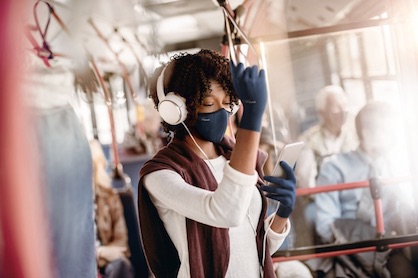
Face mask and gloves with Livinguard technology (c) 2021 Livinguard


Livinguard technology is used in a wide range of applications, including the medical sector and various industries. Currently, Livinguard technology can be applied to face masks, personal and professional apparel, home textiles, hygiene products, computer hardware such as keyboards, and air and water filters. In the future, many more applications are conceivable, and Livinguard is currently working on them.
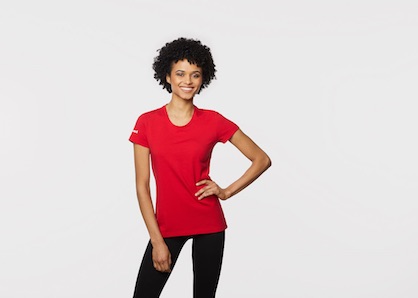

T-Shirt with Livinguard technology (c) 2021 Livinguard


More News from TEXDATA International

#ITM 2026

ITM 2026: The new geography of textile production

New production hubs are emerging across North Africa and Central Asia, while Türkiye is accelerating its transformation toward higher-value, technology-driven and more sustainable textile manufacturing.

#Research & Development

“Production is a product”

From technical textiles and AI-driven robotics to the limitations of textile circularity: Professor Dr Thomas Gries looks back on more than two decades of development at ITA Aachen. In the interview, he explains why production technology remains a decisive success factor, discusses international collaborations and innovation ecosystems, and shares his views on the transformation of production landscapes and the challenges facing an increasingly regulated industry.

#Knitting & Hosiery

“We need to move away from the price trap and return to a value-driven mindset.”

With its new Textile Innovation Center, KARL MAYER is sending a strong signal for innovation, collaboration, and the future of textile applications. In this interview, Karl Josef Mayer discusses new opportunities in warp knitting, the processing of staple fibres, recycling, the changing role of machinery manufacturers, and why the textile industry must once again focus more strongly on the value of textiles. by Oliver Schmidt

#Associations

“Innovation, resilience and international experience remain the great strengths of the Swiss textile machinery industry”

Geopolitical uncertainty, growing competitive pressure from China, new free trade agreements and the shift towards a circular economy are currently reshaping the global textile industry. In this interview, Cornelia Buchwalder discusses the current mood within the Swiss textile machinery sector, the industry’s distinctive innovative strength, new market opportunities in India and Asia, and the technological trends that could shape the upcoming trade fair cycle leading up to ITMA 2027.

More News on Nonwovens / Technical Textiles

#ITMA Asia + CITME Singapore 2025

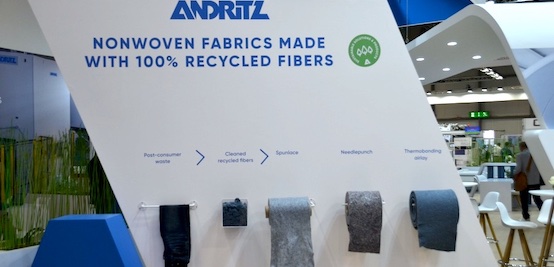
ANDRITZ sets focus on textile recycling and durable nonwoven production technologies at ITMA Asia 2025

International technology Group ANDRITZ will be presenting its innovative nonwovens production and textile solutions at ITMA ASIA + CITME 2025 in Singapore, from October 28 to 31, 2025 (Hall 2, D106). ANDRITZ will showcase its MMCF production plants, textile sorting and recycling, bast fiber processing, needlepunch, airlay, and life-cycle service technologies, with a focus on sustainable solutions. Discover how these innovations can grow your business opportunities and support a greener future.

#ITMA Asia + CITME Singapore 2025

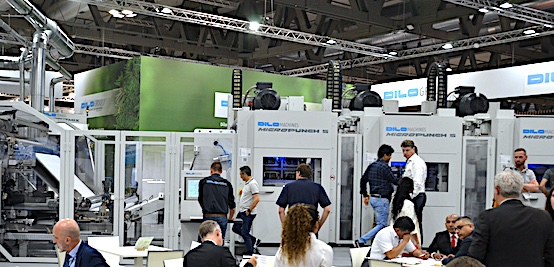
Dilo Group at ITMA ASIA Singapore 2025

At ITMA ASIA Singapore, the Dilo Group will exhibit at Booth No. H2 – D202. Together with Kansan Materials, Izmir, the company will present its latest developments and looks forward to welcoming visitors to exchange ideas and explore innovations in needling technology.

#Nonwovens

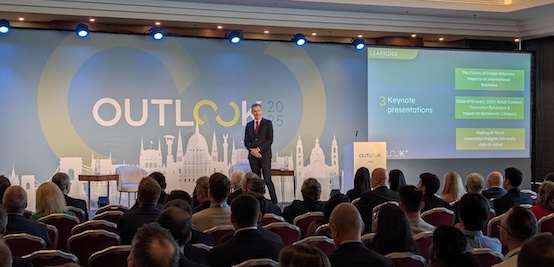
OUTLOOK™ 2025: Charting a sustainable and innovative future for the Nonwovens Industry

EDANA concluded its flagship event, OUTLOOK™ 2025, last week, marking it as a major success and addressing the biggest questions facing the industry. The three-day conference highlighted the urgent need for a unified approach to sustainability, regulation, and innovation in the absorbent hygiene and wipes sectors.

#Nonwovens

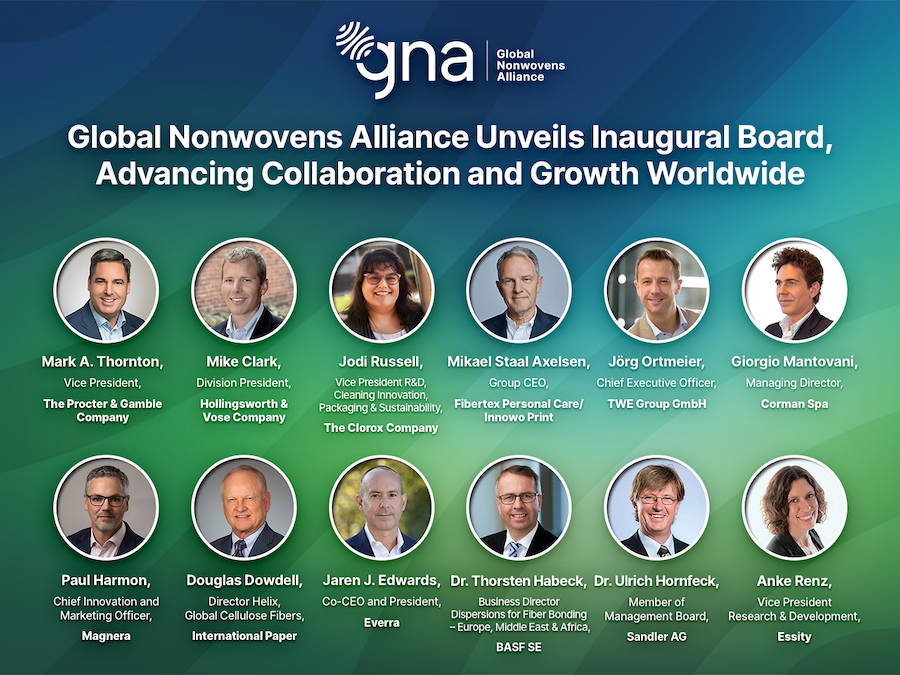
Global Nonwovens Alliance unveils Inaugural Board, advancing collaboration and growth worldwide

The Global Nonwovens Alliance (GNA), a tax-exempt federation jointly founded by INDA, the Association of the Nonwoven Fabrics Industry, and EDANA, the Voice of Nonwovens, announces the appointment of its founding Board of Directors. This group of leaders represents some of the most influential executives across the nonwovens value chain and reflects GNA’s mission to foster global collaboration, innovation, and growth in the industry.

Latest News

#Recycled Fibers

Indorama Ventures enables brands to scale circular textiles through proven, traceable supply chains

Indorama Ventures, a global leader in recycled polyester staple fibers and filament yarns, will exhibit at Textiles Recycling Expo in Brussels on June 24–25. At the event, the company will show how brands and textile manufacturers can build traceable, circular textile supply chains by working with proven partners who deliver recycled materials on an industrial scale.

#Recycled Fibers

RECOVER™ launches Recover™ Yarns to accelerate recycled cotton uptake

Recover™, a leading materials science company and one of the world’s largest producers of recycled cotton fiber, today announces the launch of Recover™ Yarns, a curated portfolio of ready-to-use yarn solutions designed to accelerate the adoption of recycled cotton across the apparel supply chain.

#Spinning

Barmag and Hitech Automation enter into partnership for an auto-doff system for texturing machines

Barmag (Suzhou) Technology Co., Ltd. and Hitech Automation Solutions PVT LTD. of Surat, India, have agreed to an exclusive partnership to jointly market Hitech’s Doffmatic automation solution for Barmag’s proven manual eFK texturing machines. In many texturing facilities, manual doffing processes remain heavily operator-dependent – resulting in issues such as increased scrap, inconsistent quality, and limited productivity.

#ITM 2026

Uster’s new Recycling Opening Index guides spinners to the perfect blend

Uster AFIS 6 now offers the key data for better decisions when blending recycled fibers. Process control is decisive in determining the quality and economic outcome. The new R Recycling Module of AFIS 6 introduces the Recycling Opening Index (ROI), so spinners can optimize their circularity credentials. It was officially launched at ITM 2026 in Istanbul, Türkiye.

TOP