[pageLogInLogOut]

#Nonwovens / Technical Textiles

Hybrid-Acoustics PET sets new standards for sustainable noise protection

Lighter, quieter and more environmentally-friendly vehicles ? this is what Hybrid-Acoustics PET from Autoneum stands for. The product innovation for the engine bay is not only characterized by its lightweight construction and noise protection optimized for electric vehicles, it also convinces through sustainability: Components made of Hybrid-Acoustics PET consist entirely of PET, which is largely obtained from recycled fibers, and thus meet customer demand for environmentally-friendly mobility solutions.

With Hybrid-Acoustics PET, Autoneum has adapted its textile interior technology Hybrid-Acoustics for use in the engine compartment. The patented innovation is based on a unique fiber material that acts as an insulator and absorber at the same time. Among others, Hybrid-Acoustics PET is used to encapsulate electric motors, thereby reducing noise directly at the source and particularly attenuating high-frequency sounds of the electric drive unit. This key technology accordingly ensures optimum noise protection in the passenger cabin and greater driving comfort.

At the same time, components made of Hybrid-Acoustics PET convince with their low weight. Compared to conventional insulators, they are up to 40 percent lighter and thereby contributing to a greater driving range. They are also flameproof and find application as powertrain-mounted insulators for combustion engines thanks to their temperature resistance of up to 180°C. The parts, which consist to a large extent of recycled PET fibers, are produced waste-free and are completely recyclable – an outstanding life cycle assessment compared to equivalent components in the engine bay. Hybrid-Acoustics PET therefore exemplifies Autoneum’s commitment as part of its Advance Sustainability Strategy 2025 to continuously improve the environmental performance of its product portfolio and thus contribute to a resource-efficient mobility.

Starting in spring 2020, e-motor encapsulations made of Hybrid-Acoustics PET are being produced for various new electric models of a Swedish car manufacturer at the Company’s Taicang plant in China (Jiangsu province). In addition, Autoneum will supply engine-mounted parts to various French and Japanese vehicle models with combustion engines from its site in Valldoreix, Spain.
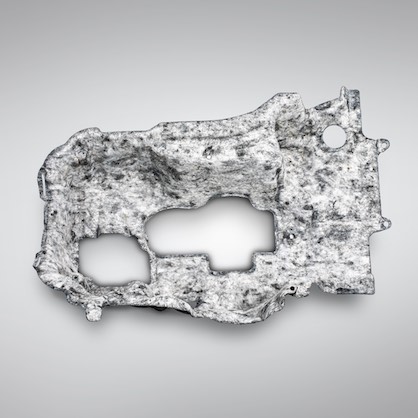
Hybrid-Acoustics PET (c) 2019 Autoneum


More News from TEXDATA International

#ITM 2026

ITM 2026: The new geography of textile production

New production hubs are emerging across North Africa and Central Asia, while Türkiye is accelerating its transformation toward higher-value, technology-driven and more sustainable textile manufacturing.

#Research & Development

“Production is a product”

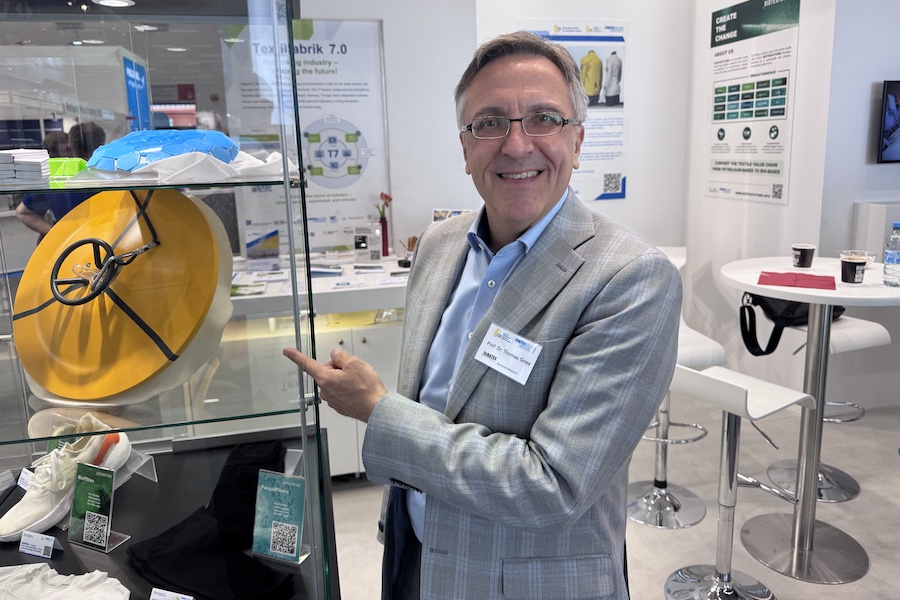
From technical textiles and AI-driven robotics to the limitations of textile circularity: Professor Dr Thomas Gries looks back on more than two decades of development at ITA Aachen. In the interview, he explains why production technology remains a decisive success factor, discusses international collaborations and innovation ecosystems, and shares his views on the transformation of production landscapes and the challenges facing an increasingly regulated industry.

#Knitting & Hosiery

“We need to move away from the price trap and return to a value-driven mindset.”

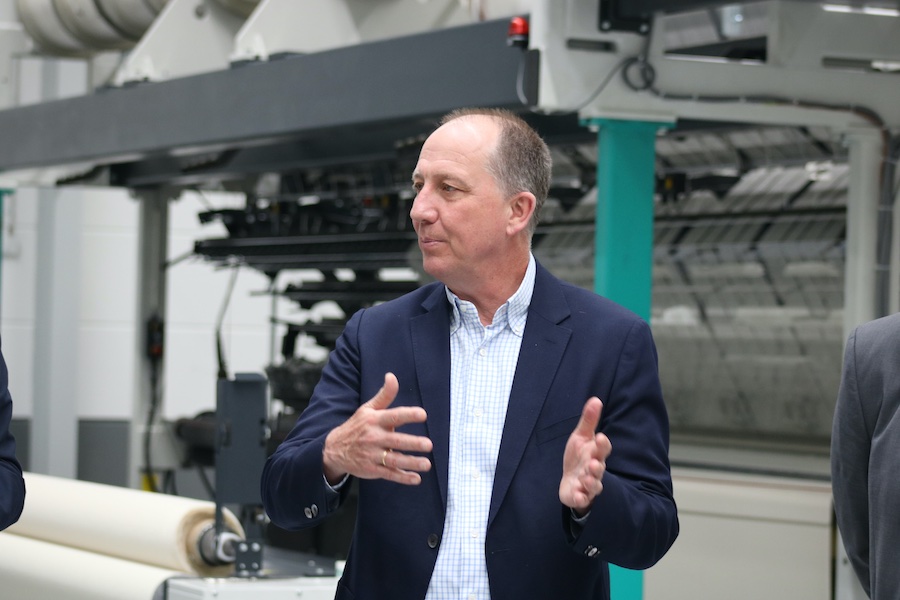
With its new Textile Innovation Center, KARL MAYER is sending a strong signal for innovation, collaboration, and the future of textile applications. In this interview, Karl Josef Mayer discusses new opportunities in warp knitting, the processing of staple fibres, recycling, the changing role of machinery manufacturers, and why the textile industry must once again focus more strongly on the value of textiles. by Oliver Schmidt

#Associations

“Innovation, resilience and international experience remain the great strengths of the Swiss textile machinery industry”

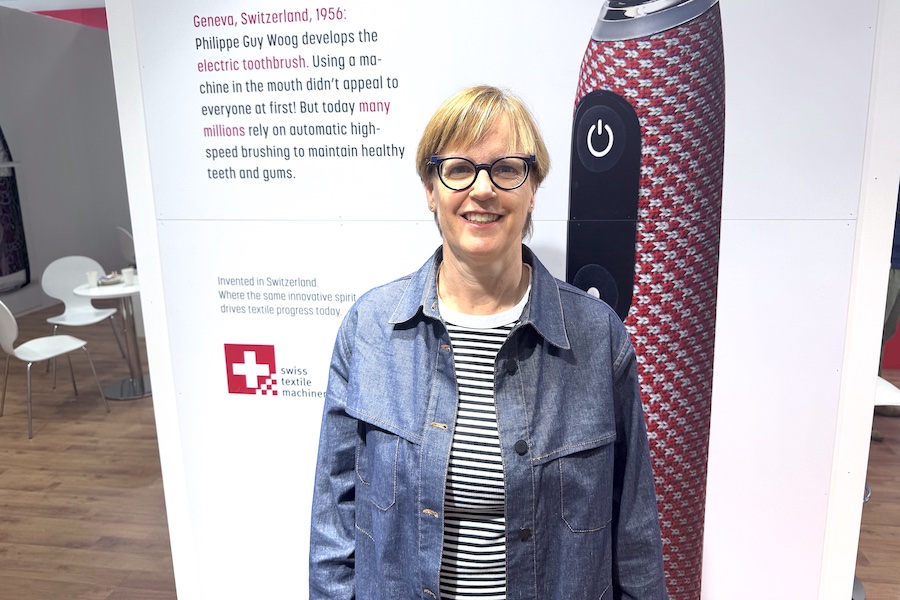
Geopolitical uncertainty, growing competitive pressure from China, new free trade agreements and the shift towards a circular economy are currently reshaping the global textile industry. In this interview, Cornelia Buchwalder discusses the current mood within the Swiss textile machinery sector, the industry’s distinctive innovative strength, new market opportunities in India and Asia, and the technological trends that could shape the upcoming trade fair cycle leading up to ITMA 2027.

More News on Nonwovens / Technical Textiles

#ITMA Asia + CITME Singapore 2025

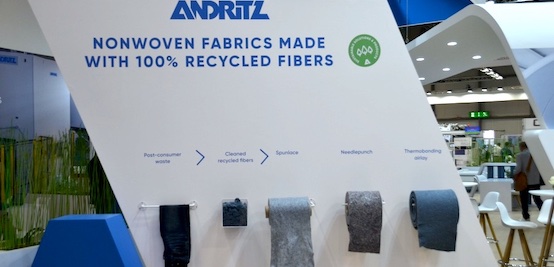
ANDRITZ sets focus on textile recycling and durable nonwoven production technologies at ITMA Asia 2025

International technology Group ANDRITZ will be presenting its innovative nonwovens production and textile solutions at ITMA ASIA + CITME 2025 in Singapore, from October 28 to 31, 2025 (Hall 2, D106). ANDRITZ will showcase its MMCF production plants, textile sorting and recycling, bast fiber processing, needlepunch, airlay, and life-cycle service technologies, with a focus on sustainable solutions. Discover how these innovations can grow your business opportunities and support a greener future.

#ITMA Asia + CITME Singapore 2025

Dilo Group at ITMA ASIA Singapore 2025

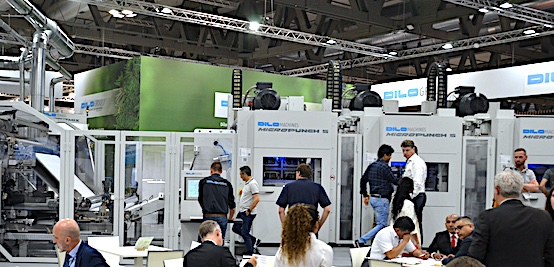
At ITMA ASIA Singapore, the Dilo Group will exhibit at Booth No. H2 – D202. Together with Kansan Materials, Izmir, the company will present its latest developments and looks forward to welcoming visitors to exchange ideas and explore innovations in needling technology.

#Nonwovens

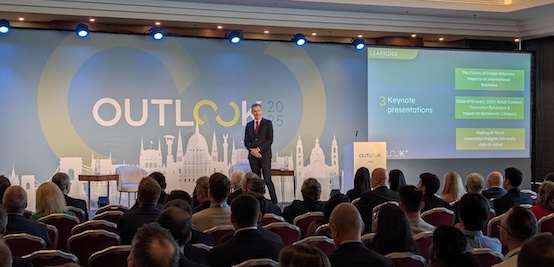
OUTLOOK™ 2025: Charting a sustainable and innovative future for the Nonwovens Industry

EDANA concluded its flagship event, OUTLOOK™ 2025, last week, marking it as a major success and addressing the biggest questions facing the industry. The three-day conference highlighted the urgent need for a unified approach to sustainability, regulation, and innovation in the absorbent hygiene and wipes sectors.

#Nonwovens

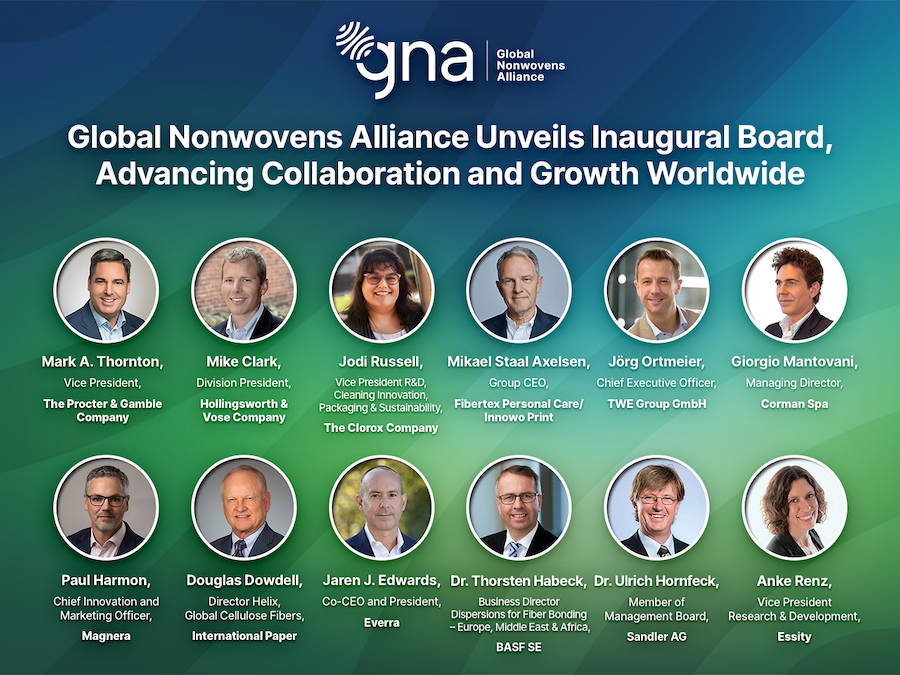
Global Nonwovens Alliance unveils Inaugural Board, advancing collaboration and growth worldwide

The Global Nonwovens Alliance (GNA), a tax-exempt federation jointly founded by INDA, the Association of the Nonwoven Fabrics Industry, and EDANA, the Voice of Nonwovens, announces the appointment of its founding Board of Directors. This group of leaders represents some of the most influential executives across the nonwovens value chain and reflects GNA’s mission to foster global collaboration, innovation, and growth in the industry.

Latest News

#Industry 4.0 / Digitalization

Coats Digital launches AI-powered GSD RealMotion for motion analysis

Coats Digital has launched GSD RealMotion, an AI-powered solution designed to provide apparel manufacturers with greater visibility into factory-floor operations. By analysing shop-floor video and applying Coats Digital’s GSD methodology, the solution turns video recordings into structured, motion-by-motion method studies.

#Textile chemistry

Archroma and Lameirinho partner in pioneering deployment of InOneGO single-step dyeing

Archroma, a global leader in specialty chemicals, and Lameirinho, a leading home textiles manufacturer based in Portugal, are collaborating to bring InOneGO by Archroma, a new single-step dyeing process, into commercial production. Lameirinho’s first InOneGo bedlinens collection is now available worldwide.

#Knitting & Hosiery

KARL MAYER launches extra-wide HKS 3-M EL for increased productivity

KARL MAYER has launched a new extra-wide version of its HKS 3-M EL tricot machine, designed to increase productivity particularly in the manufacture of textiles for sports, activewear and athleisure applications.

#Research & Development

Reducing development times for technical textiles by accelerated thermo-oxidative aging in a high-pressure autoclave

Synthetic polymers used in technical textiles can be effectively protected against degradation caused by heat, oxygen, and water through the use of stabilizer systems. This enables service lives of several decades, extending to more than 50 years. As the use of durable technical textiles continues to grow, so does the demand for reliable methods to predict their service life within economically feasible testing periods. For the first time the German Institutes of Textile and Fiber Research Denkendorf (DITF) developed methods for robust service life prediction for textiles in an IGF research project.

TOP