[pageLogInLogOut]

#Market Analysis & Forecasts

The global bamboo market is projected to reach $82.90 billion by 2028, at a CAGR of 5.7%

The "Bamboo Market Size, Share & Trends Analysis Report by Application (Industrial Products, Shoots, Furniture, Raw Materials), by Region (North America, Europe, APAC, CSA, MEA), and Segment Forecasts, 2021 - 2028" report has been added to ResearchAndMarkets.com's offering.

The global bamboo market size is expected to reach USD 82.90 billion by 2028. It is expected to expand at a CAGR of 5.7% from 2021 to 2028. A broader scope of application of bamboo in domestic as well as commercial applications, such as furniture, fabric, food, biofuel, pulp and paper, charcoal, and cloth, is expected to pose high growth potential for the market.

The Asia Pacific accounted for almost 80% of the global bamboo product trade in 2020 owing to the high influence from China, which accounted for almost 71% of the world's export of bamboo products. North America, Central, and South America, and Europe have also emerged as the significant traders of bamboo products in recent years owing to the presence of indigenous bamboo species in Brazil, Mexico, Ecuador, Chile, and the Dominican Republic.

Bamboo is an inexhaustible category of grass that can be cut 5 fold faster than trees and also absorbs 30% more carbon dioxide when compared with wood. Thus, the emergence of sustainability trends, especially increasing focus on environmentally neutral building materials, is expected to drive the market for bamboos over the forecast period.

Bamboos Market Report Highlights

• The industrial products application segment accounted for the largest revenue share of over 35.0% in 2020 owing to the broad range of applications in modern-day food and biobased industries, such as dietary fiber food additives

• The shoots application segment emerged as the second-largest segment in 2020 as bamboo shoots are considered an important health food as they contain amino acids, high proteins, vitamin A, vitamin B6, vitamin E, niacin, and thiamine

• The furniture application segment is expected to register a CAGR of 5.0% over the forecast period owing to the emerging trend of sustainable interior designs in the environmentally neutral or green buildings

• The Asia Pacific dominated the market with a revenue share of over 75.0% in 2020 owing to the highly concentrated production of bamboo in Asia Pacific economies, especially China

• Industry participants are expanding the domestic production of bamboo in Non-Asia Pacific economies to cater to the domestic demand and reduce reliance on imports from China or other high production economies


Companies Mentioned

• Anji Tianzhen Bamboo Flooring Co. Ltd.

• Bamboo Australia Pty. Ltd.

• Bamboo Bio Composites Sdn Bhd

• Bamboo Village Company Limited

• China Bamboo Textile Company Limited

• Dasso Industrial Group Co., Ltd.

• Ecoplanet Bamboo

• Moso International B.V.

• Smith & Fong Co Inc.

• Southern Bamboo Inc.

Key Topics Covered:

Chapter 1. Methodology and Scope

1.1. Market Segmentation & Scope

1.2. Market Definition

1.3. Information Procurement

1.4. Information Analysis

1.5. Market Formulation & Data Visualization

1.6. Data Validation & Publishing

Chapter 2. Executive Summary

2.1. Market Outlook

2.2. Segment Outlook

2.3. Competitive Insights

Chapter 3. Market Variables and Trends

3.1. Penetration & Growth Prospect Mapping

3.2. Industry Value Chain Analysis

3.3. Product Price Trend Analysis

3.4. Regulatory Framework

3.5. Market Variable Analysis

3.5.1. Market Driver

3.5.2. Market Restraint

3.6. Business Environment Analysis Tools: Bamboo Market

3.6.1. Industry Analysis: Porter's Five Forces Analysis

3.6.2. PESTEL Analysis

3.7. Recent Trends & Developments

Chapter 4. Bamboo Market: Application Estimates & Trend Analysis

4.1. Bamboo Market: Application Movement Analysis, 2020 & 2028

4.2. Raw Materials

4.3. Industrial Products

4.4. Furniture

4.5. Shoots

4.6. Others

Chapter 5. Bamboo Market: Regional Estimates & Trend Analysis

5.1. Bamboo Market: Regional Movement Analysis, 2020 & 2028

5.2. North America

5.3. Europe

5.4. Asia-Pacific

5.5. Central & South America

5.6. Middle East & Africa

Chapter 6. Company Profiles

For more information about this report visit:

https://www.researchandmarkets.com/r/c7qie0


More News from TEXDATA International

#ITM 2026

ITM 2026: The new geography of textile production

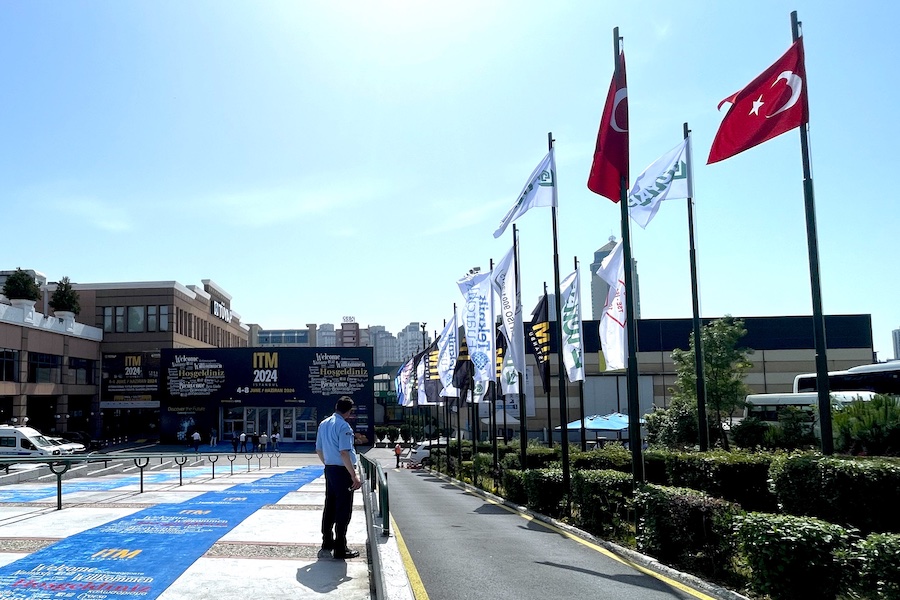
New production hubs are emerging across North Africa and Central Asia, while Türkiye is accelerating its transformation toward higher-value, technology-driven and more sustainable textile manufacturing.

#Research & Development

“Production is a product”

From technical textiles and AI-driven robotics to the limitations of textile circularity: Professor Dr Thomas Gries looks back on more than two decades of development at ITA Aachen. In the interview, he explains why production technology remains a decisive success factor, discusses international collaborations and innovation ecosystems, and shares his views on the transformation of production landscapes and the challenges facing an increasingly regulated industry.

#Knitting & Hosiery

“We need to move away from the price trap and return to a value-driven mindset.”

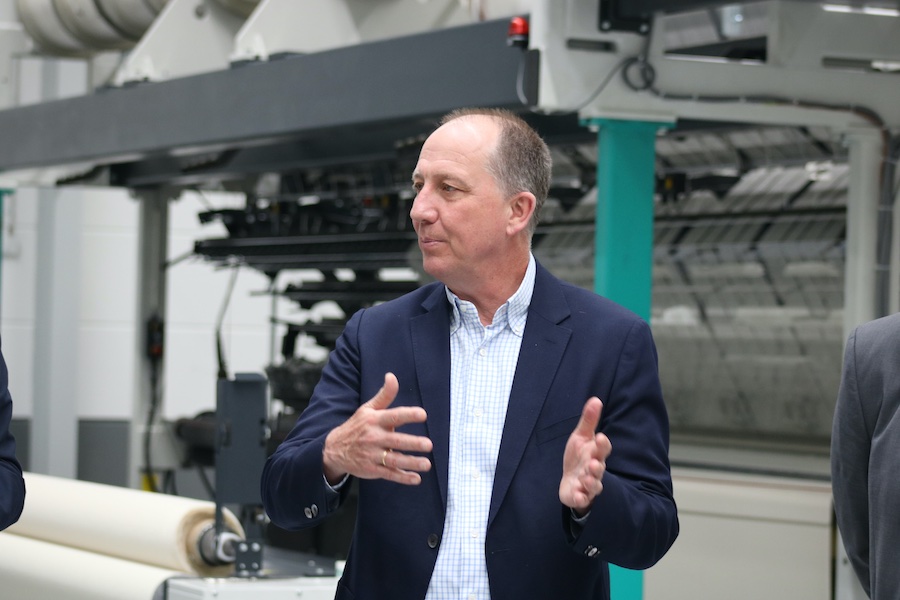
With its new Textile Innovation Center, KARL MAYER is sending a strong signal for innovation, collaboration, and the future of textile applications. In this interview, Karl Josef Mayer discusses new opportunities in warp knitting, the processing of staple fibres, recycling, the changing role of machinery manufacturers, and why the textile industry must once again focus more strongly on the value of textiles. by Oliver Schmidt

#Associations

“Innovation, resilience and international experience remain the great strengths of the Swiss textile machinery industry”

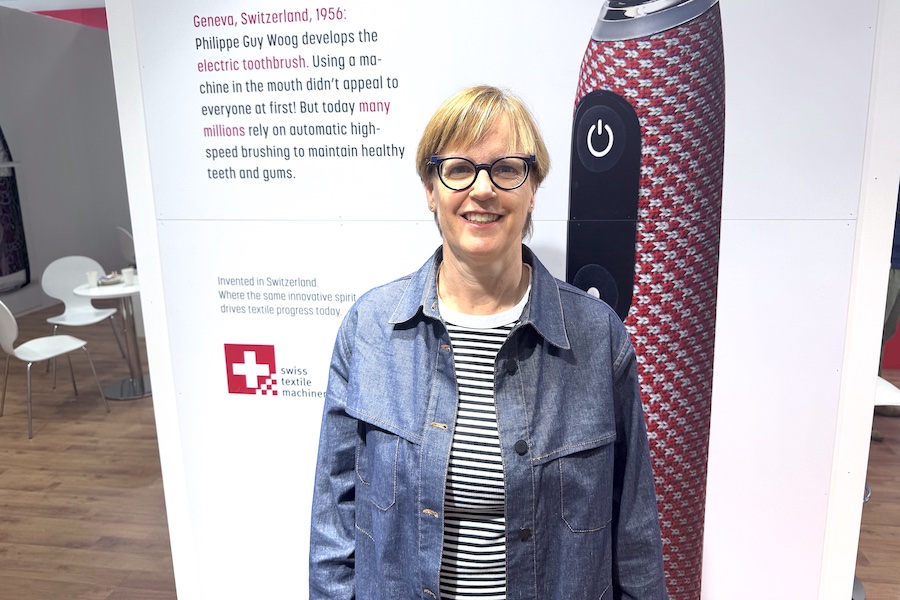
Geopolitical uncertainty, growing competitive pressure from China, new free trade agreements and the shift towards a circular economy are currently reshaping the global textile industry. In this interview, Cornelia Buchwalder discusses the current mood within the Swiss textile machinery sector, the industry’s distinctive innovative strength, new market opportunities in India and Asia, and the technological trends that could shape the upcoming trade fair cycle leading up to ITMA 2027.

More News on Market Analysis & Forecasts

Latest News

#Spinning

Ibrahim Fibres and Trützschler: A strong partnership enters its next phase with the TC 30Si

For more than two decades, Ibrahim Fibres and Trützschler have grown side by side, driven by a shared ambition to continuously improve spinning performance, strengthen technology leadership and set new benchmarks in the textile industry. Today, Ibrahim Fibres is a leading yarn and polyester staple fiber manufacturer in Pakistan. The company operates the largest number of Trützschler cards in the country, with more than 200 machines running across its mills in Faisalabad, and plays an important role in one of Asia’s largest textile industries.

#Digital Printing

USColorworks expands digital platform with Kornit Atlas MATRIX and Atlas MAX PLUS solutions

Kornit Digital Ltd. (NASDAQ: KRNT), a global pioneer in sustainable, on-demand digital fashion and textile production, today announced that USColorworks, a North Carolina-based apparel decoration and fulfillment company specializing in custom and on-demand printing for retail and promotional markets, has expanded its Kornit digital production platform with the addition of Atlas MATRIX and Atlas MAX PLUS systems to deliver high-quality, on-demand apparel across cotton, blended fabrics and polyester.

#Functional Fabrics

CovationBio introduces two new bio-based innovations at Functional Fabric Fair New York

Covation Biomaterials LLC (“CovationBio®”) is showcasing its two new bio-based innovations, Xatryx® and Sorona® elasterell-p fiber, at this year’s Functional Fabric Fair in New York City, July 7–9, 2026. Attendees can visit CovationBio at Booth #404 to explore this next generation of bio-based performance materials.

#Research & Development

Geotextiles made from recycled materials: GREEN leads the way into the industry

For the industry, recycled materials are creating new opportunities in geotextile production. In the GREEN project, the Fraunhofer Cluster of Excellence Circular Plastics Economy CCPE demonstrates that recycled polypro-pylene (PP), polyethylene terephthalate (PET), and high-density polyeth-ylene (HDPE) can be processed into nonwovens, fibers, and membranes that meet industrial requirements. This creates opportunities for use in existing production lines and new value chains in the geotextile market.

TOP