[pageLogInLogOut]

#Man-Made Fibers

ARMEDANGELS to develop more sustainable products with SPINNOVA® fibre
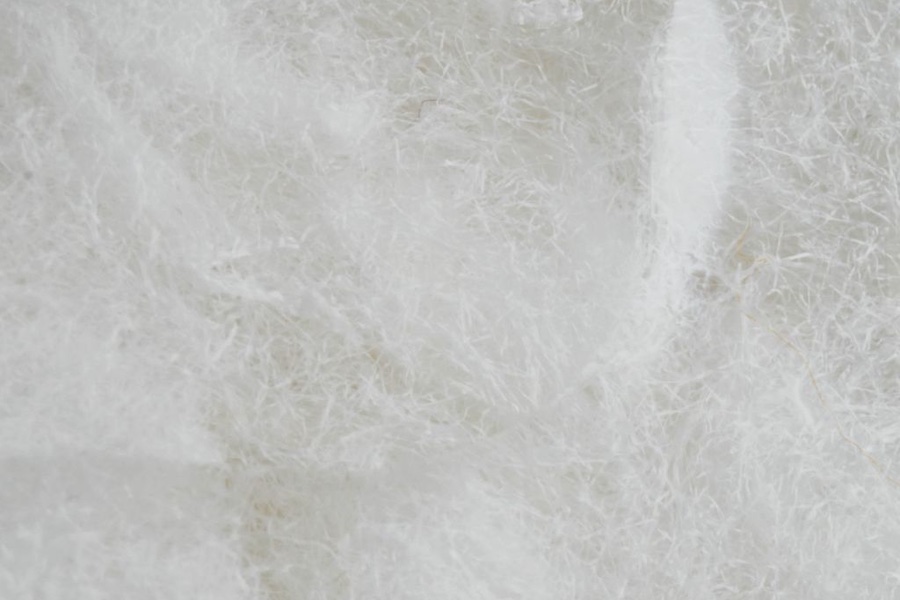
ARMEDANGELS has signed non-binding Letter of Intent (LOI) to secure access to SPINNOVA® fibre volumes in the future. The LOI outlines an important step in Spinnova’s ambitions to create an ecosystem (consortium) to enable the availability of sustainable SPINNOVA® fibre in the textile materials market.


ARMEDANGELS places strong emphasis on sustainable and ethical production. Their clothing is made from innovative, sustainable materials, with a transparent supply chain and a firm commitment to fair working conditions. Every product begins with a careful selection of materials, evaluated against strict criteria: origin, processing, durability, and impact on people and the environment. Guided by these principles, ARMEDANGELS will develop future collections using SPINNOVA® fibre.

“We are incredibly proud to announce our partnership with ARMEDANGELS, a brand that stands at the forefront of sustainable and responsible fashion. As we build the ecosystem to support the scale-up of SPINNOVA® fibre, it is essential to collaborate with partners who share our values and vision for a more sustainable textile industry," says Pedro Brito, the Senior Commercial Manager at Spinnova.

“At ARMEDANGELS, we make products people love with the least harm to the planet. Our Impact* Roadmap constantly pushes us to explore new materials that can lower our footprint — and that’s exactly why SPINNOVA® fits so well with our vision. Their fibre-making approach is fundamentally different and shows real potential as an alternative to cotton. Introducing new materials takes time, but once we commit, we go all in. Together, we want to explore the role SPINNOVA® can play in our future collections,” says ARMEDANGELS Innovation & Circularity Manager, Päivi Eräpuu.



More News from SPINNOVA PLC

#Man-Made Fibers

Spinnova’s partner NZ TEX GROUP supports scaling of SPINNOVA® fibre

NZ TEX GROUP, Spinnova’s long-term woven fabric manufacturing partner based in Bangladesh, supports the scaling of SPINNOVA® fibre by joining the Spinnova ecosystem. NZ TEX GROUP and Spinnova have jointly developed fabrics, including denim, over several years, and the partners are now formalising and strengthening their cooperation through the ecosystem model.

#Raw Materials

ECCO introduces first shoe featuring innovative protein-based fibre

ECCO, in partnership with Spinnova, announces the launch of the limited edition ECCO BIOM® 720, a first-of-its-kind shoe utilising an often overlooked leather by-product, transformed into a protein-based fibre. The fibres are produced using patented technology that advances material innovation while reducing waste and supporting full resource use across the leather and textile industry.

#Man-Made Fibers

Swiss industrial engineering and manufacturing company Sulzer joins Spinnova’s ecosystem

Sulzer, a Swiss industrial engineering and manufacturing company, has joined Spinnova’s ecosystem (consortium) to enable the availability of SPINNOVA® fibre in the textile materials market. Sulzer will contribute its expertise to support Spinnova’s development work.

#Recycling / Circular Economy

Textile‑to‑textile recycling leader Circulose joins Spinnova’s ecosystem to accelerate technology scale‑up

Textile‑to‑textile recycling leader Circulose joins Spinnova’s ecosystem (consortium) to help advance the scale‑up of Spinnova’s technology. Spinnova has actively sought partners to accelerate commercial scale‑up, and Circulose, as a key player in textile recycling, strengthens the ecosystem by providing a raw material that is in high demand across the industry.

More News on Man-Made Fibers

#Man-Made Fibers

Dornbirn GFC 2026 expands conference program with new thematic sessions

For 65 years, Dornbirn GFC has stood for innovation and is one of the world’s leading conferences in the fiber industry. From September 16 to 18, 2026, the international fiber community will meet in Dornbirn, Austria, to discuss current trends, technological developments, and forward-looking solutions. More than 600 experts from industry and academia from over 30 countries are expected to attend. With around 100 presentations by renowned speakers, a 2,5-day conference program, and three parallel presentation rooms with moderated sessions, Dornbirn GFC provides a first-class platform for knowledge exchange, networking, and international collaboration. Together, participants will generate ideas and impulses that will sustainably shape the future of the global fiber industry.

#Man-Made Fibers

Lenzing reports improved half-year results and advances strategic transformation

Despite a persistently challenging market environment in the first half of 2026, characterized by volatile energy and raw material prices, subdued global consumer demand and intensified competition from Asia, the Lenzing Group significantly improved its financial performance. Net result after tax more than doubled to EUR 35.6 million, compared with EUR 15.2 million in the first half of 2025. Free cash flow increased to EUR 45.8 million, while EBITDA amounted to EUR 239.2 million. Revenue totaled EUR 1.27 billion, compared with EUR 1.34 billion in the previous year.

#Raw Materials

Kimberly-Clark develops alternative natural fiber platform for hygiene products

Kimberly-Clark has introduced a proprietary innovation program aimed at developing alternative natural fibers for future hygiene products. The company has created a patented materials platform based on fibers derived from hesperaloe, a drought-tolerant succulent native to the southwestern United States.

#Man-Made Fibers

Ministry of Industry Delegation visits NatureWorks’ second global manufacturing site at Nakhon Sawan Biocomplex

NatureWorks Asia Pacific Limited welcomed a high-level delegation led by Mr. Varawut Silpa-archa, Minister of Industry, to its manufacturing site at the Nakhon Sawan Biocomplex (NBC). The visit follows the successful inauguration of the site on April 29, 2026, and highlights the role of public-private collaboration in advancing Thailand’s sustainable industrial development and bioeconomy ambitions.

Latest News

#Weaving

More patterns, less effort: the MULTI-MATIC® at Rohleder

Rohleder is one of Europe’s most modern weaving mills. For over 80 years, the family-owned company has been developing and manufacturing premium fabrics for brands, retailers and private customers – 100% Made in Germany. This success is made possible by a consistent focus on design, quality, and functionality, as well as by continuous investment in state-of-the-art production facilities. Rohleder also relies on innovative technologies in warp preparation and has been collaborating with KARL MAYER for many years. As recently as 2023, a MULTI-MATIC® was delivered to the company’s headquarters in Konradsreuth.

#Nonwovens

BASF opens global diaper and superabsorbents performance lab in Mumbai

BASF has officially inaugurated its new Performance Lab for diapers and superabsorbents (SAP) in Mumbai on August 18, 2026, which will provide technical and application services to superabsorbent customers globally. The new lab of BASF’s Hygiene Solutions business has been established in less than a year and is part of BASF’s Innovation Campus Asia Pacific in Mumbai, BASF’s second largest R&D site in Asia Pacific established in 2017 under BASF Chemicals India Private Limited.

#Recycled Fibers

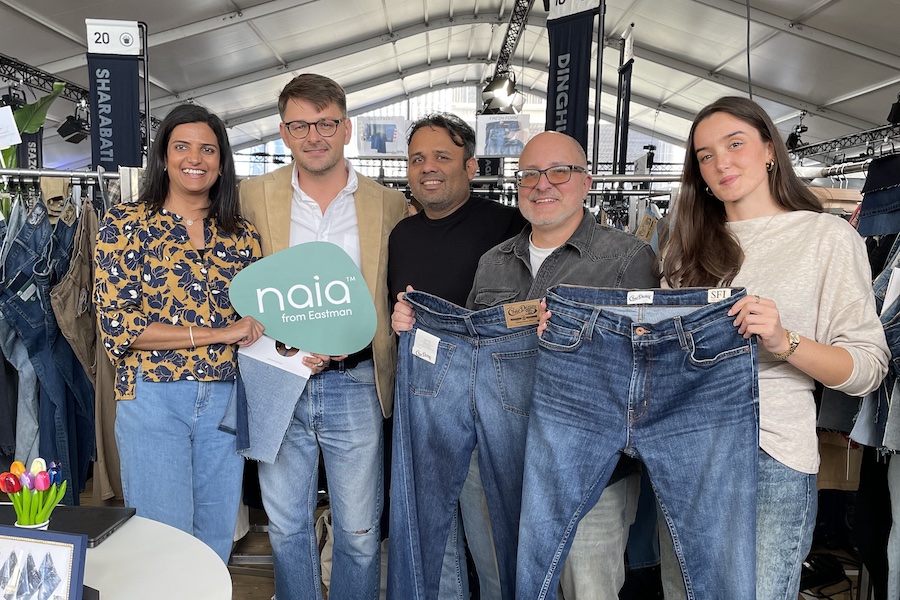
Naia™ from Eastman strengthens western hemisphere textile connections at Apparel Sourcing Show Guatemala

As brands and retailers explore more diversified and responsive sourcing networks, the Naia™ brand from Eastman is strengthening its engagement with the textile and apparel value chain across the western hemisphere. From August 18–20, the company will participate for the first time in Apparel Sourcing Show Guatemala, a regional meeting point for apparel sourcing, manufacturing and nearshoring.

#Research & Development

Europe is committed to recycling end-of-life wind turbine blades

Starting in 2026, Europe’s wind energy industry has committed itself to ensuring that wind turbine blades do not end up in landfills once they reach the end of their service life. The EU-funded research project REWIND is exploring ways to reuse this composite waste. The German Institutes of Textile and Fiber Research Denkendorf (DITF) are one of 13 project partners from seven countries.

TOP