[pageLogInLogOut]

#Knitting & Hosiery

How WEFTTRONIC® II G with ITMA upgrade maximises customer benefits

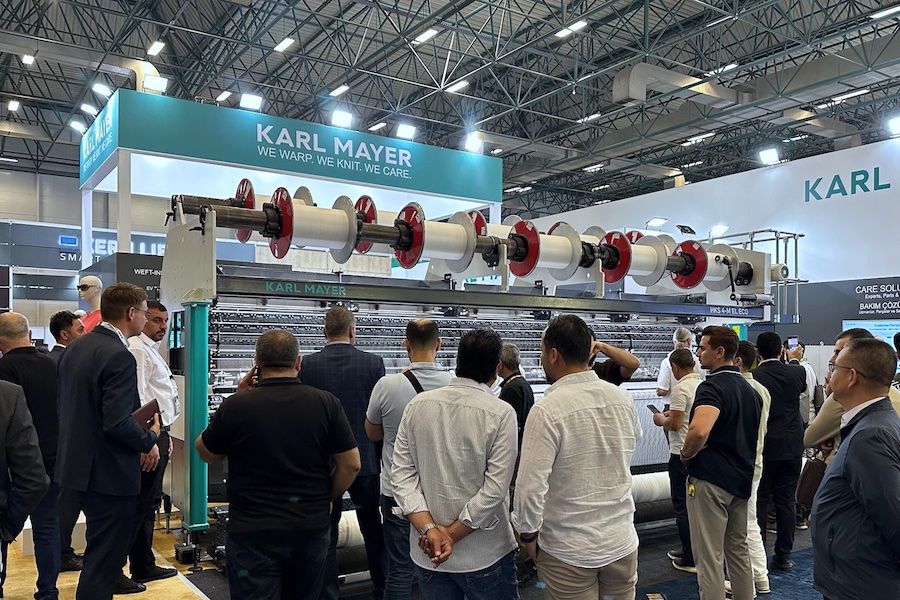
At the ITMA 2023 in Milan, KARL MAYER Technical Textiles presented its best-selling model in the weft insertion machine sector, the WEFTTRONIC® II G, with sensational upgrades, thus demonstrating its understanding of the market. "We were able to record a super response. Especially on the first day of the fair, the number of visitors was surprisingly high", Vice President Sales Hagen Lotzmann sums up with satisfaction.

The reason for the high visitor interest were innovative machine features: the new VARIO WEFT laying system, a solution for stabilising the edges, monitoring of the weft tension and a central suctioning device. The WEFTTRONIC® II G was shown at ITMA in a working width of 213?, the best-selling working width for the production of geogrids.

More patterning freedom

Above all, VARIO WEFT delighted customers by revolutionising weft patterning. The innovation makes changes of weft pattern extremely simple, fast and flexible. The electronic solution requires no mechanical intervention during threading in and has no limitations in terms of repeat length. In addition, there is considerably less selvedge waste.

The basis for this advantage package is a newly developed patterning principle: Whereas weft carriage and transport chain used to work with a weft insertion according to the desired pattern, now a full threading in is always used. A stop-and-go operation of the transport chain and a new movement curve of the supporting sinker ensure that the yarn is fed according to the pattern. If a weft yarn is to be inserted into the fabric, it is guided to the knitting elements by the circulating transport chain and brought into the engagement area of the slider needles by the supporting sinker. If a free space is to be created in the fabric, the transport chain stops and the supporting sinker dips under the weft yarn. "The flexibility which VARIO WEFT offers in weft patterning is completely new for our customers. In the discussions on this during the ITMA, potentials were discussed and thought processes initiated. We are expecting many new product ideas, and we will be on hand to help our customers implement them," explained Hagen Lotzmann.
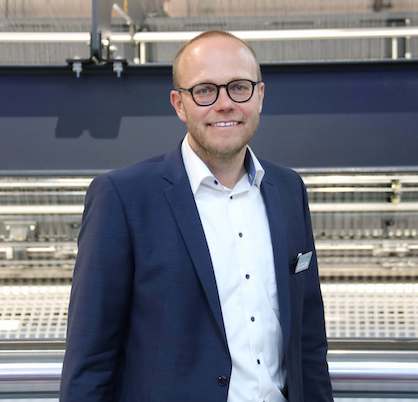
Hagen Lotzmann (c) 2023 KARL MAYER


Lower costs and environmental impacts

With the elimination of the vacant positions in the transport chain, the waste generated here is also eliminated. In the conventional process, the weft yarns are passed by the empty positions, and the yarn sections running in the direction of work have to be disposed of, with negative effects on costs and the environmental balance. The relative yarn waste is greater the more positions have to be bridged and weft threads inserted, i.e. the more open the grid is. When considering the absolute savings potential, however, the count of weft yarns in the fabric must also be taken into account.

For example, with a weft threading in of 5 full, 10 out, about 61 % less material is needed. This results in about 38,000 EUR less costs and about 256,000 kg less CO2 emissions per year. In the case of denser grid designs with an threading in of 2 full, 2 out, the material saving is lower at just under 46%, but the absolute annual saving in costs is higher at around 40,000 euros and in CO2 emissions at almost 270,000 kg.
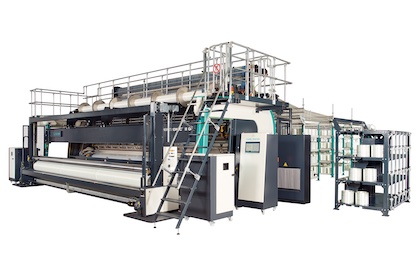


WEFTTRONIC II G (c) 2023 KARL MAYER


Stable selvedges

Another innovation of the WEFTTRONIC® II G stabilises the fabric selvedges and uses the weft yarn ends for this purpose. The weft yarn ends sticking out at the sides of the mesh selvedges are mechanically and by means of air flow returned to the warp knitting elements and firmly integrated into the mesh structure by means of a stitch.

Due to the thus consolidated fabric ends, the grids can be better fixed during the finishing process - an advantage especially for medium-weight and heavy geotextiles. This allows the shrinkage behaviour of the warp knitted fabric to be adjusted in a controlled manner and its quality to be improved. The consolidated selvedge structures can also open up new areas of application, for example in the fields of slope stabilisation and safety nets.

Controlled yarn tension

To maximise fabric quality, the WEFTTRONIC® II G has been equipped with a weft tension monitoring system. The new solution keeps an eye on every single yarn and triggers actions when threshold values are exceeded or undershot: first a warning, then the machine is stopped.

When resetting to new patterns, the weft tension can be easily adjusted and controlled, thus improving the reproducibility of the product quality. In addition, the tension data can be stored for control and traceability of production orders.
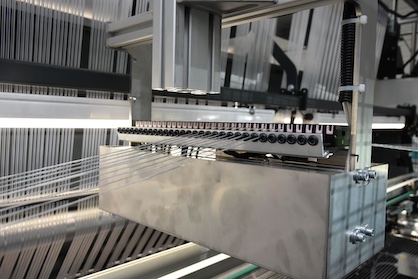
Tension Monitoring System(c) 2023 KARL MAYER


Automatic suction in non-stop operation

A new device for suctioning off selvedge waste, the CSD 600, focuses on increasing machine efficiency. The innovation continuously picks up the weft waste during machine operation and uses operational stops for fully automatic emptying, without any manual intervention. In addition, less electrical energy is required compared to the previous solution with one suction cabinet on each side of the machine. The savings potential is around 8 %.
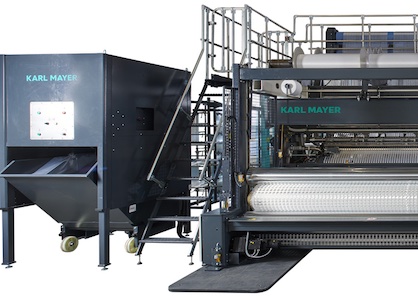
Automatic suction device (c) 2023 KARL MAYER


Uniquely flexible and profitable: Weft insertion reinvented
More News from KARL MAYER Textilmaschinenfabrik GmbH

#Knitting & Hosiery

KARL MAYER and Lenzing partner to advance warp knitting with scalable cellulose fiber solutions

The Lenzing Group, a leading supplier of regenerated cellulosic fibers for the textile and nonwovens industries, together with KARL MAYER, the global market leader in warp knitting machines and warp preparation systems, debut a joint innovation project during Premiere Vision, Paris.

#Knitting & Hosiery

KARL MAYER opens a new TEXTILE INNOVATION CENTRE – a new era of textile innovation begins

KARL MAYER is opening its new TEXTILE INNOVATION CENTRE (TIC), sending a strong signal that it is driving textile innovation forward and opening up new perspectives for the textile industry. The TIC brings together the latest developments in Warp Knitting, Technical Textiles and Warp Preparation – KARL MAYER’s core areas of expertise.

#Knitting & Hosiery

Proven performance, optimised costs – the new RE 6 EL

Nowadays textile companies increasingly need to produce small production runs and respond to market changes with instantaneous pattern changes in order to operate profitably – meaning they require machines that offer maximum flexibility, reliability and cost efficiency. KARL MAYER understands the challenges of the market and is launching its new RE 6 EL. The Raschel machine offers the core strengths of the classic RSE 6 EL and essentially the same performance parameters, but has been further cost-optimised largely due to local production advantages. This makes the newcomer an efficiency champion in production, especially when it comes to frequent pattern changes.

#Knitting & Hosiery

Live more beautifully and comfortably with Warp Knits

Knitted fabrics are the all-rounders among home textiles. They can be designed in many different ways and are used in mattresses, blankets and pillows as well as in terry towelling, curtains and upholstery fabrics to create trendy designs, constantly new products and good business.

More News on Knitting & Hosiery

#Knitting & Hosiery

SHIMA SEIKI to exhibit at GMMSA Expo India

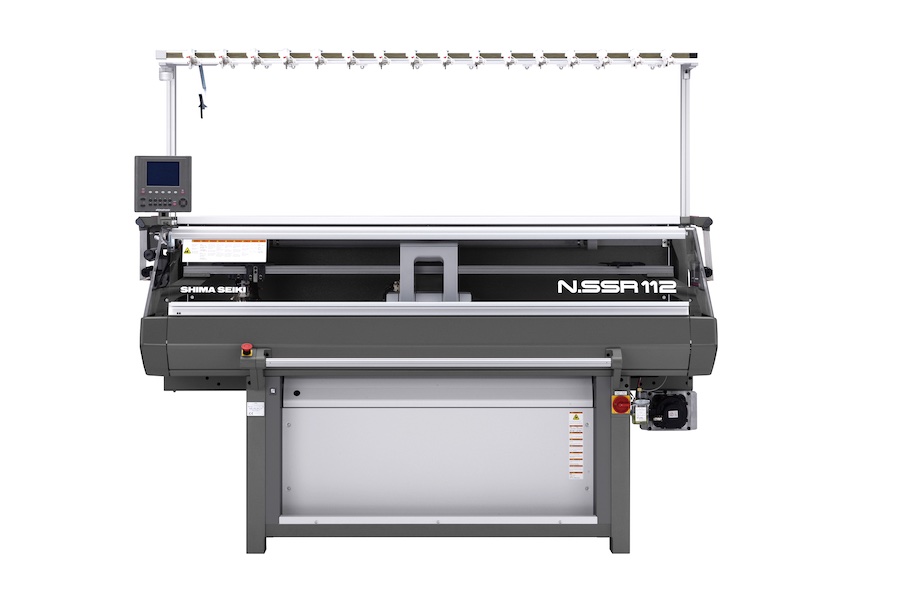
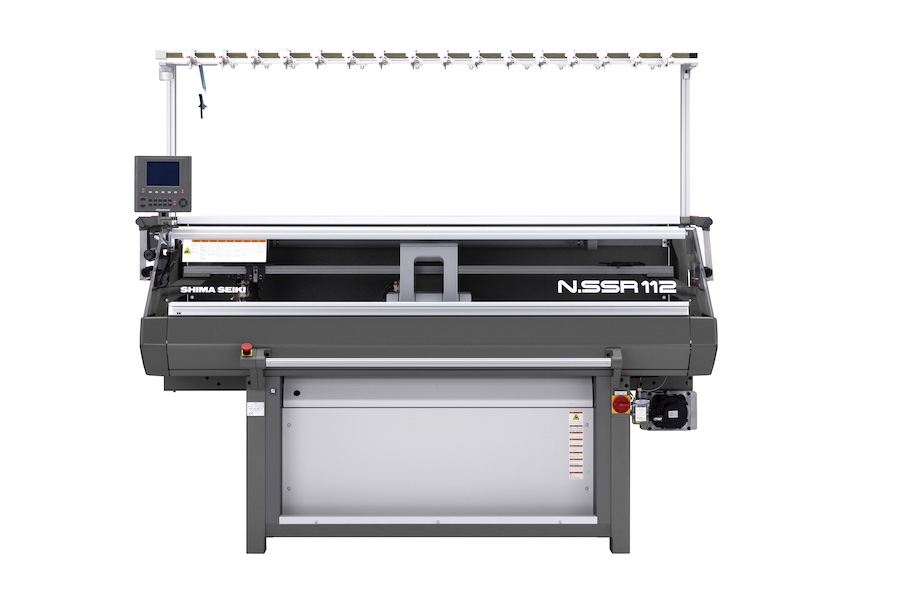
Leading Japanese computerized flat knitting technologist SHIMA SEIKI MFG., LTD. of Wakayama, Japan, together with its Indian sales representative Universal MEP Projects & Engineering Services, Ltd., will participate in the upcoming Garments Machinery Manufacturers & Suppliers Association (GMMSA) Expo India 2026 exhibition to be held in Ludhiana, India next month. Through its lineup at GMMSA, SHIMA SEIKI aims to further strengthen its presence within the Indian market with an exhibit that caters to diverse needs, consisting of seam-free WHOLEGARMENT® knitting technology as well as a brand-new shaping machine with high productivity and excellent cost performance.

#Knitting & Hosiery

Terrot introduces T-Frame platform to redefine stability and flexibility in large-diameter circular knitting

Terrot Textilmaschinen GmbH has unveiled the new T-Frame, a universal machine frame platform for large-diameter circular knitting machines. Designed to meet growing demands for flexibility, stability, and operational safety, the T-Frame provides a next-generation foundation for both current and future industrial knitting machines, combining German engineering expertise with a modular, future-ready design approach.

#Knitting & Hosiery

SHIMA SEIKI returns to ShanghaiTex

Leading flat knitting solutions provider SHIMA SEIKI MFG., LTD. of Wakayama, Japan, together with its Hong Kong and Chinese market subsidiary SHIMA SEIKI (HONG KONG) LTD., will exhibit at the ShanghaiTex 2025 exhibition (Booth No.: Hall N3, Booth A20) held in Shanghai, China this month. This marks the return of SHIMA SEIKI to ShanghaiTex after a 14-year hiatus, its last exhibit at the show having been in 2011.

#Knitting & Hosiery

The newcomers HKS 3-M EL ECO and HKS 4-M EL ECO set new standards in the tricot market

Short development cycles, frequent pattern changes, and maximum efficiency – even with small batch sizes: Today's global fashion and apparel market demands more flexibility than ever before. High-performance warp knitting machines with compound needles (HKS) and EL pattern drive are KARL MAYER's answer to this challenge.

Latest News

#Functional Fabrics

“Action helps us change what we do!”

DAY 0 takes place deliberately before PERFORMANCE DAYS begins. It is conceived as a space for reflection, dialogue and active engagement — a moment to pause before the fair, rethink established systems and address sustainability not as a trend, but as a fundamental transformation challenge. Under the guiding metaphor “Turn the Tap Off”, DAY 0 focuses on root causes rather than symptoms, systemic change rather than isolated solutions, and collective responsibility rather than individual silos.

#Textiles & Apparel / Garment

Pets in fashion: functional and sustainable textiles find new market at Intertextile Apparel

China’s pet economy is booming, especially amongst younger generations, and pet apparel – from designer outfits to functional garments – was a RMB 3.5 billion (over USD 500 million) market in 2024, growing more than 20% annually¹. To help exhibitors harness this trend, Intertextile Shanghai Apparel Fabrics – Spring Edition 2026 will launch the Pet Boutique, presenting a range of innovative, sustainable materials that prioritise both functionality and comfort for pets.

#Sustainability

VAUDE eliminates PFAS from all products

PFAS (per- and polyfluoroalkyl substances) are now detectable worldwide – in drinking water, soil and the human body. These so-called “forever chemicals” are considered hazardous to health and potentially carcinogenic, as they do not break down and remain in the environment permanently. Despite these risks, PFAS are still used in a wide range of products. More than 15 years ago, VAUDE made a strategic decision to gradually eliminate PFAS from all product categories.

#Man-Made Fibers

Lenzing AG to become majority owner of TreeToTextile AB and accelerates industrialization of new fibers

The Lenzing Group is taking another strategic milestone by acquiring a controlling majority in the Swedish innovation company TreeToTextile AB. This step strengthens Lenzing’s position as a leading provider of sustainable, wood‑based specialty fibers and expands its innovation pipeline with a highly scalable, patent‑protected technology platform. The transaction is executed through the issuance of new shares.

TOP