[pageLogInLogOut]

#Knitting & Hosiery

MJ 92/1 B, a superlative JACQUARDTRONIC® LACE for a perfect fabric appearance
© 2021 KARL MAYER
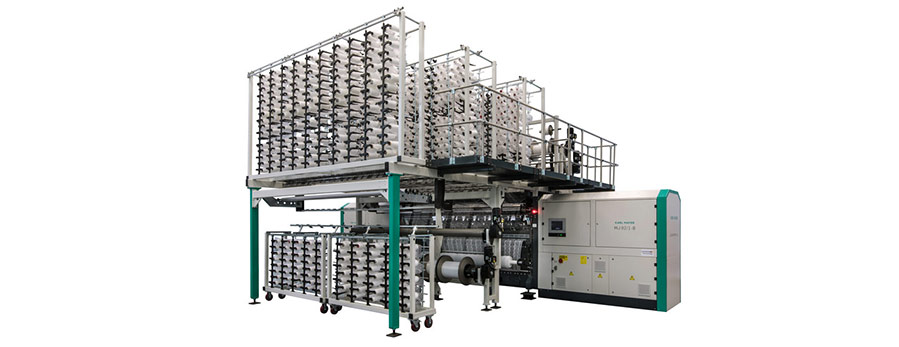
With the MJ 92/1 B, KARL MAYER has added an outstanding model to its successful MJ machine series. The newcomer has 92 bars, making it the JACQUARDTRONIC® LACE with the highest number of bars in the portfolio offered by the innovative world market leader.

Committed to symmetry

Thanks to its technical configuration, the MJ 92/1 B produces premium elastic lace articles offering unprecedented flexibility, variety and a clearly defined look and feel, and at an extremely competitive price to boot. Based on proven MJ technology, the MJ 92/1 B is a reliable, flexible production machine with an excellent price/performance ratio.

Greater clarity thanks to counter lapping jacquard technology

The unique patterning performance of the new MJ model has two bars for elastane, a jacquard bar in split execution and 88 pattern guide bars, all arranged together in 16 shogging lines.

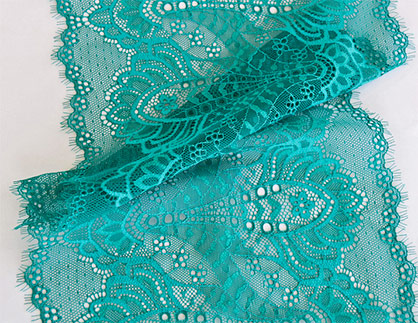
This set up of the MJ 92/1 B is targeted predominantly toward the production of elastic galloon lace, and also all-over lace for stylish lingerie items. The products are characterised by an extremely distinct fabric appearance created by a clearly drawn and symmetrically designed jacquard ground.

The two split Jacquard bars work counterlapped and are split-threaded. In addition, the elastane is split into two bars that also work counterlapped mirroring the movement of the Jacquard. In this way complete symmetry is achieved.

In addition to modern counter-lapped jacquard patterns, traditional equal-lapped equivalents can also be produced. Switching between the two options is almost seamless. This flexibility offers customers a competitive advantage.


Shortest payback times

The MJ 92/1 B offers the greatest possible productivity in view of its extraordinary design flexibility, thereby setting new standards in the lace industry. As a result, the investment in the machine soon pays for itself. At a working speed of up to 800 rpm, an average of around 24 m of grey fabric can be produced per hour, using the entire working width and standard yarns.
© 2021 KARL MAYER
© 2021 KARL MAYER


Released for sale in May 2021

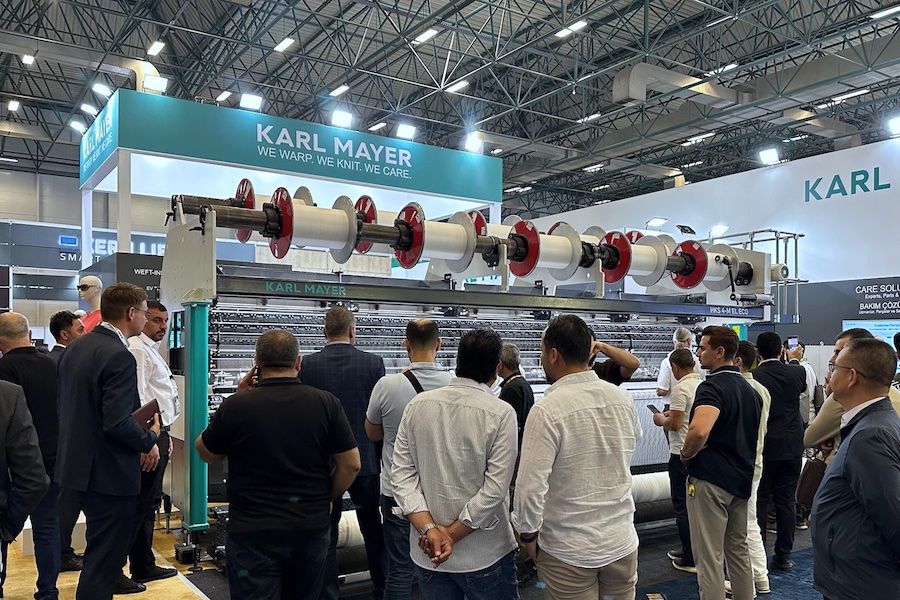
The new high-bar MJ machine was successfully presented to key customers in China in mid-May 2021. It was then released for worldwide sale shortly afterwards. It premiered at a highly regarded performance demonstration in front of an expert audience at an in-house show during the most recent ITMA ASIA + CITME at KARL MAYER (CHINA).


More News from KARL MAYER Textilmaschinenfabrik GmbH

#Knitting & Hosiery

Live more beautifully and comfortably with Warp Knits

Knitted fabrics are the all-rounders among home textiles. They can be designed in many different ways and are used in mattresses, blankets and pillows as well as in terry towelling, curtains and upholstery fabrics to create trendy designs, constantly new products and good business.

#Knitting & Hosiery

The newcomers HKS 3-M EL ECO and HKS 4-M EL ECO set new standards in the tricot market

Short development cycles, frequent pattern changes, and maximum efficiency – even with small batch sizes: Today's global fashion and apparel market demands more flexibility than ever before. High-performance warp knitting machines with compound needles (HKS) and EL pattern drive are KARL MAYER's answer to this challenge.

#Knitting & Hosiery

KARL MAYER celebrates 35 years of EL pattern drive

KARL MAYER is celebrating an anniversary this year: on 30 November 1990, the first warp knitting machine with electronic guide bar control, the KS 4 EL, was delivered – another milestone for patterning. As early as 1980, the SU gearbox with the MRS42SU had initiated the transition from mechanical chains to digital data.

#ITMA Asia + CITME Singapore 2025

India becomes growth engine for the warp knitting industry

ITMA ASIA 2025 exceeded all expectations for KARL MAYER – above all thanks to the strong interest from India: around 30% of the qualified discussions were held with partners from this traditional textile country. The response underlines the growing importance of the Indian market, which could become the second largest sales region for KARL MAYER after China. The warp knitting industry in particular is developing dynamically.

More News on Knitting & Hosiery

#Knitting & Hosiery

SHIMA SEIKI returns to ShanghaiTex

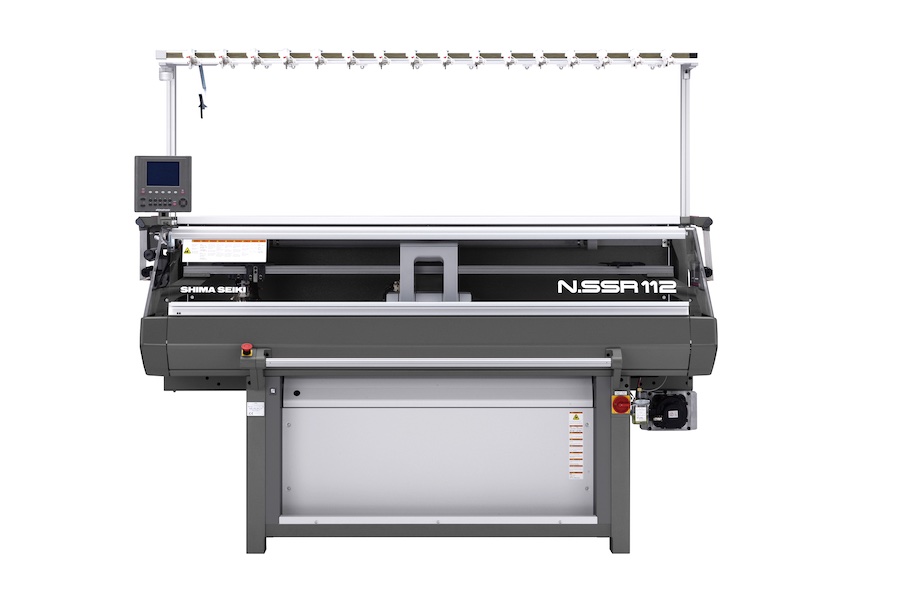
Leading flat knitting solutions provider SHIMA SEIKI MFG., LTD. of Wakayama, Japan, together with its Hong Kong and Chinese market subsidiary SHIMA SEIKI (HONG KONG) LTD., will exhibit at the ShanghaiTex 2025 exhibition (Booth No.: Hall N3, Booth A20) held in Shanghai, China this month. This marks the return of SHIMA SEIKI to ShanghaiTex after a 14-year hiatus, its last exhibit at the show having been in 2011.

#Exhibitions & Events

Groz-Beckert showcases textile innovation at ShanghaiTex 2025

From December 16 to 19, 2025, the global textile industry will gather at ShanghaiTex at the Shanghai New International Expo Center (SNIEC), where Groz-Beckert will present its latest highlights and innovations across its five product areas – Knitting, Weaving, Nonwovens, Sewing, and Spinning – at Hall N3, Booth A05.

#Knitting & Hosiery

Mayer & Cie. to shut down after failed search for investor – 270 jobs affected

Mayer & Cie., the long-established German manufacturer of circular knitting and braiding machines, will cease operations after its international search for an investor ended without success. The company, based in Albstadt-Tailfingen, had been undergoing insolvency proceedings in self-administration since its filing on 23 September 2025. As Schwarzwälder Bote reports, the insolvency court has now formally opened the proceedings, triggering the decision to wind down the business in an orderly process.

#ITMA Asia + CITME Singapore 2025

Innovation and customer proximity – KARL MAYER’s clear focus makes an impression

ITMA ASIA in Singapore was a resounding success for KARL MAYER, exceeding all expectations. The company welcomed visitors from 39 countries and held around 570 expert discussions. Most guests came from India, followed by China, Indonesia and Pakistan. The exchange with them was both well-founded and targeted. Conversation topics ranged from investment projects and new technologies to opportunities for cooperation and business expansion.

Latest News

#Research & Development

Innovation center for textile circular economy inaugurated

Just over eight months after the foundation stone was laid, the new Innovation Center for Textile Circular Economy was officially inaugurated today at TITK Rudolstadt. Thuringia's Minister President Mario Voigt, TITK Director Benjamin Redlingshöfer, and other guests of honor cut the ribbon to the modern building complex and viewed the premises, which are now ready for occupancy. The “DICE – Demonstration and Innovation Center for Textile Circular Economy” is TITK's largest single investment to date. The Free State of Thuringia supported the total cost of €11.5 million with €8 million in GRW and FTI funding.

#Research & Development

Sustainable design of Geosynthetics and roof underlayments made from recyclates

Is it possible to recover plastic recyclates from previously unused waste streams in order to produce high-quality fibers and films? How can bio-based polymer fibers be manufactured so as to allow adjustable biodegradability? These are the questions being addressed by researchers from the Fraunhofer Cluster of Excellence Circular Plastics Economy CCPE in the Zirk-Tex project.

#Associations

Waste2Fashion: FTTH Committed to advancing Circular Fashion in the Mediterranean

As an official partner of the Waste2Fashion project, the Tunisian Federation of Textile and Apparel (FTTH) participated in the Kick-off Meeting held on 10–11 December in Spain. The event brought together project partners from across the Mediterranean, including Spain, Italy, Egypt, Lebanon, and Tunisia, to align on a shared vision and initiate the first implementation steps.

#Associations

AATCC announces 2025 Herman & Myrtle Goldstein Graduate Student Paper Competition winners

The American Association of Textile Chemists and Colorists (AATCC) recognized the winners of the 2025 Herman & Myrtle Goldstein Graduate Student Paper Competition. Founded in 1982 to give student members the chance to conduct and present original research, the competition was renamed in 1994 in honor of Herman and Myrtle Goldstein, following their US$60,000 endowment. Their gift is a lasting remembrance of their dedication to young people in the textile industry.

TOP