[pageLogInLogOut]

#Industry 4.0 / Digitalization

The responsible Mica initiative & Tilkal launching first multi-stakeholder blockchain-based solution to improve traceability across Mica supply chains

The Responsible Mica Initiative (RMI) and Tilkal are pleased to announce their collaboration in the development of a solution that will improve traceability across mica supply chains using blockchain technology.

Since its creation in 2017, the Responsible Mica Initiative has been working towards the establishment of a fair, responsible and sustainable mica supply chain where child labor and poor working conditions are eradicated. Timely and accurate data collection across the entire mica supply chain – from mines and processors to intermediate and end-use industries – has been a key organization tool. Blockchain-based traceability data platform from Tilkal, a pioneer in the field, will enable RMI to better understand its mica supply chain. Adoption of Tilkal's system will improve data transparency while maintaining security and providing a flexible, cost-efficient and auditable traceability system.

"From day one, we've known that our ability to trace mica to and from end-users and mines would be key to our success," explained Fanny Fremont, RMI Executive Director. " The state-of-the-art blockchain tool from Tilkal that we're going to use will take our program to the next level, giving us more detailed and timely data. Blockchain will help us monitor our supply chains, identify where & who RMI can further support and make responsible mica sourcing a reality in the communities we serve."

"Working with RMI is an incredible opportunity and a huge responsibility altogether. At Tilkal we are always proud of how our innovative platform supports our customers’ supply chains: yet supporting a mission-driven organization like RMI in its social cause is particularly rewarding," said Matthieu Hug, Chief Executive Officer of Tilkal. "Besides this initiative from RMI to secure mica supply chains is unique in its breadth and ambition, considering the wide variety of industrials from around the world joining forces.”

Why a next generation traceability tool for the mica supply chain?

RMI has used confidential mica supply chain mapping since 2017 but the process has been manual. Today, with more than 70 mica supply chain members drawn from a wide range of industries located on different continents, a manual system is unduly labor intensive, cumbersome and lacks the sophistication needed to support transparency and optimize data formats and reporting in ways that can advance RMI goals. 


There are a number of specific benefits of Tilkal's software:

  • Traceability of mica will significantly improve 360° knowledge of the supply chain, enabling thorough mapping and verification of all members committed to implement responsible workplace practices.
  • By sharing a common database, RMI members will promote transparency across mica supply chains, enabling more efficient risk identification and easier reporting processes.
  • Tilkal's technology offers better insights into the sustainability performance along the mica supply chain and enables RMI to customize support to improve workplace practices among all stakeholders.


How Tilkal’s solution will help?

By efficiently capturing information along the mica supply chain in a decentralized network, Tilkal's traceability solution will reduce complexity while offering greater flexibility and auditability. Blockchain technology provides the necessary foundation to build such a network for sharing end-to-end traceability data, a field in which Tilkal is paving the way. The system is also designed to ensure confidentiality of individual member data.

More News from TEXDATA International

#Techtextil 2026

Performance Apparels: Functional textiles drive innovation at Techtextil 2026

From high-performance fibres and advanced membranes to smart textiles and sustainable material concepts – functional apparel is becoming one of the most dynamic innovation fields in technical textiles. At Techtextil 2026, exhibitors demonstrate how new materials, finishing technologies and digital functions are shaping the next generation of protective, workwear and outdoor systems.

#Texprocess 2026

Texprocess 2026: Automation, digitalisation and AI reshape textile processing

Investment decisions in textile processing have become increasingly complex. Rising energy prices, labour shortages and geopolitical uncertainties are forcing companies to prioritise technologies that deliver measurable improvements in efficiency and process stability. This applies not only to apparel production, but also to the processing of technical textiles and high-performance materials. Modernisation projects are therefore being evaluated more selectively – but the pressure to upgrade production systems continues to grow. Texprocess 2026 reflects this tension between cautious investment behaviour and increasing technological demand.

#Techtextil 2026

Textile Chemicals & Dyes: Innovation in Textile Chemistry moves into focus at Techtextil 2026

From PFAS-free finishes and water-saving dyeing technologies to advanced coatings and recycling-compatible formulations, innovation in textile chemistry is accelerating across the industry. Reflecting this development, Techtextil 2026 introduces Textile Chemicals & Dyes as a dedicated product segment, highlighting the growing role of chemical solutions in shaping the next generation of technical textiles.

#Recycling / Circular Economy

textile.4U publishes special edition “Top 100 Textile Recycling Companies 2025”

With a comprehensive 176-page special edition, textile.4U is dedicating its latest issue entirely to one of the most dynamic and influential topics in today’s textile industry: textile recycling. The new issue, published exclusively in high-quality print, presents the Top 100 textile recycling companies researched and selected by TexData – organizations that already play a key role in the transition to circular textiles or are expected to have a significant impact in the near future.

More News on Industry 4.0 / Digitalization

#Research & Development

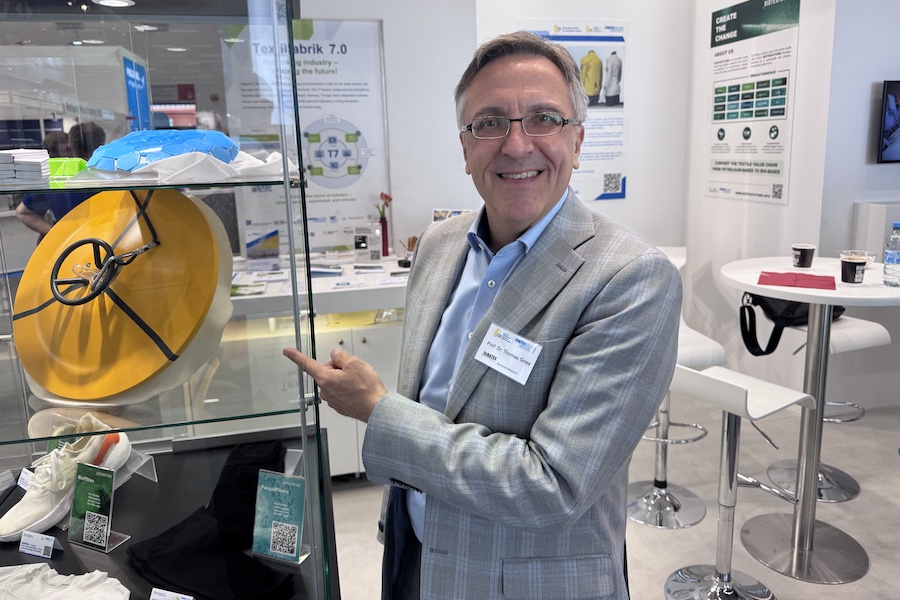
Textilfabrik 7.0 launched: Mönchengladbach becomes a real-world lab for sustainable textile production

With the official kick-off event of the Textilfabrik 7.0 (T7), a major transformation project for the German textile and apparel industry has been launched in the Monforts Quarter in Mönchengladbach. At the “Textile Roundtable,” an event format organized by the Zukunftsagentur Rheinisches Revier, representatives from industry, research, politics, and the regional economy came together to jointly lay the foundation for CO₂-neutral, circular, and economically viable textile production in Germany.

#Man-Made Fibers

OnceMore® from Södra brings end-to-end traceability for circular Man-made Cellulosic Fibers (MMCF) using TextileGenesis

OnceMore® from Södra, the world’s first large-scale process for recycling blended fabrics into high‐quality dissolving pulp, will begin using TextileGenesis, a Lectra company, to strengthen traceability from raw material to retail across the value chain. OnceMore® produces dissolving pulp made from blended textile waste and wood sourced from responsibly managed Swedish forests. By integrating TextileGenesis, OnceMore® supports the growing need for verified data and secure, transparent tracking throughout increasingly complex supply chain.

#Denim

Jeanologia launches Billy

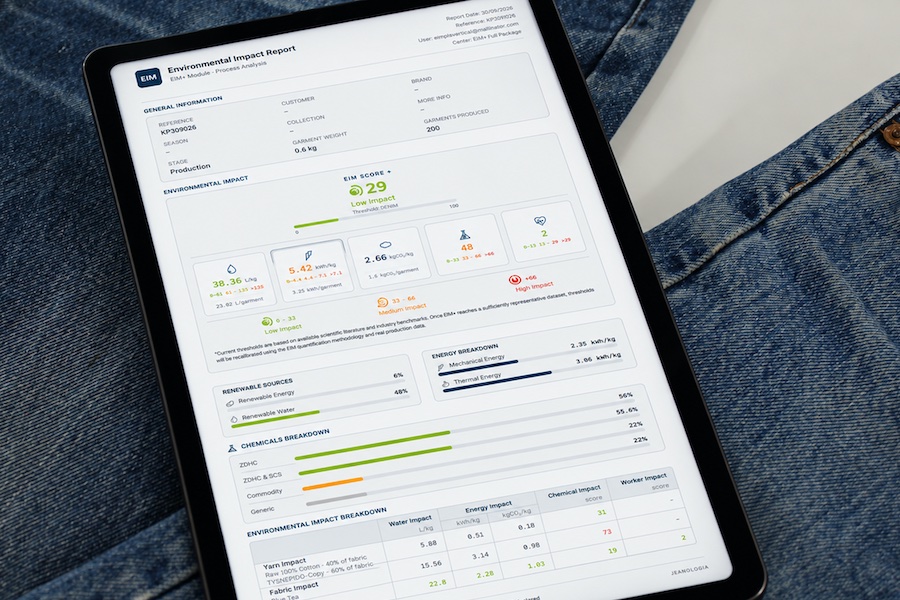
The new AI extracts precise laser designs from a garment image in minutes, transforming how vintage denim is recreated for production. If Jeanologia’s laser changed the way jeans were made at the end of the last century, its AI now takes the next step: moving from reproducing wear to designing it. / archive photo © 2026 Jeanologia

#Dyeing, Drying, Finishing

Monforts unveils interactive digital platform for textile finishers

Monforts has launched a new digital platform designed to give textile manufacturers faster, more intuitive access to the company’s finishing technologies, technical expertise and aftersales support worldwide.

Latest News

#Techtextil 2026

AI, Start-ups, Research: Techtextil and Texprocess bring together players in the textile industry

From start-ups to universities and research institutes: at Techtextil and Texprocess, the world’s leading innovation trade fairs in Frankfurt am Main, exhibitors present future-oriented concepts for the global textile industry. With the international Campus & Research area, a strong participation from start-ups and the latest AI applications for textile processing, both trade fairs showcase current developments in the textile industry. By bringing together innovation, research and application, they enable new partnerships across the textile value chain.

#Techtextil 2026

IVGT joint stand brings innovation and networking to Techtextil 2026

At Techtextil 2026 and the parallel Texprocess 2026, key transformation topics such as artificial intelligence, digitalisation, sustainability, recycling and the circular economy will be reflected across the show. Against this backdrop, the IVGT, together with 16 member companies, will present its joint stand in Hall 12.1 (Stand D62) as a platform for exchange and networking.

#Man-Made Fibers

Indorama Ventures supports Southeast Asia’s textile customers with reliable regional supply and global innovative portfolio

Indorama Ventures, one of the leading global polyester fiber and filament yarn suppliers globally, will participate in Indo Intertex 2026 in Jakarta this April, making its diverse global portfolio available to apparel, home textile, and hygiene customers across Southeast Asia.

#Raw Materials

New study shows low environmental impact by Cotton made in Africa Organic Cotton from Tanzania

Today, the Aid by Trade Foundation (AbTF) is announcing the results of a comprehensive life-cycle analysis (LCA) for cotton produced in Tanzania under the Cotton made in Africa Organic (CmiA Organic) standard. The study emphasises the small ecological footprint of CmiA Organic verified cotton. This can largely be traced back to the absence of synthetic pesticides, artificial fertilisers, and artificial irrigation. Consequently, CmiA Organic cotton can help the textile industry meet regulatory requirements as well as science-based targets. The results also show that the consequences of climate change threaten the livelihoods of these cotton farmers, even though the type of agriculture they practise barely contributes to climate change.

TOP