[pageLogInLogOut]
TRÜTZSCHLER SPINNING - THE NEW CARD

#Industry 4.0 / Digitalization

Birla Cellulose now maps 100% forest sources on Traceability platform GreenTrack™

Birla Cellulose has advanced the capability of the well-established blockchain-enabled traceability platform, GreenTrack™, which now enables the consumers to see the forests from where the wood is sourced and thus providing a complete end-to-end visibility of forest to fashion. The visibility of forest sources for all the Birla Cellulose’s eco-enhanced products has been achieved by collaboration with Sappi Ltd., the largest supplier of dissolving pulp.The forest information of pulp produced by Birla Cellulose was available on the platform thus far.

The GreenTrack™ platform was introduced in early 2019 and has since been used widely to trace and track the material flow in the fashion value chain, and is currently being used by over 20 leading global brands & retailers and their respective supply chain partners across the globe, while many others are in the process of onboarding it. In addition to brands, many large garment producers and exporters are also using this platform to trace their supply chains. The traceability of the value chain through the use of this platform comes without any additional cost to the supply chain partners or to the brands & retailers. This unique platform already handles thousands of ‘live’ transactions and has a potential to reach millions of consumers across the globe. Brands have started to pass on the power of traceability to their end consumers through QR codes on their garment hangtags. 

“Expanding the capability of the GreenTrackTM platform and our collaboration with Sappi to provide the visibility of sustainably managed forests from where the wood was sourced, would help the sustainability focused consumers, brands and retailers to make a more informed buying decision, said Mukul Agrawal, Chief Sustainability Officer of Birla Cellulose. He informed “this initiative simplifies the verification of sustainability of complete supply chain, from forest to retail, validation of which otherwise would be a cumbersome process involving compilation of many certifications and manual tracking of the material in a long complex value chain”. 


This is one more step towards our commitment for building fully transparent supply chain and creating visibility to the sustainably managed forests, that are among the most important aspect of responsibly produced viscose. Birla Cellulose leads sustainable wood sourcing practices in MMCF industry and ranks no. 1 in Canopy’s Hot Button Report 2020 that ranks the MMCF producers on sustainable wood sourcing practices and next generation solutions. 

According to Krelyne Andrew, General Manager - Sustainability for Sappi Verve, “we are committed to enhancing trust and creating shared value within our supply chain, working closely with our partners to promote and shape the sustainability of the MMCF sector towards a Net Positive vision.” Traceable and transparent supply chains are integral stepping stones to providing brand owners and consumers with the confidence that their products originate from sustainable and renewable sources of wood, free from deforestation, where biodiversity is promoted and customary, traditional or civil rights of people are upheld. 

The platform is unique in the sense that it tracks orders as well as shipments (actual material flow) at the same time, thereby, eliminating any chance of inconsistent practices in the supply chain. The platform ensures information access only to relevant parties and full details of transparent supply chain is visible to end buyers or brands only. In addition to live tracking of material, the platform offers a series of value added features such as auto-generation of transaction certificates, easing quality management efforts, business analytics, amongst other features. 


More News from TEXDATA International

#Texprocess 2026

Texprocess 2026: Automation, digitalisation and AI reshape textile processing

Investment decisions in textile processing have become increasingly complex. Rising energy prices, labour shortages and geopolitical uncertainties are forcing companies to prioritise technologies that deliver measurable improvements in efficiency and process stability. This applies not only to apparel production, but also to the processing of technical textiles and high-performance materials. Modernisation projects are therefore being evaluated more selectively – but the pressure to upgrade production systems continues to grow. Texprocess 2026 reflects this tension between cautious investment behaviour and increasing technological demand.

#Techtextil 2026

Textile Chemicals & Dyes: Innovation in Textile Chemistry moves into focus at Techtextil 2026

From PFAS-free finishes and water-saving dyeing technologies to advanced coatings and recycling-compatible formulations, innovation in textile chemistry is accelerating across the industry. Reflecting this development, Techtextil 2026 introduces Textile Chemicals & Dyes as a dedicated product segment, highlighting the growing role of chemical solutions in shaping the next generation of technical textiles.

#Recycling / Circular Economy

textile.4U publishes special edition “Top 100 Textile Recycling Companies 2025”

With a comprehensive 176-page special edition, textile.4U is dedicating its latest issue entirely to one of the most dynamic and influential topics in today’s textile industry: textile recycling. The new issue, published exclusively in high-quality print, presents the Top 100 textile recycling companies researched and selected by TexData – organizations that already play a key role in the transition to circular textiles or are expected to have a significant impact in the near future.

#Recycling / Circular Economy

Responsible Textile Recovery Act of 2024 signed by Governor

Senator Josh Newman (D-Fullerton) is proud to announce that Senate Bill 707 (SB 707), the Responsible Textile Recovery Act of 2024, has been signed into law by the Governor of California, Gavin Newsom. This groundbreaking legislation establishes the country’s first Extended Producer Responsibility (EPR) textile recycling program, marking a significant step forward in the state’s efforts to combat waste and promote sustainability.

More News on Industry 4.0 / Digitalization

#Man-Made Fibers

OnceMore® from Södra brings end-to-end traceability for circular Man-made Cellulosic Fibers (MMCF) using TextileGenesis

OnceMore® from Södra, the world’s first large-scale process for recycling blended fabrics into high‐quality dissolving pulp, will begin using TextileGenesis, a Lectra company, to strengthen traceability from raw material to retail across the value chain. OnceMore® produces dissolving pulp made from blended textile waste and wood sourced from responsibly managed Swedish forests. By integrating TextileGenesis, OnceMore® supports the growing need for verified data and secure, transparent tracking throughout increasingly complex supply chain.

#Denim

Jeanologia launches Billy

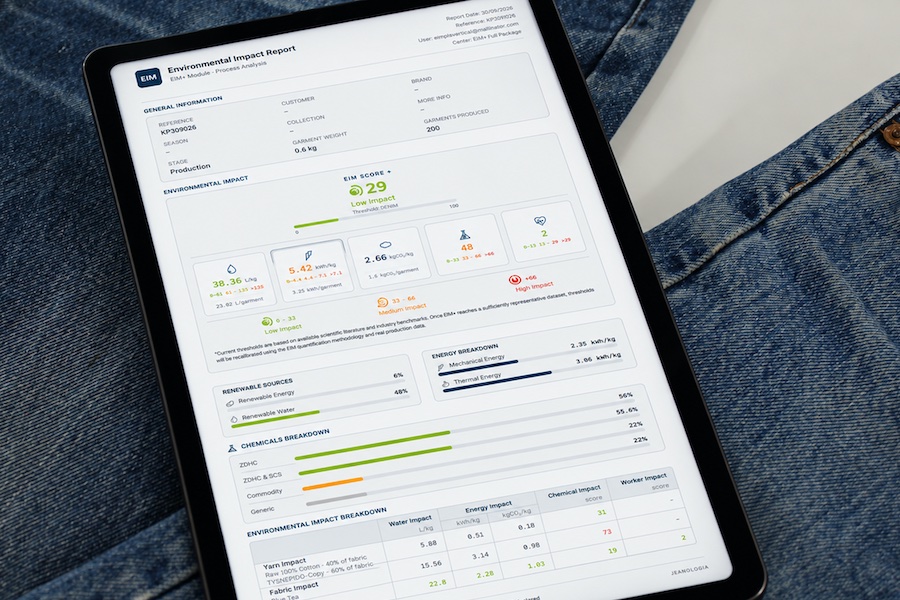
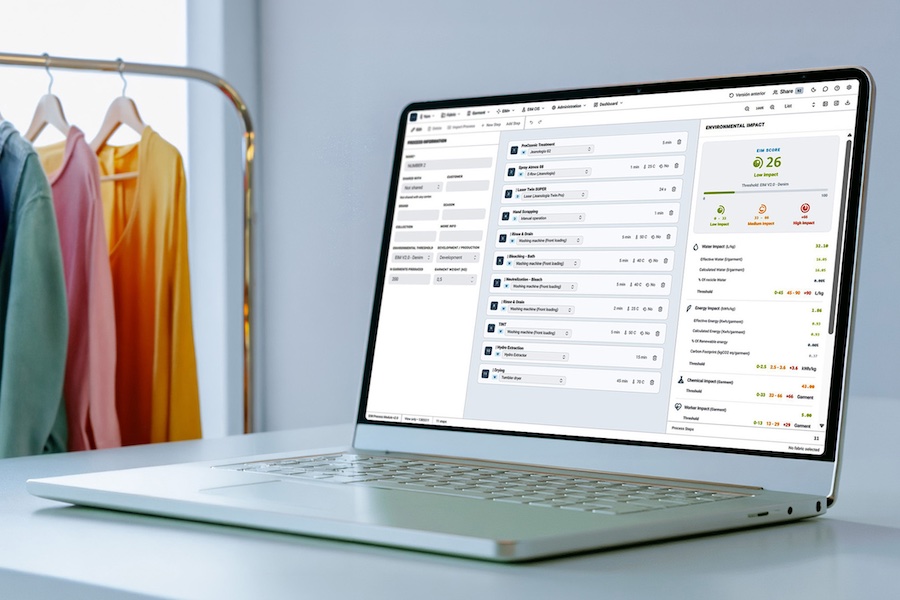
The new AI extracts precise laser designs from a garment image in minutes, transforming how vintage denim is recreated for production. If Jeanologia’s laser changed the way jeans were made at the end of the last century, its AI now takes the next step: moving from reproducing wear to designing it. / archive photo © 2026 Jeanologia

#Dyeing, Drying, Finishing

Monforts unveils interactive digital platform for textile finishers

Monforts has launched a new digital platform designed to give textile manufacturers faster, more intuitive access to the company’s finishing technologies, technical expertise and aftersales support worldwide.

#Spinning

Barmag presents the next generation of POY production – energy-efficient and partial-automated

With POY 2.0, Barmag is introducing a completely redesigned spinning concept that takes the production of partially oriented yarn (POY) to a new level in terms of technology and economy. The solution, which was presented to a selected audience of experts for the first time at ITMA Asia + CITME 2025, was met with great enthusiasm: several yarn producers worldwide immediately expressed their interest in a pilot plant.

Latest News

#Europe

Commission presents proposal for EU Inc. - unlocking the full potential of the Single Market for Europe's entrepreneurs

Today, the European Commission presented its proposal for EU Inc., a new single set of corporate rules, building the cornerstone and starting point for the EU's 28th regime. EU Inc. is an optional, digital-by-default European corporate framework. It will make it easier for businesses to start, operate and grow across the EU – incentivising them to stay in Europe, and encourage those who once looked elsewhere to return.

#Sustainability

Experts publish APAC policy priorities

Cascale today announced the publication of its APAC Policy Priorities Paper, developed by the Asia-Pacific (APAC) Policy Member Expert Team (MET) to identify key regional sustainability challenges and provide practical, aligned recommendations for policymakers and industry stakeholders across Asia-Pacific.

#Spinning

Temco launches a new DTY all-in-one solution

Temco introduces the DTY All-in-One Solution – a fully harmonized set of components engineered to give customers a highly stable, low maintenance and reproducible process environment. The solution reduces interruptions, extends component lifetimes and supports consistent yarn quality across all machine positions. All-in-One Solution – a fully harmonized set of components engineered to provide maintenance and reproducible process environment.

#Knitting & Hosiery

SHIMA SEIKI announces partnership with CLO Virtual Fashion

Leading computerized flat knitting innovator SHIMA SEIKI MFG., LTD. of Wakayama, Japan is partnering with digital garment solutions provider CLO Virtual Fashion of Seoul, South Korea for the integration of technology in garment design and simulation.

TOP