[pageLogInLogOut]

#Industry 4.0 / Digitalization

New automated line concept by TMAS members
(c) 2020 TMAS
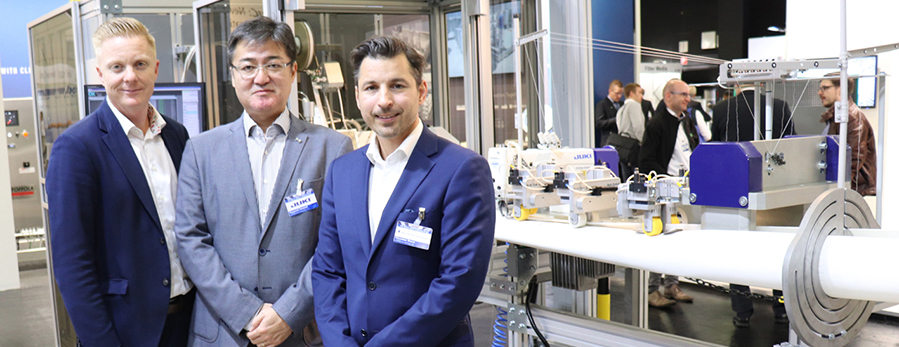
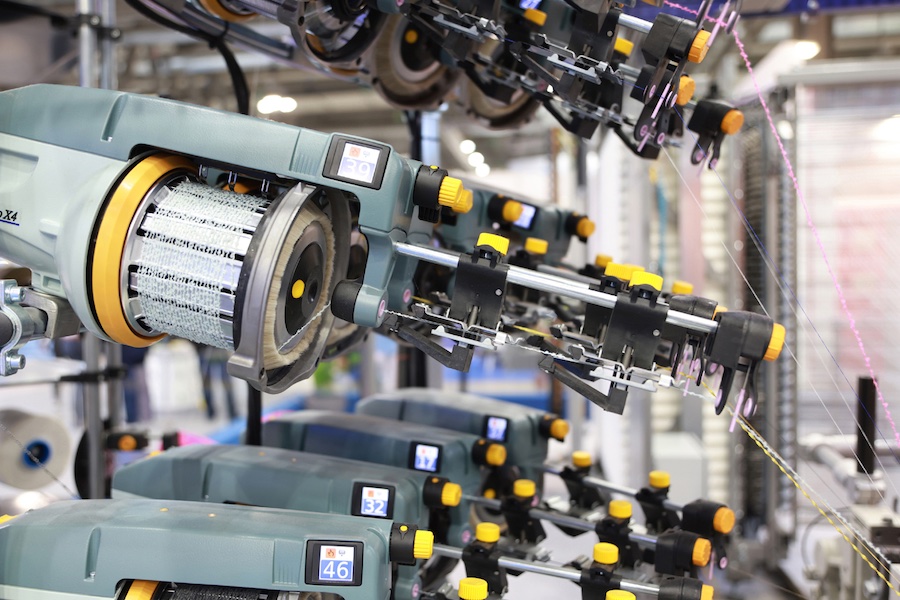
In the latest technology innovation from members of TMAS (the Swedish textile machinery association), ACG Kinna and ACG Nyström have teamed up with Juki Corporation – the world’s leading sewing machine manufacturer – in the development of a new automated line concept that can considerably speed up the production of finished filter bags.

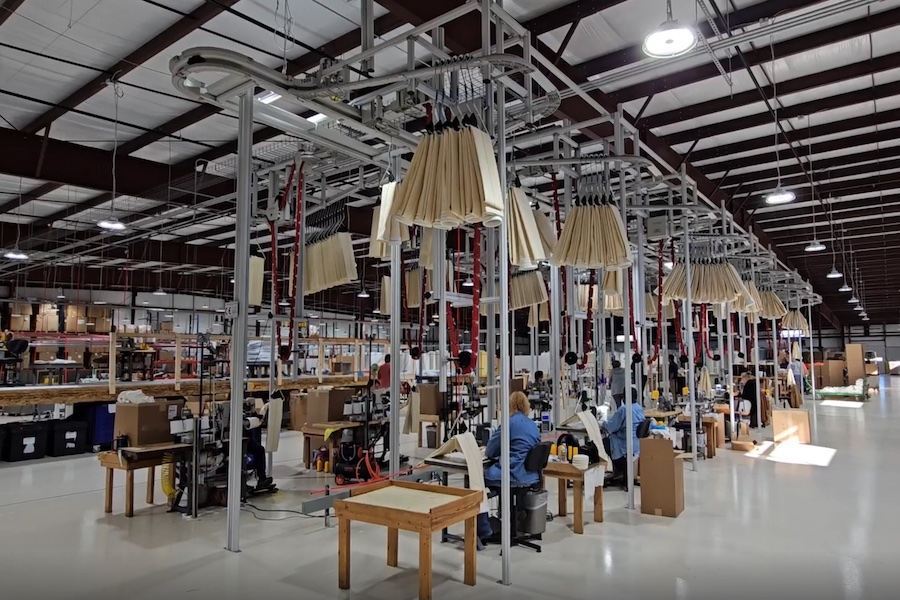
Woven or nonwoven filter bags employed in a wide range of industrial processes may be under the radar as products, but they represent a pretty significant percentage of technical textiles production.

According to a recent report from BCC research, a leading US analyst covering this sector, industrial filtration represented a $555 million market in 2019 and some of the key areas where such filter bags are employed include:

  • Metal fabrication, with effective filtration required for manual and automated welding, thermal cutting, blasting and machining, especially for coolant filtration.
  • The process and energy industries, including foundries, smelters, incinerators, asphalt works and energy production plants.
  • Other key manufacturing fields – often where dust is generated – including the production of timber, textiles, composites, waste handling and minerals, in addition to chemicals, food production, pharmaceuticals, electronics and agriculture.

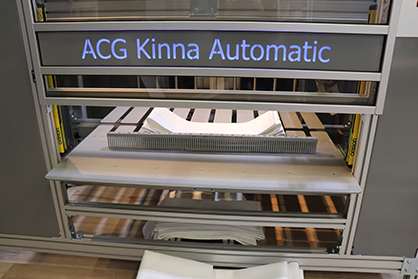
As an example of the scale of this industry and the high volumes of fabrics involved, one supplier recently received a single order for 30,000 filter bags to be used for flue gas cleaning at the Estonian Eesti Power Plant – the biggest oil shale fired power plant in the world. The bags can be anywhere up to eight metres in length and frequently have to be replaced.
(c) 2020 TMAS
(c) 2020 TMAS


Line integration

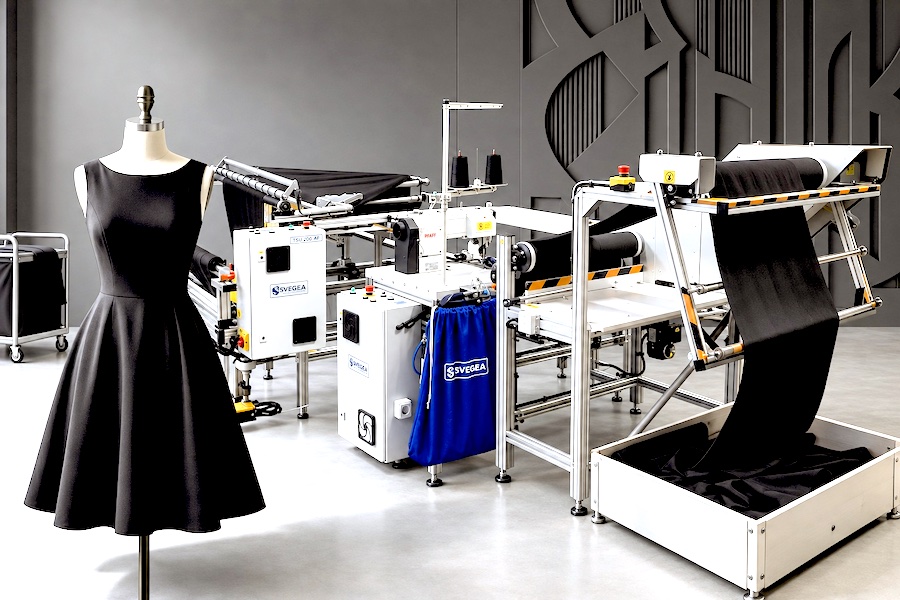
The new SFL-2000 line is the result of a four-year development project between Juki Central Europe, headquartered in Poland, and the two ACG companies.

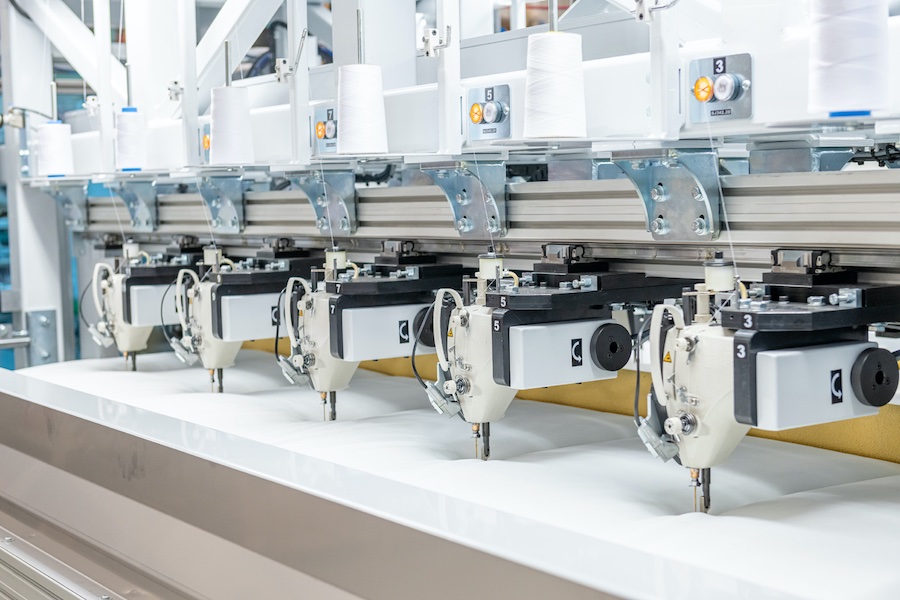
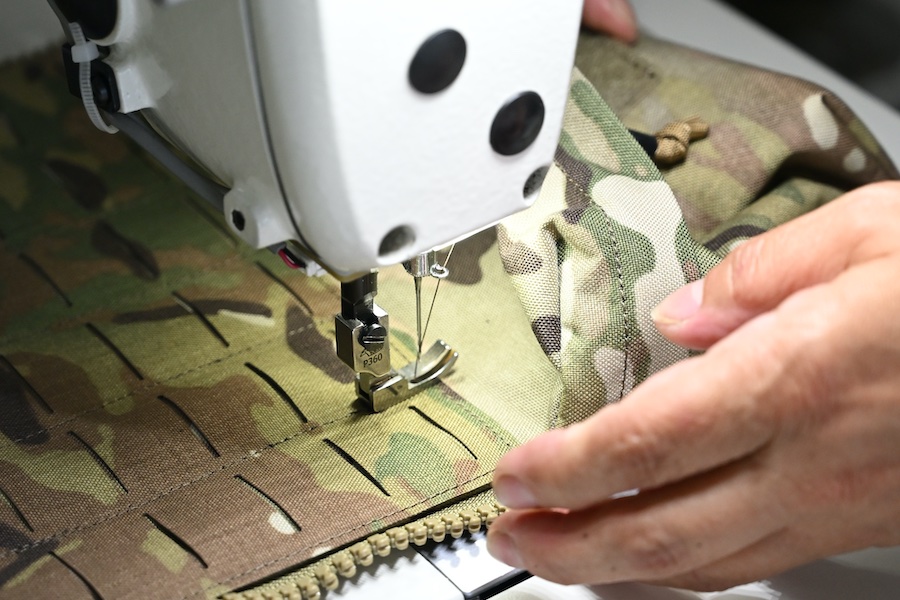
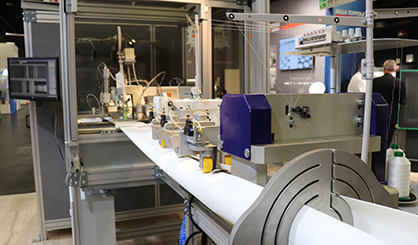
It is capable of handling a wide range of different filter media, and as an all-in-one solution, can produce high quality and accurate seams to pre-defined parameters, with optional modules allowing for customised constructions.
(c) 2020 TMAS
(c) 2020 TMAS


“The line can achieve sewing speeds of ten metres a minute with all kinds of fold, overlap and stitched seam, and up to 20 metres per minute with welded bags in widths of up to a metre,” says Christian Moore, CEO at ACG Kinna. “The unique selling point is that it builds all sewing, welding and taping options into one flexible line to ensure less stops, and more importantly, quicker stops between changes of material, dimensions or joining options. This puts more money into the pockets of our customers.”

“This type of automation is the way forward, not just for filtration, but for all industries,” adds Masanori Awasaki, President of Juki Central Europe. “At Juki, our main technologies are for garment manufacturing, but we are also widely involved in the technical textiles field and this line integration concept is moving production on to the next level of efficiency.”
(c) 2020 TMAS
(c) 2020 TMAS


Joining options

The line is available in three versions – the SFL-2000S for sewn seams, the SFL-2000-W for welded alternatives and the SFL-2000WS employing both joining technologies.

The standard version of these lines has a single media roll feeder as standard, but as an option, a second can be added, with a Juki MO-6903G overlock head joining two separate materials together in continuous production, without any slow-down of the machine.

A custom pre-folding system creates the tubular form of the filter bag and the overlap just prior to the Juki sewing and welding units.

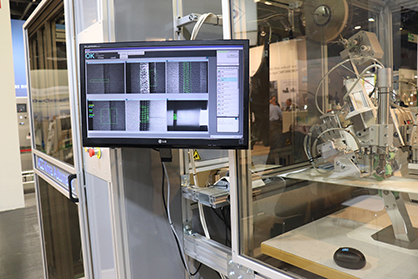
“The quality control system at this point employs three cameras inspecting and steering every parameter – the bag width and the width of the overlap, as well as seam accuracy – right down to the length of each stitch,” explains Christian Moore. “Three-axis positioning of the Juki modules ensures the seams are perfectly centred for precision consistency.”

The bag is then conveyed to the cutting and printing unit.

“An inkjet printer is a further option at this stage, for the addition of QR and bar codes, and/or logos, and a buffer system of up to 1.5 metres prevents any stoppages as this is taking place, prior to cutting,” adds ACG Nyström Vice-President Thomas Arvidsson.

“I continue to be surprised by the many fields of industry our TMAS members serve,” says TMAS Secretary General Therese Premler-Andersson. “The innovations from our companies during 2019 were far-ranging and characterised by an advanced grasp of Industry 4.0 automation techniques and the need for more sustainable processing methods that is being demanded by their customers. There will be much more of this to come in 2020 and beyond.”
More News from Textile Machinery Association of Sweden

More News on Industry 4.0 / Digitalization

#Industry 4.0 / Digitalization

Suzhou Tianyuan boosts costing accuracy to 98% with Coats Digital’s GSDCost

Coats Digital is delighted to announce that Suzhou Tianyuan Garments Co., Ltd., a leading manufacturer of high-quality sportswear and functional apparel for global brands such as Adidas, FILA, ANTA, and The North Face, has achieved remarkable productivity and cost management improvements following the implementation of Coats Digital’s award-winning method-time-cost optimisation solution, GSDCost.

#Industry 4.0 / Digitalization

Lenze receives IEC 62443-4-1 certification: TÜV Rheinland confirms cyber-secure development process

Lenze SE has been certified according to IEC 62443-4-1 since November 2025. TÜV Rheinland thus confirms that Lenze meets the requirements of this internationally recognized standard for a secure development process for industrial automation and drive products. The certification is an important milestone on the way to implementing the EU Cyber Resilience Act (CRA), which will become mandatory for machine manufacturers and their suppliers from December 2027.

#Industry 4.0 / Digitalization

Mango joins TextileGenesis pioneering traceability solution, a Lectra company, for a transparent value chain

Mango, one of the leading international fashion groups, has joined TextileGenesis, the pioneering traceability solution for the fashion and textile industries, to trace their natural and animal fibers, synthetics, man-made cellulosic fibers and leather. TextileGenesis, a Lectra company, offers a complete and secure cutting-edge technology with its six-dimensional (6D) offering and unique “fiber forwards” approach. Mango, has long been committed to maintaining a fully transparent supply chain, and TextileGenesis will reinforce this commitment.

#Sustainability

Cascale’s Higg FEM 2025 update unlocks new data-driven insights

Refreshed Higg FEM 2025 delivers data-driven insights, sharper emission metrics, and enhanced verification to accelerate industry-wide progress.

Latest News

#People

Happy Holidays!

Dear reader, the year 2025 is drawing to a close. We are entering what we hope will be a peaceful holiday season, spending time with our families and taking a moment to pause and reflect. We hope we have been able to support you once again this year with relevant news and articles, and we look forward to surprising you with many innovations in the coming year. Enjoy the festive season, stay healthy, and we wish you a happy and joyful holiday season.

#Weaving

Lindauer Dornier announces leadership transition in weaving machine business

After more than ten successful years at Lindauer DORNIER GmbH, Mr Wolfgang Schöffl will leave the family-owned company at the end of the year to enter well-deserved retirement.

#Heimtextil 2026

Texpertise Focus AI: Messe Frankfurt puts Artificial Intelligence centre stage at its international textile and apparel trade fairs

Under the banner 'Texpertise Focus AI, Messe Frankfurt will place a strong emphasis on Artificial Intelligence (AI) across its international textile and apparel trade fairs from 2026 onwards, setting a future-shaping signal for the industry. The initiative highlights the responsible use of AI along the entire textile value chain, from fibre production to the point of sale. The programme will launch at Heimtextil in Frankfurt in January 2026.

#Technical Textiles

Autoneum and Polestar set new benchmarks for passenger experience and sustainability

As the global market leader in sustainable acoustic and thermal management, Autoneum is a key supplier of interior and exterior components for the highly anticipated Polestar 5 model. The successful collaboration between Autoneum and Polestar marks a significant milestone in sustainable automotive engineering: the electric grand tourer sports car features several innovations in lightweight, fully recyclable polyester-based components that ensure a superior driving experience. Polestar 5 was revealed at the IAA Mobility 2025 in Munich and is available in 24 markets.

TOP