[pageLogInLogOut]
TRÜTZSCHLER SPINNING - THE NEW CARD

#Industry 4.0 / Digitalization

Dienes is moving rapidly towards Industry 4.0
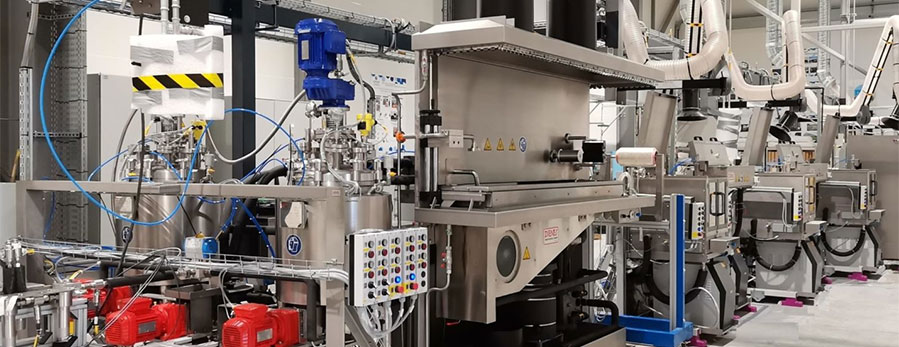
Automation of technical fiber production © 2022 Dienes
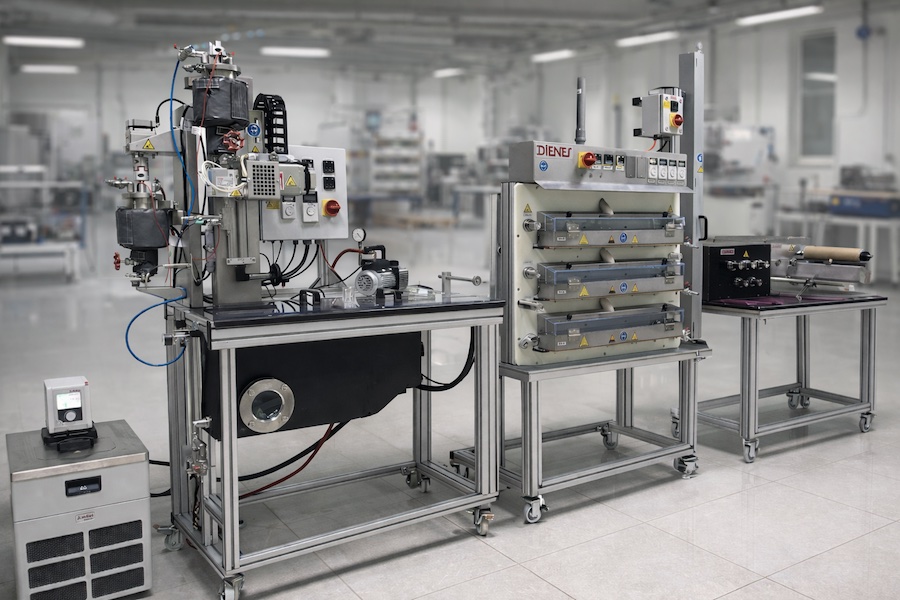
The transition is carried out using a new generation of automation systems in its plants helping the provider to achieve many goals at once. The systems include company’s own electronics, PLCs (programmable logic controller), touch panels, industrial PCs, etc. The enhancements focus on upgrading remote maintenance, improving performance and real-time behavior, using compatible standardized interfaces, and modernizing HMI (human machine interface) visualization.

The design of special equipment and fully-engineered solutions is quite a challenge. The utilization of CANopen specifications will not only increase the performance and reliability of the communication between field-level devices in the plant, but also simplify and help to reduce the costs of the development process. Dienes is keen on developing its own electronics with the newest CANopen specifications, so that all controllers, I/O cards and inverters support the CANopen communication protocol with its respective device profiles. This enables the devices to reach a higher standardized level of configurability and connectivity.

The development of innovative filaments demands an efficient, systematic and, in part, self-optimizing experimental working system, which must be smart and flexible. In the Dienes Multimode plants, each process step is represented by a module, which has its own decentralized control. This is the key for module’s integration into any plant at any time with a reduced programming effort. In the Multimode Explorer tool developed by Dienes, all process data are permanently visualized and recorded with a high degree of transparency for further evaluation. In order to guarantee the operation of each smart modular unit, an error-free system and communication are required. Furthermore, a reliable system makes sure that all production parameters can be permanently visualized and recorded, enabling a complete traceability of the process.


The recent CiA member Dienes Apparatebau is a supplier of fully-engineered solutions for leading manufacturers of technical fibers and renowned research institutes

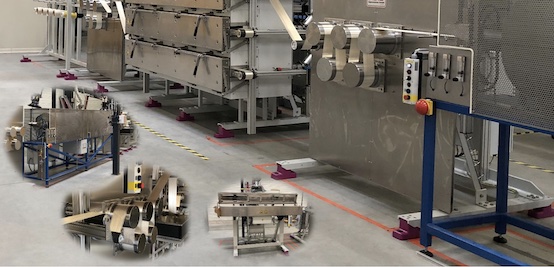
The company founded for over 90 years is located in Mühlheim am Main (Germany). Over the decades, the product range has been continuously growing from heated godets, control systems, individual plant modules up to complete laboratory, pilot and production lines for melt, wet, nano-?ber spinning, and further post-treatment. Growing demands on fiber performance require a continuous development and optimization of technology and production parameters.
More News from Dienes Apparatebau GmbH

#Techtextil 2026

DIENES at Techtextil 2026: Flexible pilot lines for bio-based fiber development

The growing relevance of bio-based materials in technical textiles is accompanied by increasing demands for reproducibility, high-quality data, and scalable process routes. Especially when working with cellulose and its derivatives, chitosan, lignin-based approaches, or bio-based PAN as a carbon-fiber precursor, R&D teams face variable feedstock quality, tighter process windows, and the need for reliable comparability across trials. This calls for flexible, data-driven experimental setups that can be reconfigured efficiently when recipes, solvents, and raw-material batches change.

#Composites

DIENES showcases MultiMode®: Pioneering solutions for the development of sustainable carbon fibres at JEC World 2025

DIENES Apparatebau GmbH, a global leader in innovative fibre processing technologies, is delighted to announce its participation at JEC World 2025 in Paris. The company will present its state-of-the-art MultiMode® modular platform, a revolutionary approach to developing sustainable carbon fibres. Visitors can explore DIENES’s advanced solutions at the Baden-Württemberg International stand in hall 6 stand N82.4.

#Techtextil 2024

DIENES at Techtextil 2024

The current accelerated growing demand for technical textile demands a more proactive approach which includes implementing frameworks and technologies for recycling and a broad use of biobased materials as an alternative to conventional polymers. Research work in this field is characterised by a high degree of adaptation needs, hence demanding an efficient, systematic and, in part, self-optimising experimental working system, which must be intelligent in gathering data from the process and flexible in enabling its rearrangement.

More News on Industry 4.0 / Digitalization

#Research & Development

Textilfabrik 7.0 launched: Mönchengladbach becomes a real-world lab for sustainable textile production

With the official kick-off event of the Textilfabrik 7.0 (T7), a major transformation project for the German textile and apparel industry has been launched in the Monforts Quarter in Mönchengladbach. At the “Textile Roundtable,” an event format organized by the Zukunftsagentur Rheinisches Revier, representatives from industry, research, politics, and the regional economy came together to jointly lay the foundation for CO₂-neutral, circular, and economically viable textile production in Germany.

#Man-Made Fibers

OnceMore® from Södra brings end-to-end traceability for circular Man-made Cellulosic Fibers (MMCF) using TextileGenesis

OnceMore® from Södra, the world’s first large-scale process for recycling blended fabrics into high‐quality dissolving pulp, will begin using TextileGenesis, a Lectra company, to strengthen traceability from raw material to retail across the value chain. OnceMore® produces dissolving pulp made from blended textile waste and wood sourced from responsibly managed Swedish forests. By integrating TextileGenesis, OnceMore® supports the growing need for verified data and secure, transparent tracking throughout increasingly complex supply chain.

#Denim

Jeanologia launches Billy

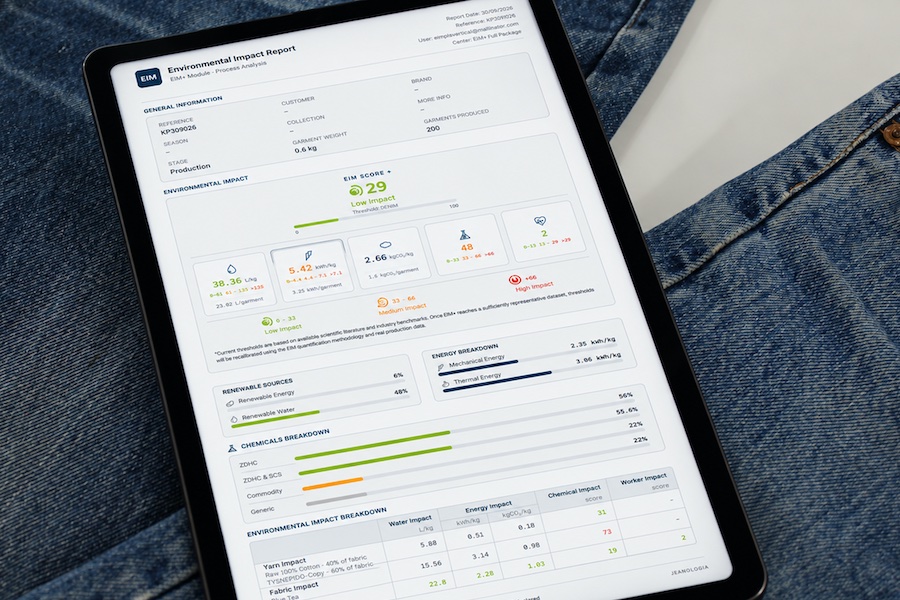
The new AI extracts precise laser designs from a garment image in minutes, transforming how vintage denim is recreated for production. If Jeanologia’s laser changed the way jeans were made at the end of the last century, its AI now takes the next step: moving from reproducing wear to designing it. / archive photo © 2026 Jeanologia

#Dyeing, Drying, Finishing

Monforts unveils interactive digital platform for textile finishers

Monforts has launched a new digital platform designed to give textile manufacturers faster, more intuitive access to the company’s finishing technologies, technical expertise and aftersales support worldwide.

Latest News

#Techtextil 2026

Performance Apparels: Functional textiles drive innovation at Techtextil 2026

From high-performance fibres and advanced membranes to smart textiles and sustainable material concepts – functional apparel is becoming one of the most dynamic innovation fields in technical textiles. At Techtextil 2026, exhibitors demonstrate how new materials, finishing technologies and digital functions are shaping the next generation of protective, workwear and outdoor systems.

#Textile chemistry

A flagship for chemical production: BASF inaugurates world-scale Verbund site in China

BASF today (March 26, 2026) celebrated the official inauguration of its newly built, world-scale Verbund site in Zhanjiang, Guangdong Province in southern China. Covering an area of around four square kilometers, it is more than a major BASF project in the chemical growth market of China. “Zhanjiang shows what the future of chemistry looks like: efficient, digital and sustainable by design. The site showcases a smart integrated Verbund structure on an industrial scale,” said Dr. Markus Kamieth, CEO of BASF, at the ceremony attended by representatives from government, customers, business partners and employees.

#Nonwovens

VEOCEL™ Lyocell production expands to Asia – Launching a new chapter for nonwovens in the region

VEOCEL™, Lenzing's flagship specialty nonwovens brand, expands production at its Thai plant in Prachinburi. This is the first-ever production of its nonwoven-grade lyocell fibers in Asia. Built in 2022 with a 100,000-ton annual production capacity, the facility - previously focused on fibers for textile applications - now can directly meet the demand for VEOCEL™’s biodegradable¹, wood-based lyocell fibers for nonwovens products. These fibers are an essential ingredient for high-quality nonwovens products, ranging from baby wipes to facial sheet masks and everyday personal hygiene items.

#Research & Development

Hof University develops sustainable textile coating for the fashion of tomorrow from mushrooms

Clothing is often treated as disposable: T-shirts for events, general merchandise, or short-term campaigns frequently end up in the trash after only a few uses. This is particularly problematic given that their production still largely relies on fossil-based materials. This is precisely where a new research project at Hof University of Applied Sciences comes in.

TOP