[pageLogInLogOut]

#ITMA 2019

USTER launches five value modules for the quality management platform at ITMA
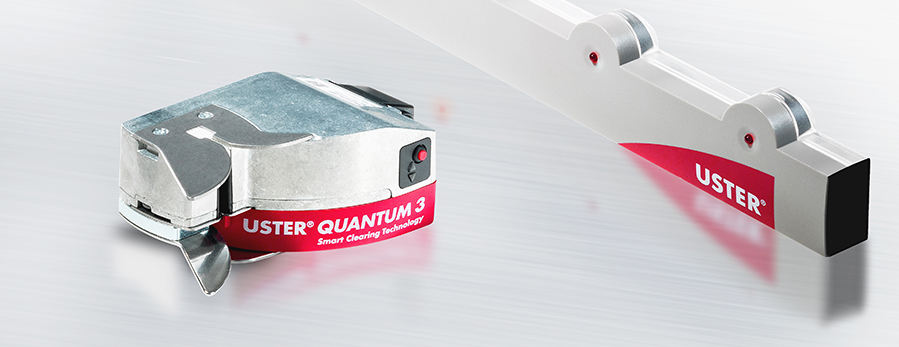
(c) 2019 Uster - Uster Sentinel Quantum 3 showcased at ITMA
Visitors to ITMA 2019 will see the present and future of textile quality management. A world in which substandard quality is actually prevented – instead of just being monitored and removed.

This new reality for mills enables data-based preventive control. It is delivered exclusively by Uster Technologies through USTER® QUALITY EXPERT, the ultimate Quality Management Platform. The system connects, integrates, analyses and interprets vital quality information from every stage of the fiber-to-yarn process. This analysis is based on USTER® application know-how and produces alerts about exceptions and suggestions for fixing them, as well as improvements when necessary. At ITMA, five ‘Value Modules’ for USTER® QUALITY EXPERT will be launched, after successful testing by customers around the globe. These modules will give spinners an objective and accurate view of the entire spinning process, leading to higher yields and consistent quality: ‘Managing a textile mill with quality in mind’ in practice.


Optimize ring spinning, control contamination – and much more

The five Value Modules will give tangible benefits to operators, quality managers and mill managers.

Ring Spinning Optimization (RSO)

RSO focuses on the most costly part of yarn making – ring spinning – using data from USTER® QUANTUM 3 yarn clearers at winding and USTER® SENTINEL in ring spinning to ensure yarn quality stays constant, even at high speeds. Spinners can correlate end-breaks with winding data, as well as with fiber properties, in a single system. This results in an improved cop build-up quality, fewer quality variations and a reduction in alarms, delivering significant profitability increases to yarn producers.

USTER® RSO 3D extends this functionality to quality mapping of the ring frame, based on individual quality data for each spindle. This helps to identify outlier sides, sections or spindles. Through seamless collaboration with Muratec QPRO EX/FPRO EX spindle identification, USTER® QUANTUM 3 and USTER® SENTINEL, the system can stop faulty spindles or poor quality cops and so prevent poor quality. This reduces the workload for operators, while increasing quality assurance.

Total Contamination Control (TCC)

The double protection by USTER® JOSSI VISION SHIELD and USTER® QUANTUM 3 gives spinners control over balancing quality and productivity – a transparency that enhances cost efficiency and maximizes profits. It means they can make good choices about raw cotton purchases and reduce waste of ‘good’ fiber. Optimizing ejections and cuts gives precise control over levels of contamination, ensuring the yarn meets customer demands.


Alarm center

This provides direct guidance to machine operators, alerting the appropriate personnel and pointing them to the exact location of an issue. Knowledge from these alarms is stored and used for future reference, enabling even faster reactions.

Mill analysis

Intelligent, data-based analysis by USTER® QUALITY EXPERT provides customers with an excellent overview of mill operations. Information is stored centrally, for easy access and total transparency. The result is savings in both time and money.

Yarn prognosis

Accurate forecasting of how yarns will perform in downstream processes brings security and confidence to both spinners and their customers. It means spinning mills can isolate below-par quality and remove it, sending out only yarn which meets customer specifications.


Quality Management Platform for long-term business success

By increasing productivity, the Quality Management Platform contributes directly to improved business security for textile producers. “The profitability and future sustainability of a textile mill depends a lot on the optimization of production and the predictability of produced quality,” says Thomas Nasiou, CEO of Uster Technologies. “Our customers are partners and we want to support them to stay successful and tackle challenges, by providing the best services and systems.”

More News from Uster Technologies AG

#Spinning

Measure and control the fiber – optimize yarn quality

Producing consistent yarn quality is an everyday challenge – and a very difficult one. Detailed knowledge and understanding of the fiber raw material is absolutely critical to achieving the best possible quality in the yarn. To help spinners, Uster experts have put together guidelines for avoiding yarn irregularity claims, in a special edition of the Uster News Bulletin.

#ITMA Asia + CITME Singapore 2025

Uster presents novelties at ITMA Asia + CITME 2025

There’s news from Uster Technologies to be announced for the industry’s upcoming event in Singapore. The Uster 360Q universe is growing with new products, solutions and services. Innovation developments can also be recorded in the fields of man-made fiber testing and fabric inspection. Uster innovations address the industry’s trending topics as mill management and process control, optimization of delivered fabric quality and yield.

#Spinning

Uster Technologies marks 150 years of empowering quality excellence

Uster Technologies marks 150 years of excellence – a milestone that reflects continuous adaptation to customer needs and industry change. Over the decades, Uster has evolved from manufacturing quality testing instruments into a trusted partner shaping the future of textile production.

#Recycling / Circular Economy

Challenges of making yarn from recycled fibers

What does it take to spin quality yarn from recycled fibers? Uster Technologies brought textile industry leaders together to discuss the role of technology, data and automation – as well as the current challenges in using recycled raw material. Experts from Rieter, Säntis Textiles, Otto Yarns, and TVU commented on the current situation and looked into the future of spinning in a panel discussion organized at Uster headquarters.

More News on ITMA 2019

Latest News

#Raw Materials

New study shows low environmental impact by Cotton made in Africa Organic Cotton from Tanzania

Today, the Aid by Trade Foundation (AbTF) is announcing the results of a comprehensive life-cycle analysis (LCA) for cotton produced in Tanzania under the Cotton made in Africa Organic (CmiA Organic) standard. The study emphasises the small ecological footprint of CmiA Organic verified cotton. This can largely be traced back to the absence of synthetic pesticides, artificial fertilisers, and artificial irrigation. Consequently, CmiA Organic cotton can help the textile industry meet regulatory requirements as well as science-based targets. The results also show that the consequences of climate change threaten the livelihoods of these cotton farmers, even though the type of agriculture they practise barely contributes to climate change.

#Raw Materials

Better Cotton Initiative strengthens regenerative focus in standard update

The Better Cotton Initiative (BCI) has strengthened the regenerative focus of its field-level standard with the launch of a new version of its Principles & Criteria (P&C), which marks the next step in the organisation’s journey to becoming a regenerative standards system.

#Man-Made Fibers

Selenis and Kintra Fibers partner to scale 100% bio-based synthetic fiber technology

Selenis, a leading global specialty polyester manufacturer, today announced a strategic manufacturing partnership with materials science company Kintra Fibers to scale Kintra’s patented fiber-grade PBS resin - a 100% bio-based and biodegradable material designed for textile applications.

#Functional Fabrics

PERFORMANCE DAYS proves its relevance as the industry’s key meeting point

Held on March 18–19, 2026, PERFORMANCE DAYS once again confirmed its position as a leading international platform for functional textiles. A total of 3.366 trade visitors and around 560 exhibitors gathered in Munich, with the event already kicking off successfully on DAY 0, which received highly positive feedback for its interactive format. Despite challenging conditions caused by the public transport strike in Munich, the event saw strong attendance and a consistently high level of activity across both exhibition days.

TOP