[pageLogInLogOut]

#IDEA 2022

Discover fibres that build futures with Beaulieu Fibres International at IDEA®22
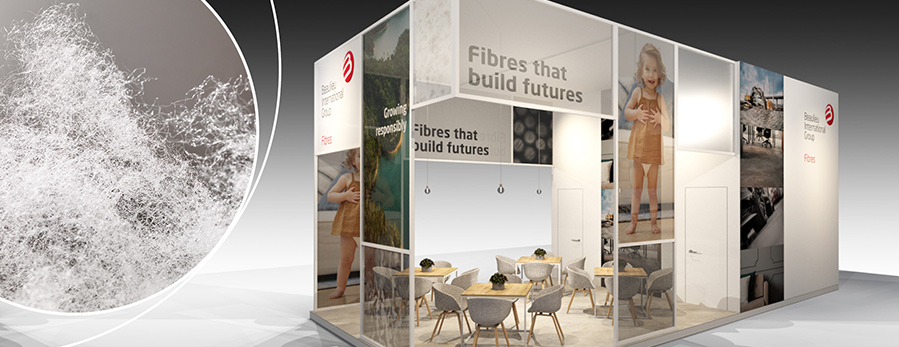
Discover fibres that build futures with Beaulieu Fibres International at IDEA®22. (Photo: © Beaulieu International Group)
Beaulieu Fibres International, the largest and most differentiated European staple fibre producer, turns the spotlight on future-focused solutions for nonwovens & engineered fabrics at IDEA®22, this 28-31 March (Booth 4314). A key priority is innovation in polyolefin and BICO fibres to advance sustainable design, end-of-life recyclability, and resource and carbon footprint reduction for industrial and hygiene applications.

• Visit Booth 4314 for complete fibre portfolio for geotextiles, hygiene & wipes, floor coverings, automotive, upholstery, filtration, RTM and construction

• Increase nonwoven & engineered fabric performance with new fibres that reduce carbon footprint & support design for recycling

• Explore new possibilities for collaboration using BFI’s expertise, pilot line and equipment

“We offer fibres that build futures: we are proud to support customers with our complete product portfolio and versatility in finding solutions to shape the future developments of our world”, comments Maria Teresa Tomaselli, General Manager, Beaulieu Fibres International.

Sustainability is key to Beaulieu Fibre International’s long-term strategy, and the company is heavily focused on defining its green portfolio to support evolution in diverse market applications.

Visit Booth 4314 to target reduction in fossil carbon & material use.

Bio-based fibres

From June 2022, Beaulieu Fibres International will offer ISCC+ certification on mono-PP and BICO PP/PE fibres. The fibres will be offered in 1,3-8,9 dtex and will be available with all the main available finish classes (ie. hydrophilic, hydrophobic, etc.) suitable for the main carding and consolidation technologies. These drop-in solutions with no loss in quality will support customers looking to reduce reliance on virgin fossil carbon in their nonwoven and engineered fibre applications. The bio-based fibres enable customers to contribute to the transition towards a circular economy.

Achieve material savings

For customers in industrial segments like geotextiles, high-tenacity HT8 staple fibres enable customers to achieve nonwovens for construction projects with high mechanical performance but with 15% less weight. The durability of the fibres means that customers can use less raw material for a longer service lifetime, supporting more sustainable design in addition to resource reduction.

For hygiene nonwovens, the Meralux fibres provide significant sustainable design advantages. Meralux fibres deliver substantial sustainability benefits including around 55% savings in raw materials, with equivalent carbon emission savings. These emission savings are thanks to weight reduction in nonwovens with the same coverage level and also the higher recyclability of PP/PE compared to BICO materials.


Target more eco-friendly product design with single polymer fibres

Design for recycling

Discover UltraBond innovative bonding staple fibres that replace the need for chemical binders. They open up a path to create 100% polypropylene (PP) needlepunched fabrics which meet the same performance requirements as traditional constructions, while reducing the end-of-life environmental impact. The 100% polyolefin-based needlepunched fabrics are fully recyclable, reducing waste generation and creating high value PP recycled products as new materials. Furthermore, the sustainable fabrics are produced with an improved Total Cost of Ownership and with a significant ecological footprint reduction.

Weight reduction = energy saving in automotive

With today’s rush towards greener, sustainable mobility, the automotive industry is under continuous pressure to increase performance and reduce emissions. Beaulieu Fibres International’s PP fibres for thermoplastic lightweight composites offer the most optimal cost-to-performance ratio in needlepunched, compression-moulded composite materials. Car manufacturers and OEMs can rely on a bonding fibre range to help improve mechanical, thermal and functional properties of the composite while reducing weight, ultimately reducing fuel consumption on traditional vehicles or increasing autonomy for e-vehicles.

Visit Beaulieu Fibre International at IDEA®22 for its complete portfolio of performance-enhancing sustainable innovations as well as key fibre solutions addressing overall functional performance.




More News from TEXDATA International

#ITM 2026

ITM 2026: The new geography of textile production

New production hubs are emerging across North Africa and Central Asia, while Türkiye is accelerating its transformation toward higher-value, technology-driven and more sustainable textile manufacturing.

#Research & Development

“Production is a product”

From technical textiles and AI-driven robotics to the limitations of textile circularity: Professor Dr Thomas Gries looks back on more than two decades of development at ITA Aachen. In the interview, he explains why production technology remains a decisive success factor, discusses international collaborations and innovation ecosystems, and shares his views on the transformation of production landscapes and the challenges facing an increasingly regulated industry.

#Knitting & Hosiery

“We need to move away from the price trap and return to a value-driven mindset.”

With its new Textile Innovation Center, KARL MAYER is sending a strong signal for innovation, collaboration, and the future of textile applications. In this interview, Karl Josef Mayer discusses new opportunities in warp knitting, the processing of staple fibres, recycling, the changing role of machinery manufacturers, and why the textile industry must once again focus more strongly on the value of textiles. by Oliver Schmidt

#Associations

“Innovation, resilience and international experience remain the great strengths of the Swiss textile machinery industry”

Geopolitical uncertainty, growing competitive pressure from China, new free trade agreements and the shift towards a circular economy are currently reshaping the global textile industry. In this interview, Cornelia Buchwalder discusses the current mood within the Swiss textile machinery sector, the industry’s distinctive innovative strength, new market opportunities in India and Asia, and the technological trends that could shape the upcoming trade fair cycle leading up to ITMA 2027.

More News on IDEA 2022

Latest News

#Recycled Fibers

Indorama Ventures enables brands to scale circular textiles through proven, traceable supply chains

Indorama Ventures, a global leader in recycled polyester staple fibers and filament yarns, will exhibit at Textiles Recycling Expo in Brussels on June 24–25. At the event, the company will show how brands and textile manufacturers can build traceable, circular textile supply chains by working with proven partners who deliver recycled materials on an industrial scale.

#Recycled Fibers

RECOVER™ launches Recover™ Yarns to accelerate recycled cotton uptake

Recover™, a leading materials science company and one of the world’s largest producers of recycled cotton fiber, today announces the launch of Recover™ Yarns, a curated portfolio of ready-to-use yarn solutions designed to accelerate the adoption of recycled cotton across the apparel supply chain.

#Spinning

Barmag and Hitech Automation enter into partnership for an auto-doff system for texturing machines

Barmag (Suzhou) Technology Co., Ltd. and Hitech Automation Solutions PVT LTD. of Surat, India, have agreed to an exclusive partnership to jointly market Hitech’s Doffmatic automation solution for Barmag’s proven manual eFK texturing machines. In many texturing facilities, manual doffing processes remain heavily operator-dependent – resulting in issues such as increased scrap, inconsistent quality, and limited productivity.

#ITM 2026

Uster’s new Recycling Opening Index guides spinners to the perfect blend

Uster AFIS 6 now offers the key data for better decisions when blending recycled fibers. Process control is decisive in determining the quality and economic outcome. The new R Recycling Module of AFIS 6 introduces the Recycling Opening Index (ROI), so spinners can optimize their circularity credentials. It was officially launched at ITM 2026 in Istanbul, Türkiye.

TOP



