[pageLogInLogOut]

#Dyeing, Drying, Finishing

First division knitters in Europe and Asia choose the Monforts MONTEX
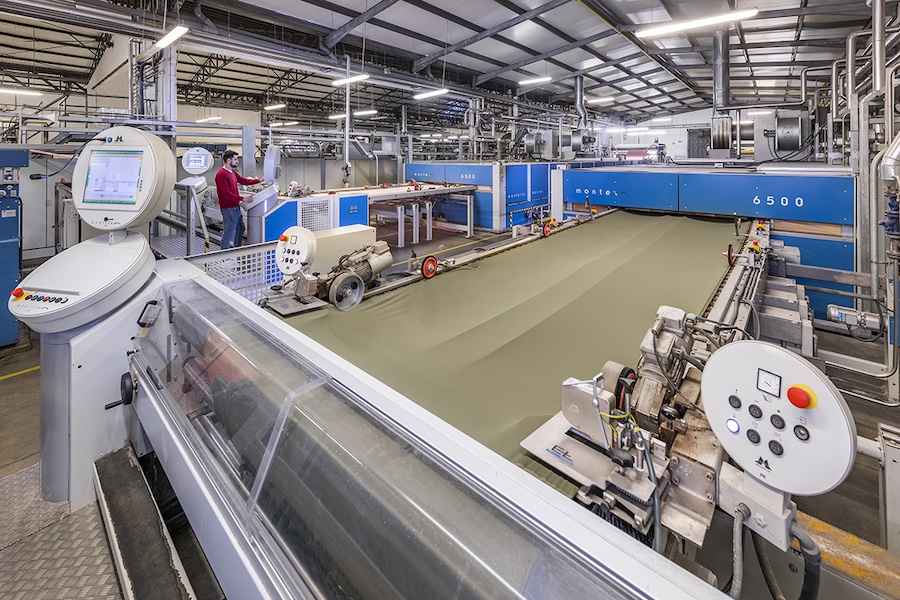
From Portugal to Pakistan, market-leading knitted fabric manufacturers rely on Monforts MONTEX stenters for accurate and highly automated handling during essential drying after dyeing and other processes.
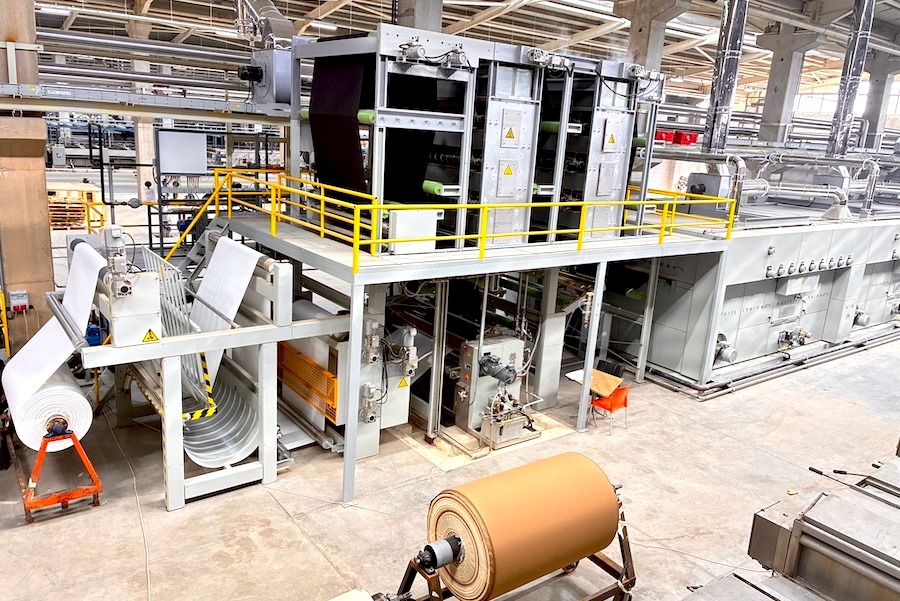
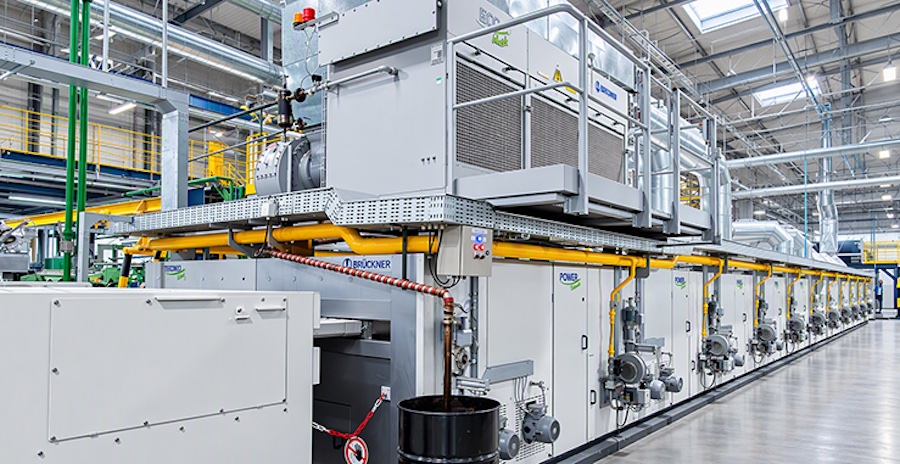
ATB’s finishing plant is extensively equipped with Monforts equipment © 2025 Monforts


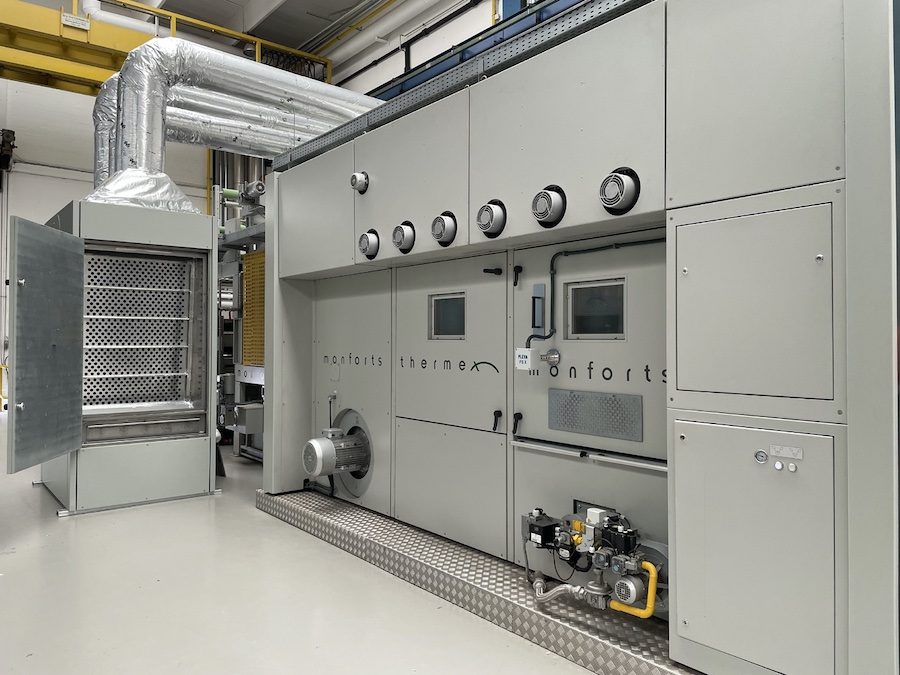
“Knitted fabrics need delicate handling as they often have a higher degree of elasticity compared to more rigid woven materials,” explains Monforts Marketing Manager Nicole Croonenbroek. “Our MONTEX stenters provide smooth treatment at very low and precisely controlled tension during all stages of knitted fabric handling, as well as very gentle and even thermal treatment. The MONTEX is extremely flexible in terms of the different fabric qualities it can accommodate and also provides significant benefits in terms of energy consumption.”

Europe’s leader in dyeing and finishing

As one of the largest dyers in Europe, ATB – Acabamentos Têxteis de Barcelos – founded by Mário Mano in 1985 in Barcelos in northern Portugal, is dyeing and finishing between 36-40 tons of fabric on a daily basis for key customers including Benetton, Inditex and Mango.

ATB installed its first Monforts MONTEX stenter frame in 1990 and has subsequently ordered four more over the years. All are 2.8 metres wide and use heat recovery units for increased energy efficiency and also the latest control equipment, to grant the highest possible process quality/reproducibility. In addition, the ATB plant is equipped with two Monforts Dynair relaxation dryers and one EcoApplicator.

Knitting is carried out at Etevimol, also in Barcelos, which during 2024 became 100% owned by the Mano family. Etevimol’s 160 knitting machines are now being transferred to the ATB plant and a €5 million investment is planned in new knitting machines.

ATB also holds some 10,000 fabric samples in stock, and its library is constantly growing.

“Our customers will ask for initial fabric samples and then very quickly need five metres of the fabric for prototyping, so we have to be very organised in this respect,” says Mário Mano’s son and company CEO Ricardo. “We also do a lot of shopping to equip our showroom, in order to investigate how our fabrics turn out in finished garments, and to let our visiting customers know that we are anticipating all of their needs – with the help, of course, of our leading technology suppliers like Monforts.”

Interloop’s ambitious expansion

Another major Monforts customer is Interloop, a company which started humbly in 1992 with just ten knitting machines for hosiery production and has grown into the one of Pakistan’s largest publicly listed textile firms

Interloop is aiming to achieve $700 million in annual sales in 2026 following its latest ambitious expansion programme and key customers include Adidas, H&M, Nike and Target among many other well-known brands.

The company’s latest fully-integrated knitwear plant in Faisalabad, Pakistan, is being equipped to produce fifty tons of knitted and dyed fabrics on a daily basis, for the production of 45 million finished garments annually.

The 1.25 million-square-foot facility is Interloop’s most technologically advanced to date and has earned the highest LEED score for a facility of its scale. It is powered extensively by renewable energy, including biomass boilers, and is supported by advanced water management and effluent treatment systems. 

“We’re setting new standards by harnessing innovative technologies and relentlessly pursuing process improvement,” says Navid Fazil, Interloop CEO. “Through our LEED certified infrastructure, a self-reliant,green energy grid and transition to biomass fuel, we’re committed to increasing Interloop’s sustainability impact on an unprecedented scale.”
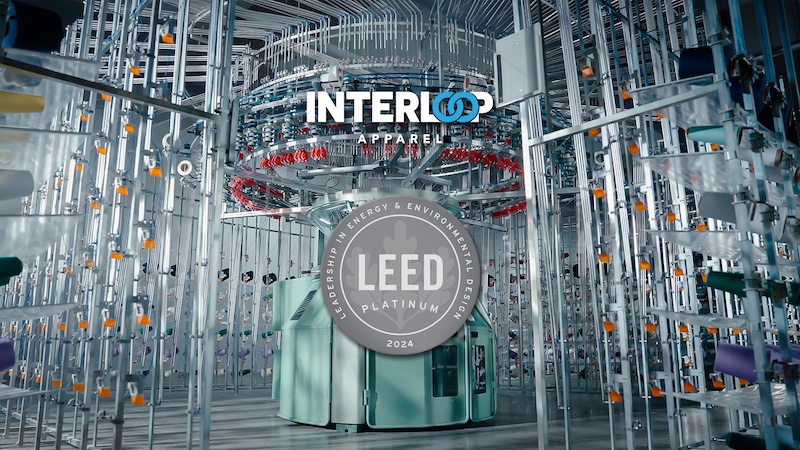
Interloop’s latest fully-integrated knitwear plant in Faisalabad, Pakistan, is equipped to produce fifty tons of knitted and dyed fabrics on a daily basis. © 2025 Image coutesy of Interloop


Reliability

“Monforts MONTEX stenters are the industry standard for the fabric finishing industry, and offer knitwear manufacturers a number of advantages in terms of sensitive handling and precise control, production throughput and energy efficiency and savings,” concludes Nicole Croonenbroek. “Our machines remain unmatched in terms of their robustness and long service life and are reinforced by our commitment to customer service based on four principles – being helpful, accurate, fast and reliable.”
More News from A. Monforts Textilmaschinen GmbH & Co. KG

More News on Dyeing, Drying, Finishing

#Dyeing, Drying, Finishing

Orthopac RVMC-20 plus: German Engineering for Smarter Weft Straightening

In times of rising cost pressure and growing quality demands, textile producers worldwide are searching for solutions that combine precision, efficiency, and sustainability. With its latest innovation, the Orthopac RVMC-20 plus, Mahlo once again demonstrates the strength of German engineering: improving proven technology to meet today’s challenges.

#Dyeing, Drying, Finishing

Precision jet dyeing moves towards industrial scale as Alchemie partners with Acatel

BTMA member Alchemie Technology, the pioneer of precision jet dyeing solutions based in Cambridge, UK, is partnering with Acatel, the Portuguese leader in sustainable textile manufacturing. The two companies will work together to validate and optimise Alchemie’s Endeavour system for knitted cellulosic fabrics.

#Associations

AATCC announces 2025 Herman & Myrtle Goldstein Graduate Student Paper Competition winners

The American Association of Textile Chemists and Colorists (AATCC) recognized the winners of the 2025 Herman & Myrtle Goldstein Graduate Student Paper Competition. Founded in 1982 to give student members the chance to conduct and present original research, the competition was renamed in 1994 in honor of Herman and Myrtle Goldstein, following their US$60,000 endowment. Their gift is a lasting remembrance of their dedication to young people in the textile industry.

#Dyeing, Drying, Finishing

Stefan Moll becomes new CEO of the machinery manufacturer

Starting January 1, 2026, Stefan Moll will take over the management of Mahlo GmbH + Co. KG, the world’s leading provider of measurement and control technology for web-shaped materials. With this move, Mahlo is focusing on the long-term safeguarding of its market position and technological leadership. The current CEO, Rainer Mestermann, will leave the company after 14 years as part of a planned succession arrangement.

Latest News

#Techtextil 2026

Knowledge that drives progress: Techtextil and Texprocess forums strengthen the global textile industry with a future-oriented programme

From AI-supported production optimisation and digital manufacturing solutions to circular technologies and bio-based high-performance materials: the Techtextil and Texprocess forums provide answers to the key challenges of the global textile industry with a curated content programme. As hubs for innovation and knowledge, they enhance competitiveness and offer orientation in changing markets. From 21 to 24 April 2026, Frankfurt is once again the global meeting point for thought leaders from industry, research and business.

#Techtextil 2026

Enhanced protection without added weight: Innovative technology for flame-retardant textiles doubles reaction time and ensures high wearing comfort

Flame-retardant textiles have long faced the same dilemma: the higher the level of protection, the greater the compromise in comfort, weight and breathability. This is especially important for workwear and protective clothing worn for long hours, where comfort is crucial to wearer acceptance and satisfaction. At Techtextil 2026 in Frankfurt, Swiss company Textilcolor AG will unveil pyroshell™, an innovative flame-retardant technology designed to tackle this challenge. Protection is provided by a graphite-based functional layer integrated into the textile structure, which doubles the reaction time before burns occur while significantly enhancing comfort. The material does not release any toxic fumes and offers textile manufacturers entirely new opportunities to design and produce protective and functional garments. It is also durable enough to withstand up to 50 industrial washes.

#Composites

JEC WORLD 2026 opens: Paris becomes the World Capital of composites

JEC World 2026 opens tomorrow, March 10, at Paris Nord Villepinte, bringing together the entire composites ecosystem for three days of exhibitions, conferences, technical sessions, strategic industry gatherings, and business meetings. As the “festival of composites”, JEC World is also a destination for a broad spectrum of other professional visitors, eager to discover how these advanced materials can offer sustainable solutions to their industries.

#Spinning

Barmag presents the next generation of POY production – energy-efficient and partial-automated

With POY 2.0, Barmag is introducing a completely redesigned spinning concept that takes the production of partially oriented yarn (POY) to a new level in terms of technology and economy. The solution, which was presented to a selected audience of experts for the first time at ITMA Asia + CITME 2025, was met with great enthusiasm: several yarn producers worldwide immediately expressed their interest in a pilot plant.

TOP