[pageLogInLogOut]
You can feel it's Benninger!

#Dyeing, Drying, Finishing

Van Clewe converts Brückner POWER-FRAME ECO stenter to cogeneration with micro gas turbine
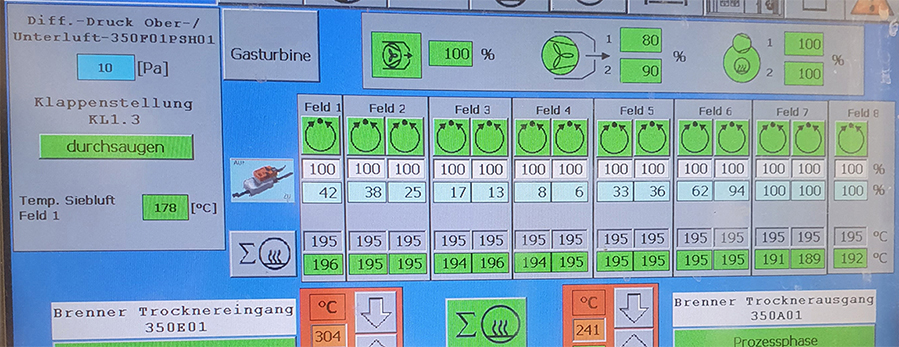
Integration of the micro gas turbine into the process visualization of the BRÜCKNER POWER-FRAME ECO © 2023 Brückner
Brückner and Van Clewe work together in the field of cogeneration for textile dryers to save energy and thus contribute to avoiding CO2 emissions and counteracting climate change.

Founded in 1954 and family-run in the third generation, the contract manufacturer Van Clewe supplies customers throughout Europe and the world. The company produces 100% of its products at its site in Dingden (North Rhine-Westphalia, Germany). Sustainable management is a major concern at Van Clewe and has been a lived theme for decades.

Electricity and gas are the main drivers in production. Van Clewe is constantly working on measures to avoid unnecessary consumption of these valuable resources. For the past 12 years, Van Clewe has been operating a combined heat and power gas engine. The main advantage of this technology is that the electricity generation works simultaneously with the electricity demand of the production. An additional PV system ensures that the company can operate without externally supplied electricity during the day, weather permitting. This is an important factor for a textile finishing plant when the heat requirement for dry and wet processes is covered by combined heat and power plants.

Brückner, a mechanical engineering company and system supplier with over 70 years of experience in the textile finishing sector, has always focused on being particularly innovative and economical in all areas. On this way everything is questioned and again and again one dares to go new ways to increase the energy efficiency of the machines. Already in 2014 - 2015, the advantages of cogeneration in textile dryers were explained and discussed at a symposium at Brückner. In the meantime, the energy issue has taken on an unprecedented explosiveness and the idea of cogeneration is becoming more and more interesting due to rising energy prices and impending bottlenecks. Cogeneration always makes sense when heating with fuels instead of electricity and is a must for self-generation based on microturbines to be efficient.

Van Clewe already had a Brückner belt dryer with vertical chain of the type POWER-FRAME ECO and in memory of the presentation in 2015 at Brückner, Van Clewe and Brückner closely cooperated to integrate a micro gas turbine in industrial scale and to integrate it into the processes based on the experiences at that time in the pilot plant at Brückner with this technology and with courage to take risks by Van Clewe.

The special feature of the innovative ECO technology of the Brückner stenter consists of the combination of through-suction drying and subsequent air impingement. At the same time, the exhaust air heat is optimally utilized by flowing hot circulating air through the cold and usually wet fabric entering the dryer. In addition, the energy potential of the exhaust air is even better utilized by integrated heat-recovery systems. The preheated fresh air is fed to a central gas-fired combustion chamber and metered to the individual thermal chambers as process air. The central combustion chamber also allows direct integration of a combined heat and power unit / micro gas turbine. The hot turbine exhaust air is used directly for the process and the electricity generated covers the power requirements of the stenter.


Due to its design, the Brückner POWER-FRAME ECO is particularly well suited for the integration of a micro gas turbine. However, integration is also possible with other Brückner stenter types. The hot exhaust gas of the microturbine must then be distributed into several compartments, comparable to the integration of an air-to-air heat-recovery system.

At Van Clewe, additional gas is burned using the gas turbine, but on the other hand the gas consumption at the stenter itself is very much reduced, so that no more gas is consumed overall. The big advantage is that electricity is also generated. The micro gas turbine at Van Clewe has an output of 200 Kwh of electricity generation, which is more than the stenter itself consumes in operation. This creates independence from the electricity supplier and electricity does not have to be purchased at expensive conditions.

A micro gas turbine can - if the company itself generates electricity by wind power or like Van Clewe by solar energy - be used as redundancy in case of wind failure or at night. A cogeneration unit (turbine or engine) can also be powered by biogas, which is locally available or can be procured in the form of bio-LNG. Future considerations involving hydrogen may take the microturbine to a completely CO2-free level, provided the hydrogen is "green" produced. But it will certainly take some time before hydrogen is commercially available.

Van Clewe is very satisfied with the performance and the conversion of the Brückner POWER-FRAME ECO. Ansgar van Clewe, Managing Director: "The turbine runs at 100% power almost without exception. The operating personnel has no additional work with the turbine and the control is very simple. In drying processes, the front burner is switched off and the process-relevant parameters are controlled with the rear compartments. If a higher drying capacity is required, we switch on the front burner. Then the gas turbine still runs at 100 % power."

Axel Pieper, CTO of Brückner says: "We are proud to have taken an important innovative step years ago, which today, with the discussion on energy efficiency and green hydrogen, opens up a further opportunity to save energy and thus contribute to avoiding CO2 emissions and counteracting climate change."
More News from TEXDATA International

#Texprocess 2026

Texprocess 2026: Automation, digitalisation and AI redefine textile processing

Making investment decisions in textile processing has become significantly more demanding. Increasing energy costs, a shortage of skilled labour and ongoing geopolitical uncertainties are compelling companies to focus on technologies that deliver clear gains in efficiency and process reliability. This applies equally to apparel manufacturing and to the processing of technical textiles and high-performance materials. As a result, modernisation initiatives are assessed more carefully – even as the need to upgrade production systems continues to intensify.

#Techtextil 2026

Techtextil 2026: Between innovation pressure & market reality

From 21 to 24 April 2026, Techtextil in Frankfurt am Main will once again become the central meeting point for the international technical textiles and nonwovens industry. Running in parallel, Texprocess will focus on the industrial implementation of textile processing technologies as the leading platform in this field. Together, the two trade fairs form a closely integrated presentation and working platform along the entire textile value chain – from material development to finished applications.

#Techtextil 2026

Between geopolitical pressure and industrial resilience

In this interview, Dr. Janpeter Horn (VDMA) discusses the current challenges facing textile machinery manufacturers, shaped by geopolitical tensions, regulatory developments and subdued investment. He also outlines why innovation strength, integrated solutions and strategic positioning remain key to global competitiveness.

#Texprocess 2026

Between investment restraint and modernization pressure

Texprocess 2026 takes place in a complex market environment shaped by uncertainty and innovation pressure. In this interview, Elgar Straub (VDMA) explains why the trade fair is particularly relevant this year and which technologies are driving efficiency and competitiveness.

More News on Dyeing, Drying, Finishing

#Dyeing, Drying, Finishing

Smart Quality Control for Technical Textiles

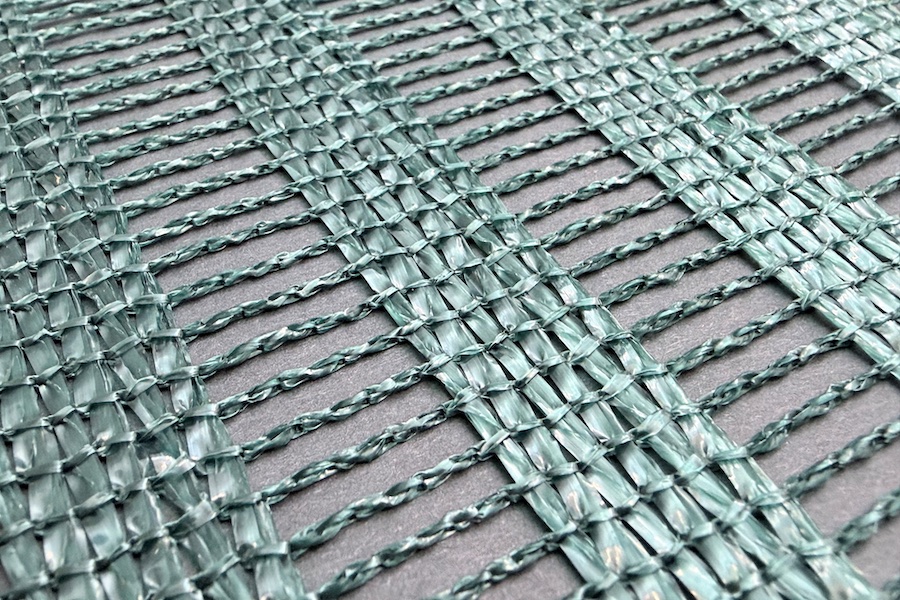
In the end, what matters is the result: a filter that performs reliably, a membrane that remains stable in storm conditions, a composite material with precisely defined properties. But the path to achieving this is demanding. In the production of technical textiles, numerous parameters interact – and even the smallest deviations can have major consequences.

#ITM 2026

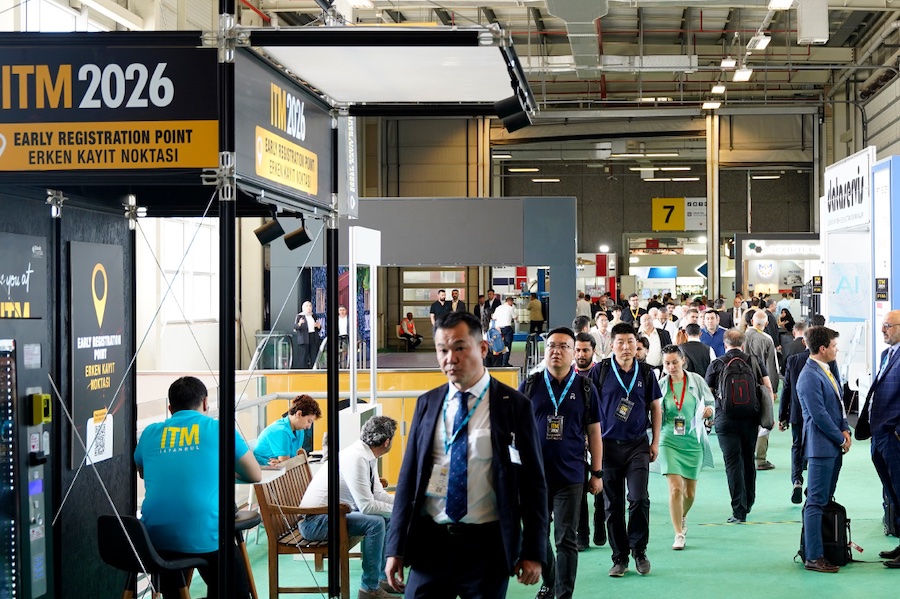
The address for environmentally friendly dyeing and finishing systems: ITM 2026

Dyeing and finishing technologies, one of the most critical and value-added areas of the textile sector, have gained strong growth momentum on a global scale. Technologies that are pioneers of this transformation focused on sustainability, quality and efficiency will meet with sector professionals at the ITM 2026 International Textile Machinery Exhibition. Dyeing and Finishing Hall (11–12) will host the latest technologies that increase efficiency, optimize resource use and reduce environmental impact in textile finishing processes.

#Techtextil 2026

iNTERSPARE presents latest developments and upgrade solutions for technical textile finishing at Techtextil

iNTERSPARE Textilmaschinen GmbH will present its latest solutions for technical textile finishing at Techtextil 2026 in Frankfurt (VDMA joint stand, Hall 12 / Stand C55A). The focus will be on further developments within the Krantz, Artos and Babcock (BTM) product lines, in particular the Krantz K30 stenter as well as the reintroduction of the Artos Vari-Flex foulard. The presentation will be complemented by modular solutions for upgrading existing installations and new approaches in automation and digitalization.

Latest News

#ITM 2026

ITM 2026: KARL MAYER presents new perspectives

KARL MAYER will once again showcase itself as a strong partner to the Turkish textile industry at ITM in Istanbul from June 9 to 13. At Booth 303 A in Hall 3 of the Tüyap Fair Convention and Congress Center, the industry leader will exhibit solutions for warp knitting, warp preparation, and technical textiles – tailored to a challenging economic environment.

#Spinning

Specialist in fine counts: New type 2777 ceramic oiler

With the new Type 2777 ceramic oiler, Barmag has added a solution for fine titers and microfilaments to its portfolio of original parts.

#INDEX 2026

STFI highlights textile circular economy and alternative fibres at INDEX™ 2026

From 19 to 22 May 2026, INDEX will invite visitors to Lake Geneva for the world's leading nonwovens trade fair. The Centre of Excellence in Nonwovens at the Sächsisches Textilforschung- sinstitut e.V. (STFI) will be in attendance to present the latest developments in nonwovens research. In the field of the textile circular economy, the STFI will present acoustically effective nonwovens made from chemical recycling residues. The range also includes innovations aimed at replacing conventional raw materials, such as the biobased and biodegradable polymer polybutylene succinate (PBS) and Kendyr as an alternative to cotton.

#Associations

Italian textile machinery sector faces weak start to 2026 despite domestic growth

In the first quarter of 2026, order intake for Italian textile machinery manufacturers recorded a decrease of 5% compared to the same period in 2025, reflecting a still challenging start to the year. The decline affected foreign markets (-7%), while the domestic market showed growth (+21%).

TOP