[pageLogInLogOut]

#Dyeing, Drying, Finishing

Data-controlled production
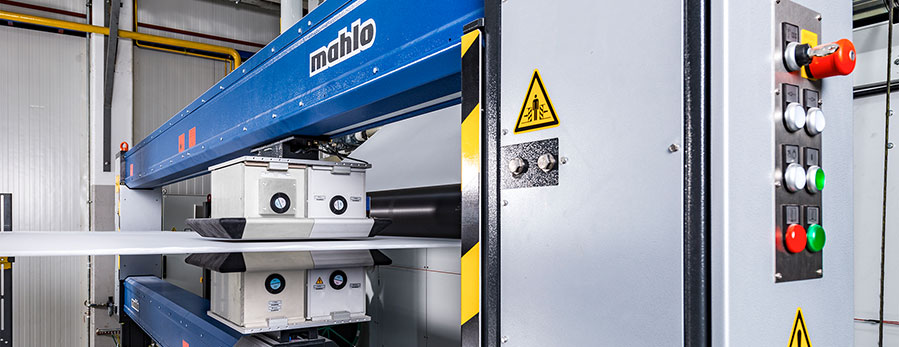
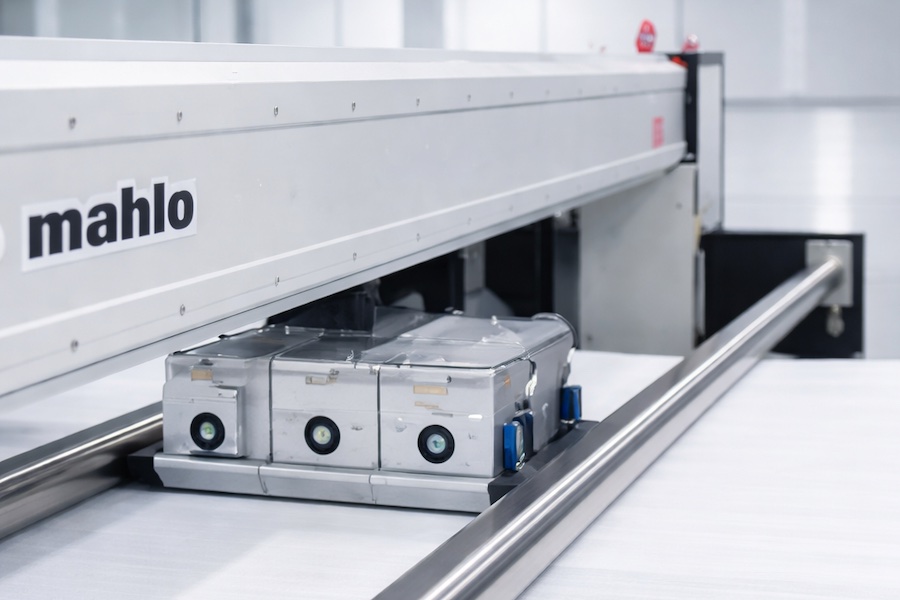
Web gauging with Qualiscan QMS © 2023 Mahlo
Extreme rising in energy prices and a growing uncertainty in almost every industrial sector: many manufacturing textile companies face immense challenges these days. To compete in the market, they must increase the flexibility and efficiency of their production and minimize manufacturing costs by reducing the input of resources. Online quality control in textile production processes is suddenly more important than ever before. German machine builder Mahlo shows, how data-controlled production can solve today’s problems.

The answer to today’s challenges in textile coating and converting

“The key points are the correct collection, analysis, and treatment of the right data as well as the seamless transition of data flows between machines, company divisions and to other companies such as customers or suppliers”, says Matthias Wulbeck. He is the product manager for Quality Control Systems (QCS) at Mahlo. The expert also notes that leading industrial companies are thinking ahead as well, producing in a sustainable way before they are forced to, and introduce automated processes and high-tech networked devices to perform live data analysis.

Controlling parameters with broad sensor portfolio

I4.0-compliant Mahlo quality control systems installed throughout a modern textile coating line show the variety of options to control a production. “To adapt to the different needs, Mahlo has a broad portfolio of intelligent scanners and sensors in the Qualiscan QMS system. They record product and process parameters online, such as basis weight, add-on weight, thickness, moisture content, web temperature, residual moisture, exhaust air humidity, air permeability etc. at different stages of the production.”

The measured values are processed directly in real-time processors of the sensors. The finished measurement data is visualized internally in an intuitive control display or transmitted via interfaces (OPC-UA, Modbus etc.) to an external network. The implemented automatic control algorithms interact directly with the suitable actuators of the textile coating line and reduce deviation from the target and thus, results in a more uniform end-product. This allows optimised target value specifications and, in addition to better product quality, leads to significant savings in raw materials and energy costs. Furthermore, process reliability and production throughput increase. “And you can react fast and flexible on changing market demands”, Wulbeck adds.


Besides the online control of the above-mentioned parameters, an important function of any quality control system is to provide detailed historical data. By a simplified and direct data exchange, the end user can keep track at any time where and especially how its product is fabricated. With that, not only a trouble-free value chain is guaranteed, according to Wulbeck. The end user can also be sure that its fabric is always produced with the right parameters. “That security in these unsecure times is of high value.”
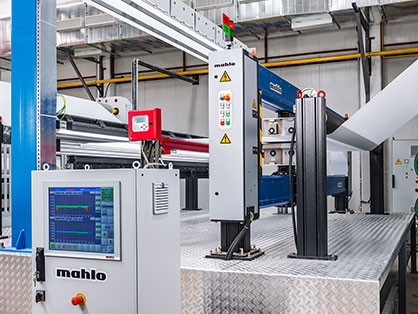
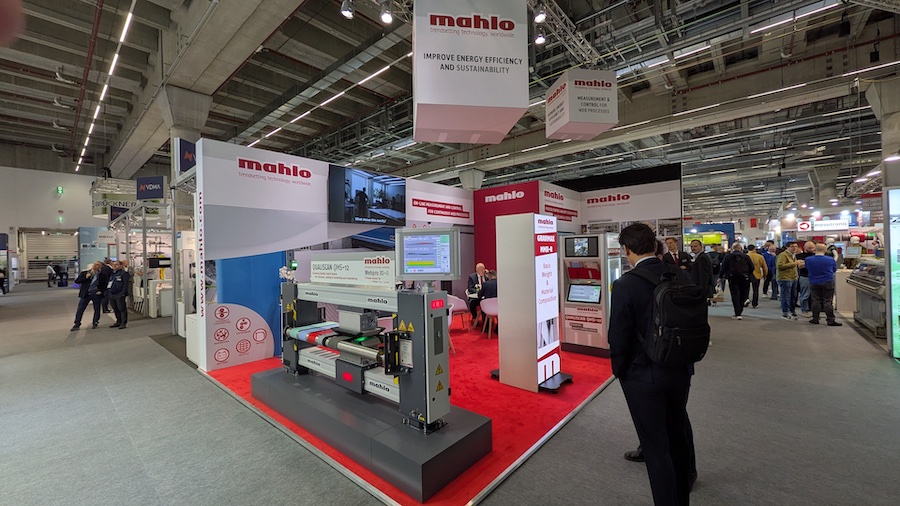
The measured values are visualized in real time © 2023 Mahlo


More News from Mahlo GmbH + Co. KG

#Dyeing, Drying, Finishing

Smart Quality Control for Technical Textiles

In the end, what matters is the result: a filter that performs reliably, a membrane that remains stable in storm conditions, a composite material with precisely defined properties. But the path to achieving this is demanding. In the production of technical textiles, numerous parameters interact – and even the smallest deviations can have major consequences.

#Advertorial

New Gravimax MMX-R X-ray sensor platform opens up new application fields

The demands placed on quality control in web-based production processes are increasing: materials are becoming more complex, basis weights are varying more widely, and at the same time, pressure is growing to make processes more efficient and transparent. Precise measurement data across the entire web width has therefore become a key factor in ensuring stable production processes. With its new Gravimax MMX-R sensor platform, Mahlo introduces a radiometric measurement solution designed to set new standards in determining basis weight and material composition. The platform combines advanced X-ray technology with newly developed signal processing, enabling measurement tasks that previously often required multiple sensor technologies.

#Dyeing, Drying, Finishing

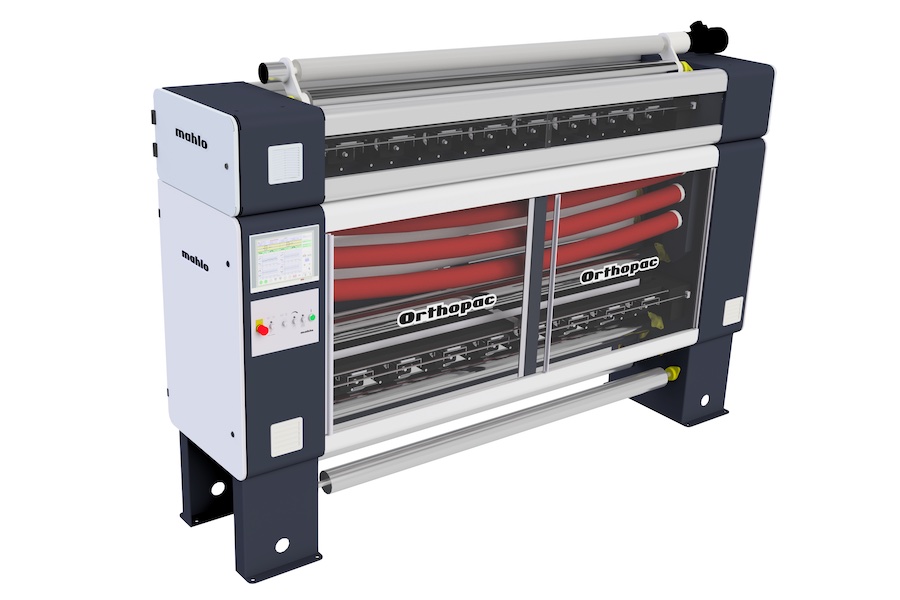
Orthopac RVMC-20 plus: German Engineering for Smarter Weft Straightening

In times of rising cost pressure and growing quality demands, textile producers worldwide are searching for solutions that combine precision, efficiency, and sustainability. With its latest innovation, the Orthopac RVMC-20 plus, Mahlo once again demonstrates the strength of German engineering: improving proven technology to meet today’s challenges.

#Dyeing, Drying, Finishing

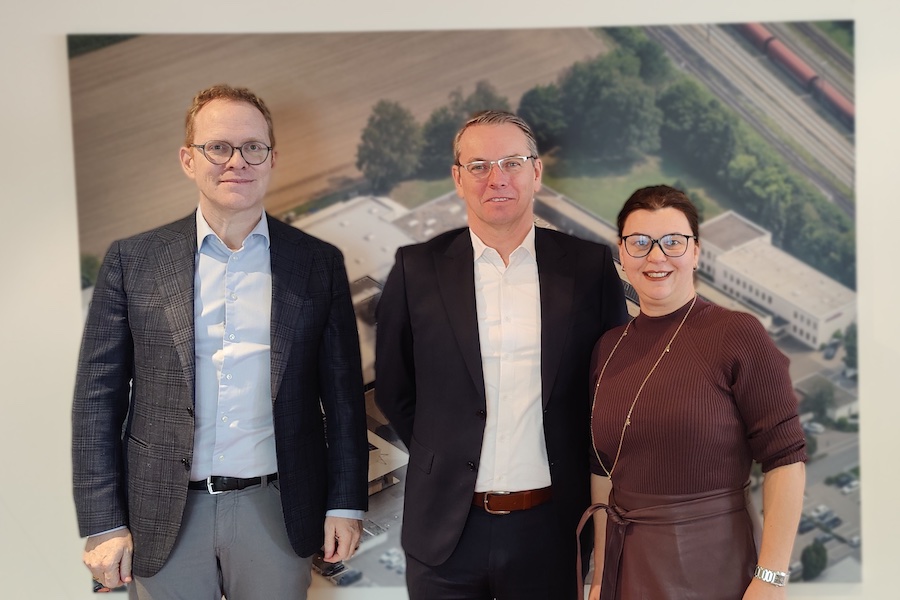
Stefan Moll becomes new CEO of the machinery manufacturer

Starting January 1, 2026, Stefan Moll will take over the management of Mahlo GmbH + Co. KG, the world’s leading provider of measurement and control technology for web-shaped materials. With this move, Mahlo is focusing on the long-term safeguarding of its market position and technological leadership. The current CEO, Rainer Mestermann, will leave the company after 14 years as part of a planned succession arrangement.

More News on Dyeing, Drying, Finishing

Latest News

#Knitting & Hosiery

KARL MAYER's HKS 2-SE Expands Possibilities for Premium Stretch WARP KNITS

Warp knitted fabrics with a woven look are more in demand than ever in the fashion and apparel industries. Stretch WARP KNITS, in particular, impress with their freedom of movement, breathability, and virtually wrinkle-free wear – thereby opening up new style worlds such as smart casual or business casual. When it comes to the highly efficient production of premium-quality stretch WARP KNITS, the HKS 2-SE has long been the machine of choice. KARL MAYER’s best-selling tricot machine produces standard elastic fabrics characterized by high gauges, smooth, delicate surfaces, and a soft hand feel.

#Textiles & Apparel / Garment

Catalyst Club launches in Florence: Where conversations become catalysts for change

The first chapter of Catalyst Club debuted in Florence, bringing together creative directors, entrepreneurs, manufacturers, journalists and innovators from across the fashion and textile industry for an evening of dialogue, exchange and connection.

#Recycling / Circular Economy

Textiles Recycling Expo 2026 builds on successful debut with record attendance, global participation and expanded industry collaboration

The second edition of Textiles Recycling Expo concluded on 24–25 June at Brussels Expo, reinforcing its position as Europe's leading exhibition and conference dedicated exclusively to textile recycling and circularity.

#Composites

JEC Forum Southeast Asia 2026 highlights Taiwan as a strategic hub for the global composites industry

The third edition of JEC Forum organized in Southeast Asia brought together 350+ participants from 22 countries for three active days of high-level Business Meetings, conferences, and networking, emphasizing Southeast Asia’s growing role in the global composites market. Held for the first time in Taipei from 23 to 24 June 2026, following the successful first editions in Bangkok, JEC Forum Southeast Asia 2026 confirmed its position as the region’s leading business platform dedicated to the composites industry.

TOP