[pageLogInLogOut]

#Dyeing, Drying, Finishing

Fashion for Good launches d(r)ye factory of the future project:
© 2022 Fashion for Good
A new consortium project to accelerate the shift from wet to mostly dry processing in the textile supply chain

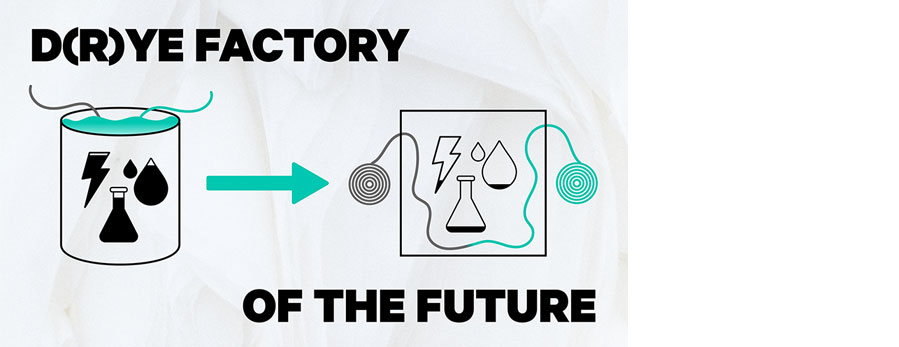
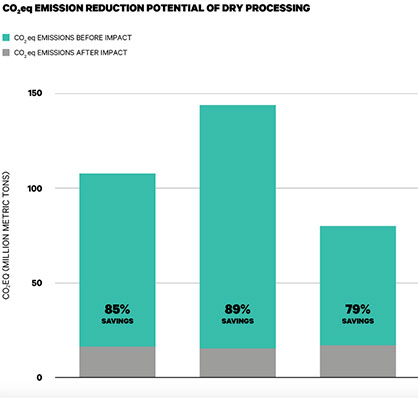
Today, Fashion for Good launches the D(R)YE Factory of the Future, a new consortium project that brings together several innovations in textile pre-treatment and colouration, that are set to accelerate the shift from wet to mostly dry processing. Textile processing is responsible for the highest greenhouse gas emissions, significant water and chemical use in the fashion value chain. The selected innovations have the potential to reduce emissions by up to 89%, and to cut water consumption by between 83% and 95%.

“Textile processing is the largest contributor to carbon emissions in the supply chain and a shift to mostly dry processing is crucial for the path to net-zero. Given the interdependencies in the processing stages, a stand-alone assessment of solutions is not sufficient. By validating a combination of technologies, we can unlock the full potential of those solutions. This is why this project is so pivotal.” - Katrin Ley - Managing Director, Fashion for Good
© 2022 Fashion for Good


Orchestrated by Fashion for Good, the D(R)YE Factory of the Future partners with adidas, Kering, PVH Corp., Arvind Limited, and Welspun India who bring extensive expertise in the textiles space, and innovators to bring together several novel technologies with the aim of disrupting the current processing, pre-treatment, colouration (dyeing and printing) and finishing, of textiles in the fashion supply chain. Although a number of innovations exist in this space, they are often explored in isolation. To achieve greater impact and accelerate the shift to more sustainable practices, this project, initially focuses on innovations in pre-treatment and colouration, partners several innovations together to test their solutions in combination to validate their impact and potential to scale in the fashion value chain.

Working closely with participating Fashion for Good partners and key supply chain players, eight innovators, Alchemie Technologies, Deven Supercriticals, eCO2Dye, GRINP, Indigo Mill Designs, imogo, MTIX and Stony Creek Colors, will collaborate to demonstrate innovative solutions in pre-treatment and colouration, across five different materials; cotton, polyester, blends, denim and wool. Technologies tested include plasma and laser treatments, spray dyeing, supercritical carbon dioxide (CO2) and foam dyeing. The results from the evaluations, as well as next steps for implementation, will be shared in a report in late 2022. 

THE OPPORTUNITY FOR DISRUPTION

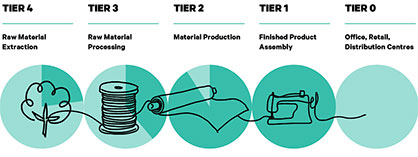
Traditional pre-treatment, colouration and finishing, which occur in Tier 2 of the supply chain (see figure below) often takes place in large tanks or baths which require vast amounts of energy, heat and water. It produces the highest amount of Greenhouse Gas (GHG) emissions, 52%, in addition to releasing large amounts of toxins into water. One of the key levers to reduce impact is to move from wet processes - to mostly dry processes - innovative processing technologies that require very little to no water and reduced energy1.


This shift has the potential to reduce Tier 2 emissions by between 79-89% and could slash over a quarter of total GHG emissions in the industry2. An equal opportunity exists to reduce water consumption, including savings of up to 83% in pre-treatment and 95% in dyeing3.

The opportunity to accelerate this impact reduction, in this particular tier, lies in the disruptive solutions provided by participating innovators, and others emerging in this space. In comparison to conventional solutions, these technologies use little water, are effluent free, reduce the amount of consumables and as a result use less energy.??Fashion for Good has compiled an accompanying overview of these technologies and their impact potential in the “Textile Processing Guide: pre-treatment, colouration and finishing”.

© 2022 Fashion for Good


NEXT STEPS

At the project close Fashion for Good will share a report with key learnings and next steps for implementation. Simultaneously, Fashion for Good will work with the participating Fashion for Good partners to help facilitate the implementation of these solutions at selected manufacturers.

The D(R)YE Factory of the Future project, also leverages the learnings and actions outlined in the recent report “Unlocking the Trillion-Dollar Fashion Decarbonisation Opportunity” by Fashion for Good and Apparel Impact Institute. The report charts a trajectory for the industry to meet its net-zero ambition breaking down the funding needed and maps integral levers across existing and innovative solutions. This report identifies that the shift from wet to mostly dry processing is crucial, with the potential to abate 24% of the industry’s carbon emissions and points out a set of interventions to unlock financing and accelerate the implementation. 

1. Fashion for Good and Apparel Impact Institute

2. Fashion for Good and Apparel Impact Institute

3. Fashion for Good internal analysis using innovator self reported data



More News from TEXDATA International

#Recycling / Circular Economy

textile.4U publishes special edition “Top 100 Textile Recycling Companies 2025”

With a comprehensive 176-page special edition, textile.4U is dedicating its latest issue entirely to one of the most dynamic and influential topics in today’s textile industry: textile recycling. The new issue, published exclusively in high-quality print, presents the Top 100 textile recycling companies researched and selected by TexData – organizations that already play a key role in the transition to circular textiles or are expected to have a significant impact in the near future.

#Recycling / Circular Economy

Responsible Textile Recovery Act of 2024 signed by Governor

Senator Josh Newman (D-Fullerton) is proud to announce that Senate Bill 707 (SB 707), the Responsible Textile Recovery Act of 2024, has been signed into law by the Governor of California, Gavin Newsom. This groundbreaking legislation establishes the country’s first Extended Producer Responsibility (EPR) textile recycling program, marking a significant step forward in the state’s efforts to combat waste and promote sustainability.

#Textiles & Apparel / Garment

Modtissimo promotes sustainability with 28 coordinates in the Green Circle

Modtissimo is proving more and more to be a textile and clothing show that delivers the latest innovations in the area of sustainability, with the iTechStyle Green Circle being the main showcase for companies' creations. In this 60+4 edition, taking place on 12 and 13 September, 28 coordinates will be exhibited in a section organised by CITEVE and curated by Paulo Gomes.

#Europe

The EU and Egypt team up to mobilise private sector investments at Investment Conference and sign a Memorandum of Understanding underpinning €1 billion in macro-financial assistance for Egypt

At the EU-Egypt Investment Conference, co-organised by the EU and the Government of Egypt on 29-30 June, the EU and Egypt are teaming up to intensify private sector investments in Egypt. They are also signing a Memorandum of Understanding (MoU) for the disbursement to Egypt of up to €1 billion in Macro-Financial Assistance.

More News on Dyeing, Drying, Finishing

#Dyeing, Drying, Finishing

Orthopac RVMC-20 plus: German Engineering for Smarter Weft Straightening

In times of rising cost pressure and growing quality demands, textile producers worldwide are searching for solutions that combine precision, efficiency, and sustainability. With its latest innovation, the Orthopac RVMC-20 plus, Mahlo once again demonstrates the strength of German engineering: improving proven technology to meet today’s challenges.

#Dyeing, Drying, Finishing

Precision jet dyeing moves towards industrial scale as Alchemie partners with Acatel

BTMA member Alchemie Technology, the pioneer of precision jet dyeing solutions based in Cambridge, UK, is partnering with Acatel, the Portuguese leader in sustainable textile manufacturing. The two companies will work together to validate and optimise Alchemie’s Endeavour system for knitted cellulosic fabrics.

#Dyeing, Drying, Finishing

Monforts customers make strong showing at Heimtextil 2026

Monforts dyeing and finishing technology customers from Pakistan had a formidable presence at the Heimtextil 2026 home and contract textiles exhibition which attracted over 48,000 visitors to Frankfurt in Germany this month (January 13-16).

#Dyeing, Drying, Finishing

Monforts announces leadership transition in 2026

Effective from January 1, 2026, Volker Gingter, has been appointed the new Managing Director of A. Monforts Textilmaschinen GmbH & Co. KG, headquartered in Mönchengladbach, Germany, and will steer the fortunes of the leading dyeing and finishing technology company going forward.

Latest News

#Sustainability

Ying McGuire becomes new CEO of Cascale

Cascale today announced the appointment of Ying McGuire as Chief Executive Officer, effective June 1, 2026.

#Technical Textiles

Sustainable, lightweight, and sound absorbing: Polyester-based front trunk solution for BEVs

As car manufacturers look to further reduce their carbon footprint, Autoneum has developed an innovative front trunk solution for battery electric vehicles (BEVs), made entirely from polyester-based textile. The Ultra-Silent Frunk offers significant weight reduction, improved acoustic and thermal insulation, and uses up to 70 percent recycled material, supporting sustainable and efficient vehicle design. Autoneum, global technology leader in acoustic and thermal management for vehicles, has already received orders for the new frunk from three major OEMs in Asia and Europe to be built in three BEV models. Series production for two BEVs has been underway in China and Germany since last year.

#Raw Materials

Modern testing methods for raw cotton

The 38th International Cotton Conference Bremen will take place from 25 to 27 March 2026 at the Bremen Parliament. This conference has traditionally stood for in-depth expertise and international exchange. The program will focus on technical innovations, market trends, and regulatory frameworks across the entire value chain – from agriculture to the circular economy. With high-profile speakers, the conference is regarded as the key meeting point for the global cotton industry. Today’s focus: Cotton quality and testing methods.

#Spinning

Rieter responds to higher raw material prices

Global political and economic developments have been leading to rising raw material and energy costs for some time. The textile machinery industry is also affected by this trend. Rieter machines and components consist to a large extent of steel, copper, aluminum and electronics. These materials in particular have seen higher demand and higher prices in recent months.

TOP