[pageLogInLogOut]

#Dyeing, Drying, Finishing

Monforts denim mills move hemp into the mainstream
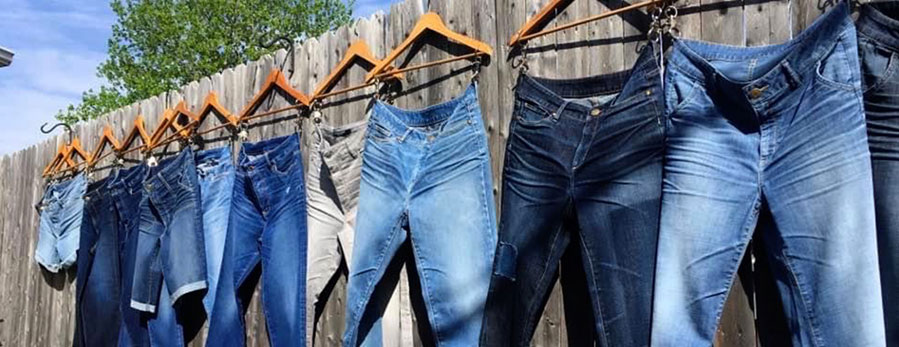
Cone Denim Sweet Leaf jeans. © Cone Denim
There is an urban legend that hemp canvas was used to make the very first pair of Levi’s jeans.While this is a myth that originated in the counterculture of the 1960s, hemp is without doubt the fibre of the moment for the denim industry. At the second Kingpins24 virtual denim show that was broadcast from New York on June 23rd and 24th, the sustainable benefits of hemp fibre were referenced by many Monforts customers who are now including it in their collections, including AGI Denim, Artistic Milliners, Black Peony, Calik, Cone Denim, Naveena Denim Mills (NDM) and Orta.

“Hemp is an easy to grow fibre which requires no irrigation, no fertilizers, no herbicides and no chemicals,” says Allan Little, Director of Product Development for Cone Denim, which has recently launched its Sweet Leaf collection featuring the fibre. “Significantly, it also uses fifty per cent or even less water than cotton in cultivation.”

It can also bring some new aesthetics to denim too, he adds.

“Hemp has a unique colour and adds a different cast to our indigo, the drape and texture of the fabrics is different and it even adds a bit of a unique hand, so combined with its sustainable credentials we are proud to be bringing the Sweet Leaf collection to the market.”

Cone Denim has recently launched its Sweet Leaf collection featuring hemp. © Cone Denim


US supply chain

Cone is currently sourcing its hemp from France, but with much of its manufacturing now in Mexico – and with the introduction of the US Farm Bill in 2018 which has legalised the growing of legal hemp – is exploring the possibility of investing in the US supply chain.

“With US hemp we’re really at the R&D phase,” Little emphasises. “It’s a unique crop, so coming up with the right stalk to provide the right fibre is challenging. We’ve experimented with different types of seed and various methods of decortication.”

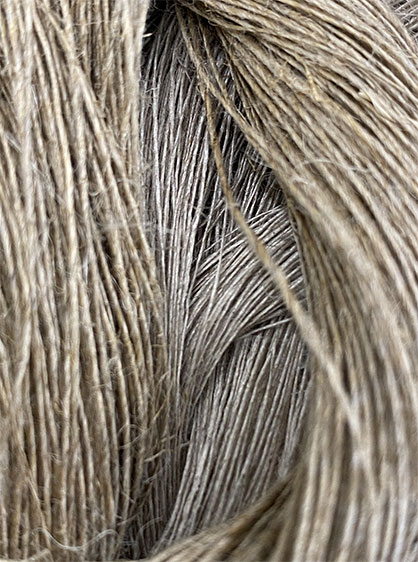
Decortication, he explains, is the mechanical removal of the outside layer of the hemp stalk to useable fibre on the inside. A second process, cottonization, is necessary to make the fibre suitable for spinning, because compared to cotton, hemp is longer, stiffer, and less flexible.
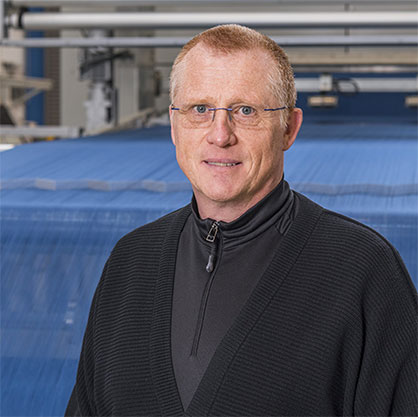
Monforts Head of Denim Hans Wroblowski at the new CYD pilot line at the Monforts ATC in Mönchengladbach, Germany. (c) 2020 Monforts


Cottonization, is necessary to make the fibre suitable for spinning, because compared to cotton, hemp is longer, stiffer, and less flexible. © Cone Denim


 100% success

At the end of 2019, Naveena (NDM), headquartered in Karachi, introduced fabrics featuring up to 51% hemp content in blends with Tencel and recycled polyester and this year has developed the first 100% hemp denims.

“The response to the fabrics we showed last year was incredible and we were looking forward to the response to this latest development – which everyone was asking for – at the Kingpins show in Amsterdam, which unfortunately was unable to go ahead,” says NDM’s Director of Marketing Rashid Iqbal. “We produced initial samples in an undyed state because we were not sure how the wet spun yarn would react in the dyeing, but I’m happy to say we have had success in this respect and are now able to provide one hundred per cent indigo dyed hemp denim.”

Environmental benefits

“Differentiation is the key in the highly-competitive denim industry and we have assisted our customers with trials and optimised processing parameters for a range of different fibres, including hemp, both at our Advanced Technology Centre in Germany and at their own mills around the world,” says Hans Wroblowski, Monforts Head of Denim. “Given the environmental benefits of hemp, and the liberalisation of its cultivation in many parts of the world, the interest in it now comes as no surprise. We have the technologies and know-how to help our customers to fully maximise their hemp denims at all post-weaving stages of production.”

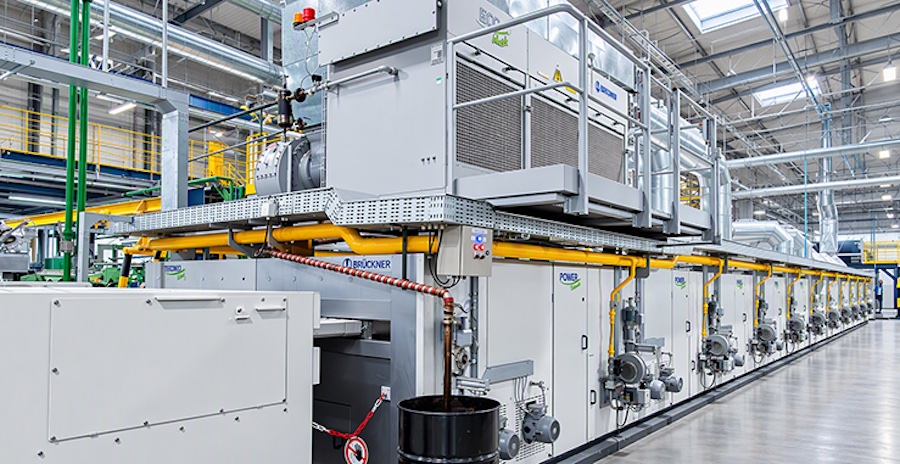
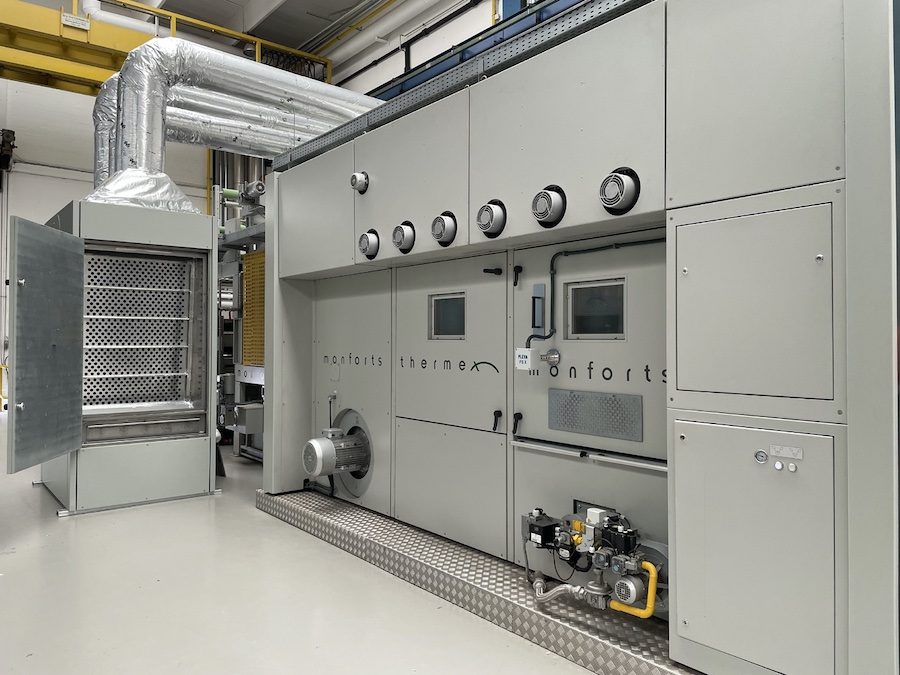
Monforts has a dominant position in the field of denim finishing with its well proven Montex stenters. It has been enjoying further recent success with its Eco Line concept based on two key technology advances – the Eco Applicator and the Thermo Stretch.

The latest Monforts innovation for denim is the CYD yarn dyeing system. This technology is based on the effective and established dyeing process for denim fabrics that is now being applied for yarn dyeing.

The CYD system also integrates new functions and processes into the weaving preparation processes – spinning, direct beaming, warping and assembly beaming, followed by sizing and dyeing – to increase quality, ?exibility, economic viability and productivity. A full CYD line is now available for trials at the company’s Advanced Technology Centre.
More News from A. Monforts Textilmaschinen GmbH & Co. KG

More News on Dyeing, Drying, Finishing

#Advertorial

New Gravimax MMX-R X-ray sensor platform opens up new application fields

The demands placed on quality control in web-based production processes are increasing: materials are becoming more complex, basis weights are varying more widely, and at the same time, pressure is growing to make processes more efficient and transparent. Precise measurement data across the entire web width has therefore become a key factor in ensuring stable production processes. With its new Gravimax MMX-R sensor platform, Mahlo introduces a radiometric measurement solution designed to set new standards in determining basis weight and material composition. The platform combines advanced X-ray technology with newly developed signal processing, enabling measurement tasks that previously often required multiple sensor technologies.

#Techtextil 2026

BW Converting to present its Baldwin TexCoat® G4 at Techtextil 2026

BW Converting will present its Baldwin TexCoat® G4 precision spray finishing system at Techtextil Frankfurt 2026, taking place April 21-24 at Messe Frankfurt. Visitors to Hall 12, Booth C56B, will have the opportunity to explore how this advanced spray technology helps textile manufacturers improve finishing quality, increase efficiency and reduce resource consumption across a wide range of applications.

#Techtextil 2026

Smart sensors, smart savings - Reducing energy and cost in textile finishing

As energy prices, sustainability requirements and quality expectations continue to rise, manufacturers of technical textiles face increasing pressure to optimize efficiency while ensuring process reliability. At the same time, skilled labor shortages require production systems that are intuitive, automated and easy to manage. PLEVA addresses these challenges with robust, maintenance-friendly sensor technologies combined with intelligent process control.

#Dyeing, Drying, Finishing

Navis TubeTex and Fibroline announce upcoming Innovation Days

Navis TubeTex and Fibroline LLC announced their upcoming Innovation Days, a collaborative 3-day event designed to showcase advancements in product development technologies, and next-generation sustainable manufacturing solutions.

Latest News

#Techtextil 2026

Modernizing Needling – DiloGroup at Techtextil & INDEX 2026

With the theme “Modernizing Needling”, the DiloGroup presents a comprehensively enhanced portfolio for needling technology. The objective is to further increase the performance and application range of needlefelt production lines in terms of productivity, flexibility, and the development of new products, thereby meeting the growing demands of modern technical textiles.

#Recycling / Circular Economy

Carbios confirms Longlaville plant in France following financing progress

Carbios has reaffirmed its plans to build its Longlaville plant in France within a project financing framework, targeting the start of production in the first half of 2028. The company also reports a solid cash position of around €60 million at the end of 2025 and has appointed Benoît Grenot as Deputy Chief Executive Officer to support the execution of its strategic projects.

#Composites

KARL MAYER strengthens partnerships in the composites industry at JEC World 2026

KARL MAYER further strengthened its role as a reliable and competent partner to the composites industry at JEC World 2026. The global market leader in textile machinery manufacturing used the trade show to meet key customers, establish numerous new contacts, and engage in in-depth technical discussions.

#Recycling / Circular Economy

ABB and Syre partner to explore technologies for industrial-scale textile recycling

ABB has signed a Memorandum of Understanding (MoU) with Swedish textile impact company Syre to jointly explore technologies to support the development of Syre’s first textile-to-textile recycling plant in Vietnam. The agreement establishes a framework for collaboration to investigate how ABB’s automation, electrification and digital technologies could contribute to safe, efficient and scalable operations. It will also explore how these capabilities could further optimize process and quality control performance as Syre advances its ambition to produce circular polyester at industrial scale.

TOP