[pageLogInLogOut]

#Dyeing, Drying, Finishing

Monforts ATC adventures in aquaculture
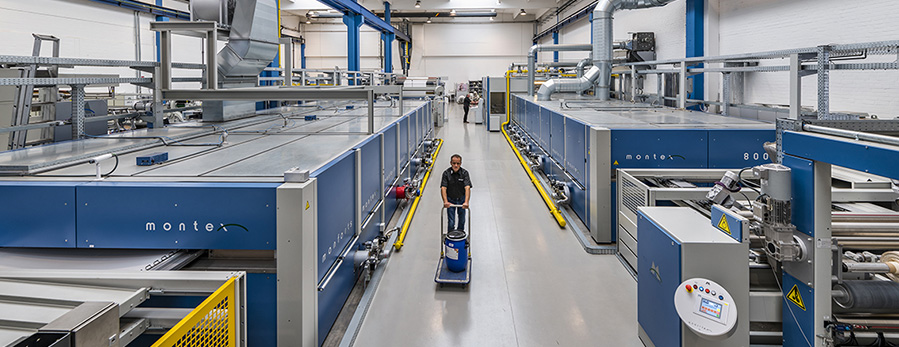
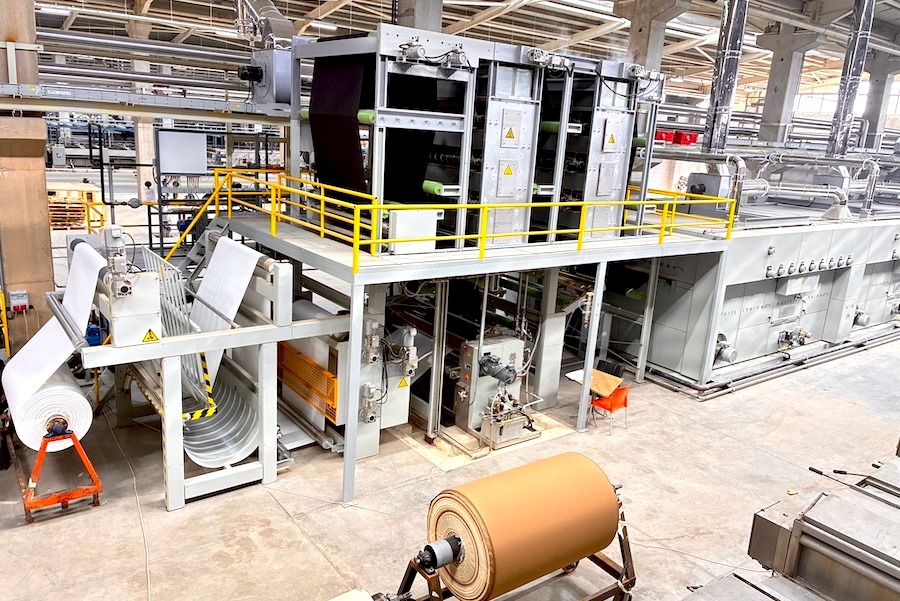
Over €3 million has been invested in industrial-scale equipment at the Monforts Advanced Technology Centre (ATC) in Mönchengladbach, Germany (c) 2020 Monforts
Monforts has recently been involved in a number of R&D trials aimed at improving the performance of the fishing cage nets employed in fish farming operations at its Advanced Technology Centre (ATC) in Mönchengladbach, Germany.

The cultivation of both freshwater and saltwater fish populations under controlled conditions is a global industry valued at around $200 billion annually and only made possible with the use of huge aquaculture nets.

Biofouling

“These nets are very prone to biofouling and to avoid its negative impacts, high-pressure robotic jets are now used to clean them,” explains Monforts Head of Technical Textiles Jürgen Hanel. “Net cleaning is expensive and can also damage current antifouling coatings on the nets, causing contamination as well as fish health and welfare risks.

“The abrasion resistance of the nets is also extremely important, because in addition to the general wear and tear of the underwater environment, they also contain a lot of potential food for predatory bigger fish, such as sharks. Even sea lions have been known to be attracted to these fish farming cages, but have the advantage of being able to jump over the top of them if they’re not sufficiently protected.”

The development of more effective antifouling coatings for fishing cage nets has been one aspect of R&D work at the Monforts ATC, while the use of how alternative fibres could potentially be coated or finished to replace the polyamide which is currently most widely used has also been explored.

The issue of plastics and synthetic fibres in the oceans has generated global media attention recently, and the aquaculture industry is exploring all avenues that will lead to more sustainable practices.

Diverse applications

“We are asked to investigate a wide range of fabric finishes and coatings at the ATC, where our customers can test their own textiles and technical fabrics on Monforts dyeing, finishing and coating machines under fully confidential, real production conditions,” says Jürgen Hanel.
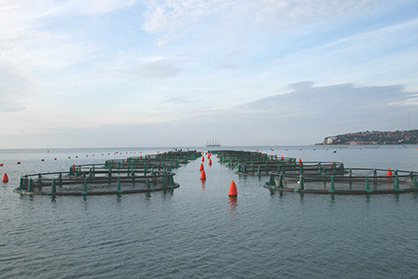
A modern seawater fish farm off the coast of Slovenia (c) 2020 Monforts


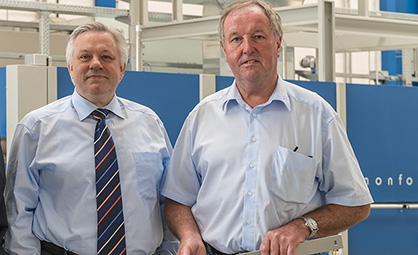
Monforts Head of Technical Textiles Jürgen Hanel (left) with ATC manager Fred Vohsdal, who has now worked for the company for 51 years and has a wealth of accumulated know-how to share with customers (c) 2020 Monforts


“The range of textiles finished or coated with Monforts technologies is already extremely diverse, including standard knits and wovens, as well as advanced denim. When it comes to technical textiles, our lines are already being used commercially for treating substrates for digitally-printed soft signage, carbon fabrics for composites, filter media which must perform in extreme temperatures and flame retardant barrier fabrics, to name just four applications, but the list gets longer all the time.”

Expansions

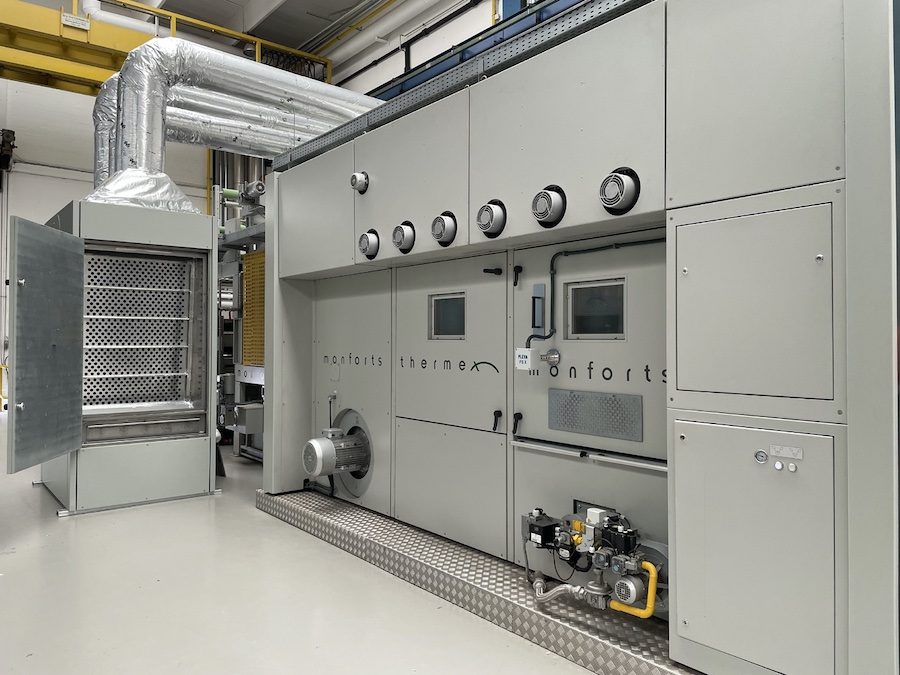
Since its opening in 2013, over €3 million has been invested in equipment at the Monforts ATC, which over an area of 1,200 square metres houses two full finishing lines, engineered to accommodate an extremely diverse range of processes, in addition to a Thermex range for the continuous dyeing of denim.

Recent expansions have included the installation of the latest Monforts texCoat coating system, with its multi-head capability, and the CYD yarn dyeing system for denim, both of which received an enthusiastic reception at last year’s ITMA show in Barcelona.

“We have subsequently demonstrated the potential of these new technologies to many customers during their visits to the ATC, in addition to running full trial programmes on our industrial-scale machines,” Jürgen Hanel concludes. “The intended end-uses may not always be as unusual as fishing cage nets, but whatever the application, trials in real production conditions yield the results that enable us to make many recommendations for improving fabric finishes and coatings.”
More News from A. Monforts Textilmaschinen GmbH & Co. KG

#Dyeing, Drying, Finishing

Monforts customers make strong showing at Heimtextil 2026

Monforts dyeing and finishing technology customers from Pakistan had a formidable presence at the Heimtextil 2026 home and contract textiles exhibition which attracted over 48,000 visitors to Frankfurt in Germany this month (January 13-16).

#Dyeing, Drying, Finishing

Monforts announces leadership transition in 2026

Effective from January 1, 2026, Volker Gingter, has been appointed the new Managing Director of A. Monforts Textilmaschinen GmbH & Co. KG, headquartered in Mönchengladbach, Germany, and will steer the fortunes of the leading dyeing and finishing technology company going forward.

#Dyeing, Drying, Finishing

Third Monforts Thermex for Turkey’s Altoteks

As a leader in the dyeing, finishing and printing of fabrics for workwear and uniforms, Altoteks, based in Çorlu, Turkey, has been a highly valued Monforts partner since 1996, and has just installed a new Thermex continuous dyeing range.

#ITMA Asia + CITME Singapore 2025

VDMA companies outline major benefits in finishing – and now dyeing too

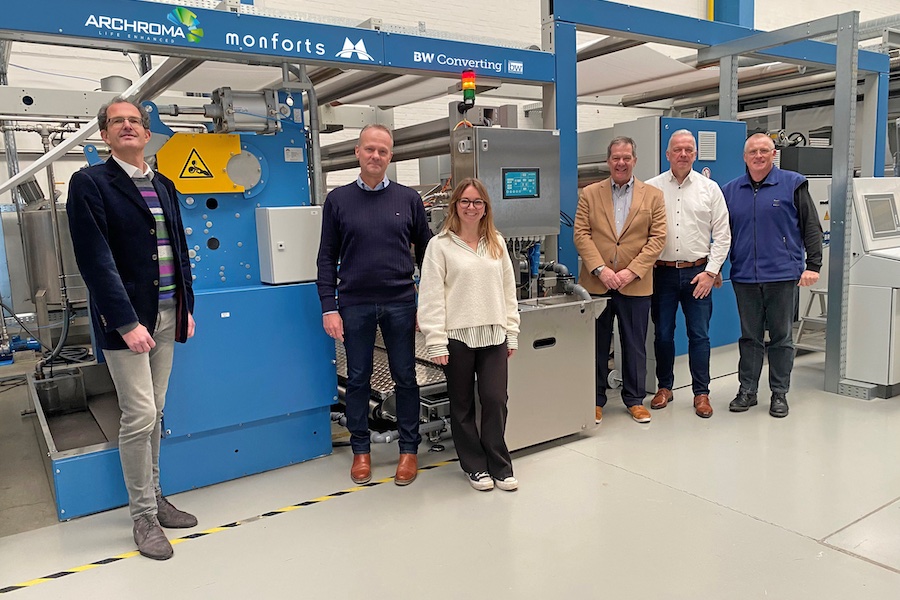
Monforts and its partners Archroma and BW Converting are setting new standards in the resource efficient and cost-effective finishing of fabrics. During a recent webinar organised by Germany’s VDMA textile machinery association, specialists from the three companies provided details of the range of new energy-saving options that is now available to mills.

More News on Dyeing, Drying, Finishing

#Dyeing, Drying, Finishing

Orthopac RVMC-20 plus: German Engineering for Smarter Weft Straightening

In times of rising cost pressure and growing quality demands, textile producers worldwide are searching for solutions that combine precision, efficiency, and sustainability. With its latest innovation, the Orthopac RVMC-20 plus, Mahlo once again demonstrates the strength of German engineering: improving proven technology to meet today’s challenges.

#Dyeing, Drying, Finishing

Precision jet dyeing moves towards industrial scale as Alchemie partners with Acatel

BTMA member Alchemie Technology, the pioneer of precision jet dyeing solutions based in Cambridge, UK, is partnering with Acatel, the Portuguese leader in sustainable textile manufacturing. The two companies will work together to validate and optimise Alchemie’s Endeavour system for knitted cellulosic fabrics.

#Associations

AATCC announces 2025 Herman & Myrtle Goldstein Graduate Student Paper Competition winners

The American Association of Textile Chemists and Colorists (AATCC) recognized the winners of the 2025 Herman & Myrtle Goldstein Graduate Student Paper Competition. Founded in 1982 to give student members the chance to conduct and present original research, the competition was renamed in 1994 in honor of Herman and Myrtle Goldstein, following their US$60,000 endowment. Their gift is a lasting remembrance of their dedication to young people in the textile industry.

#Dyeing, Drying, Finishing

Stefan Moll becomes new CEO of the machinery manufacturer

Starting January 1, 2026, Stefan Moll will take over the management of Mahlo GmbH + Co. KG, the world’s leading provider of measurement and control technology for web-shaped materials. With this move, Mahlo is focusing on the long-term safeguarding of its market position and technological leadership. The current CEO, Rainer Mestermann, will leave the company after 14 years as part of a planned succession arrangement.

Latest News

#Sustainability

Ying McGuire becomes new CEO of Cascale

Cascale today announced the appointment of Ying McGuire as Chief Executive Officer, effective June 1, 2026.

#Technical Textiles

Sustainable, lightweight, and sound absorbing: Polyester-based front trunk solution for BEVs

As car manufacturers look to further reduce their carbon footprint, Autoneum has developed an innovative front trunk solution for battery electric vehicles (BEVs), made entirely from polyester-based textile. The Ultra-Silent Frunk offers significant weight reduction, improved acoustic and thermal insulation, and uses up to 70 percent recycled material, supporting sustainable and efficient vehicle design. Autoneum, global technology leader in acoustic and thermal management for vehicles, has already received orders for the new frunk from three major OEMs in Asia and Europe to be built in three BEV models. Series production for two BEVs has been underway in China and Germany since last year.

#Raw Materials

Modern testing methods for raw cotton

The 38th International Cotton Conference Bremen will take place from 25 to 27 March 2026 at the Bremen Parliament. This conference has traditionally stood for in-depth expertise and international exchange. The program will focus on technical innovations, market trends, and regulatory frameworks across the entire value chain – from agriculture to the circular economy. With high-profile speakers, the conference is regarded as the key meeting point for the global cotton industry. Today’s focus: Cotton quality and testing methods.

#Spinning

Rieter responds to higher raw material prices

Global political and economic developments have been leading to rising raw material and energy costs for some time. The textile machinery industry is also affected by this trend. Rieter machines and components consist to a large extent of steel, copper, aluminum and electronics. These materials in particular have seen higher demand and higher prices in recent months.

TOP