[pageLogInLogOut]

#Dyeing, Drying, Finishing

Winning combinations for ARTA
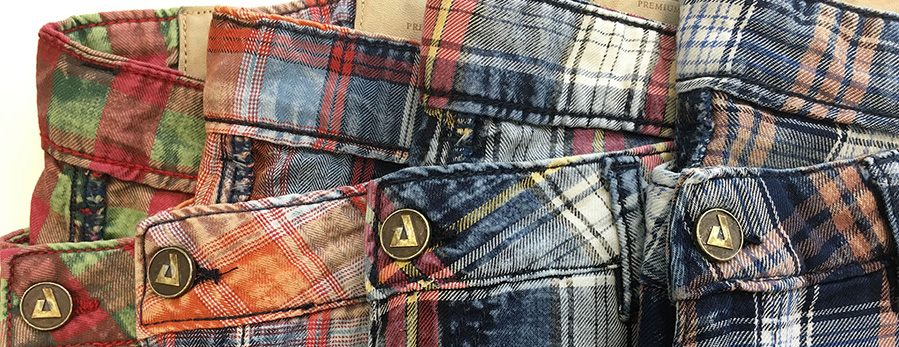
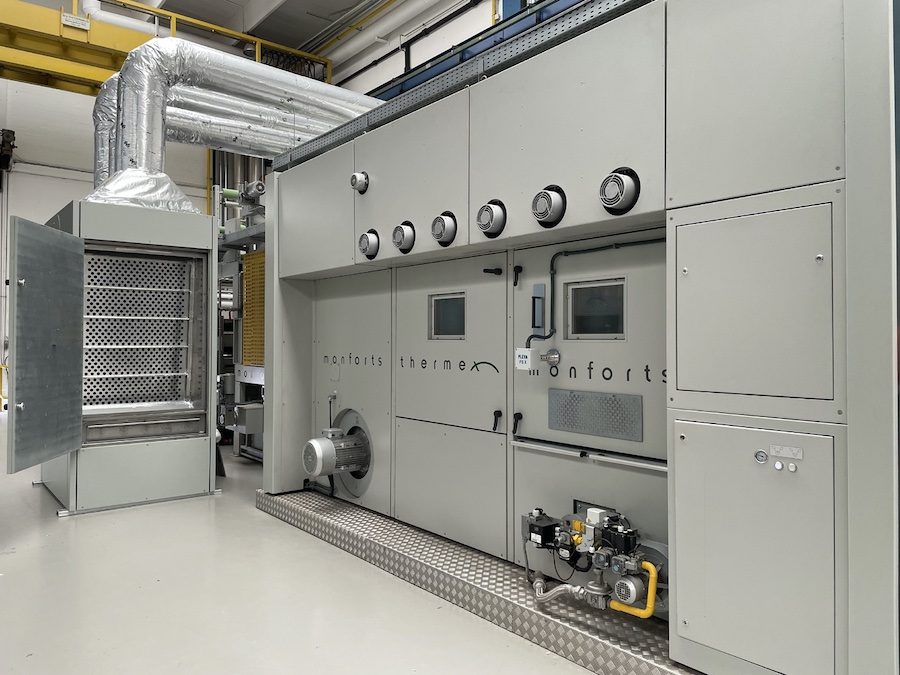
A fast and economical method for applying both reactive dye and a version of pigment dye in a single process allows striking new colour combinations and effects to be achieved. (c) 2019 Monforts
As an accredited supplier to leading European retail brands such as Marks & Spencer, H&M, INDITEX and Top Shop, Turkey’s Arta Tekstil Ltd. is seeing a programme of continuous investment over the past three years now paying solid dividends.

With a production capacity of around 4 million metres of finished woven fabrics per month, Arta employs 300 workers over three shifts daily, with 50% of its output exported to key retail customers and the other half produced on a commission basis.

The company is situated in Çorlu, some 70km west of Istanbul – a city which has boomed over the past 30 years, with its population having risen from barely 20,000 to over 270,000 people. This has largely been due to a welcoming immigration policy and the new textile mills which have emerged in the past few decades in the city and now number around 350 in total.

Of the textile companies in Çorlu, however, around 250 are estimated to be dyeing and finishing operations, so how, you may ask, does a company like Arta distinguish itself?

The answer is through clever combinations of processes exploiting its comprehensive dyeing, finishing, coating and digital and rotary printing technologies to the full. 

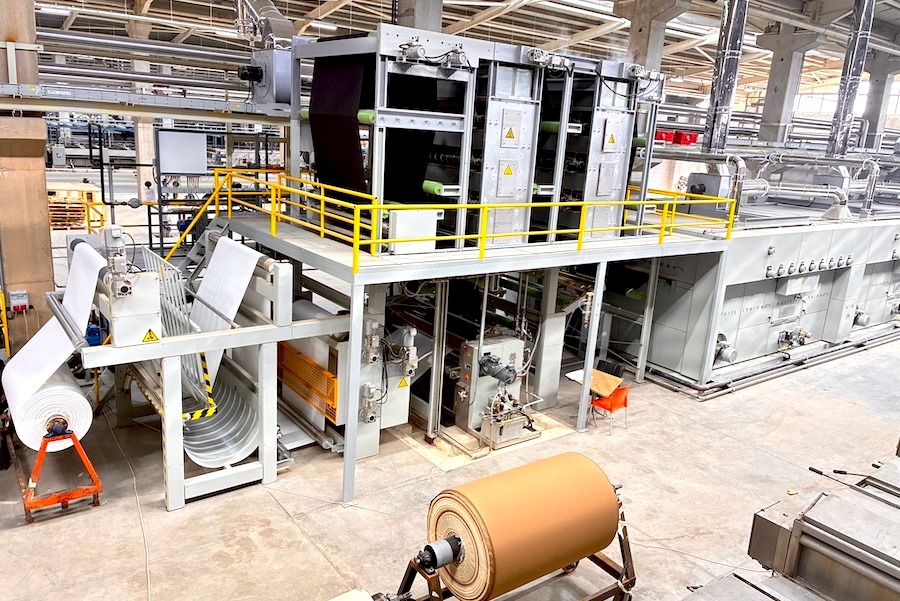
In addition to other technologies, the company’s recent investment programme has seen the installation of a new European-built Monforts Thermex Econtrol dyeing system as well as two ten-chamber Monfongs Montex stenters and a Monfongs sanforising unit, all of which have been installed and commissioned by Istanbul-based Neotek.

Wider range

“In combination with the new Monforts Thermex system, this provides us with a far wider range of fabric finishes and surface effects that we can achieve compared to our competitors,” says Arta plant manager Mehmet Kaan Kalipçio?lu. “We specialise in cotton, polyester, viscose and lyocell finished fabrics and their blends, with varying levels of controlled stretch, in advanced weaves including twills, poplins, canvas, sateen, double-face as and dobby qualities.

“Our dyeing methods include reactive, sulphur, indanthren, indigo, pigment and disperse dyeing, along with specially-developed in-house techniques and special glitter, PU, pearl and other blade coatings. Through combinations of all of these techniques, we are able to provide our customers with highly-differentiated fabrics.”

Added to these winning combinations can be a variety of finish effects such as silicone, wrinkle-free, paper-touch, water repellent, stain repellent, anti-bacterial, fire-retardancy etc.
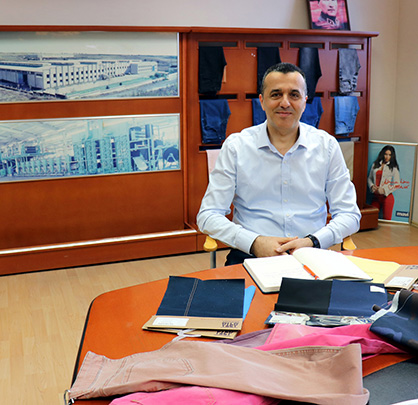
Arta plant manager Mehmet Kalipçioglu. (c) 2019 Monforts


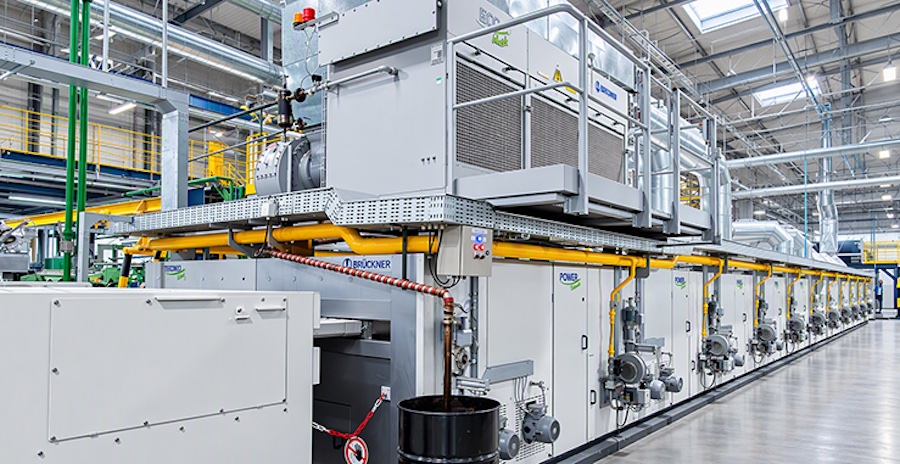
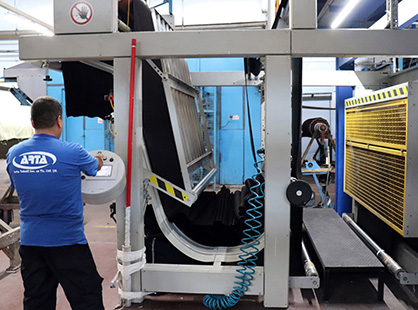
Arta’s Thermex Econtrol range has a working width of 1.8 metres (c) 2019 Monforts


 Single process

One special development Arta has been involved with in a joint project for TÜBITAK – The Scientific and Technological Research Council of Turkey – has resulted in a fast and economical method for applying both reactive dye and a version of pigment dye in a single process.

“Since the washing effects of reactive and pigment dyes are far different, there are some colours you can only get with either, but our customers can now achieve outstanding new colour shades after garment washing with this process, and different shades or contrast colours can be combined,” Mr Kalipçioglu explains.

The latest Monforts and Monfongs installations, he adds, have resulted in a production increase of over 50%, with a marked improvement in quality and reproducibility.

“What’s been particularly impressive is the total control we now have over parameters such as humidity,” he says.

The company’s Thermex Econtrol range meanwhile has a working width of 1.8 metres and allows the single-bath continuous dyeing of cotton and polyester fabrics with selected reactive and dispersion dyestuffs, as well as cotton-polyester blends to be processed without reductive intermediate cleaning, eliminating the need for a steamer.

“Other processes, such as the use of indanthren vat dyes for enhanced wash and boil fastness, or the over-dyeing on reactive-dyed cotton fabrics to achieve an extremely broad range of colour effects, are also carried out on the range,” Mr. Kalipçio?lu says.

Another significant advantage for the company is the advanced water treatment and recycling equipment it has in place.

“It’s now very difficult to get a licence to operate a new plant in Çorlu, due to new government regulations to protect agriculture in the region,” Mr. Kalipcioglu concludes. “Luckily, we have been well prepared for this.”
More News from A. Monforts Textilmaschinen GmbH & Co. KG

#Dyeing, Drying, Finishing

Monforts customers make strong showing at Heimtextil 2026

Monforts dyeing and finishing technology customers from Pakistan had a formidable presence at the Heimtextil 2026 home and contract textiles exhibition which attracted over 48,000 visitors to Frankfurt in Germany this month (January 13-16).

#Dyeing, Drying, Finishing

Monforts announces leadership transition in 2026

Effective from January 1, 2026, Volker Gingter, has been appointed the new Managing Director of A. Monforts Textilmaschinen GmbH & Co. KG, headquartered in Mönchengladbach, Germany, and will steer the fortunes of the leading dyeing and finishing technology company going forward.

#Dyeing, Drying, Finishing

Third Monforts Thermex for Turkey’s Altoteks

As a leader in the dyeing, finishing and printing of fabrics for workwear and uniforms, Altoteks, based in Çorlu, Turkey, has been a highly valued Monforts partner since 1996, and has just installed a new Thermex continuous dyeing range.

#ITMA Asia + CITME Singapore 2025

VDMA companies outline major benefits in finishing – and now dyeing too

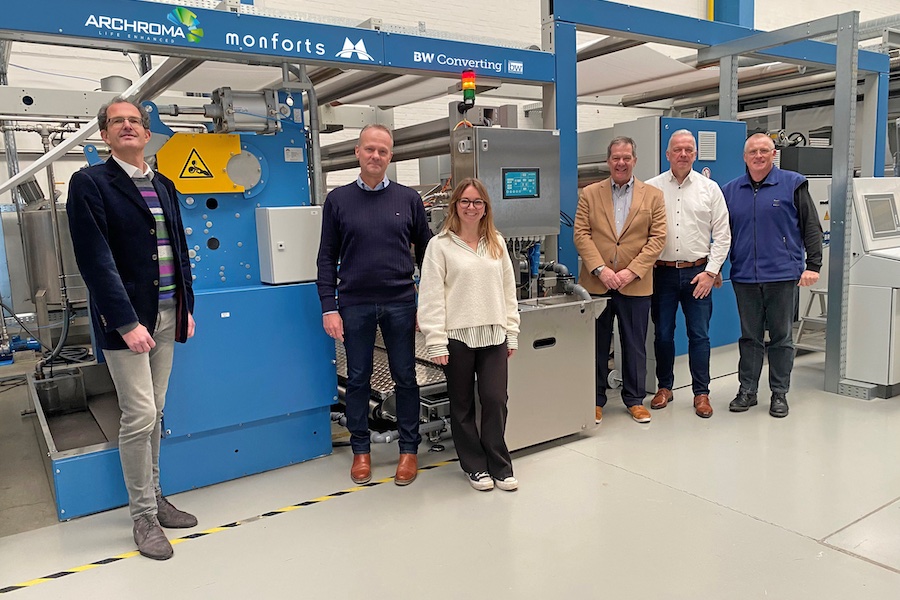
Monforts and its partners Archroma and BW Converting are setting new standards in the resource efficient and cost-effective finishing of fabrics. During a recent webinar organised by Germany’s VDMA textile machinery association, specialists from the three companies provided details of the range of new energy-saving options that is now available to mills.

More News on Dyeing, Drying, Finishing

#Dyeing, Drying, Finishing

Orthopac RVMC-20 plus: German Engineering for Smarter Weft Straightening

In times of rising cost pressure and growing quality demands, textile producers worldwide are searching for solutions that combine precision, efficiency, and sustainability. With its latest innovation, the Orthopac RVMC-20 plus, Mahlo once again demonstrates the strength of German engineering: improving proven technology to meet today’s challenges.

#Dyeing, Drying, Finishing

Precision jet dyeing moves towards industrial scale as Alchemie partners with Acatel

BTMA member Alchemie Technology, the pioneer of precision jet dyeing solutions based in Cambridge, UK, is partnering with Acatel, the Portuguese leader in sustainable textile manufacturing. The two companies will work together to validate and optimise Alchemie’s Endeavour system for knitted cellulosic fabrics.

#Associations

AATCC announces 2025 Herman & Myrtle Goldstein Graduate Student Paper Competition winners

The American Association of Textile Chemists and Colorists (AATCC) recognized the winners of the 2025 Herman & Myrtle Goldstein Graduate Student Paper Competition. Founded in 1982 to give student members the chance to conduct and present original research, the competition was renamed in 1994 in honor of Herman and Myrtle Goldstein, following their US$60,000 endowment. Their gift is a lasting remembrance of their dedication to young people in the textile industry.

#Dyeing, Drying, Finishing

Stefan Moll becomes new CEO of the machinery manufacturer

Starting January 1, 2026, Stefan Moll will take over the management of Mahlo GmbH + Co. KG, the world’s leading provider of measurement and control technology for web-shaped materials. With this move, Mahlo is focusing on the long-term safeguarding of its market position and technological leadership. The current CEO, Rainer Mestermann, will leave the company after 14 years as part of a planned succession arrangement.

Latest News

#Sustainability

Ying McGuire becomes new CEO of Cascale

Cascale today announced the appointment of Ying McGuire as Chief Executive Officer, effective June 1, 2026.

#Technical Textiles

Sustainable, lightweight, and sound absorbing: Polyester-based front trunk solution for BEVs

As car manufacturers look to further reduce their carbon footprint, Autoneum has developed an innovative front trunk solution for battery electric vehicles (BEVs), made entirely from polyester-based textile. The Ultra-Silent Frunk offers significant weight reduction, improved acoustic and thermal insulation, and uses up to 70 percent recycled material, supporting sustainable and efficient vehicle design. Autoneum, global technology leader in acoustic and thermal management for vehicles, has already received orders for the new frunk from three major OEMs in Asia and Europe to be built in three BEV models. Series production for two BEVs has been underway in China and Germany since last year.

#Raw Materials

Modern testing methods for raw cotton

The 38th International Cotton Conference Bremen will take place from 25 to 27 March 2026 at the Bremen Parliament. This conference has traditionally stood for in-depth expertise and international exchange. The program will focus on technical innovations, market trends, and regulatory frameworks across the entire value chain – from agriculture to the circular economy. With high-profile speakers, the conference is regarded as the key meeting point for the global cotton industry. Today’s focus: Cotton quality and testing methods.

#Spinning

Rieter responds to higher raw material prices

Global political and economic developments have been leading to rising raw material and energy costs for some time. The textile machinery industry is also affected by this trend. Rieter machines and components consist to a large extent of steel, copper, aluminum and electronics. These materials in particular have seen higher demand and higher prices in recent months.

TOP