[pageLogInLogOut]

#Digital Printing

Mimaki launches environmentally conscious, two-step textile transfer printing solution TRAPIS
© 2024 Mimaki
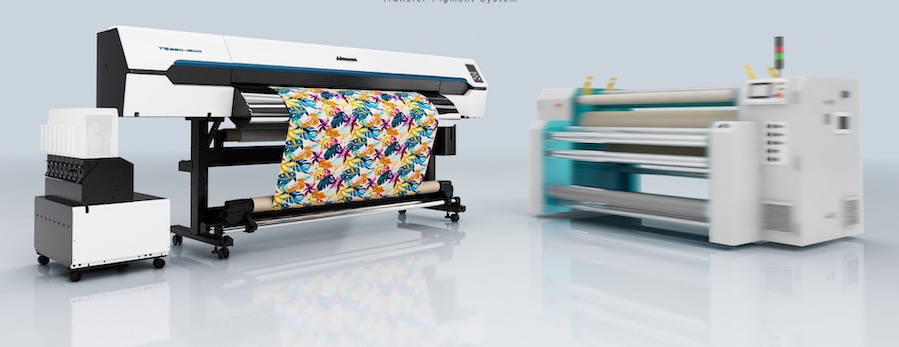
Mimaki Europe, a leading provider of industrial inkjet printers, cutting plotters, and 3D printers, announces the commercial release of its textile pigment transfer printing system, named “TRAPIS”. Following the preview of the technology at ITMA 2023, this commercialised version, available later this year, offers an environmentally friendly and easy to operate solution for textile applications – saving almost 90% of wastewater compared to conventional methods.
  • Mimaki’s new textile pigment transfer printing system, named TRAPIS, makes significant savings on wastewater compared to conventional methods
  • Latest innovation also broadens application possibilities for print service providers, with the ability to print on a multitude of materials, including natural fibres
  • System to be demonstrated with Mimaki’s inkjet printer, the TS330-1600, in Mimaki’s booth at FESPA Global Print Expo 2024 (Stand F10, Hall 12)

TRAPIS provides a simple two-step process, consisting of an inkjet printer and a calender. The design of choice is printed by the inkjet printer with a dedicated ink onto transfer paper, which is then transferred to the application via a calender. Unlike both analogue and digital conventional dye-printing methods, TRAPIS generates almost no wastewater, only that which is produced during the printer’s automatic maintenance. Due to no pre-treatment or washing of the fabric being needed, this saves around 14.5 litres per square meter of water when compared to digital dye printing1.

Additionally, this eliminates the need for wastewater treatment facilities, which can be both expensive and constrictive when it comes to where the solution is installed. Due to the smaller size, it is possible for the TRAPIS system to be installed in a limited space, or even at the front of a printshop.

TRAPIS also offers print service providers an easy-to-use option for textile printing. As the process only involves printing and transferring, it does not require specialised skills to operate when compared to the more complex seven- or eight-step system for digital and analogue conventional printing. The lack of a fabric conveyor belt in the system further minimises the need for time intensive maintenance.


Further simplifying the process, TRAPIS is able to print on a wide range of materials, including natural fibres like cotton and silk in addition to blended fabrics, with just one type of ink. Due to this, the process can be flexible and adapt to customer demand, even with multi-material short runs. The accompanying ink has also achieved the ZDHC MRSL Lv.3*2 certification and is bluesign® APPROVED, to ensure that it is both worker and consumer safe, as well as an environmentally friendly product. Like with Mimaki’s existing textile solution portfolio, the prints produced with TRAPIS maintain stretchability and colourfastness, without impacting aspects like breathability and water absorbability, important for sectors like home textiles, activewear and fashion.

Arjen Evertse, General Manager Sales, Mimaki Europe, comments, “After the positive reception we received when we initially showcased the technology last year, we’re pleased to now announce the release of this solution commercially at FESPA. Conscious of the evolving sustainability standards and customer demands, we created TRAPIS as an innovative and seamless system for print service providers looking to produce high-quality and vibrant textile applications, while keeping cost, time and environmental impact to a minimum.”

© 2024 Mimaki
© 2024 Mimaki


[1] According to Mimaki’s original research, digital dye printing generates significant amount of wastewater by textile printing conveyor belt washing and fabric washing after dye fixation (steam)
[2] ZDHC is a non-profit organization based in Amsterdam, the Netherlands, that works to eliminate the emission of hazardous substances in the textile and leather industry.



More News from Mimaki Europe B.V.

#Digital Printing

Maximising print efficiency exploring ink saving features for modern print production

In today’s print industry, balancing quality, efficiency, and environmental responsibility is a growing priority. With increasing pressure on margins and sustainability, solutions that streamline production without sacrificing results are more relevant than ever.

#Digital Printing

Mimaki upgrades TS330 series for vibrant and seamless dye sublimation printing

The TS330 Series now provides users with an extended colour gamut, offering the flexibility to serve different markets profitably from one solution – from fashion to décor to signage – with improved colour vibrancy, fidelity and accuracy. Mimaki also introduces a larger solution to the TS330 Series, the TS330-1800, able to accommodate single-piece, wide textile fabrics, ideal for larger home décor applications.

#Heimtextil 2026

Mimaki demonstrates versatile, simple TRAPIS textile printing at Heimtextil 2026

Mimaki’s textile pigment transfer printing system, TRAPIS, is able to print on a diverse range of fabrics - unlike traditional processes - including natural fibres and synthetic fabrics. The full solution will be shown on Mimaki’s booth (Hall 3.0 Stand A97), as the company returns to Heimtextil to showcase its advancements in sustainable, high quality and efficient textile printing.

#Digital Printing

Mimaki introduces entry-level TS200-1600 dye sublimation printer for vibrant and versatile Results

Mimaki Europe, a leading manufacturer of industrial inkjet printers and cutting plotters, today announces the TS200-1600, its latest sublimation transfer inkjet printer, which will make its international debut at The Sign Show / The Print Show in Birmingham, UK (23–25 September 2025). Building on the success of the TS100, the new TS200-1600 delivers fast production speeds, high-quality and versatile applications at an affordable price point, making it an ideal solution for small shops, start-ups, and businesses looking to expand into customised goods and short-run textile production.

More News on Digital Printing

#Digital Printing

Epson launches SureColor G9000: high-production Direct-To-Film printer delivering greater productivity and reliability

Epson today announces the launch of the SureColor G9000, a new high-production Direct-To-Film (DTFilm) printer designed to meet growing global demand for flexible and efficient textile transfer printing. Expanding Epson’s DTFilm line-up alongside the SC-G6000, the SC-G9000 introduces enhanced speed, reliability and ease of maintenance for commercial garment decorators and textile producers.

#Digital Printing

Call for speakers and partners: Kornit Konnections 2026

Kornit Konnections today announced it is officially accepting speaker proposals and partner interest for what is set to be the most influential digital apparel industry gathering of the decade. Interested parties should visit www.kornitkonnections.com.

#Digital Printing

Sold-out industrial inkjet print technology showcase signals accelerating adoption across advanced manufacturing

A new sold-out industrial inkjet print showcase taking place in Munich this month is sending one of the clearest signals yet that industrial print technologies are entering a new phase of commercial adoption, as manufacturers increasingly integrate inkjet into production-scale environments.

#Digital Printing

Epson future proofs textile printing with Epson Textile Academy 2.0

Technology leader Epson today hosted its second Textile Academy Event at the company’s Textile Innovation Centre in Lutterworth, Leicestershire. Building on the success of its inaugural Textile Academy earlier this year, the event welcomed Textile Design BA students from Nottingham Trent University (NTU) and Loughborough University. The event features workshops designed to enhance student’s practical textile printing skills; corporate and entrepreneurial business acumen; marketing and self-branding; and environmental awareness around the textile industry.

Latest News

#Nonwoven machines

Three ANDRITZ spunlace lines start operating at Alar Silk Road New Materials in China

Alar Silk Road New Materials and ANDRITZ have successfully commissioned three spunlace lines in crosslapped configuration at Alar’s facility in Aral City, Xinjiang, China.

#Raw Materials

Better Cotton Initiative opens enrollment in the US with promising opportunities for producers

Producer enrollment for the US Program of the Better Cotton Initiative (BCI) is open until May 15 for the 2026-2027 season. With over 2,600 members spanning the cotton supply chain and more than 11,000 users of its Better Cotton Platform (BCP) as of 2025, BCI’s standard is implemented in 15 countries and covers one fifth of global cotton production.

#Knitting & Hosiery

SHIMA SEIKI to exhibit at GMMSA Expo India

Leading Japanese computerized flat knitting technologist SHIMA SEIKI MFG., LTD. of Wakayama, Japan, together with its Indian sales representative Universal MEP Projects & Engineering Services, Ltd., will participate in the upcoming Garments Machinery Manufacturers & Suppliers Association (GMMSA) Expo India 2026 exhibition to be held in Ludhiana, India next month. Through its lineup at GMMSA, SHIMA SEIKI aims to further strengthen its presence within the Indian market with an exhibit that caters to diverse needs, consisting of seam-free WHOLEGARMENT® knitting technology as well as a brand-new shaping machine with high productivity and excellent cost performance.

#Research & Development

Bio-based fibers with good flame retardancy

Fibers made from bio-based plastics reduce dependence on fossil raw materials and promote the circular economy. The covalent bonding of flame-retardant additives can open the way for these fibers to enter the mass market.

TOP