[pageLogInLogOut]

#Digital Printing

New 3-litre ink system to increase productivity and enhance automation of Mimaki JFX600-2513 printer
© 2022 Mimaki
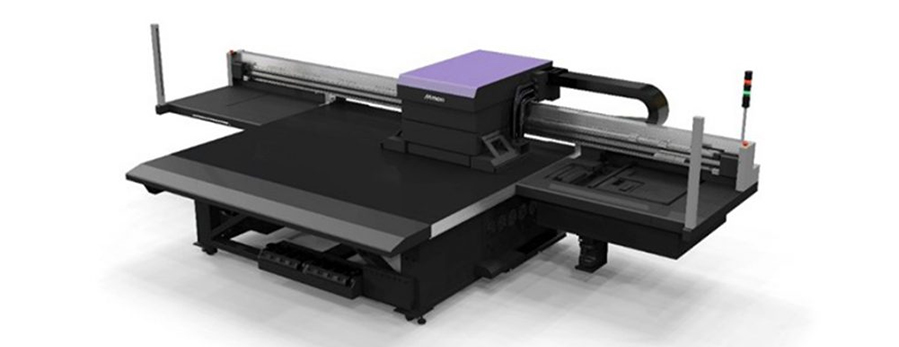
Today, Mimaki announced that the company has developed a new 3-Litre External Ink Supply Option for the Mimaki JFX600-2513 Large-format Flatbed UV Inkjet Printer. The new ink system is designed to maximize production efficiency and improve automation for a more streamlined, productive print operation for JFX600-2513 customers.

This optional unit will be commercially available globally in January 2023, but visitors to Viscom Italia 2022 in Milan, Italy (13-15 October) will get a preview of this new, production-enhancing system. Attendees at the show will be the first to see how much this new 3-litre ink tank capacity reduces the frequency users are required to refill their JFX600-2513 ink supplies1. The system even enables ink replenishment during the printing process, further reducing printer downtime and improving productivity.

Mimaki has developed the 3-litre ink system with one of its core objectives for the future of its technology portfolio at the forefront – to support the automation of its customers’ printing processes. An automatic white ink circulation system included in the 3-litre ink unit eliminates the need for manual shaking. Additionally, weight sensors enable operators to measure the remaining ink levels of the JFX600-2513 more accurately, preventing unnecessary ink waste.
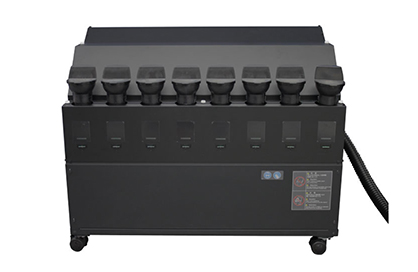
3-litre external ink supply option for Mimaki JFX600-2513 © 2022 Mimaki


JFX600-2513 printers are also compatible with the proprietary Mimaki MDL command, allowing customers to communicate with their print production systems or peripheral devices via IoT protocols. The MDL command enables automated operation of the respective printing processes, such as the transportation of print media (workpieces). In combination with the new 3-litre ink option, the MDL command will support extensive, continuous, automated printing sessions.


Mark Sollman, Product Manager EMEA, Mimaki Europe explains why automation is key to futureproofing print operations,

“To be able to better connect technology, make it more intuitive and allow for a more seamless, efficient transition from when a customer places an order to its’ delivery has clear long-term business benefits. An automated workflow enables printers to improve their production processes, therefore reducing delivery times and allowing them the increased production capacity to take on new business. With this new 3-litre ink unit, JFX600-2513 customers can further minimise downtime and speed up delivery times especially in higher volume print environments, helping them to become more efficient, versatile and profitable.”

The Mimaki JFX600-2513 large-format flatbed UV inkjet printer is designed for high volume print productions. It has 16 print heads and a maximum output size of 2500mm x 1300mm x 60mm, corresponding to 4X8 plates (1220mm x 2440mm). Capable of direct printing onto a wide variety of media, including resin, glass, and metal, and of course, large-format signboards, the printer can accommodate substrates of up to 60mm in thickness. The JFX600-2513 also features 2.5D printing, which enables layers of UV ink to be printed to create a textured surface for use in higher value printing applications.

1 The new 3-Litre Ink system can be refilled using the standard 1-litre ink bottles.

More News from Mimaki Europe B.V.

#Digital Printing

Keeping print inclusive: Empowering women in the print industry

Across all industries, cultivating a diverse and inclusive workplace is increasingly recognised as valuable and essential to long-term success. However, despite the print industry’s significant advancements in technology and innovation, visible representation of women remains limited. As the sector grapples with low recruitment, it’s important to challenge outdated perceptions. Creating real change, however, requires collective effort - no single company can do it alone.

#Digital Printing

Express Print boosts production using an expanded fleet of Mimaki technologies

Express Print, a fast-growing Bulgarian provider of visual communication and soft signage solutions, has significantly enhanced its production workflow with a comprehensive portfolio of Mimaki digital printing systems. Based in Varna and active for more than 10 years, the company maintains a strong focus on the advertising sector. Over the years, it has steadily expanded its operations, driven by a clear vision to bring the full spectrum of large-format printing services in-house, avoiding outsourcing and ensuring complete control over production quality.

#Digital Printing

Erreà upgrades sportswear printing operations with seven high-performance Mimaki digital textile printers

Mimaki Europe, a leading manufacturer of industrial inkjet printers and cutting systems, has supported renowned Italian sportswear brand, Erreà in upgrading its digital textile printing operations with the installation of seven high-performance Mimaki systems. The new installation includes three Tiger600-1800TS industrial dye-sublimation printers and four TS330-1600 solutions, replacing a previous fleet of 28 digital printers. This major upgrade marks a significant step forward in Erreà’s production strategy, enabling the company to streamline its printing infrastructure while improving efficiency, colour consistency and overall production control.

#Digital Printing

Maximising print efficiency exploring ink saving features for modern print production

In today’s print industry, balancing quality, efficiency, and environmental responsibility is a growing priority. With increasing pressure on margins and sustainability, solutions that streamline production without sacrificing results are more relevant than ever.

More News on Digital Printing

#Digital Printing

Former ASOS CEO Nick Beighton joins Kornit Digital to help shape the future of on-demand fashion

Kornit Digital LTD. (NASDAQ: KRNT) ("Kornit" or the "Company"), a global leader in sustainable, on-demand digital fashion and textile production technologies, today announced it has appointed Nick Beighton, former Chief Executive Officer of ASOS, as a strategic advisor to the Company and its Board of Directors. His appointment reflects Kornit’s continued focus on strengthening its connection to global brands, retailers, and digital commerce platforms as the industry transitions toward on-demand production. The Company plans to nominate Mr. Beighton for election to the Board at Kornit’s 2026 Annual Shareholder Meeting.

#Digital Printing

FESPA confirms participation from leading exhibiting suppliers and brands for inaugural textile event

FESPA has confirmed a strong exhibitor line-up for its inaugural Textile show, a dedicated new event that will run as part of FESPA 2026, alongside co-located events: Global Print Expo, Personalisation Experience, European Sign Expo, WrapFest and the brand-new Corrugated.

#Digital Printing

UK Manufacturer Basic Prints commits to digital-first production model with dual investment in Kornit Digital’s Apollo

Kornit Digital, a global leader in sustainable, on-demand digital fashion and textile production technologies, today announced that UK clothing manufacturer Basic Prints has expanded its digital production capacity with a second Kornit Apollo Direct-to-Garment (DTG) system. This marks a strategic shift supporting Basic Prints’ digital-first manufacturing model.

#Digital Printing

Hybris Productions scales licensed apparel production moving from screen to digital with Kornit Digital

Kornit Digital, a global pioneer in sustainable, on-demand digital fashion and textile production technologies, today announced that Hybris Productions has adopted Kornit’s direct-to-garment (DTG) digital production technology to scale licensed apparel manufacturing with greater speed, design flexibility, and on-demand production capabilities supporting retail and e-commerce growth.

Latest News

#Textile chemistry

A flagship for chemical production: BASF inaugurates world-scale Verbund site in China

BASF today (March 26, 2026) celebrated the official inauguration of its newly built, world-scale Verbund site in Zhanjiang, Guangdong Province in southern China. Covering an area of around four square kilometers, it is more than a major BASF project in the chemical growth market of China. “Zhanjiang shows what the future of chemistry looks like: efficient, digital and sustainable by design. The site showcases a smart integrated Verbund structure on an industrial scale,” said Dr. Markus Kamieth, CEO of BASF, at the ceremony attended by representatives from government, customers, business partners and employees.

#Nonwovens

VEOCEL™ Lyocell production expands to Asia – Launching a new chapter for nonwovens in the region

VEOCEL™, Lenzing's flagship specialty nonwovens brand, expands production at its Thai plant in Prachinburi. This is the first-ever production of its nonwoven-grade lyocell fibers in Asia. Built in 2022 with a 100,000-ton annual production capacity, the facility - previously focused on fibers for textile applications - now can directly meet the demand for VEOCEL™’s biodegradable¹, wood-based lyocell fibers for nonwovens products. These fibers are an essential ingredient for high-quality nonwovens products, ranging from baby wipes to facial sheet masks and everyday personal hygiene items.

#Research & Development

Hof University develops sustainable textile coating for the fashion of tomorrow from mushrooms

Clothing is often treated as disposable: T-shirts for events, general merchandise, or short-term campaigns frequently end up in the trash after only a few uses. This is particularly problematic given that their production still largely relies on fossil-based materials. This is precisely where a new research project at Hof University of Applied Sciences comes in.

#Raw Materials

Fashion for Good mobilises industry to adopt mass balance attribution and accelerate decarbonisation

Fashion for Good launches today the Mass Balance Demonstrator project, a collaborative industry initiative to implement and scale the mass balance attribution (MBA) chain-of-custody model for biomass-attributed PET in textile applications. The project represents a concrete step toward accelerating brand-driven decarbonisation across the apparel value chain.

TOP