[pageLogInLogOut]

#Digital Printing

Shirtworks adopts Kornit Digital DTG, workflow software solution to grow sustainable, on-demand fulfilment operation
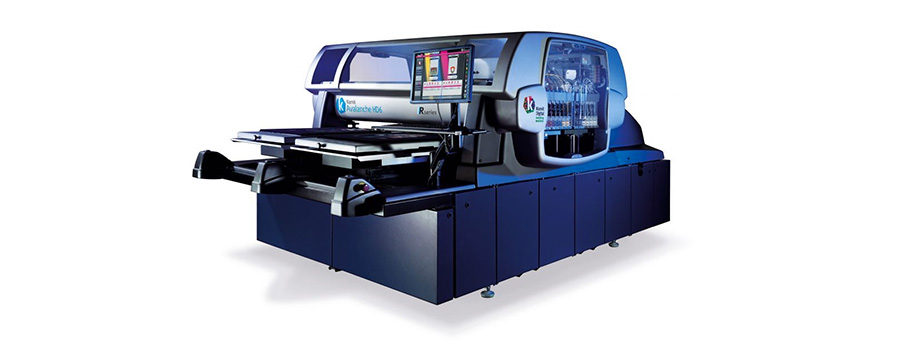
Kornit Avalanche HD6 printer © 2020 Kornit Digital
Kornit Digital (Nasdaq: KRNT), a worldwide market leader in digital textile printing technology, announced Oxford, United Kingdom-based Shirtworks is implementing a Kornit Digital direct-to-garment (DTG) production system for sustainable, on-demand fulfilment. In addition to implementing Kornit DTG technology, Shirtworks has also purchased the new Kornit Workflow software solution, a product resulting from Kornit’s recent acquisition of U.K.-based Custom Gateway.

"We turned to Kornit because it offered a one-process solution, and its inks are GOTS-approved, which is very important to us."

The software, which provides end-to-end management capabilities of the production process (from online store to shipping logistics), helps brands and fulfillers streamline their operations, for increased efficiency, accountability, control, and visibility—an ideal match for the speed, versatility, and retail quality demands of the e-commerce consumer market in which Shirtworks operates.

Shirtworks services brands and consumers on five continents, and in addition to delivering superior quality in rapid time, prides itself on being one the first European print shop accredited “Organic” by the Soil Association for both embroidery and screen printing, using “fair trade” materials, and paying all employees the Real Living Wage rather than the national minimum living wage. They offer a wide variety of personalized apparel and workwear, including sportswear, sweatshirts, caps, jackets, children’s wear, and other pieces.

“Shirtworks supplies decorated garments to all industries,” says Arron Harnden, the brand’s Managing Director. “We have a very diverse customer base, from consumers ordering one-offs to small brands and ethical-conscious B2Bs needing up to a thousand pieces or more. We are known as an ethical decorator, GOTS-approved for both screen and embroidery.”

Having supplemented its screen-printing capabilities with embroidery, Shirtworks believes Kornit will enable them to produce lower volumes of garments they would traditionally screen-print, in a manner that meets their quality standards and is profitable in all quantities. Harnden expects the Kornit system to help reduce their wage costs, while meeting the very high quality control standards necessary to maintain strong customer service.

Kornit’s DTG technology uses a proprietary single-step print process and eco-friendly pigment inks that produce no waste water, imprint a variety of fabrics at the push of a button, and deliver vibrant, photorealistic digital impressions with a durability for wash, rub, and light fastness. As the system requires virtually no setup time or labor, print costs are low and consistent, making runs profitable from the first piece, simplifying the production of samples, and making any design specifications repeatable with precision. A piece can be imprinted, dried, and ready to ship or wear in mere minutes.

“We turned to Kornit because it offered a one-process solution, and its inks are GOTS-approved, which is very important to us,” says Harnden. “Being able to match Pantones is also very important to us, and key to moving our screen-print clients over to DTG. We also wanted a retail-ready product that would enable us to expand into drop shipping.”


“Shirtworks was one of the first screen-print shops to establish their own website, and it’s that spirit of looking forward and anticipating customer needs that led them to supplement their production capabilities with efficient, eco-friendly Kornit systems,” says Chris Govier, KDEU Managing Director. “Kornit prides itself on developing technology that offers speed, quality, and versatility, while answering the demand for more sustainable and responsible business practices. We’re proud to give Shirtworks the capabilities they need to grow their operation in the on-demand, e-commerce marketplace, while staying true to their mission and reputation.”


Kornit Workflow Software © 2020 Kornit Digital


More News from Kornit Digital

#Digital Printing

USColorworks expands digital platform with Kornit Atlas MATRIX and Atlas MAX PLUS solutions

Kornit Digital Ltd. (NASDAQ: KRNT), a global pioneer in sustainable, on-demand digital fashion and textile production, today announced that USColorworks, a North Carolina-based apparel decoration and fulfillment company specializing in custom and on-demand printing for retail and promotional markets, has expanded its Kornit digital production platform with the addition of Atlas MATRIX and Atlas MAX PLUS systems to deliver high-quality, on-demand apparel across cotton, blended fabrics and polyester.

#Digital Printing

Kornit Digital announces commercial availability of Atlas MATRIX following successful global Beta program

Kornit Digital (NASDAQ: KRNT, "Kornit Digital", "Kornit", or the "Company"), a global leader in sustainable, on-demand digital fashion and textile production technologies, today announced the commercial availability of the Atlas MATRIX platform following the successful completion of a global beta program across leading production environments in Europe and North America. The announcement, made ahead of FESPA 2026 in Barcelona, marks a major milestone in the evolution of digital apparel production.

#Digital Printing

Kornit Digital launches Konnections 365

Kornit Digital (NASDAQ: KRNT) (“Kornit” or the “Company”), a global pioneer in sustainable, on-demand digital fashion and textile production today announced the launch of Konnections 365 - a year-round movement designed for the people moving the apparel, print, and retail industries forward. The strategy is built on the overwhelming success of Konnections 2026 held in Hollywood, Florida, featuring more than 500 customers, partners, and collaborators who together are driving the future of apparel and textiles.

#Texprocess 2026

Kornit Digital expands digital production into footwear and technical textiles with Presto MAX PLUS

Kornit Digital (NASDAQ: KRNT) (“Kornit” or the “Company”), a global pioneer in sustainable, on-demand digital fashion and textile production, today unveiled the Kornit Presto MAX PLUS, a new roll-to-roll system expanding digital manufacturing into footwear, automotive interiors, military camouflage, high-performance sportswear, and high-end furnishings. Debuting at Texprocess 2026 in Frankfurt, Presto MAX PLUS enables entirely new applications for on-demand textile production.

More News on Digital Printing

#Digital Printing

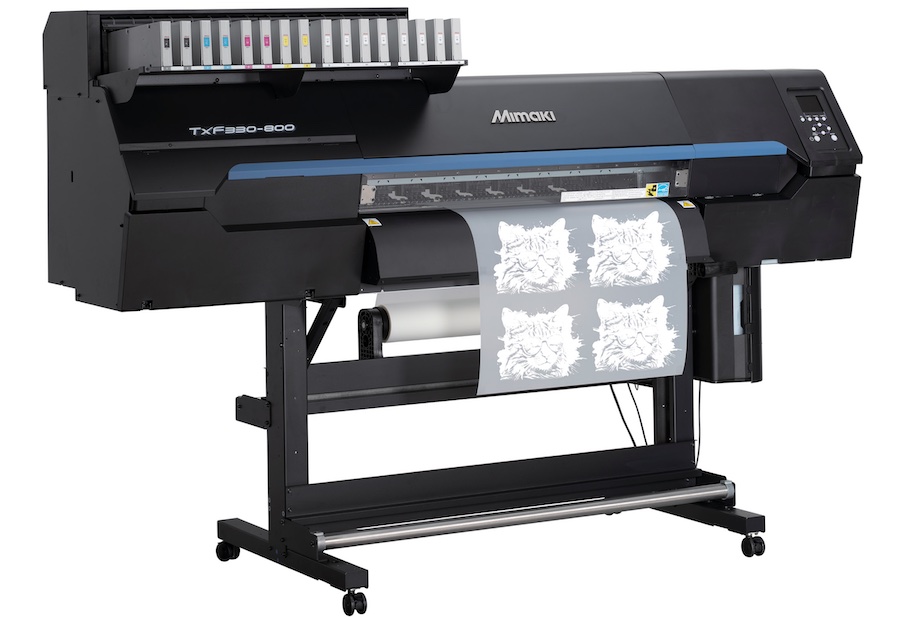
Mimaki advances DTF productivity and stability with new TxF330-800

Mimaki Europe, a leading manufacturer of industrial inkjet printers and cutting plotters, announces the TxF330-800, its new direct-to-film (DTF) printer. Designed to support stable, high-quality garment decoration in demanding print environments, the system combines automated maintenance, expanded white ink capacity and advanced production capabilities to streamline workflow.

#Digital Printing

Where every detail counts: Experiential applications of DTF and UV-DTF printing

Personalisation has moved far beyond the traditional logo on a t-shirt. Today, brands want to create complete experiences, where every detail – from clothing and accessories to décor and packaging – feels distinctive and reflective of their identity.

#Dyeing, Drying, Finishing

EFI Reggiani and Danitech Group announce strategic multi-year agreement for Mezzera textile finishing machinery

Electronics For Imaging, Inc. (EFI), through its subsidiary EFI Reggiani (Reggiani Macchine S.p.A.), together with Danitech Engineering and Solutions Srl (Italy) and Suzhou Danitech Intelligent Technology Co. Ltd (China), announces a multi-year license and manufacturing agreement covering the Mezzera and Jaeggli textile finishing machinery portfolio.

#Digital Printing

DTF vs DTG Printing - The technologies shaping today’s custom merchandise market

From sportswear to branded tote bags, custom merchandise continues to grow in popularity across sectors, driving print shops to cater to short runs, personalisation, and rapid turnaround. As print providers look to this market, two printing technologies often stand out: Direct‑to‑Film (DTF) and Direct‑to‑Garment (DTG). Each offers its own benefits, and understanding these differences helps determine the most suitable production method for print service providers.

Latest News

#Industry 4.0 / Digitalization

Coats Digital launches AI-powered GSD RealMotion for motion analysis

Coats Digital has launched GSD RealMotion, an AI-powered solution designed to provide apparel manufacturers with greater visibility into factory-floor operations. By analysing shop-floor video and applying Coats Digital’s GSD methodology, the solution turns video recordings into structured, motion-by-motion method studies.

#Textile chemistry

Archroma and Lameirinho partner in pioneering deployment of InOneGO single-step dyeing

Archroma, a global leader in specialty chemicals, and Lameirinho, a leading home textiles manufacturer based in Portugal, are collaborating to bring InOneGO by Archroma, a new single-step dyeing process, into commercial production. Lameirinho’s first InOneGo bedlinens collection is now available worldwide.

#Knitting & Hosiery

KARL MAYER launches extra-wide HKS 3-M EL for increased productivity

KARL MAYER has launched a new extra-wide version of its HKS 3-M EL tricot machine, designed to increase productivity particularly in the manufacture of textiles for sports, activewear and athleisure applications.

#Research & Development

Reducing development times for technical textiles by accelerated thermo-oxidative aging in a high-pressure autoclave

Synthetic polymers used in technical textiles can be effectively protected against degradation caused by heat, oxygen, and water through the use of stabilizer systems. This enables service lives of several decades, extending to more than 50 years. As the use of durable technical textiles continues to grow, so does the demand for reliable methods to predict their service life within economically feasible testing periods. For the first time the German Institutes of Textile and Fiber Research Denkendorf (DITF) developed methods for robust service life prediction for textiles in an IGF research project.

TOP