[pageLogInLogOut]

#Digital Printing

Mimaki customer, TOMDOM, declares digital technology the fabric of a successful textile print uusiness

TOMDOM online store is one of the largest Russian online trading platforms, offering a broad range of home textiles. During its 12 years in the market, Moscow-based TOMDOM has become a leading vendor of ready-made curtains with a diverse clientele throughout the country and abroad.

The concept of TOMDOM begun 12 years ago, when the future founder of the company, Vyacheslav Markov, went curtain shopping for his grandmother. There he faced a serious issue – the range of curtains was incredibly limited, and those that were in the medium price range were particularly hard to find in store. A long search eventually resulted in a purchase and a realization that this consumer niche is virtually empty – with very few Russian or foreign vendors. So, with a little effort and education, one could create a business with guaranteed success and high demand for its products.

“People enjoy refreshing their homes or offices with new and exciting pieces every so often; and, on top of that, housing construction was already quite intense in Moscow, and many people were moving into their new apartments, which urgently required home textiles,” explained Markov. “This is how the idea of opening a specialized online store came about. Initially, TOMDOM only sold ready-made products, but eventually we expanded production and became a major supplier of our own home textile products.”

Russia had very few online stores selling custom-made textile goods with digital print, and so, TOMDOM’s realization of the advantages and prospects of fast-fashion came at just the right time. The company followed the trends and integrated sales within its own print production facilities, thanks to the hard work of their coordinated and customer-oriented team.
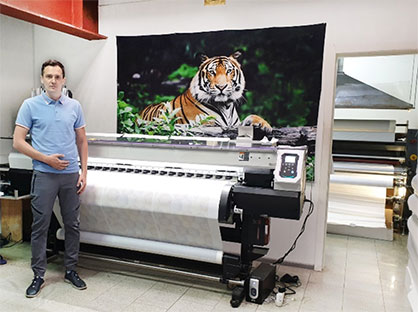
TOMDOM Founder, Vyacheslav Markov, with the Mimaki JV300-160 sublimation printer © Mimaki


A high-quality, flexible production line all sewn up

The TOMDOM factory, which currently employs more than 20 staff, produces curtains, furniture cases, bed covers, decorative pillows, bed linen, tablecloths, and various textile gift items. The production meets the highest quality criteria and uses cutting-edge sewing and digital printing equipment. TOMDOM constantly monitors global interior design trends so that it offers its customers only the most stylish and best-quality goods manufactured using the latest technologies. Thanks to flexible production capabilities, TOMDOM can meet orders of any style and complexity with the upmost quality and all in a short timeframe. The company ensured they hired a team of true professionals, which is why these carefully made, factory products are so highly appreciated by its customers.

Their production site has two Mimaki JV300-160 sublimation printers, chosen for their high performance, excellent print quality, simple controls and stable work under heavy production loads. Finished prints always live up to the company designers’ expectations, in terms of both picture clarity and colour reproduction. Long-lasting colours, no need for complex fabric preparation and finish processes, along with product safety, all played an important role in choosing this print method. Another reason why sublimation technology turned out to be an ideal match for TOMDOM is that most curtains and net curtains today are made of polyether fabrics.

“We took time to look at various solutions in the market, visiting exhibitions and inquiring what equipment others are using so that we could invest in the right technology. Once we saw the Mimaki printers in action, we were keen to have one for ourselves. And, of course, we trusted the legendary Japanese reliability, which has not failed us once in all these years. We immediately reached out to Smart-T, Mimaki’s representative in Russia, and they provided comprehensive help in implementing the sublimation printing equipment, and the digitalization process went without a hitch”, Markov recalls.

The company highlighted another key advantage of digital print: no risk of excess production, as every metre of fabric is printed to order. Digital printing helps keep the company profitable for batches as small as one metre, without the need to stock up on large quantities of pre-made products. With digital printing, you simply need to buy the amount of fabric that is required.
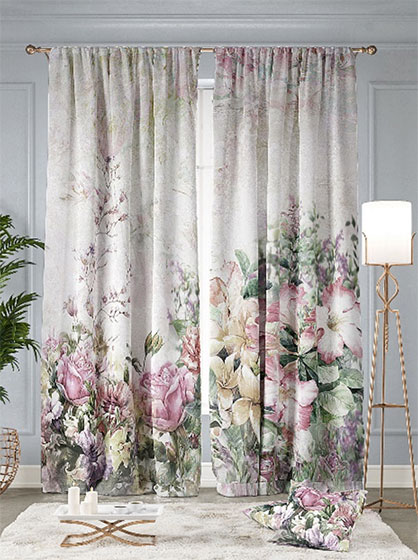
Finished prints always live up to the company designers’ expectations, in terms of both picture clarity and colour reproduction. © Mimaki


It is important to TOMDOM that digital technology helps them to provide a broad range of products and allows them the flexibility to diversify their collections at any time. This is what customers want, and therefore boosts the store’s profitability.

A successful future by design

When creating curtain designs, TOMDOM’s designers primarily focus on Russian consumers’ choices. They begin by analyzing the demand, by looking at website page hits and identifying customer preferences. The popularity of certain patterns shapes the primary direction of the artists’ work. The company also looks at interior design projects and takes into account the latest trends in urban apartment and country house design. Global fashion trends are also a key part in influencing their collections, both in terms of design and colour schemes.
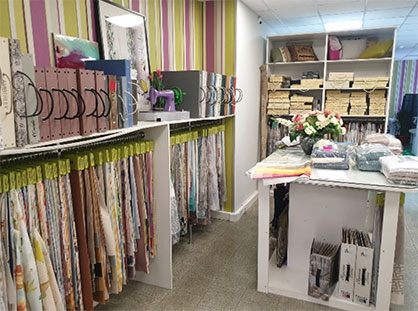
TOMDOM is well-known for producing high-quality curtains, bed covers, tablecloths, and other textiles © Mimaki


TOMDOM has a keen interest in the latest developments of Mimaki’s textile printers. Its business is successfully thriving thanks to utilizing modern hi-tech equipment. Today, TOMDOM is seriously considering purchasing a Tx300P-1800 MkII printer for natural fabrics, which are incredibly popular in Russia these days. Expanding the range of designer fabrics by adding natural materials will allow TOMDOM to start its own independent production of bed linen and various textile products for the kitchen and dining room. This progressive attitude towards business development is what helped the company overcome all economic challenges and maintain the growth it achieved over the years with its digital printing facility.

Thanks to its flexible production capabilities, TOMDOM can meet orders for curtains of any style and complexity with the upmost quality and all in a short timeframe © Mimaki


TOMDOM believes that, as the competition in the e-commerce market expands and new opportunities in textile printing appear, it is vital to uphold high product quality and avoid delays in delivery times- the customer should get exactly what they want, exactly when they want it. The company also values the importance of a well-refined online store; how their collections are presented, how informative the photos are and how accessible the navigation is. Having an easy to use online storefront is key in retaining existing customers while also engaging new ones.

“Digital printing technology makes designing and personalizing your interior that much simpler, especially since our collection has such a great variety of designer patterns. I believe curtains with photographic print will see a boost in popularity, as the demand for personalization becomes greater. We expect that our fleet of Mimaki technologies will increase in the near future, and our reliable, time-tested partner (Smart-T) will help us take our company to the next level,” Markov concludes.
More News from Mimaki Europe B.V.

#Digital Printing

Mimaki highlights growing demand for hybrid UV printing across European markets

Insights from Mimaki's European partner network reveal how hybrid UV printing is responding to different regional market needs, driven by growing demand for flexible, application-oriented printing technologies.

#Digital Printing

Mimaki advances DTF productivity and stability with new TxF330-800

Mimaki Europe, a leading manufacturer of industrial inkjet printers and cutting plotters, announces the TxF330-800, its new direct-to-film (DTF) printer. Designed to support stable, high-quality garment decoration in demanding print environments, the system combines automated maintenance, expanded white ink capacity and advanced production capabilities to streamline workflow.

#Digital Printing

Where every detail counts: Experiential applications of DTF and UV-DTF printing

Personalisation has moved far beyond the traditional logo on a t-shirt. Today, brands want to create complete experiences, where every detail – from clothing and accessories to décor and packaging – feels distinctive and reflective of their identity.

#Digital Printing

DTF vs DTG Printing - The technologies shaping today’s custom merchandise market

From sportswear to branded tote bags, custom merchandise continues to grow in popularity across sectors, driving print shops to cater to short runs, personalisation, and rapid turnaround. As print providers look to this market, two printing technologies often stand out: Direct‑to‑Film (DTF) and Direct‑to‑Garment (DTG). Each offers its own benefits, and understanding these differences helps determine the most suitable production method for print service providers.

More News on Digital Printing

#Digital Printing

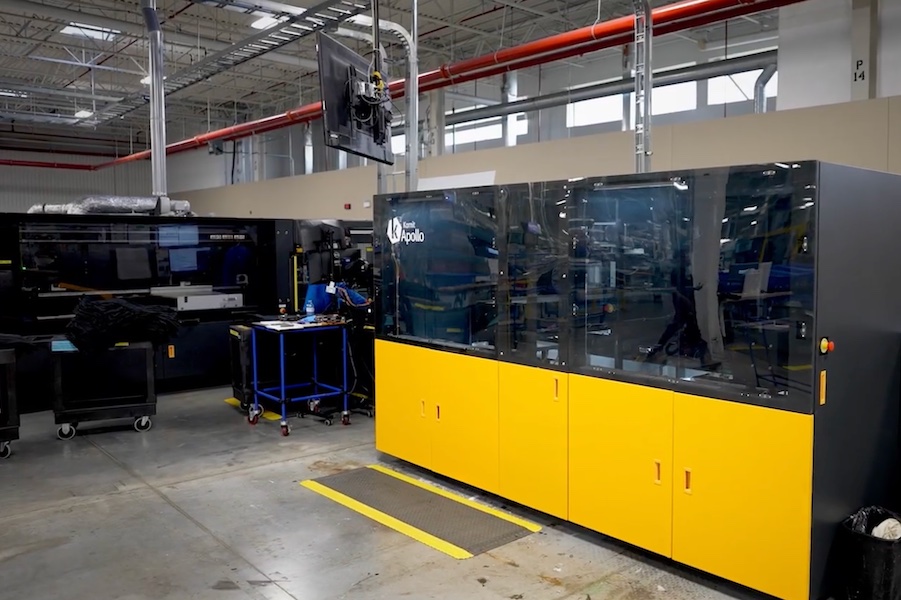
VistaPrint increases apparel production capacity with Kornit Apollo

Kornit Digital (NASDAQ: KRNT), a provider of on-demand digital textile production technologies, reports that VistaPrint has significantly increased its apparel production capacity through the implementation of the Kornit Apollo system. The installation has enabled the international print and design company to add approximately 25,000 units of weekly production capacity while improving production speed, operational efficiency and order turnaround times.

#Digital Printing

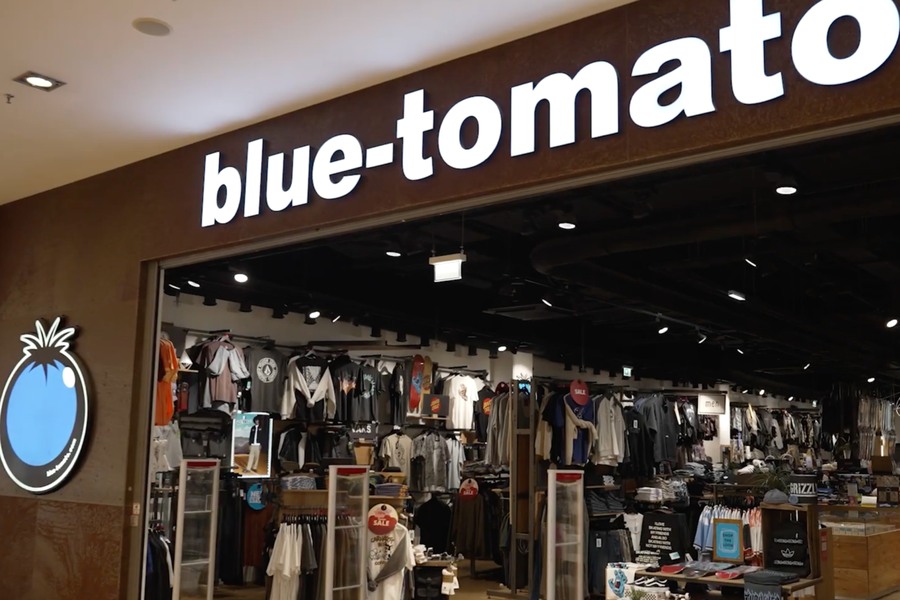
Blue Tomato accelerates agile retail apparel production with Kornit Digital

Kornit Digital (NASDAQ: KRNT), a global pioneer in on-demand digital fashion and textile production technologies, is highlighting how Blue Tomato, Europe’s largest board sports retailer, is using two Kornit Atlas MAX PLUS systems to support a more agile approach to in-house apparel production. The systems are helping Blue Tomato respond faster to changing consumer trends, produce high-quality apparel for its network of 86 retail stores across Europe and reduce inventory by printing only what the market demands.

#Digital Printing

Growth at the speed of demand: Kornit Digital brings digital textile innovation to PERFORMANCE DAYS 2026

Kornit Digital Ltd. (NASDAQ: KRNT) (“Kornit”), a global pioneer in on-demand digital fashion and textile production, will showcase the possibilities of digital, on-demand production at PERFORMANCE DAYS 2026, October 13–14 at Messe München, Hall 6, Booth E08.

#Digital Printing

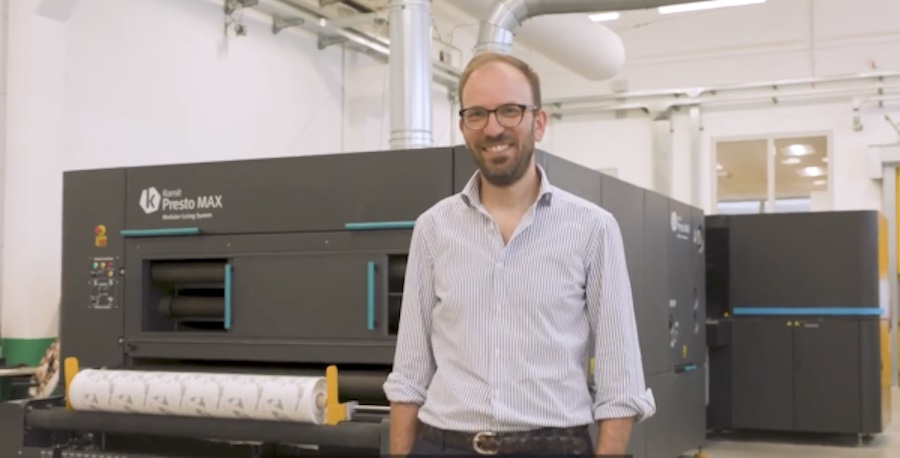
Italian textile finishing specialist injects digital agility into luxury textile manufacturing with Kornit Digital

1st October 2026 – Kornit Digital, a global pioneer in sustainable, on-demand digital fashion and textile production technologies, shares the news that Tintoria Finissaggio 2000, one of Italy's leading textile dyeing and finishing specialists, has integrated the Kornit Presto MAX into its production environment to expand its premium textile offering to improve manufacturing efficiency and support growing demand for sustainable, agile fabric production.

Latest News

#Textile processing

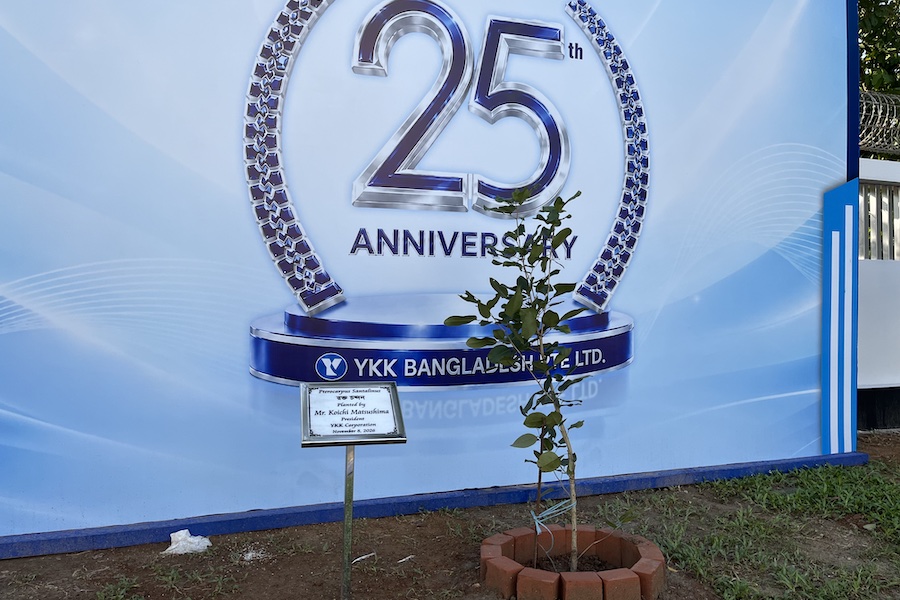
YKK Bangladesh celebrates 25 years of fastening production and business development

YKK Bangladesh Pte. Ltd., a subsidiary of Japanese fastening manufacturer YKK Corporation, has celebrated its 25th anniversary with a commemorative ceremony in Dhaka on November 8, 2026. Since its establishment in November 2000, the company has expanded its manufacturing capacity and business operations alongside the growth of Bangladesh's apparel industry.

#ITMA Asia + CITME 2026

Murata Machinery to showcase AIcone winding and high-speed VORTEX spinning at ITMA ASIA 2026

Japanese textile machinery manufacturer Murata Machinery will present its PROCESS CONER AIcone automatic winder and VORTEX 870 EX spinning machine at ITMA ASIA + CITME 2026. Under the theme “Right Choice, Bright Future”, the company will highlight technologies for efficient yarn manufacturing, combining energy-saving winding solutions with high-speed air-jet spinning. Visitors can meet Murata Machinery in Hall 5, Booths E01 and E02.

#ITMA Asia + CITME 2026

DORNIER highlights airbag, filtration and composite weaving technologies at ITMA ASIA 2026

Lindauer DORNIER will present its latest developments in air-jet and rapier weaving technology for technical textiles at ITMA ASIA + CITME 2026. The German machinery manufacturer will focus on the reliable and efficient production of airbag fabrics, high-density filters and reinforcement textiles for fibre-reinforced composites. Alongside its A2 air-jet and P2 rapier weaving machines, DORNIER will highlight its TRITOS FLEX technology for complex 3D composite preforms, retrofit solutions and expanded service capabilities in Asia. The company will exhibit in Hall 3, Stand E02.

#Retail & Brands

Marks & Spencer expands across Asia Pacific through partnership with Global Fashion Group

Marks & Spencer (M&S) and Global Fashion Group (GFG) have announced a strategic partnership to expand the British retailer's fashion business across Asia Pacific. M&S has launched on Southeast Asian fashion platform ZALORA and plans to enter THE ICONIC in Australia and New Zealand in early 2027. The agreement also introduces regional fulfilment for Australian M&S.com orders, enabling faster deliveries and returns while supporting a capital-light international growth strategy.

TOP