[pageLogInLogOut]

#Digital Printing

Epson and For.Tex innovate pre-treatment for pigment printing

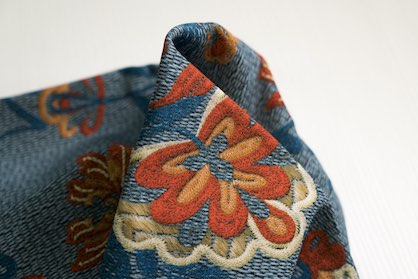
Epson, a pioneer in digital textile printing, and its subsidiary For.Tex, a leading producer of dye, thickeners and textile pre/post-treatment products, are launching Pregen PCC, the innovative textile pre-treatment formula for digital pigment-printed fabrics that allows them to reach a grade 4 rating for fastness to rubbing along with unprecedented brilliance and colour intensity. Pregen PCC is already available and is suitable for fabrics used for both clothing and interior decorating.
  • Grade 4 rubbing fastness and colour performance improved by 20%: the new formula from Pregen PCC offers state-of-the-art pre-treatment of fabrics for digital printing with pigment inks
  • Continuous improvement that combines high performance, efficiency and low environmental impact

Brilliant colours lasting longer. This is the result achieved with the new formula Pregen PCC. Compared to current pre-treatment products, it guarantees improved colour performance (20% higher intensity) and better rubbing fastness in both dry and wet tests (grade 4). Pigment printing is also environment-friendly: it does not require steaming or washing units, thereby reducing water and energy consumption.

“We are happy to see that the market is learning to appreciate pigment technology. We were the first to believe in it – with the first Genesta PG pigment inks launched in 2005 - and we are convinced that the new pre-treatment formula will facilitate the adoption of this technique,” explained Pietro Roncoroni, chairman of For.Tex.. “Pregen PCC is another step forward in the simplification and efficiency of the printing process, as it considerably reduces time and costs. In reaching a higher level of colour fastness, switching from traditional to digital printing is becoming increasingly more convenient.”


Monna Lisa, Genesta pigment inks, and Pregen: the integrated system that guarantees reliable, high-quality digital printing

Pregen PCC, the new pre-treatment for pigment-printed textiles, is only the latest product developed by For.Tex as they work continuously to improve the chemical component of digital printing. Since the introduction in 2005 of Genesta PG pigment inks, with over 6 million square meters printed to date, Monna Lisa has ensured a level of quality and reliability that are unmatched in this sector. The ongoing research has now produced Pregen PCC, another target achieved in improving quality while reducing time and costs (no particular treatment is required after printing to obtain maximum results) for digital pigment-printed textiles. This is an indispensable pre-condition for a sector that promises significant growth rates in coming years, and new efforts towards a reduced environmental impact. 
(c) 2018 Epson
(c) 2018 Epson


More News from Epson Europe

#Digital Printing

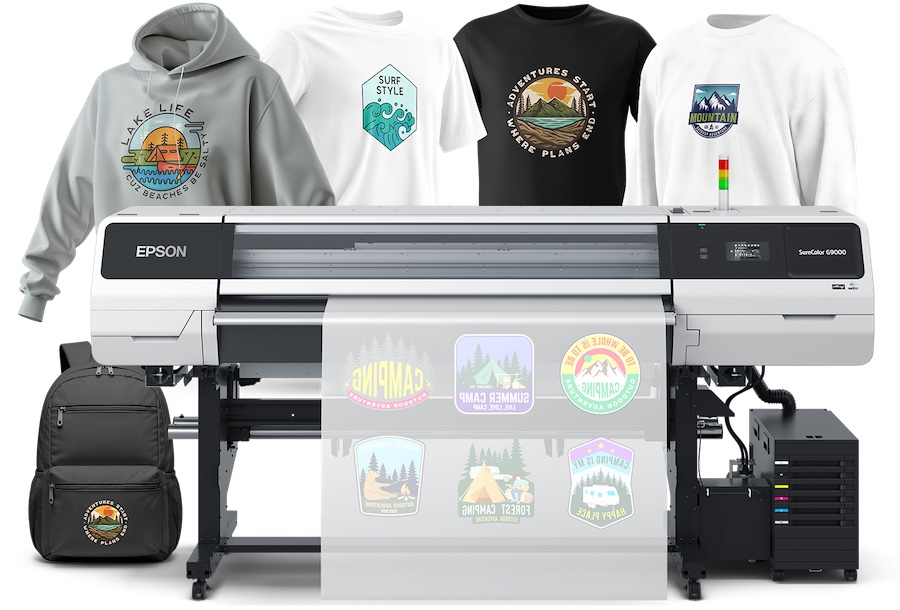
Epson launches SureColor G9000: high-production Direct-To-Film printer delivering greater productivity and reliability

Epson today announces the launch of the SureColor G9000, a new high-production Direct-To-Film (DTFilm) printer designed to meet growing global demand for flexible and efficient textile transfer printing. Expanding Epson’s DTFilm line-up alongside the SC-G6000, the SC-G9000 introduces enhanced speed, reliability and ease of maintenance for commercial garment decorators and textile producers.

#Digital Printing

Epson future proofs textile printing with Epson Textile Academy 2.0

Technology leader Epson today hosted its second Textile Academy Event at the company’s Textile Innovation Centre in Lutterworth, Leicestershire. Building on the success of its inaugural Textile Academy earlier this year, the event welcomed Textile Design BA students from Nottingham Trent University (NTU) and Loughborough University. The event features workshops designed to enhance student’s practical textile printing skills; corporate and entrepreneurial business acumen; marketing and self-branding; and environmental awareness around the textile industry.

#Recycling / Circular Economy

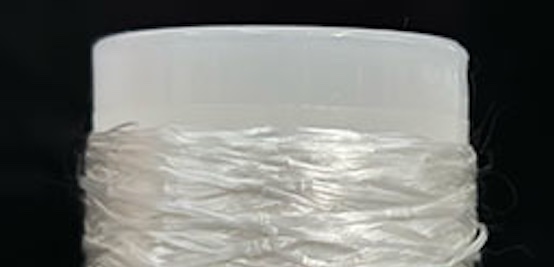
HKRITA and Epson develop silk-like regenerated fiber from cotton

The Hong Kong Research Institute of Textiles and Apparel ("HKRITA") and Seiko Epson Corporation ("Epson"; TSE: 6724) have succeeded in developing new regenerated cellulose fiber with a silk-like sheen from waste cotton fabric through a new production process.

#Digital Printing

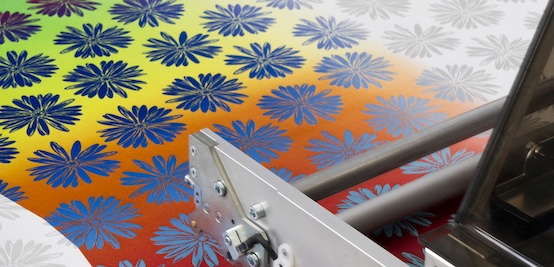
Epson unveils Monna Lisa ML-16000JQ for more efficient and sustainable Jacquard fabric printing

Global technology firm Epson announces a new direct-to-fabric digital textile printer designed for jacquard fabrics. The Monna Lisa ML-16000JQ delivers direct-to-fabric double-sided printing on jacquard fabrics, meeting the needs of fashion designers looking to enhance their creativity by seamlessly integrating vibrant colours with intricate woven patterns.

More News on Digital Printing

#Digital Printing

Maximising print efficiency exploring ink saving features for modern print production

In today’s print industry, balancing quality, efficiency, and environmental responsibility is a growing priority. With increasing pressure on margins and sustainability, solutions that streamline production without sacrificing results are more relevant than ever.

#Digital Printing

Mimaki upgrades TS330 series for vibrant and seamless dye sublimation printing

The TS330 Series now provides users with an extended colour gamut, offering the flexibility to serve different markets profitably from one solution – from fashion to décor to signage – with improved colour vibrancy, fidelity and accuracy. Mimaki also introduces a larger solution to the TS330 Series, the TS330-1800, able to accommodate single-piece, wide textile fabrics, ideal for larger home décor applications.

#Digital Printing

Call for speakers and partners: Kornit Konnections 2026

Kornit Konnections today announced it is officially accepting speaker proposals and partner interest for what is set to be the most influential digital apparel industry gathering of the decade. Interested parties should visit www.kornitkonnections.com.

#Digital Printing

Sold-out industrial inkjet print technology showcase signals accelerating adoption across advanced manufacturing

A new sold-out industrial inkjet print showcase taking place in Munich this month is sending one of the clearest signals yet that industrial print technologies are entering a new phase of commercial adoption, as manufacturers increasingly integrate inkjet into production-scale environments.

Latest News

#Nonwoven machines

Three ANDRITZ spunlace lines start operating at Alar Silk Road New Materials in China

Alar Silk Road New Materials and ANDRITZ have successfully commissioned three spunlace lines in crosslapped configuration at Alar’s facility in Aral City, Xinjiang, China.

#Raw Materials

Better Cotton Initiative opens enrollment in the US with promising opportunities for producers

Producer enrollment for the US Program of the Better Cotton Initiative (BCI) is open until May 15 for the 2026-2027 season. With over 2,600 members spanning the cotton supply chain and more than 11,000 users of its Better Cotton Platform (BCP) as of 2025, BCI’s standard is implemented in 15 countries and covers one fifth of global cotton production.

#Knitting & Hosiery

SHIMA SEIKI to exhibit at GMMSA Expo India

Leading Japanese computerized flat knitting technologist SHIMA SEIKI MFG., LTD. of Wakayama, Japan, together with its Indian sales representative Universal MEP Projects & Engineering Services, Ltd., will participate in the upcoming Garments Machinery Manufacturers & Suppliers Association (GMMSA) Expo India 2026 exhibition to be held in Ludhiana, India next month. Through its lineup at GMMSA, SHIMA SEIKI aims to further strengthen its presence within the Indian market with an exhibit that caters to diverse needs, consisting of seam-free WHOLEGARMENT® knitting technology as well as a brand-new shaping machine with high productivity and excellent cost performance.

#Research & Development

Bio-based fibers with good flame retardancy

Fibers made from bio-based plastics reduce dependence on fossil raw materials and promote the circular economy. The covalent bonding of flame-retardant additives can open the way for these fibers to enter the mass market.

TOP