[pageLogInLogOut]

#Denim

EIM presents the first global report on the environmental impact of denim finishing
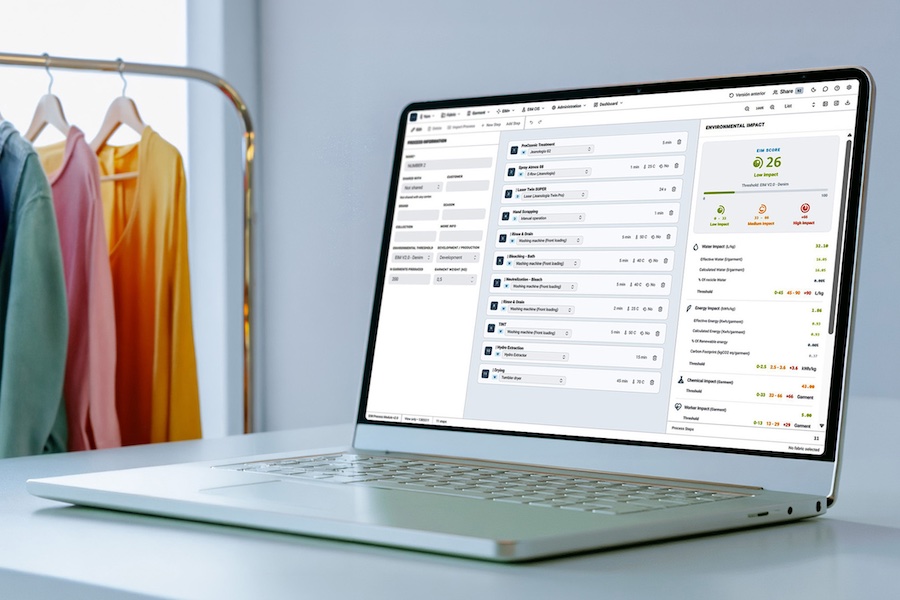
EIM (Environmental Impact Measuring), the leading global platform for measuring the environmental impact of garment finishing—trusted by the world's top brands and textile production centers—presents the "Innovations and Challenges in Denim Finishing: 2024 Report." This pioneering report provides an analysis based on accurate, objective data from over 115,000 denim finishing processes collected through the EIM platform, setting new benchmarks for sustainability in the industry.
Figure from the report © 2025 EIM


It offers a comprehensive view of the industry, setting new sustainability benchmarks and guiding the transition toward more responsible production.

The findings reveal improvements in resource efficiency while underscoring the urgent need to reduce harmful chemicals and practices that threaten both worker health and the environment.

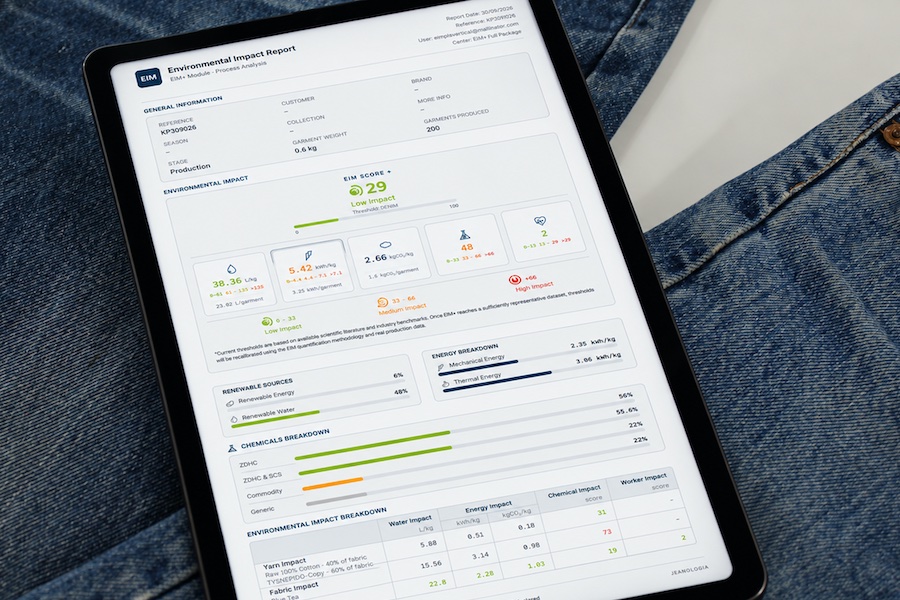
The report reveals that 63% of the analyzed processes are already classified as low environmental impact, reflecting a positive shift toward more responsible practices. However, it also highlights critical challenges, such as the high use of hazardous chemicals (24% of processes), particularly pumice stones and potassium permanganate—practices that urgently require safer and more sustainable alternatives due to their negative effects on both the environment and worker health.

Progress in water consumption management is also considered, as this remains one of the key environmental challenges for the textile sector. The report shows that the current average water usage in denim finishing is 30 liters per garment—still above the recommended benchmark of 22.5 liters per garment. Effective strategies for reducing water consumption include optimizing rinsing processes, selecting fabrics that require less aggressive treatments, and implementing technologies such as ozone, e-flow, and smart foam systems.

Among the proposed improvements are also the adoption of advanced technologies to reduce chemical use and protect worker health, such as the strategic selection of ZDHC-certified chemicals and the automation and digitalization of manual processes.

Begoña García, creator of the EIM platform and co-author of the report, states: “For years, the textile industry has lacked reliable tools to measure its environmental impact, making data-driven decisions difficult. This report marks a crucial step toward transparency and continuous improvement, showing that technology is key to measuring and reducing environmental impact.”

The report aims to support informed decision-making based on verifiable data, positioning EIM as a global standard essential for transparency and ongoing sustainability improvements in the textile industry.
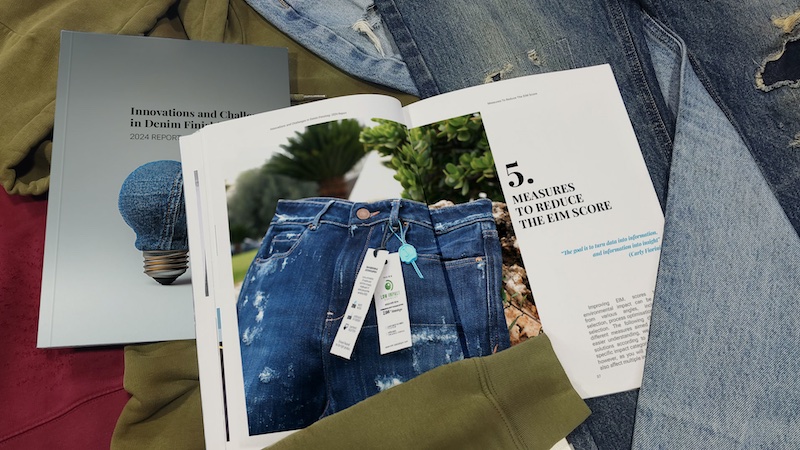
The full report © 2025 EIM


The full report is available for download and will be updated annually, serving as a vital tool for brands and suppliers to collaborate in reducing their environmental footprint and advancing toward a more responsible and sustainable production model.

To access the full report, visit Innovations & Challenges in Denim Finishing – 2024.

https://tinyurl.com/mbehwym5


More News from JEANOLOGIA S.L.

#Textile processing

Jeanologia showcases the future of product development

Jeanologia is showcasing how software is transforming product development in the fashion industry at PI Apparel Europe: The Fashion Technology Show, taking place on March 30–31 in London.

#Denim

Jeanologia launches Billy

The new AI extracts precise laser designs from a garment image in minutes, transforming how vintage denim is recreated for production. If Jeanologia’s laser changed the way jeans were made at the end of the last century, its AI now takes the next step: moving from reproducing wear to designing it. / archive photo © 2026 Jeanologia

#Textile chemistry

Jeanologia urges industry to accelerate PP Spray phase-out following ZDHC Watchlist update

Potassium permanganate has officially entered the Chemical Watchlist of the ZDHC Foundation, signaling increased scrutiny and potential phase-out of one of the most hazardous chemicals still used in denim finishing. The inclusion confirms an industry shift that Jeanologia anticipated more than a decade ago.

#Denim

Jeanologia celebrates its 30th anniversary transforming how jeans are produced worldwide

Jeanologia celebrates its 30th anniversary reaffirming the mission it was born with in 1994, to transform the textile industry into a more sustainable, efficient, and human-centered sector. Three decades later, that vision has become a global reality. Today, more than 40 percent of all jeans produced worldwide are made using technologies developed by the Valencia-based company.

More News on Denim

#Denim

ISKO’s denim language at Bluezone

ISKO returns to Bluezone to showcase its latest advancements in denim innovation, presenting a comprehensive overview of its SS27 collection alongside key creative and technological collaborations. At booth C02, ISKO offers visitors an immersive look into how performance, design, and circular thinking are shaping the future of denim.

#Fabrics

MUNICH FABRIC START: Between Attitude and Sensuality

The future begins where we reimagine it. After seasons of restraint, Spring.Summer 27 marks a conscious counter-trend: optimism, sensuality, and creative freedom are replacing pragmatism and neutrality. Physical presence and individuality are regaining importance – as a response to uncertainty, exhaustion, and algorithmic predictability. The overarching theme of PLEASURE stands for fashion as an emotional space, as an expression of attitude and cultural reflection. Colours, surfaces, and materials become vehicles for self-confidence and joie de vivre.

#Denim

organIQ seek: smart alternative to potassium permanganate

CHT Group announces new technical findings within its organIQ seek platform that significantly advance the transition toward permanganate-free denim bleaching. Through extensive industrial testing and application research, CHT confirms that organIQ seek can now be used with remarkable effectiveness as a substitute for potassium permanganate in spray bleach, while remaining aligned with sustainability expectations and cost realities in the European market. At the COLOMBIATEX in Medellín as well as at the Exintex in Puebla and the Kingpins Show in Amsterdam the CHT Group will present organIQ seek as an alternative to potassium permanganate.

#ITM 2026

The Technology Hub for global denim trends: ITM 2026

The ITM 2026 International Textile Machinery Exhibition, to be held at the Tüyap Fair and Congress Center in Istanbul from June 9–13, 2026, brings together groundbreaking technologies in denim production. From smart production systems to eco-friendly raw materials, from digital washing solutions to laser effect technologies, innovations that will shape the future of denim will be showcased for the first time at ITM 2026.

Latest News

#Composites

KARL MAYER strengthens partnerships in the composites industry at JEC World 2026

KARL MAYER further strengthened its role as a reliable and competent partner to the composites industry at JEC World 2026. The global market leader in textile machinery manufacturing used the trade show to meet key customers, establish numerous new contacts, and engage in in-depth technical discussions.

#Recycling / Circular Economy

ABB and Syre partner to explore technologies for industrial-scale textile recycling

ABB has signed a Memorandum of Understanding (MoU) with Swedish textile impact company Syre to jointly explore technologies to support the development of Syre’s first textile-to-textile recycling plant in Vietnam. The agreement establishes a framework for collaboration to investigate how ABB’s automation, electrification and digital technologies could contribute to safe, efficient and scalable operations. It will also explore how these capabilities could further optimize process and quality control performance as Syre advances its ambition to produce circular polyester at industrial scale.

#Techtextil 2026

From Nature Performance to Circular Economy: Techtextil 2026 focuses on the future market for technical textiles

Alternative materials and recycling technologies are one of the most important future segments and drivers of innovation in technical textiles. Sustainability goals and regulatory requirements increase their relevance, while advances in performance and economic viability enhance their market competitiveness. Taking place from 21 to 24 April 2026, Techtextil reflects this key industry trend with a growing number of specialised exhibitors. With the new “Nature Performance” label, the leading global trade fair bundles relevant market offerings and facilitates access to new solutions – from natural fibres and yarns to bio-based materials and circular approaches.

#Research & Development

Textile cascade filter for removing microplastics from wastewater

Microplastics are now found almost everywhere, even in remote regions of Antarctica. They enter the human body through the food chain. Studies indicate that microplastics may have negative effects on the human health.

TOP