#Composites
Waiting for an upwind
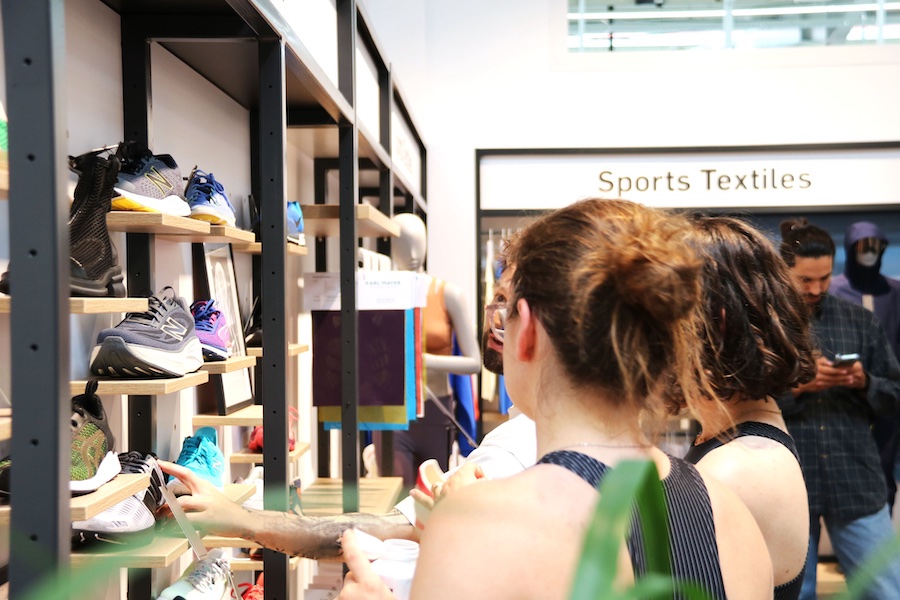
The KARL MAYER GROUP was once again one of the exhibitors at this year's JEC World in Paris. The innovative player in the composites industry presented its expertise and innovative technology for the production of multiaxial reinforcement fabrics and technical flat knitting solutions in the French capital from March 5 to 7 and is satisfied with the results. The response from visitors to the trade fair was in line with expectations.
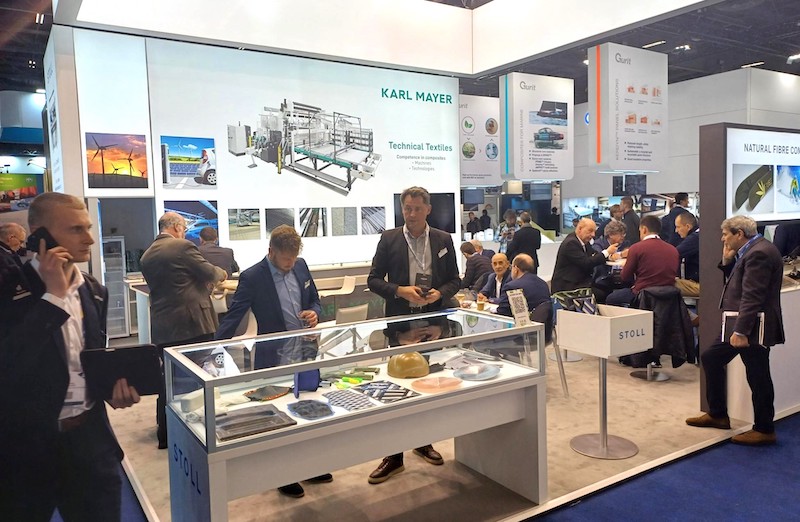
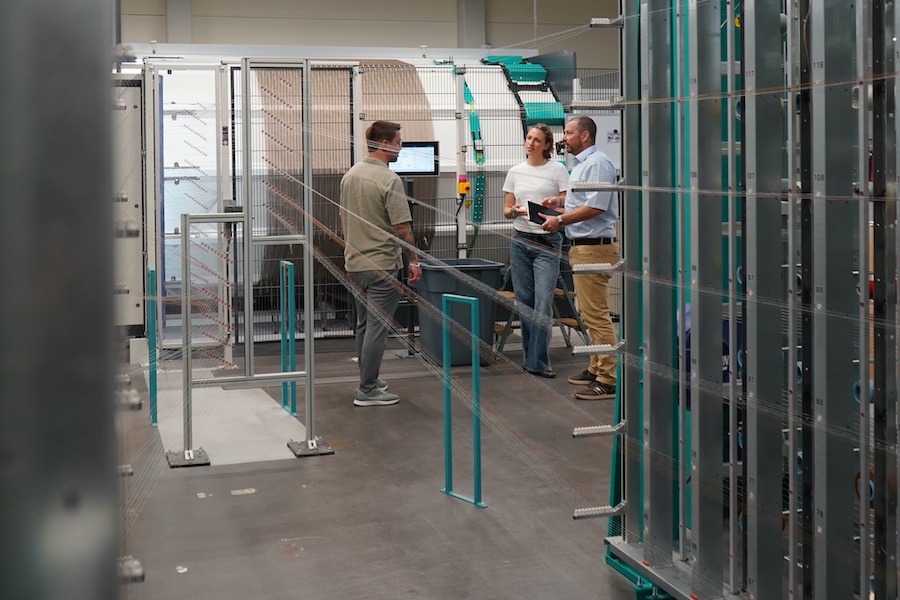
There were new contacts, some in-depth project discussions and inquiries about promising projects from existing customers, but mostly only on special topics. "Investments in broad market areas are currently not in sight," says Hagen Lotzmann, Vice President Sales at KARL MAYER Technische Textilien. The entire industry is on hold - a difficult situation for everyone! Ulrike Schlenker from KARL MAYER my TEXTILE NEWS wanted to know more about the challenges and possible solutions and spoke to Hagen Lotzmann and his colleague Martin Legner, who heads up STOLL application technology.
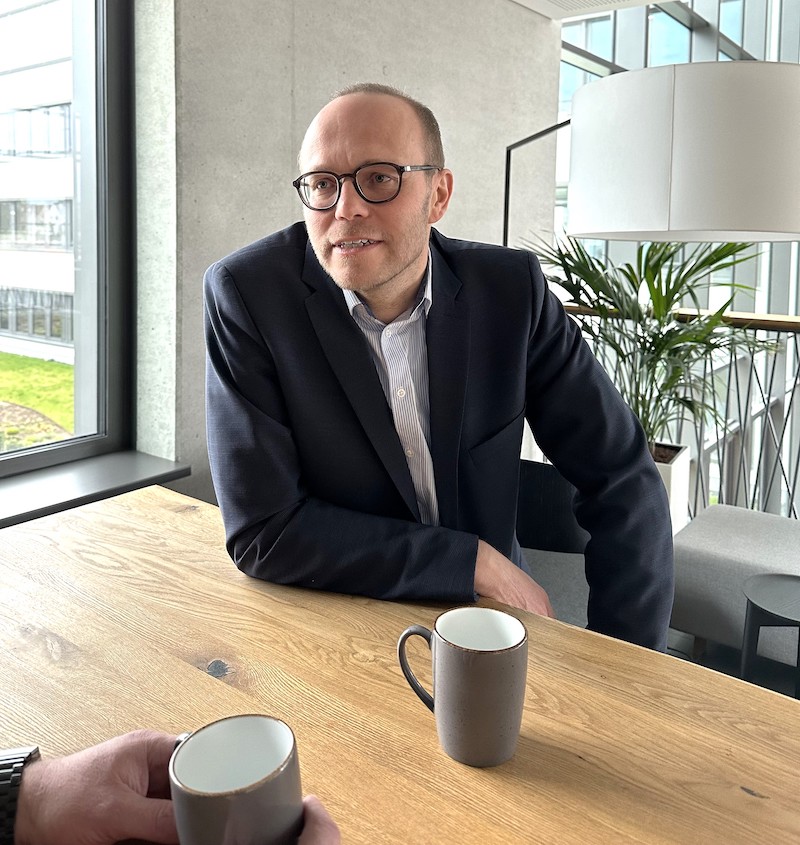
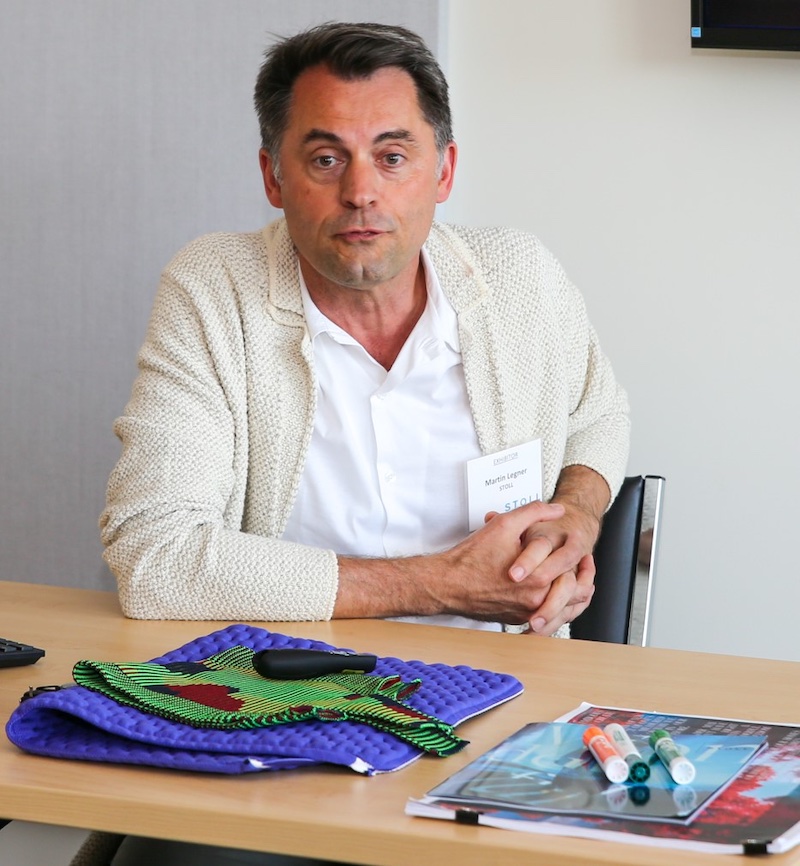
US: Why do you think the economic situation in the composites industry remains challenging?
HG: As a manufacturer of multiaxial warp knitting machines, we are at the heart of the value chain and always have an eye on the market. This is currently under pressure in two respects: due to low demand on the one hand and low raw material prices on the other. Both of which are putting pressure on the margins of all market participants.
The economic situation in the industry has long been dominated by composites made from glass fibres. In terms of volume, glass fibres continue to be the dominant fibre raw material, with over 90% of all applications for fibre-reinforced composites based on them. Glass fibre non-crimp fabrics are also indispensable in the wind power industry. However, the expansion of wind energy use as an engine has stuttered. Although it is on the agenda of many governments as a sustainability measure, it is not progressing as hoped in view of the multiple crises worldwide. This is weakening demand. Order books remain empty, there is an oversupply of raw materials and, as a result, a drop in prices, which puts pressure on the entire value chain and lowers profit margins. This effect is exacerbated by the reverse situation in previous years. Disrupted supply chains in the wake of the pandemic and high demand from the still booming wind power industry led to a shortage of raw materials. Manufacturers stocked up generously, but are now reducing their inventories.
European manufacturers are also struggling with high energy costs. Fibre production for glass and carbon composites in particular is extremely energy-intensive.
US: Let's stay on the subject of carbon. What is the situation for composites made from carbon fibres?
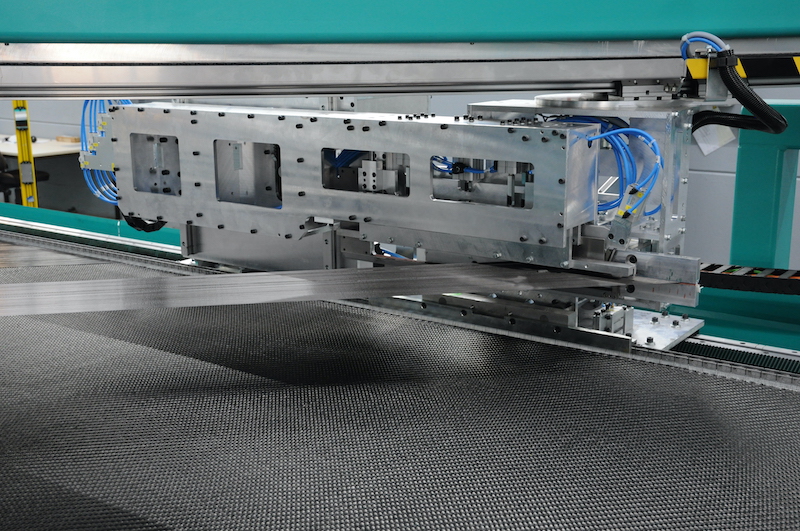
HG: The market for carbon non-crimp fabrics has developed into a solid mainstay for us. We have a steady stream of projects on our order books. As the projects usually focus on very specific applications, our COP MAX 5 enables us to outperform our competitors. The multiaxial warp knitting machine is extremely efficient, precise and can be adapted to a wide range of applications thanks to various equipment options. This is a real advantage for our customers!
US: How important is the processing of carbon for the flat knitting industry? What topics are you working on, Mr. Legner?
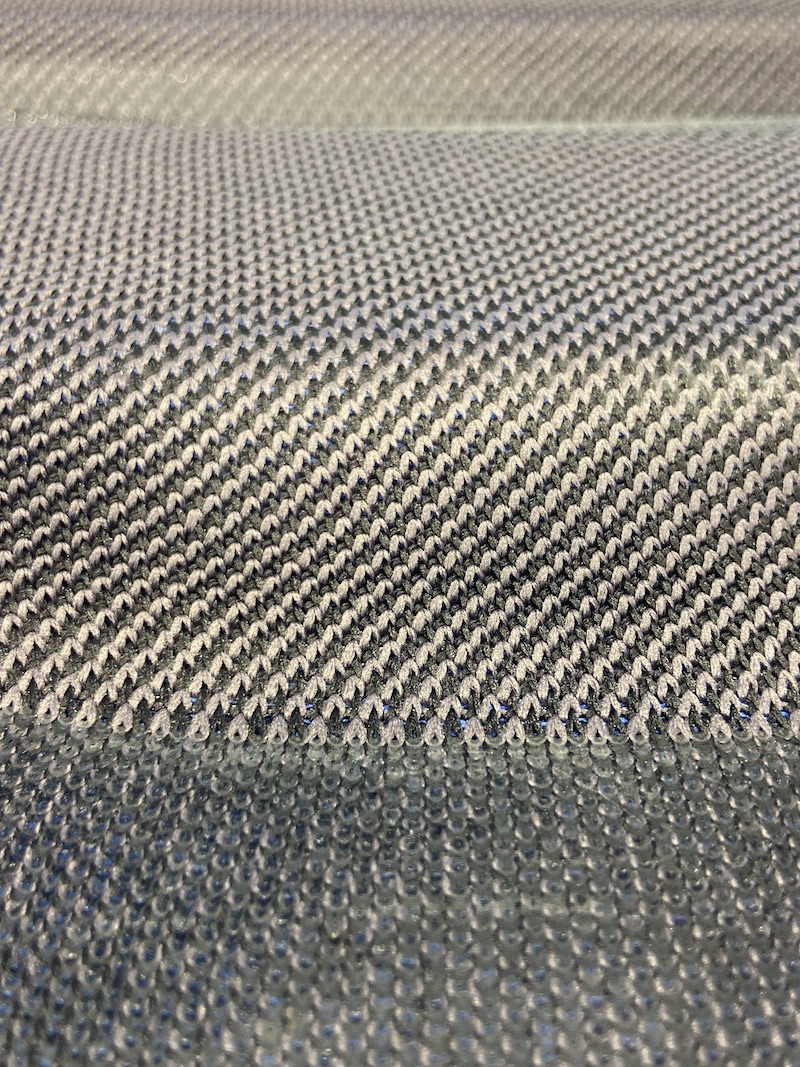
ML: The use of carbon fibres on flat knitting machines is becoming increasingly important. On the one hand, we are still working on the basics here, but on the other hand, we are looking for suitable topics on the application side that can be implemented more easily and possibly more typically for flat knitting, but also have something to do with lightweight construction.
We also deal with the topic of thermoplastics. We have produced several samples from common yarn materials and specifically integrated thermoplastic materials for reinforcement and stiffening. Particularly in combination with the potential of knitting technology, this results in promising product innovations, such as housings cases which will consist out of a knit fabric made to fit, winning its strength and sturdiness from suitable thermoplastic yarn components and knitting techniques. Reinforcement effects can also be achieved by integrating reinforcing yarn elements. We are currently looking at the question of what knitting technology can achieve if a knitted textile also includes warp yarn materials in addition to stitches and weft yarns in the future. For composite materials in particular, we see great potential in the implementation of specifically constructed fully fashion knitted textiles.
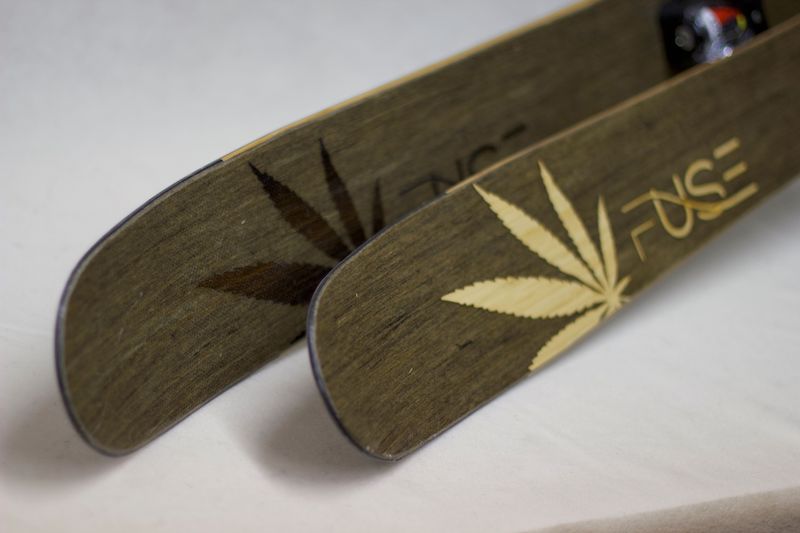
US: Let's talk about the topic of sustainability. Mr. Lotzmann, you have just presented a ski made from hemp-based composites at JEC World. How open is the industry to such sustainability innovations?
HG: We had already presented a snowboard made from flax at last year's JEC World and received a good response. This year, we presented a ski made from hemp tapes, which also got us talking to many experts. We are noticing a growing interest in natural fibre-reinforced composites. More and more representatives from industry and research are focusing on this topic, forming new alliances and technology platforms, and new players are emerging. However, there is still a long way to go before a commercial breakthrough.
In particular, the price must become more attractive and the entire value creation process, including the extraction of raw materials, must become more suitable for industry. We can make a major contribution to this with our technology offerings. Our multiaxial warp knitting machines are extremely flexible. All technical yarns can be easily processed on them on an industrial scale. Thanks to their high efficiency, niche products can also be produced economically, for example to close gaps in capacity utilization.
US: You have so far demonstrated your expertise in the production of natural fibre-reinforced composites with exhibits from the sports equipment sector. What is the level of interest in innovative sustainability solutions in other sectors? For a long time, automotive engineering, for example, was seen as the industry's beacon of hope.
HG: The sports industry is inherently very open to environmentally friendly innovations. With environmentally conscious and nature-loving consumers in mind, manufacturers focus less on price and more on sustainability. This is different in the automotive industry. Companies are extremely cost-conscious. We also see a much stronger focus on drive technology and the digitalization of the driving experience than on new developments in the area of materials. Nevertheless, automotive engineering is an important market for us. With our multiaxial technology, we have already been able to provide a lot of impetus here, for example in the electric and partially electric models of the BMW i sub-brand. Large parts of the body of the BMW i3 exhibited at the IAA in Frankfurt am Main in 2015 were made of composites with multiaxial carbon reinforcement layers.
We have also advanced many interesting projects in other sectors. We are a long-standing development partner to the composites industry. Our customers can rely on our first-class expertise and the capabilities of our state-of-the-art technical center. Our application engineers look forward to new challenges.
US: Many thanks for the interesting insights!