#Knitting & Hosiery
Driving footwear innovation
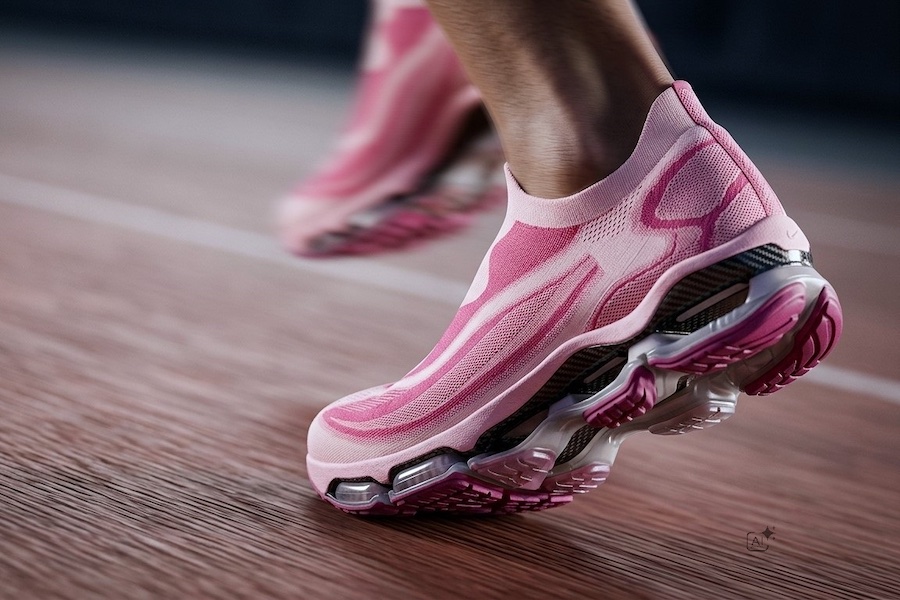
Shoes produced on KARL MAYER machines presented in KARL MAYER's TIC in Obertshausen © 2026 KARL MAYER
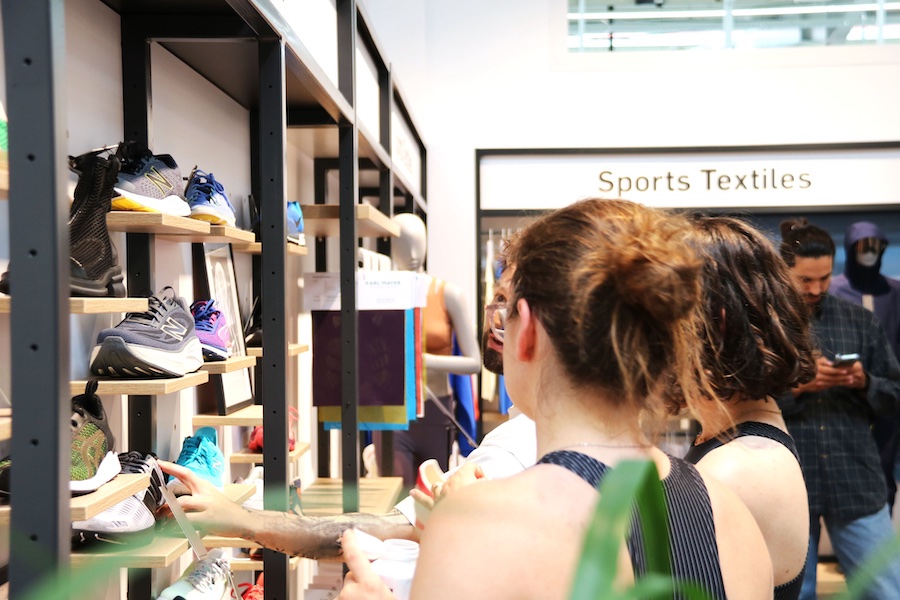
The athletic footwear market promises steady growth. By 2030, it is expected to grow by about 15% annually worldwide and reach a volume of approximately 462 billion U.S. dollars. /1/
Textile innovations are the primary drivers of this expansion.
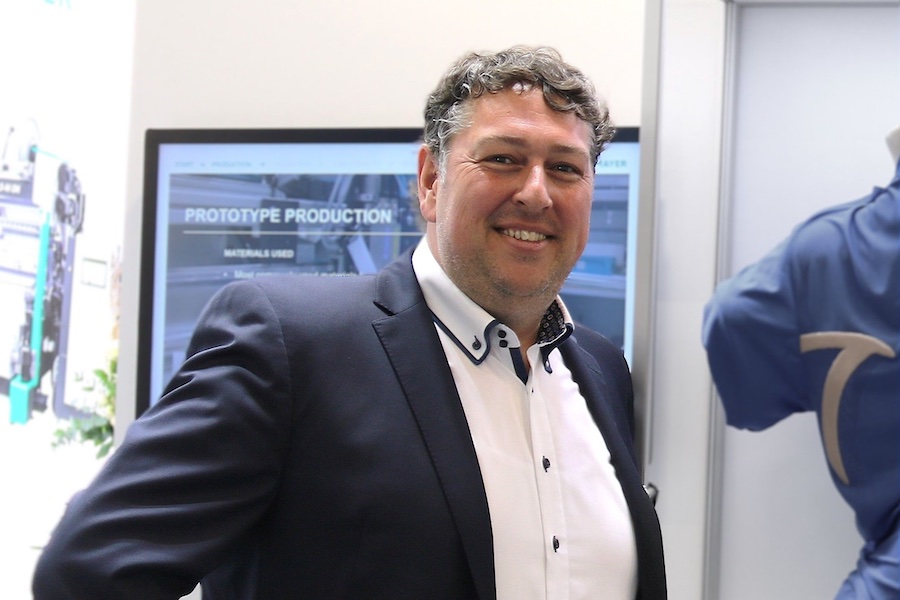
The development of advanced warp knitted fabrics and new textile concepts for footwear is one of the key areas of focus for Michael Kieren, Senior Expert Textile Development at KARL MAYER’s TEXTILE INNOVATION CENTER.
This experienced textile industry professional has been working intensively with spacer fabrics for more than twenty years; thanks to their versatile design possibilities, these textiles have become firmly established in the footwear sector. In an interview with my TEXTILE NEWS editor Ulrike Schlenker, he explains how spacer fabrics are transforming the world of footwear, which trends are shaping the market, and what role the TEXTILE INNOVATION CENTER plays in this
US: Let's start by looking back: How have the demands on the sports and athleisure footwear market changed over the past ten years?
MK: The evolution in style is particularly striking. Athletic shoes have become significantly more colorful and design-oriented. The ability to create complex patterns directly on the warp knitting machine and combine different materials has greatly expanded the range of style options.
At the same time, functionality has come increasingly into focus. Features such as breathability, a secure foothold in every movement, and targeted support during peak loads are crucial today. However, these performance characteristics are being visualized less and less. Modern athletic shoes combine performance and design without openly flaunting their technical qualities.
The issue of sustainability has also gained importance in recent years. Manufacturers are responding to the rising demand for eco-friendly products by using recycled materials and developing recyclable single-material solutions.
In terms of market volume, the athletic shoe sector is benefiting from the genre shift in fashion: sneakers with a suit are just as socially acceptable in our crossover era as kicks with a little black dress. This change is possible because athletic shoes have become significantly higher quality, and society’s mindset regarding dress codes has fundamentally transformed since the onset of the pandemic, if not before.
US: How lasting are these trends? What are your expectations for the next five years?
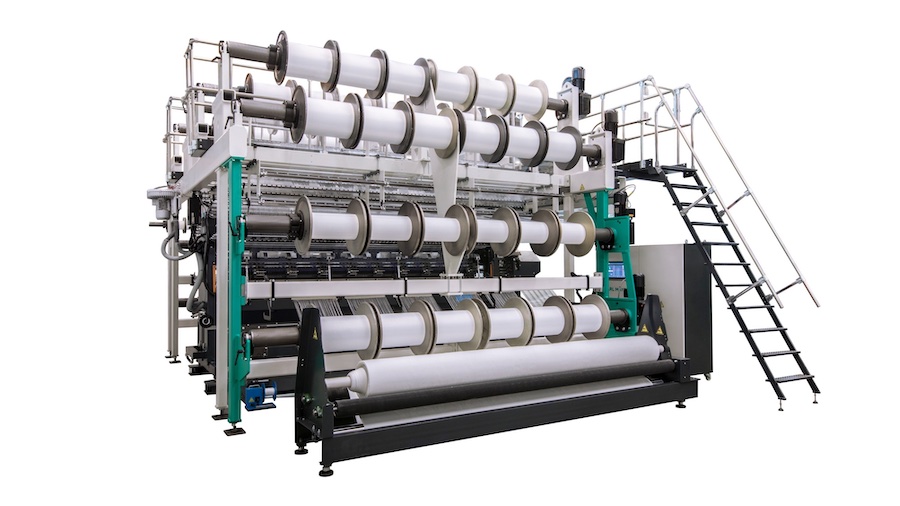
MK: We expect the trend toward more color and more complex patterns to continue. That’s why we’ve developed the RDJ 7/3, a new double needle bar raschel machine that significantly expands the boundaries of what’s possible. Notable new features include mesh designs with nearly perfectly round and even larger holes and integrated patterns and functional zones that can be realized with significantly more varied contours and variations, directly on the machine.
In addition, a wide range of colors enables exciting multicolor effects across a diverse array of design applications.
The integration of performance areas into the fabric directly during the textile production process – that is, without additional processing steps – and near-shape manufacturing are becoming increasingly important. They simplify production and enable footwear solutions that, in some cases, we cannot even imagine today. The transition from 2D to 3D and entirely new functionalities play a key role in this.
We’re also seeing a reversal of the trend toward coarse flat-knits, with fabrics featuring fine pattern structures gaining in popularity. We’ve just launched a double needle bar raschel machine with Jacquard in E 32 gauge and have produced our first shoe uppers on it, which have been very well received by our customers.
US: So, there's a lot going on in the athletic shoe industry! How can the warp knitting industry help drive future developments?
MK: Warp knitting technology combines exceptionally high productivity with a wide range of designs and remarkable ecobility. This makes it a unique textile-producing technology. Warp knitting is significantly faster than flat knitting – just at the last Techtextil in Frankfurt, we successfully showcased a three-bar high-speed tricot machine with a PLUS configuration in the production of shoe fabrics via video.
Furthermore, warp knitting results in a significantly smaller ecological footprint than, for example, waterjet or airjet weaving.
In addition, the warp knitting offers enormous potential for technological advancements and, consequently, for additional customer benefits. The journey from the first simple double needle bar raschel machines for unpatterned spacer fabrics to today’s modern machine with wireless jacquard bars – on which highly sophisticated, integrated multicolor designs can be produced – impressively demonstrates just how dynamic this technology is.
And we are far from reaching the end of this development. With the ideas and expertise within our company, new technological solutions are currently being developed, and we will continue to make history.
US: Let’s stay with the possibilities offered by KARL MAYER. The company has just opened a TEXTILE INNOVATION CENTER at its headquarters in Obertshausen. How will this new development platform support customers in the footwear sector and drive innovation in the industry?
MK: Our TEXTILE INNOVATION CENTER, or TIC for short, helps our customers, brands, and other partners develop textile innovations more quickly and successfully and turn them into market-ready products. This globally unique platform brings together inspiration, textile expertise, state-of-the-art machinery, and international networks across 7,500 m² of space in centers located in three countries.
There, customers can work with KARL MAYER experts to develop new ideas, test materials and machine solutions, and produce prototypes under real-world conditions.
At the same time, the TIC provides important impetus for the entire textile industry. It brings together stakeholders across the entire textile value chain, promotes the exchange of knowledge, brings future trends to life, and creates space for collaboration and inspiration. Facilities include a showroom featuring current trend exhibitions, an Inspiration Hub offering insights into nearly 90 years of pattern development, the KARL MAYER Academy with a wide range of courses, and a development and testing area equipped with a unique array of machinery for warp knitting, warp preparation, and technical textiles.
We invite the textile world to experience all of this and to join us in developing new applications, textile innovations, and forward-looking business models.
US: Thank you for the interesting interview.
MK: You're very welcome.
/1/ https://www.databridgemarketresearch.com/de/reports/global-athletic-footwear-market