[pageLogInLogOut]

#Composites

Toray develops high-speed thermal welding technology for carbon fiber reinforced plastics
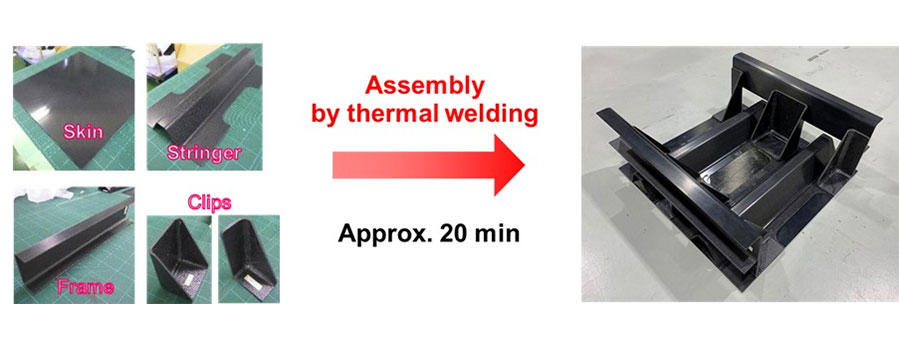
Thermally welded assembly of aircraft structural demonstrator applying this technology © 2023 Toray
Toray Industries, Inc., announced today that it has developed a technology that thermally welds carbon fiber reinforced plastics (CFRP) at high speed. This technology will enable high-rate production and weight savings of CFRP airframes. The company will push ahead with demonstrations with a view to commercializing airframes after 2030 while further expanding CFRP applications.

Global aircraft demand should recover through 2025 after stagnating amid the COVID-19 pandemic. Demand for next-generation aircraft with 120 to 240 seats should be heavy from 2030. Thermosetting CFRP is the primary structural material for aircraft main frames because of its long use and high reliability. The downside is that complicated adhesive bonding and bolt fastening processes of CFRP have become assembly bottlenecks. CFRP production times greatly lag those for aluminum alloy airframes. High-rate production and weight savings that help enhance fuel efficiency to will be important to capture prospectively large demand.

Toray developed a thermal welding technology that swiftly and robustly joins thermosetting CFRP components for aircraft like conventional welding would do.

This simple bonding approach employs Toray’s technology to form a thermally weldable layer on the surface of thermosetting CFRP, instantaneously heating part surfaces to bond them. This technology enables high-speed assembly of thermosetting CFRP parts or thermosetting and thermoplastic CFRP parts without the need for adhesive bonding and bolt fastening.

Using this technology to thermosetting CFRP with thermally weldable layers offers the same mechanical properties as CFRP for current aircraft models. Toray demonstrated that the joint strength of thermally welded structures is equivalent to that of co-cured CFRP structures for current aircraft models, ensuring the reliability of bonding technology for practical application studies. The company assembled a demonstrator simulating the elemental structure of an aircraft at high-speed using thermally weldable thermosetting CFRP parts. Thereby, its elemental technology concept was confirmed. Toray’s technology should achieve a high-rate production that matches or surpasses that for aluminum alloy airframes.

A CFRP airframe using Toray’s technology should reduce carbon dioxide emissions across the life cycle compared with those for an aluminum alloy airframe. Cutting the weight of bolt fasteners should lighten airframes, and further reducing these emissions.

Toray has partnered with Boeing to promote a number of technological development projects in the fields of aircraft manufacturing and materials technology.


Some of Toray’s progress through this development effort is based on results obtained from a project, “Development of New Innovative Composite Materials and Forming Technologies,” supported by the New Energy and Industrial Technology Development Organization (NEDO).

Under the Toray Group Sustainability Vision, the company committed itself to helping resolve environmental, resources, and energy issues through business. In keeping with its corporate philosophy of contributing to social progress by delivering new value, the company will keep creating advanced materials and innovative technologies that contribute to a carbon-neutral economy.
More News from Toray Engineering Co. Ltd.

#Man-Made Fibers

Toray develops AURLIST™ polyester filament fiber with luxurious luster and ultra-fine structure

Toray Industries has developed AURLIST™, a new polyester filament fiber designed to combine luxurious luster, soft loft and a subtle fibrillated surface texture. The company primarily targets applications in women’s apparel such as tops, bottoms and dresses.

#Recycling / Circular Economy

Toray develops recycling technology that retains carbon fiber strength and surface quality

Toray Industries, Inc., announced today that it has developed a recycling technology that can decompose diverse carbon fiber reinforced plastics (CFRP) made from thermosetting resins while retaining the strength and surface quality of those fibers. The company drew on this technology to create a nonwoven fabric employing recycled carbon fibers.

#Composites

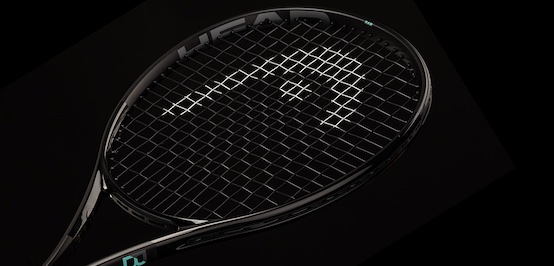
HEAD launches more sustainable(1) BOOM RAW racquet on Earth Day by using Toray’s bio-circular carbon fibers

HEAD continues to innovate with the launch of the BOOM RAW tennis racquet, an encouraging development in the search for a more sustainable future for racquet sports. All of the carbon fibers are bio-circular carbon fibers in the limited-edition and highly innovative BOOM RAW racquet, which offers the same explosive power - along with the same fun, feel and easy playability - as the regular, in-line BOOM racquet. The bio-circular carbon fibers are manufactured by Toray and its subsidiary Toray Carbon Fibers Europe.

#Recycling / Circular Economy

Companies in Japan initiate demonstration to expand the automotive recycling process

DENSO CORPORATION and other partners have been chosen by an industry-government-academia collaborative project aiming to expand the recycle content for automobile in the fiscal year 2023 supported by Ministry of the Environment, Japan.

More News on Composites

#Research & Development

Novel flame-retardant and recyclable fiber-reinforced composite

Airplanes and passenger trains must meet strict safety requirements, including fire safety standards. This calls for materials that are flame-retardant, lightweight, robust, and scalable. Empa researchers, in collaboration with their industry partner Elantas, have now succeeded for the first time in making such a material – a composite – fully recyclable.

#Composites

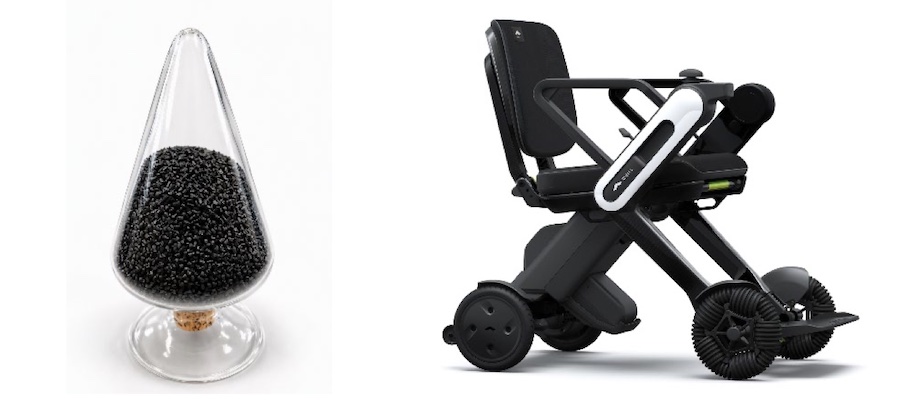
WHILL selects Teijin’s tough, lightweight Carbon Fiber Composite for new last-mile mobility

Teijin Limited announced today that WHILL Inc., a global leader in inclusive mobility technology, has selected Sereebo® P CFP series, a carbon fiber-reinforced thermoplastic (CFRTP) material, for key structural components of the upcoming WHILL Model C Lite. Sereebo® P CFP series provides high strength, light weight, design flexibility and system cost advantages to the Model C Lite, which is a battery powered, single-seat, last-mile device. This new model combines maneuverability with light weight and one-handed folding to ensure ease of handling and operation.

#Composites

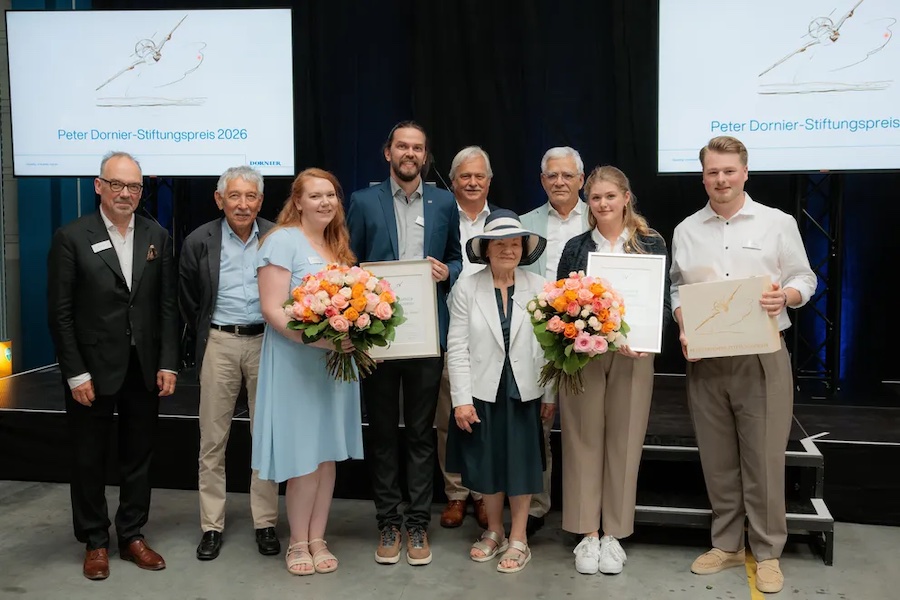
Fewer pores, greater impact tolerance: Peter Dornier Foundation Prize 2026 honours material research on fibre-reinforced composite components for aerospace industry

Microscopically small pores that form during manufacture, or barely visible impact damage, can severely impair the load-bearing capacity and service life of fibre-reinforced composite components. Two young researchers have presented groundbreaking work in this field and will both be awarded the 2026 Peter Dornier Foundation Prize: Dr.-Ing. Benedikt Neitzel from the Technical University of Ilmenau for his doctoral thesis on pore minimisation in the RTM process, and Johanna Buschmann, M.Sc., for her master’s thesis, completed at the German Aerospace Centre, on the improved impact tolerance of 3D fabrics compared to 2D laminates.

#Composites

Carbon Revolution wins Composites Australia Engineering Team Excellence Award

Carbon Revolution has won the Engineering Team Excellence Award at the 2026 Composites Australia Annual Industry Awards.

Latest News

#Weaving

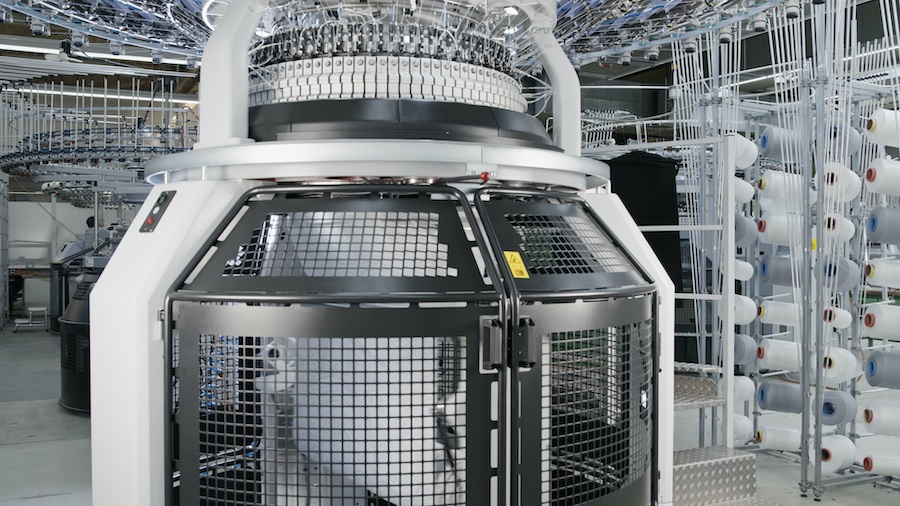
Lindauer DORNIER GmbH welcomes new apprentices and dual-study students

For 22 new “DORNIER Talents”, these days mark the beginning of a new chapter at Lindauer DORNIER. For the family-owned company, in-house training is a key pillar in developing skilled professionals and retaining them within the company for the long term.

#Raw Materials

Cotton Brazil Dialogues 2026 concludes with 50 international participants immersed in Brazilian cotton production

The Cotton Brazil Dialogues concludes its 2026 edition after a series of technical visits to farms, cotton gins and reference centers, as well as workshops focused on Brazilian cotton production. A total of 50 participants from 14 countries took part in the field trips. The initiative is led by the Brazilian Association of Cotton Growers (Abrapa) and the National Association of Cotton Exporters (Anea), with support from the Brazilian Trade and Investment Promotion Agency (ApexBrasil).

#Textile chemistry

ZymoChem secures $4 million in renewed federal funding to advance U.S. biomanufacturing of critical materials and their supply chains

ZymoChem, the specialty chemicals company dedicated to bringing decarbonization, sustainability, and supply chain resiliency to the chemical industry through innovative biological manufacturing, today announced the resumption and expansion of its federal research portfolio. The company has been notified that previously paused work under a $5 million U.S. Department of Energy (DOE) program is officially back on, to be joined by continuing collaborations with three of the nation's premier national laboratories.

#Technical Textiles

RDJ 6/2 in E 32: Finesse in Motion

The appearance of sports and casual shoes is as diverse as their applications, ranging from sporty to stylish and from functional to fashionably practical. In particular, spacer fabrics produced on highly flexible KARL MAYER double needle bar raschel machines with Jacquard technology are in high demand for manufacturing these trendy shoes. These efficient production machines enable attractive designs with integrated multifunctional zones on one or both fabric surfaces, such as breathable mesh structures. Flexible in size and positioning, these features enhance both aesthetics and wearing comfort.

TOP