[pageLogInLogOut]

#Composites

Toray to supply carbon fiber composite materials for Lilium's all-electric air vehicle

Toray Industries, Inc., announced today that it has concluded an agreement with Lilium GmbH to supply carbon fiber composite materials for the Lilium Jet. The Munich-based company is developing this all-electric, vertical take-off and landing aircraft to deliver clean, regional air mobility as early as 2025. Lilium CEO Daniel Wiegand is one of the co-founders of that company, which was established in 2015.

Regional air mobility could help reduce traffic congestion, noise, and air pollution in crowded cities. Entities around the world are developing airframes and operational systems for air taxi services. Governments are working on regulatory frameworks. Lilium is spearheading the quest to manufacture air vehicle and develop and commercialize services.

Carbon fiber composite materials are vital to lighten such vehicles as the Lilium Jet. Toray is deepening ties with Lilium and other manufacturers while continuing to innovate materials that contribute to progress with these transportation platforms by enhancing performance, conserving energy, and lowering costs. The Lilium Jet will take up to four passengers and its pilot up to 300 kilometers in less than 60 minutes. Its fuselage, wings, rotor vanes, and other structural components will employ carbon fiber composite materials.


Under the Medium-Term Management Program, Project AP-G 2022 announced in May this year, Toray's Carbon Fiber Composite Materials Business seeks to strategically expand its operational infrastructure for urban air mobility applications. Toray aims to help resolve urban environmental issues by developing materials that cater to the unique challenges of air vehicles. Toray will keep leveraging the power of materials to change the world by strengthening collaboration among Group companies while catering swiftly to market needs.

More News from Toray Engineering Co. Ltd.

#Recycling / Circular Economy

Toray develops recycling technology that retains carbon fiber strength and surface quality

Toray Industries, Inc., announced today that it has developed a recycling technology that can decompose diverse carbon fiber reinforced plastics (CFRP) made from thermosetting resins while retaining the strength and surface quality of those fibers. The company drew on this technology to create a nonwoven fabric employing recycled carbon fibers.

#Composites

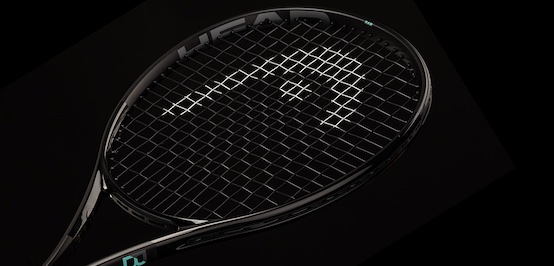
HEAD launches more sustainable(1) BOOM RAW racquet on Earth Day by using Toray’s bio-circular carbon fibers

HEAD continues to innovate with the launch of the BOOM RAW tennis racquet, an encouraging development in the search for a more sustainable future for racquet sports. All of the carbon fibers are bio-circular carbon fibers in the limited-edition and highly innovative BOOM RAW racquet, which offers the same explosive power - along with the same fun, feel and easy playability - as the regular, in-line BOOM racquet. The bio-circular carbon fibers are manufactured by Toray and its subsidiary Toray Carbon Fibers Europe.

#Recycling / Circular Economy

Companies in Japan initiate demonstration to expand the automotive recycling process

DENSO CORPORATION and other partners have been chosen by an industry-government-academia collaborative project aiming to expand the recycle content for automobile in the fiscal year 2023 supported by Ministry of the Environment, Japan.

#Yarn & Fiber

Toray develops durable reverse osmosis membrane

Toray Industries, Inc., announced today that it has developed a highly durable reverse osmosis (RO) membrane (see glossary note 1). This innovative offering guarantees the long-term provision of high-quality water. It also maintains the superior removal performance of Toray’s existing membranes vital for reusing industrial wastewater and treating sewage.

More News on Composites

Latest News

#Sustainability

Ying McGuire becomes new CEO of Cascale

Cascale today announced the appointment of Ying McGuire as Chief Executive Officer, effective June 1, 2026.

#Technical Textiles

Sustainable, lightweight, and sound absorbing: Polyester-based front trunk solution for BEVs

As car manufacturers look to further reduce their carbon footprint, Autoneum has developed an innovative front trunk solution for battery electric vehicles (BEVs), made entirely from polyester-based textile. The Ultra-Silent Frunk offers significant weight reduction, improved acoustic and thermal insulation, and uses up to 70 percent recycled material, supporting sustainable and efficient vehicle design. Autoneum, global technology leader in acoustic and thermal management for vehicles, has already received orders for the new frunk from three major OEMs in Asia and Europe to be built in three BEV models. Series production for two BEVs has been underway in China and Germany since last year.

#Raw Materials

Modern testing methods for raw cotton

The 38th International Cotton Conference Bremen will take place from 25 to 27 March 2026 at the Bremen Parliament. This conference has traditionally stood for in-depth expertise and international exchange. The program will focus on technical innovations, market trends, and regulatory frameworks across the entire value chain – from agriculture to the circular economy. With high-profile speakers, the conference is regarded as the key meeting point for the global cotton industry. Today’s focus: Cotton quality and testing methods.

#Spinning

Rieter responds to higher raw material prices

Global political and economic developments have been leading to rising raw material and energy costs for some time. The textile machinery industry is also affected by this trend. Rieter machines and components consist to a large extent of steel, copper, aluminum and electronics. These materials in particular have seen higher demand and higher prices in recent months.

TOP