[pageLogInLogOut]

#Associations

Meeting the need for tomorrow’s textile technicians
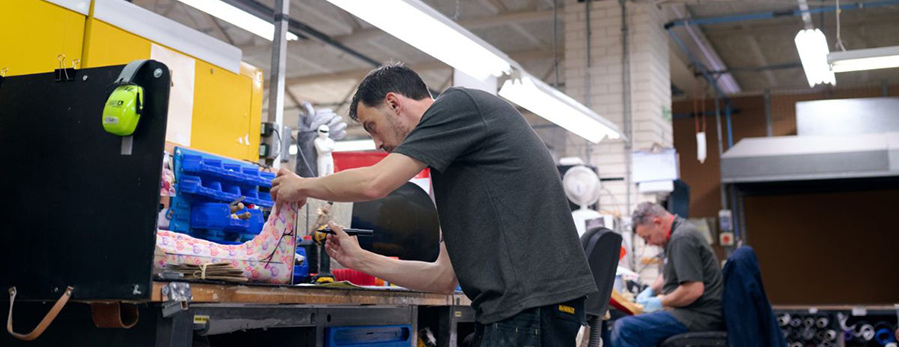
The new scheme will address the needs and complexities of both the textile and engineering sectors. © 2023 Calderdale College
West Yorkshire is to have a first-of-its-kind apprenticeship training course for textile engineering technicians, reflecting a resurgence in the industry locally, and more generally in the UK.

Calderdale College has partnered with the Textile Centre of Excellence (TCoE) and the British Textile Machinery Association (BTMA) to develop the bespoke Level 3 apprenticeship course which will start in September 2023.

Engineering Technician apprentices at Calderdale College will receive training from the TCoE, helping them to develop the engineering maintenance skills required to close the skills gap in West Yorkshire’s textile industry.

While the region has been a flourishing hub for textile excellence since the 19th century and is being revitalised through digitalization and the localisation of supply chains, its success is currently being hindered by an ageing workforce and high staff turnover.

Through adapting the engineering training at Calderdale College to address the current requirements of the textile industry, the unique new course will ensure the passing on of vital know-how and good practice aligned with the new skills demanded by Industry 4.0 and automation.

Collaborative Apprenticeships

Calderdale College has developed the programme over a two-year period through close collaboration with the TCoE and the BTMA, as well as through consultation with British heritage weaver AW Hainsworth and a number of other local textile companies.


The course launch follows on closely from the success of the Collaborative Apprenticeships project launched in 2022 at Calderdale College. To date, this has seen the college engage with over 100 local employers on the benefits of increasing the quantity and improving the quality of the apprenticeships that they offer, as well as encouraging others to introduce apprenticeships for the first time.

“Over the years, we’ve seen how beneficial apprenticeships can be for several sectors, particularly in terms of helping businesses to retain staff and ensuring that they have a steady flow of skilled workers coming in,” said Claire Williams, head of employer engagement at Calderdale College. “Having identified that employers in the textile manufacturing industry were struggling to find apprenticeship training that was designed around their needs, we knew that alongside employers and our partners, we needed to satisfy this critical gap in the market. We hope that this programme will act as a leading example for the rest of the industry to follow.”

“This programme will fill current and future skills gaps within the industry, in a specialised skill base that the sector has struggled to fill for many years,” added Martin Jenkins, director of training at the TcoE. “For the first time, it addresses the needs and complexities of both the textile and engineering sectors. Having already had a close working relationship with the BTMA and Calderdale College, collaborating on this hybrid apprenticeship was a natural fit. We’ve already seen a high level of interest from both apprentices and employers, and cannot wait to get started.”

For Jason Kent, CEO of the British Textile Machinery Association, collaboration is the key to the success of the course.

“When developing this programme, we wanted to ensure it was as collaborative as possible, not just between ourselves, Calderdale College and the Textile Centre of Excellence, but also with the employers directly benefitting from its delivery,” he said. “We are really proud of the end result, which is a truly industry-led course that will provide exciting and fulfilling career paths for young people, as well as bolstering the sector with additional technical expertise and skills.”

To find out more about the apprenticeship support offered by Calderdale College, please email apprenticeships@calderdale.ac.uk.


More News from British Textile Machinery Association

#Associations

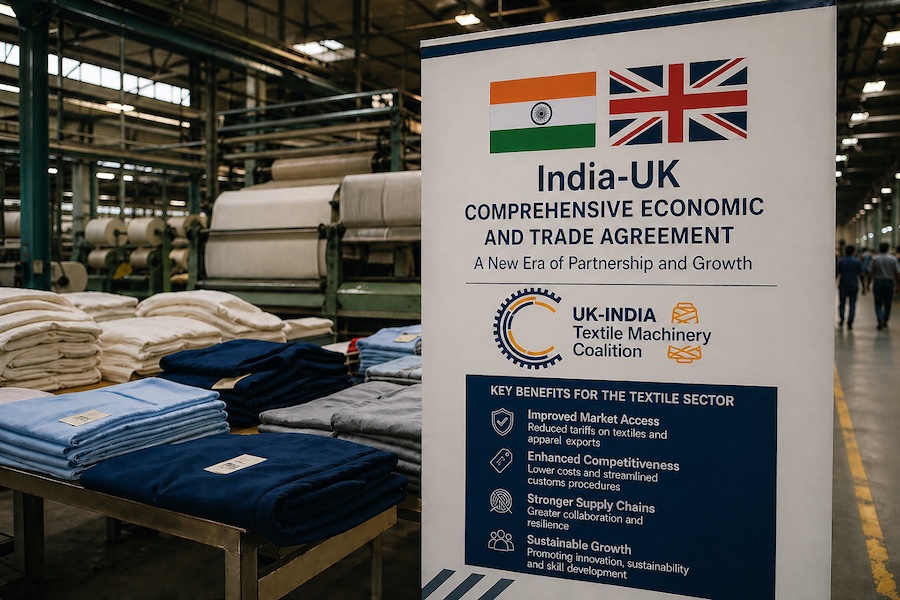
BTMA backs global growth while investing in future UK leaders

As one of a number of new initiatives launched this year, the British Textile Machinery Association (BTMA) is launching the UK-India Textile Machinery Coalition. The UK-India Free Trade Agreement, signed in July 2025, has implications that extend across sourcing, competitiveness and long-term trade dynamics, believes BTMA CEO Jason Kent.

#Techtextil 2026

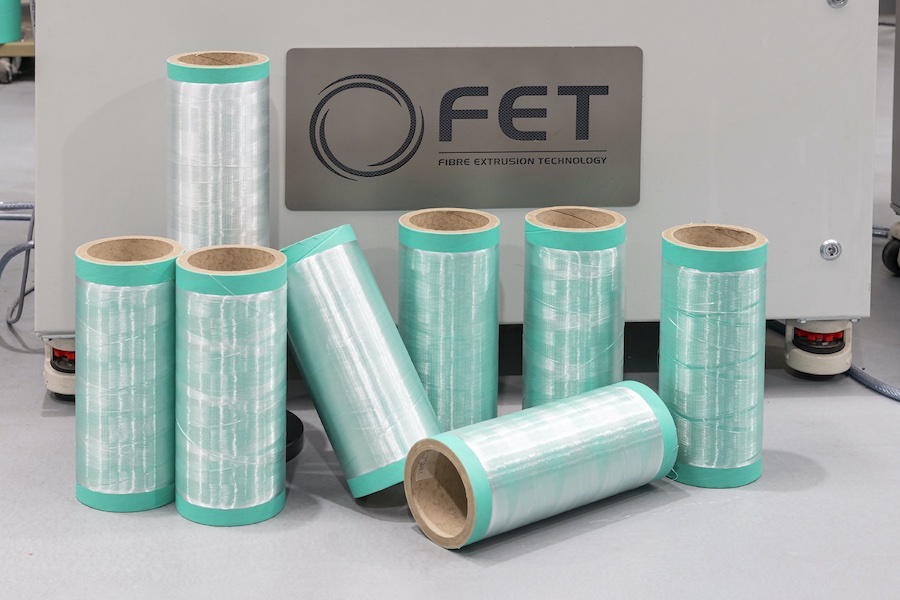
Techtextil 2026 recognition for the UK’s FET

Fibre Extrusion Technology (FET) will receive the Techtextil 2026 New Production Technology Innovation Award at next week’s Techtextil in Frankfurt (April 21-24). The Leeds-based member of the British Textile Machinery Association (BTMA) has developed the FET-500, a new toxic solvent-free gel small scale system for the production of ultra-high-molecular-weight polyethylene (UHMWPE).

#Techtextil 2026

Precision, performance and progress: British textile machinery at Techtextil and Texprocess 2026

As global demand accelerates for lighter, stronger and more sustainable technical textiles, the machinery and testing technologies behind their manufacture are evolving at pace. At the Techtextil and Texprocess exhibitions in Frankfurt this April, eight members of the British Textile Machinery Association (BTMA) will demonstrate how advanced engineering continues to shape the performance, precision and resource efficiency of advanced fibre and fabric production.

#Associations

Engineering depth and diversity for composites

Airbond is the latest member of the British Textile Machinery Association (BTMA) to receive recognition for contributions to the composites industry. The engineering firm based in Pontypool, South Wales, has just received the Make UK Energy and Sustainability Award for its Lattice 3D Printing project.

More News on Associations

#Europe

European textile industry calls for €10 handling fee on ultra-fast-fashion imports

The introduction of the €3 customs duty on low-value imports marks an important milestone in Europe’s efforts to address the challenges created by the rapid growth of ultra-fast-fashion imports. Together with the abolition of the €150 customs duty exemption, it demonstrates that policymakers are willing to act when market distortions become impossible to ignore. However, the European textile and clothing industry considers this a first step rather than the final destination.

#Associations

Business situation weakens slightly, but the industry stays cautiously optimistic

The International Textile Manufacturers Federation (ITMF) has published the results of its 39th Global Textile Industry Survey (GTIS), conducted from 14 to 22 July 2026 among companies along the entire global textile value chain. Worldwide, 10% of participants rated their business situation as good, 53% as satisfactory and 37% as bad — a balance of -26pp, down from -17pp in May but still well above the 2023 lows. All regions are now in negative territory, from South Asia at -3pp to North & Central America at -58pp.

#Associations

IVGT membership: expertise that pays off

For energy-intensive textile companies, government compensation mechanisms are an important economic factor. The IVGT successfully supports its member companies in applying for state aid and thereby regularly contributes to significant financial relief.

#Associations

Italian textile machinery orders show quarterly recovery in Q2 2026

In the period between April and June 2026, order intake for Italian textile machinery manufacturers showed mixed but encouraging signals for the second half of the year. The order index at constant prices stood at 46.6 points (taking 2021=100 as the base year), showing a slight decrease of 3% compared to the same quarter of 2025. This trend was largely due to the contraction recorded in the domestic market, which fell by 25% compared to the corresponding period of the previous year.

Latest News

#Raw Materials

Global cotton production projected to outpace consumption, but risks remain

Global cotton production is projected to reach 26.2 million tonnes in the 2026/27 season, marginally outpacing estimated consumption of 25.9 million tonnes. However, early-season production risks — including weather volatility and pest pressures — could narrow that buffer as the crop progresses, according to the September 2026 issue of Cotton This Month, published by the International Cotton Advisory Committee (ICAC).

#Research & Development

From smart jackets to laser technology: Mona Neubaur explores Textile Factory 7.0

As part of her summer tour, North Rhine-Westphalia’s Minister for Economic Affairs and Climate Action, Mona Neubaur, visited Textilfabrik 7.0 in Mönchengladbach to experience the project’s innovations first-hand. Under the motto “smart and clean”, the visit focused on innovative technologies and sustainable alternatives for textile production - from smart jackets to the decolourisation of textiles using fungal cultures.

#CINTE Techtextil China 2026

Cinte Techtextil China 2026 has opened today, bringing global innovations and resources to Shanghai

As Asia’s premier platform catering to the evolving needs in technical textiles and nonwovens, Cinte Techtextil China has opened today at the Shanghai New International Expo Centre, gathering over 300 exhibitors from 15 countries and regions. Across Halls W3 to W5, this edition will create chances for fast-growing sectors and emerging trends – such as Mobiltech, Medtech & Protech, Indutech and more. The curated zones, pavilions, and fringe programme are designed to better connect exhibitors with targeted buyers from across China, Asia-Pacific, and further afield. Meanwhile, the Association Village will gather international industry associations to foster even more global collaboration.

#Natural Fibers

Global garment trade nears $550 billion as competition intensifies

The global garment industry has undergone a dramatic transformation over the past two decades, with knit and woven garments together accounting for nearly 60% of world textile exports in 2025, according to the August 2026 issue of The Textiles Observer, a free publication from the International Cotton Advisory Committee (ICAC).

TOP