#Associations
A fresh spin on standard laundry detergent
Order Today
AATCC 1993 Standard Reference Powder Detergent WITH Brightener
https://members.aatcc.org/store/1993/740/
AATCC 1993 Standard Reference Powder Detergent WITHOUT Brightener (WOB)
https://members.aatcc.org/store/1993wob/739/
AATCC HE Standard Reference Liquid Detergent RESTOCKED SOON!
Variety Versus Validity
The purpose of “textile testing and analysis is to assess the product properties and predict its performance during use.” (Kiron, 2021) Given the variety of laundry care products and technology, estimating the laundering procedure used by any individual consumer is challenging.

Instead, standard tests and procedures represent an average consumer or even an arbitrary—but consistent—one. Standard procedures representing home laundering include AATCC LP1 Laboratory Procedure for Home Laundering: Machine Washing and LP2 Laboratory Procedure for Home Laundering: Hand Washing. These procedures include detailed specifications for the washing machine and tumble dryer as well as water temperature, load size, and detergent. Adhering to the complete procedure ensures consistent and repeatable results that can be used to qualify new fabrics, compare options, or verify performance.
Detergent companies market a variety of consumer detergents touting new features like “tough on stains;” “brightens whites;” and “fresh, floral scent.” Well-known brands showcase dozens of detergent products, with varying scents, softeners, stain removers, and odor reduction technologies.
While this broad array of new and improved detergents is attractive to consumers, the wide gamut is not much help for standardized testing. Labs don’t have time to test every sample with every detergent (never mind every model of washing machine, with every combination of items, in every temperature of water). When labs evaluate a fabric, they need a detergent that represents an average of what consumers are likely to use. This is where Standard Laundry Detergent comes in.
What is Standard Laundry Detergent?
In the textile industry, standard laundry detergents have been used in some form since the 1960s. AATCC Standard Detergent 124 was one of the first such products. Like most laundry detergents at that time, it contained phosphates—phosphorous-containing compounds that help soften wash water. While phosphates improved the cleaning power of detergent, they can also negatively impact aquatic life when drained into waterways. Starting in the 1970s, phosphates were largely phased out of the industry due to environment concerns and regulations that followed. Current AATCC standard detergents contain no phosphates.
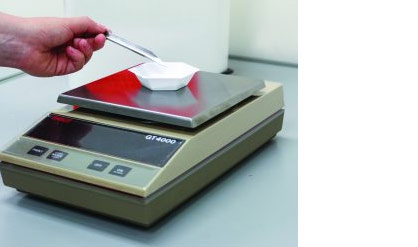
Today, the standard laundry detergents specified for most AATCC test methods is AATCC 1993 Standard Reference Powder Detergent. This powdered detergent was designed to represent an average of the detergents available to consumers. Rather than chasing the variety of features in big brand detergents, AATCC detergents serve their purpose by keeping a consistent formulation. Labs can be confident that their test results are comparable to those from any other lab, in any location, at any time.
AATCC High Efficiency (HE) Standard Reference Liquid Detergent was developed for labs that prefer a liquid formulation or use HE washing machines. This detergent is not yet specified in most test methods but still provides consistency that can’t be achieved with ever-changing consumer detergents. An earlier liquid detergent formula, 2003 Standard Liquid Detergent, was discontinued in 2016, as the AATCC HE detergent can be used in both traditional and HE machines. HE detergent will be back in stock by March 2023.
THREE KEY BENEFITS TO AATCC STANDARD DETERGENT
AATCC Standard Reference Detergents provides:
1) a representative formula,
2) consistent production, and
3) optical brightener options.
Representative Formula
AATCC standard reference detergents are formulated to have the performance of an “average” consumer detergent. This means the results you see in the lab are likely to match the results an end-product consumer sees at home. No false passes from using a high-end detergent in the lab. AATCC detergents are developed by comparing results in dimensional change, color change, color staining, stain release, and general appearance tests to those for the same fabrics laundered with mid-level consumer detergents.
Consistent Production
The recipes for AATCC detergents are the same lot-to-lot. Using standard detergent throughout your supply chain means one less variable to consider when comparing test data. You can count on closely-monitored consistency—every season, in every location. No need to worry about the impact of new formulas, scents, or additives on your results.
Optical Brightener Options
For colorfastness testing, the optical brighteners present in most detergents can interfere with specimen evaluation. AATCC standard reference detergents without optical brightener (WOB) let you assess color change due to the test procedure without the added influence of brighteners. This makes it easier to determine whether a particular dye or process is suitable for your product.
AATCC detergents are also available with brighteners for general appearance evaluations or other tests where it may be important to replicate the end-product consumer’s laundering experience.
Detergent WITH brightener will provide appearance more like what consumers are likely to see at home—most consumer detergents include brighteners. Detergent WITHOUT brightener will allow you to detect issues with dyestuffs because any color change is due to dye loss, not masked by brighteners.
Environmental Considerations
With constantly evolving industry and consumer washing practices, environmental concerns remain at the forefront for many. AATCC 1993 Standard Reference Powder Detergent—with and without optical brightener—are OEKO-TEX® ECO PASSPORT and ZDHC Level 1 certified.
These certifications mean the chemicals used to manufacture AATCC powdered detergents have been evaluated and confirmed not to be hazardous to the environment per the guidelines established for ECO PASSPORT and ZDHC-MRSL. For those companies on a journey to sustainable chemical management and ZDHC-MRSL compliance, AATCC powdered detergents can be used with confidence.
Standard Powder versus HE Liquid
Standard detergent is a necessity for repeatable testing, but the form may depend on the test. Always report the exact product used!
All AATCC powder and liquid detergents are free of phosphates, colorants, and added scents. There are no enzymes, which allow for longer shelf life and no bleaches that can interfere with color evaluation and damage some fibers or finishes.
AATCC powder detergents are THE industry standard. The formulation has been produced consistently since 1993 so many companies have decades of data using this detergent. Powder may also be more efficient for packing and shipping. AATCC 1993 Standard Reference Powder Detergent should NOT be used in HE machines as it may create too much foam, damaging the machine and invalidating test results.
The HE liquid detergent was designed for use in HE washing machines, though it can also be used in standard machines. At present, the only AATCC standard that specifies HE detergent is AATCC TM212 Test Method for Fiber Fragment Release During Home Laundering. It was selected for this method because it rinses clear without clogging filters or leaving residue on fibers.
In cases where textile labs plan to use AATCC HE Standard Reference Liquid Detergent as an alternative to the standard powder detergent, comparable quantities can be found in AATCC LP1. Aside from use in HE machines, labs may prefer a liquid detergent formulation for ease of dosing or rinsing.
Learn More!
Detergent & Laundering Digital Lab
https://www.aatcc.org/aatcc-events/detergentlab/
March 9, 11 AM ET
The Bottom Line
Standard detergents are an important factor in evaluating the fabrics that consumers will eventually use throughout the day. While the variety of laundry care products and technologies are helpful to consumers, challenges arise with estimating their unique laundry practices. When companies pre-qualify their textile products using standard detergent, it ensures consumers will experience the quality they expect.
For labs, “the most important consideration in selecting a detergent for use in textile testing is the test method being performed. A careful reading of the entire method usually reveals the type of detergent to be used. Using the prescribed detergent for each test ensures that all your test results can be validly compared with each other and even with those of other labs.
If a detergent is not specified, or if you are performing a new or modified test method, consider what the test method is meant to measure. If you are assessing color change, optical brighteners may interfere with your evaluation (Wyman, 2008).”
References
Kiron, M. I. (2021, December 17). Basic Concept of Textile Testing and Quality Control (TTQC). Textile Learner. Retrieved October 12, 2022, from https://textilelearner.net/what-is-textile-testing/
Wyman, D. A. (2008, March). Choosing a Standard Laundry Detergent. AATCC Review, 31.