[pageLogInLogOut]

#Associations

TMAS members ready to support digital textile transformations, post Covid-19
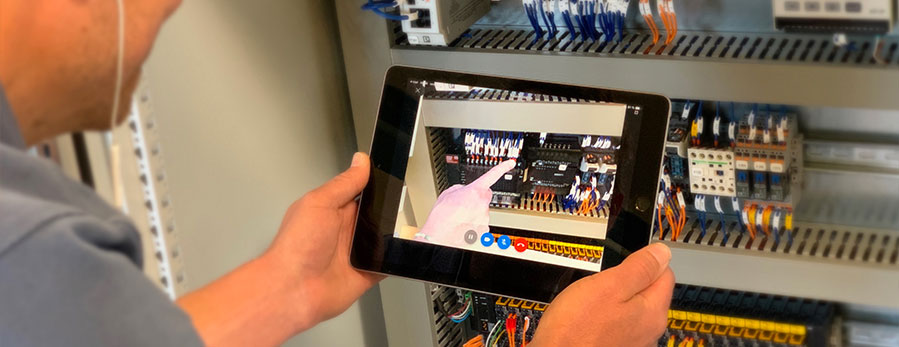
Texo AB’s Remote Guidance software allows the company to carry out commissioning and troubleshooting tasks remotely. (c) 2020 TMAS
Members of TMAS – the Swedish textile machinery association – have adopted a range of new strategies in response to the Covid-19 pandemic, aimed at assisting manufacturers of textiles and apparel to adjust to a new normal, as Europe and other regions emerge cautiously from lockdown.

“Many European companies have been forced into testing new working methods and looking at what it’s possible to do remotely, and how to exploit automation to the full, in order to become more flexible,” says TMAS Secretary General Therese Premler-Andersson. “Others have been taking risks where they see opportunies and there’s a new sense of solidarity among companies.

“It’s extremely encouraging, for example, that over five hundred European companies from across our supply chain are reported to have responded to the shortages of facemasks and PPE – protective personal equipment – by converting parts of their sites or investing in new equipment.”

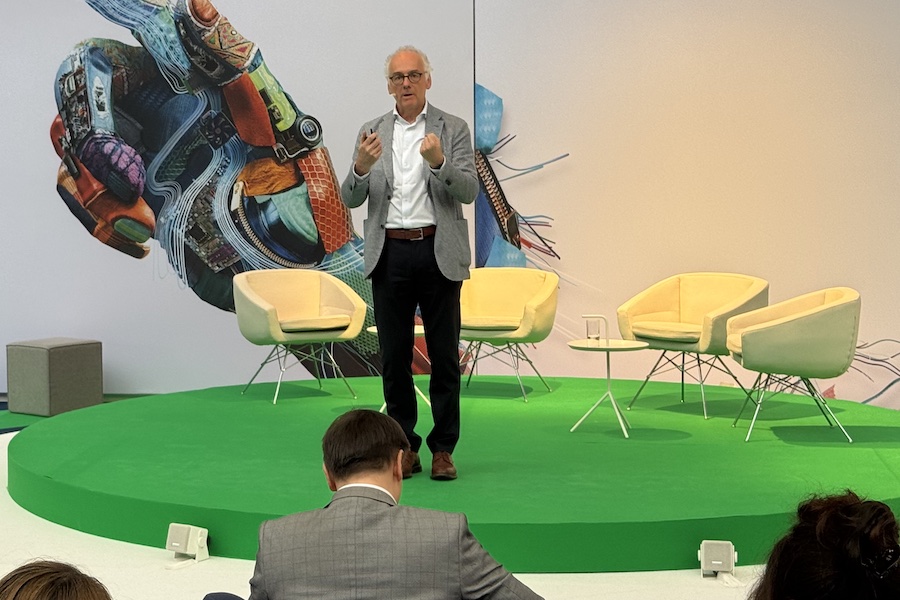
TMAS Secretary General Therese Premler-Andersson. (c) 2020 TMAS


New supply chains

Amongst them are TMAS members of the ACG Group, who quickly established a dedicated new nonwovens fabric converting and single-use garment making-up plant to supply to the Swedish health authorities. From a standing start in March, this is now producing 1.8 million square metres of converted fabric and turning it into 692,000 finished medical garments each month.

“In 2020 so far, we have seen new value chains being created and a certain amount of permanent reshoring is now inevitable,” says Premler-Andersson. “This is being backed by the new funding announced in the European Union’s Next Generation EU plan, with €750 billion marked for helping industry recover. As the European Commission President Ursula von der Leyen has stressed, “green and digital” transitions hold the key to Europe’s future prosperity and resilience, and TMAS members have new solutions to assist in both areas.”

Remote working

Automated solutions have opened up many possibilities for remote working during the pandemic. Texo AB, for example, the specialist in wide-width weaving looms for the paper industry, was able to successfully complete the build and delivery of a major multi-container order between April and May.

“Our new Remote Guidance software now makes it possible for us to carry out some of the commissioning and troubleshooting of such new lines remotely, which has been helpful” says Texo AB President Anders Svensson.

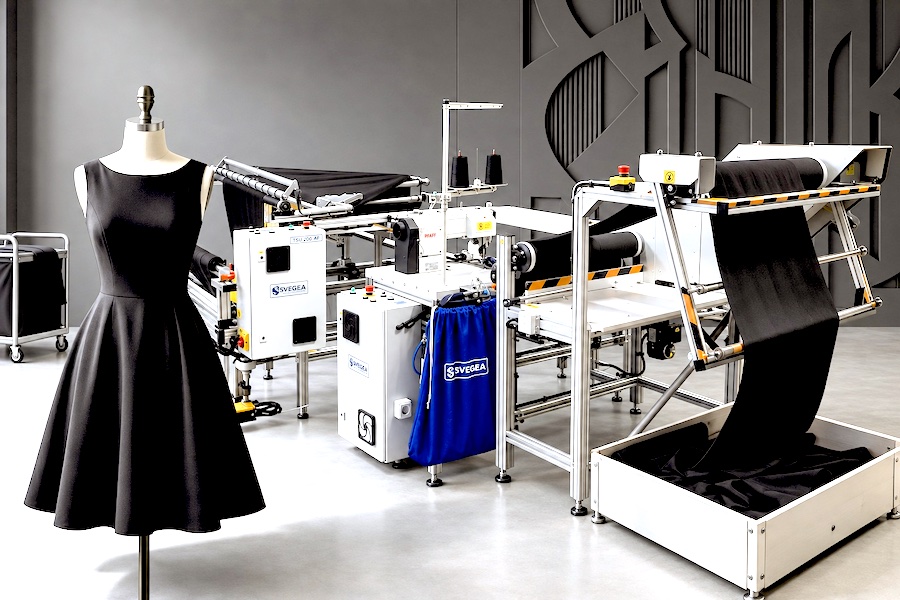
Svegea of Sweden, which has spent the past few months developing its new CR-210 fabric relaxation machine for knitted fabrics, has also successfully set up and installed a number of machines remotely, which the company has never attempted before.

“The pandemic has definitely led to some inventive solutions for us and with international travel currently not possible, we are finding better methods of digital communication and collaboration all the time,” says Svegea managing director Hakan Steene.

Eric Norling, Vice President of the Precision Application business of Baldwin Technology, believes the pandemic may have a more permanent impact on global travel.


“We have now proven that e-meetings and virtual collaboration tools are effective,” he says. “Baldwin implemented a home office work regime from April with only production personnel and R&D researchers at the workplace. These past few months have shown that we can be just as effective and do not need to travel for physical meetings to the same extent that was previously thought to be necessary.”

Pär Hedman, Sales and Marketing Manager for IRO AB, however, believes such advances can only go so far at the moment.

“Video conferences have taken a big leap forward, especially in development projects, and this method of communication is here to stay, but it will never completely replace personal meetings,” he says. “And textile fabrics need to be touched, examined and accepted by the senses, which is impossible to do via digital media today. The coming haptic internet, however, may well even change that too.”
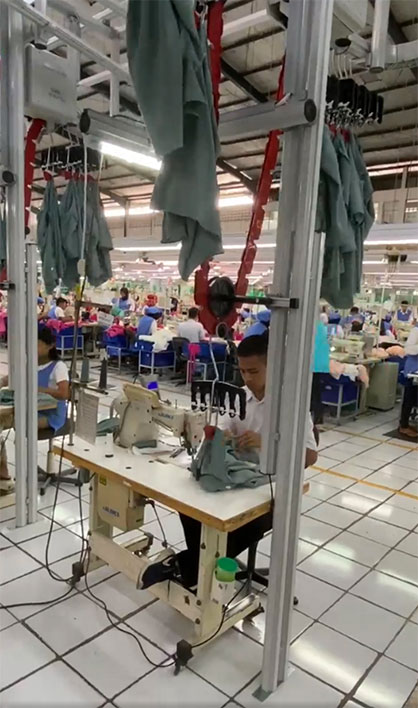
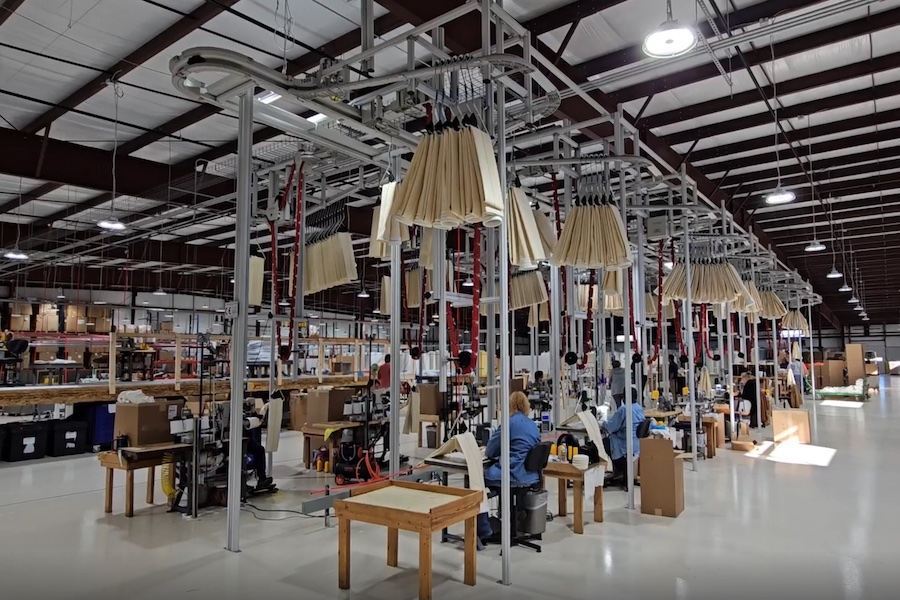
Increased productivity with the added benefit of social distancing at an Eton Systems UPS work station. (c) 2020 TMAS


Social distancing

The many garment factories now equipped with Eton Systems UPS work stations – designed to save considerable costs through automation – have meanwhile benefited from the unintentional social distancing they automatically provide compared to factories with conventional banks of sewing machines.

“These companies have been able to continue operating throughout the pandemic due to the spaced nature of our automated plant configurations,” says Eton Systems Business Development Manager Roger Ryrlén. “The UPS system has been established for some time, but planned spacing has proved an accidental plus for our customers – with improved productivity.”

“Innovations from TMAS member companies have been coming thick and fast recently due to their advanced know-how in automation concepts,” Premler-Andersson concludes. “If anything, the restrictions imposed by the Covid-19 pandemic have only accelerated these initiatives by obliging our members to take new approaches.”
More News from Textile Machinery Association of Sweden

More News on Associations

#Composites

Alliance for European Flax-Linen & Hemp expands bio-materials presence at JEC World 2026

The Alliance for European Flax-Linen & Hemp is pleased to announce its participation at JEC World 2026, featuring a significantly expanded presence and an enhanced offering for the global composites industry.

#Europe

FITA, ABIT and EURATEX underline strategic importance of Mercosur – EU Partnership Agreement for the textile and apparel industry

The Argentine Textile Industry Federation (FITA), the Brazilian Textile and Apparel Industry Association (ABIT), and the European Apparel and Textile Confederation (EURATEX) continue to monitor the process of internalizing the Mercosur-European Union Partnership Agreement. This agreement is essential for the competitiveness of our industries, on both sides of the Atlantic.

#Associations

Industry associations warn against state-run EPR models in the EU

European industry associations, led by Euratex, have raised concerns over a growing trend in several EU Member States to introduce state-run Producer Responsibility Organisations (PROs) within Extended Producer Responsibility (EPR) schemes.

#Associations

European business associations celebrate the signature of the EU-Mercosur FTA

The 17th January marks a historic milestone with the signing of the EU-Mercosur Trade Agreement, creating the biggest trading block in the world. European business – represented by more than 28 associations across a wide range of sectors – warmly welcomes this signature. It sends a strong and timely signal that the EU remains open and is committed to rules-based global trade. In a time of global uncertainty, this agreement is a key growth booster.

Latest News

#Functional Fabrics

“Action helps us change what we do!”

DAY 0 takes place deliberately before PERFORMANCE DAYS begins. It is conceived as a space for reflection, dialogue and active engagement — a moment to pause before the fair, rethink established systems and address sustainability not as a trend, but as a fundamental transformation challenge. Under the guiding metaphor “Turn the Tap Off”, DAY 0 focuses on root causes rather than symptoms, systemic change rather than isolated solutions, and collective responsibility rather than individual silos.

#Textiles & Apparel / Garment

Pets in fashion: functional and sustainable textiles find new market at Intertextile Apparel

China’s pet economy is booming, especially amongst younger generations, and pet apparel – from designer outfits to functional garments – was a RMB 3.5 billion (over USD 500 million) market in 2024, growing more than 20% annually¹. To help exhibitors harness this trend, Intertextile Shanghai Apparel Fabrics – Spring Edition 2026 will launch the Pet Boutique, presenting a range of innovative, sustainable materials that prioritise both functionality and comfort for pets.

#Sustainability

VAUDE eliminates PFAS from all products

PFAS (per- and polyfluoroalkyl substances) are now detectable worldwide – in drinking water, soil and the human body. These so-called “forever chemicals” are considered hazardous to health and potentially carcinogenic, as they do not break down and remain in the environment permanently. Despite these risks, PFAS are still used in a wide range of products. More than 15 years ago, VAUDE made a strategic decision to gradually eliminate PFAS from all product categories.

#Man-Made Fibers

Lenzing AG to become majority owner of TreeToTextile AB and accelerates industrialization of new fibers

The Lenzing Group is taking another strategic milestone by acquiring a controlling majority in the Swedish innovation company TreeToTextile AB. This step strengthens Lenzing’s position as a leading provider of sustainable, wood‑based specialty fibers and expands its innovation pipeline with a highly scalable, patent‑protected technology platform. The transaction is executed through the issuance of new shares.

TOP