#Associations
Ten textile initiatives with around 2,000 members call on governments and companies to act
AGT, amfori, Better Buying, Fair Labor Association, Fair Wear Foundation, ETI Norway and ETI UK, IDH, the Alliance for Sustainable Textiles and Solidaridad are deeply concerned about the health and livelihood of millions of workers in the joint declaration in the clothing industry and their families. Covid-19 is having a devastating impact on the global textile industry. Most factory workers earned too little to provide themselves and their families with adequate care. As social security systems are missing in many countries, the current crisis has hit these people particularly hard.
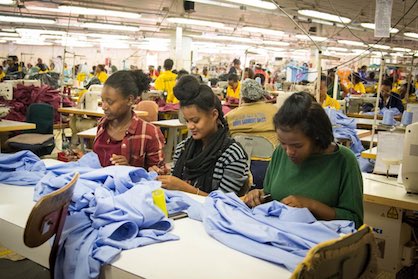
Workers need aid funds
In their letter to the governments in the producing countries, the initiatives and organizations appeal to protect the income and health of workers and to support employers in this task: “The factories must pay wages and salaries to workers on time ensure that people stay actively employed. ”If factories have to close temporarily, it should be a top priority for all concerned to support the workers directly or to help them access finance. This is the only way they can bridge the time when they cannot work.
Governments of the importing countries and multilateral organizations should also act now. In addition to providing support for retail and brand companies, they should also provide aid funds for people in the producing countries.
Seven of the ten initiatives and organizations are member-based and represent around 2,000 retail and brand companies that are currently facing immense challenges. Despite the dramatic situation, companies are required to meet their due diligence obligations and to find solutions together with their business partners. The declaration contains a list of important points that textile companies worldwide should consider. This includes:
- Companies should support the factories in implementing the necessary security measures to reduce the risk of infection.
- Orders that have already been completed and are in production should be paid in full if possible.
- Companies are advised to avoid the termination of planned orders.
- They should be flexible when factories have to change delivery times and / or adjust payment methods.
- They should not end business relationships without first looking for alternatives together with their local partners.
Rehearsal for the future
In the crisis, urgent action is needed. However, long-term systemic improvements in textile supply chains should already be considered and shaped. Fair payment and partnership-based cooperation between dealers, brands and suppliers should become the "new normal" after the crisis and are just as important as social security. "The current situation also offers the opportunity to make social security systems more sustainable so that times of unemployment do not immediately threaten the existence of workers," the statement said. The initiatives and organizations are also working on additional recommendations to support companies and other actors in the post-crisis period.
The full explanation can be found on the right side.
Responding responsibly to the COVID-19 crisis
Joint priorities for the garment sectorIntroduction
We have come together as a group of organisations working on responsible business conduct in the garment industry to collaborate in these unprecedented times. Together we represent close to 2000 garment brands and retailers committed to improving working conditions. As a group with shared interests, we are exchanging resources, tools, good practices, and guidance for our members and supporting advocacy with governments and multilateral institutions.
Two priorities that urgently need our attention in response to COVID-19 and its impact on the garment industry and its workers:
1) Protecting worker income and health
The impact of COVID-19 has magnified existing inequalities, systemic vulnerabilities, and challenges in global garment supply chains. The health and livelihoods of millions of garment workers and their families – who often cannot rely on savings, loans, or public safety nets – are at risk. The majority of garment workers are women, often concentrated in low-pay, low-power positions, underrepresented in unions and with additional unpaid child, elderly and sick care duties. COVID-19 has put them at a particular risk, not only for their immediate health but also for their immediate and long-term financial situation.
We call upon brands, retailers, suppliers, governments, trade unions, industry associations, civil society and multilateral organisations to work together to enable factories to maintain employment relationships and make changes in the workplace in order to protect the health of garment workers.
Factories must ensure on-time payment of salaries to workers who remain actively employed. If facilities have to close temporarily, it should be a top priority of all stakeholders to support workers directly or in accessing finances to bridge this period that they cannot work. When worker retrenchment cannot be avoided due to long-term factory closure or bankruptcy, all workers should receive their full legal entitlements, including wages, benefits, and severance pay.
2) Future-proofing supply chains
COVID-19 has massively disrupted the current way of doing business. While the immediate effects of the crisis have been severe, the situation offers a unique opportunity to rebuild structures in a more sustainable and fair way. A key point of attention will be building functioning social protection floors for workers, including unemployment benefits. Fair and collaborative relationships between retailers, brands, and suppliers, as well as prices that cover the cost of responsible production, should form the foundation of future global supply chains.
We welcome the global call to action COVID-19: Action in the Global Garment Industry setting out priorities and commitments for joint industry action to respond to the pandemic. We plan to align each other and other key stakeholders to implement these two priorities.
A joint call to action to the garment sector
This first joint statement is focused on the crisis and early recovery phase and:
calls upon governments and multilateral institutions for action; and
provides practical guidance on how brands can respect the rights and livelihoods of workers.
We are working on additional guidance concerning the recovery phase and post-COVID-19 period.
Call on governments and multilateral institutions
Instant relief for international supply chains
Governments of garment-producing countries certainly have a duty to protect and care for their citizens. We also call upon governments of countries where the head offices of our member brands and retailers are based to take into consideration the impacts of the COVID-19 outbreak throughout global supply chains. We call upon our governments to coordinate with multilateral institutions to provide relief funds directly to garment workers and prioritize employment when providing relief to companies.
Long-term improvements
This crisis demonstrates the need for long-term, sector-wide improvements securing social protection floors for workers in sourcing countries. We call upon governments and multilateral institutions to establish and maintain strong social protection floors, and to extend social protection for workers and employers in the garment industry, consistent with ILO standards including health and sickness benefits, unemployment, employment injury, and medical insurance, involving trade unions and industry associations in the process.
To ensure the long-term sustainability of garment supply chains, we call on governments to financially support a collaborative, coordinated approach to create and strengthen these social protection floors in producing countries.
Call on brands and retailers
We understand garment brands and retailers are facing extremely difficult times and are focused on keeping business afloat. Despite these challenging circumstances, companies must continue to uphold principles of responsible business conduct. This includes understanding how their decisions during the crisis will impact workers in their supply chain and doing everything they can to mitigate negative impacts. We provide country-specific guidance on our websites (see annex) to help members stay updated on the situation in production countries and encourage them to pay close attention to concerns flagged by local stakeholders; in particular trade unions. We call on companies to communicate transparently about the measures they take in this crisis to ensure accountability and peer learning.
Each organization is working directly with its members to provide more detailed guidance, resources, and examples of good practices (see annex). We call upon our members and all garment brands and retailers to implement the following key responsible practices during the crisis and initial recovery phase.
Responsible sourcing decisions
- Maintain frequent and transparent dialogue with all supply chain partners on sourcing decisions and look for collaborative solutions. No unilateral decisions should be taken.
- We expect retailers and brands to honour their obligations and pay in full for orders completed or in progress.
- If orders cannot be completed, we expect retailers and brands to prioritize covering labour costs, as well as materials or other costs that have already been incurred.
- We expect companies to work hard to minimise the ongoing impact upon workers who will already be facing difficult circumstances.
- Collaborate with suppliers on orders for upcoming months to identify alternatives to cancelling orders and treat order cancellations as a last resort.
- Anticipate changes or delays in production and be flexible about delivery dates, payment terms, and financial liability.
- Do not terminate the business relationship with your supplier without first having discussed scenarios and solutions with your supplier. If exit is unavoidable ensure that workers are protected and paid.
- Work closely with suppliers including raw material suppliers to collaboratively plan and secure capacity needed and provide updated forecasts.
Safeguarding factory working conditions
- Listen to the voices of workers through their trade unions, social dialogue mechanisms or elected worker representatives.
- Make sure safety measures to contain the risk of infection are implemented at the work floor. Workers should be informed about their rights and provided correct information on preventive safety measures.
- Factories should have a mechanism in place to address questions from workers and involve them in decision making. Workers must have access to a trade union or other worker representation to collectively respond to measures or to raise issues. Workers should have access to a channel to support remedy of problems related to their rights. Grievance channels should be accessible to workers even if factories have closed, or the workers have been retrenched.
- Workers should have access to safe transportation to the factory.