[pageLogInLogOut]

#Additive Manufacturing

Cooksongold AM in partnership with ITA, EOS and AMPS set to revolutionise the Glass Fibre Industry
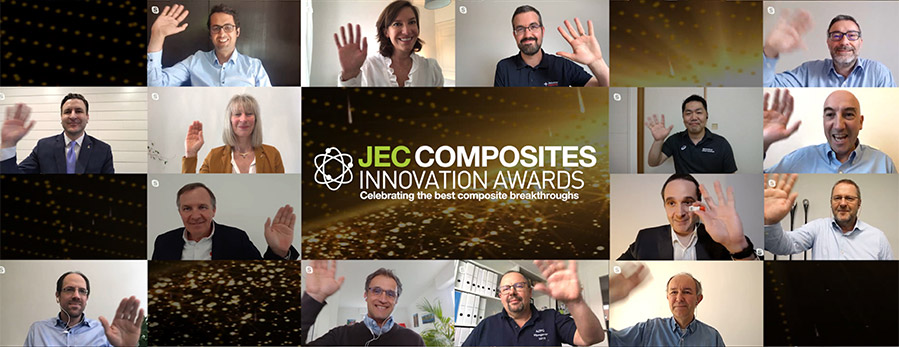
(c) 2020 JEC Group / Institut für Textiltechnik of RWTH Aachen University
Cooksongold AM and Sempsa JP, part of the Heimerle + Meule Group, have announced on 13 May 2020 that they are working to innovate glass fibre production by 3D Printing (also known as Additive Manufacturing) the Tip Plates of Bushings made from Precious Metal.

Working in partnership with the Institut für Textiltechnik of RWTH Aachen University (ITA) and EOS GmbH (EOS), Cooksongold AM have produced a full-size Tip Plate from a Platinum/Rhodium alloy that has successfully passed its initial production trials at Johns Manville in Slovakia.

Cooksongold AM has been working with EOS for several years to industrialise their M 080 and M 100 AM machines and make them compatible with precious metals. Cooksongold AM has also developed a wide range of precious metal parameters for use in the EOS AM technology.

The ability to now print with precious metals on an industrial scale and, through innovative AM strategies, optimise applications to make them commercially viable, is proving a powerful technology enabler. Combine this with the research being carried out at ITA as well as the manufacturing expertise and history of Sempsa JP, it now becomes a seismic step forward to the Additive Manufacturing technology being rolled out, on a global scale, for Industrial Production of precious metal applications. ITA is a key partner in transferring the consortium’s additive manufacturing expertise to the glass fibre industry.

To facilitate this ‘revolution’ AMPS (Advanced Manufacturing Process Solutions) GmbH has been established. It will act as a ‘technology showcase’ for the complete new manufacturing process chain as well as provide R&D and prototyping services. Glass fibre companies from around the world were quick to join up and it has been structured to suit every participant’s individual needs. A ‘cost-sharing’ environment, free of intellectual property, sits above individual research and development ‘cells’, where all the commercially sensitive work takes place. This novel way of collaboration is identifying innovation that will continue to advance glass fibre production beyond recognition over the next decade.

As a result of this unique approach to worldwide technology implementation, the members of the collaboration were awarded the ‘JEC Composites Magazine Special Prize’ on 13 May online for the first time due to recent global health crises, recognising the true potential for AM within the glass fibre industries.


Martin Bach, Managing Director of Cooksongold says

“I am incredibly proud to be receiving the JEC Magazine Special Prize but even more proud of my team, who have managed to bring together a global collaboration in such a way that it is poised to deliver game-changing material and design innovation and efficiencies in production, that could’ve only been dreamed of a few short years ago.”

Prof. Thomas Gries, Director of ITA says

“We are excited to be receiving this prestigious award for our work in the field of additive manufacturing for bushings. We truly believe that the developments will be a key enabler for future innovations in the field of glass fibre production, and I am proud of my team of researchers and our collaborators to have made this possible. As an institute developing processes, equipment and machinery, ITA goes beyond just developing fibre and textile products. Digital manufacturing of the bushings allows us to step across existing process innovation borders and allows production and product innovation never seen before.”

Thomas Weitlaner, Director of Additive Minds & Business Development of EOS adds

“At EOS we are working every day to make industrial 3D printing a sustainable, mainstream manufacturing process. The 3D printing of tip plates is another great example, how additive manufacturing can bring real business value and innovation to the glass fibre industry. Additionally, we see a lot more promising applications that can further increase the efficiency of the glass fibre production process. The combination of such innovative applications and the setup of Additive Manufacturing in the Digital Factory will result in huge innovation potential.

I am very proud of the joint team effort so far which is confirmed by receiving this prestigious JEC award and look forward to the outcomes of the consortium project.”


More News from Institut für Textiltechnik of RWTH Aachen University (ITA)

#Research & Development

Solid Air Dynamics wins second place at RWTH Innovation Award

On 30 January, RWTH spin-off Solid Air Dynamics was awarded second place in the RWTH Innovation Awards for its research in the field of aerogel fibres. Manufactured from renewable raw materials, aerogel fibres offer outstanding thermal insulation, are extremely lightweight and completely biodegradable, and can consist of over 90 per cent air.

#Research & Development

Award-winning research for sustainable carbon fibre cycles

Sustainable recycling of carbon fibres is possible through targeted electrochemical surface modification, which makes the sizing of carbon fibres resistant to solvolysis. ITA PhD student Sabina Dann was awarded the MSW Award from RWTH Aachen University for her master's thesis on this development. The award ceremony took place on 12 November 2025 in Aachen.

#Research & Development

Kick-off for the Textile Production of the Future: Establishment of a Textile Technology and Development Centre in Mönchengladbach, Germany

The Institut für Textiltechnik (ITA) of RWTH Aachen University, together with its partners, is pleased to announce that it has received approval for its joint initiative, ‘Textile Factory 7.0’. The goal of the project is the establishment of a technology and development centre for the textile industry in Mönchengladbach.

#Research & Development

Exchange data between textile companies openly, securely and cost-effectively without a central platform – ITA makes it possible

The Institut für Textiltechnik (ITA) of RWTH Aachen University has launched a new demonstrator for an open and secure data space in the textile industry at the Digital Innovation Centre Europe (DICE). For the first time, the demonstrator shows directly and clearly how companies can share their data securely with each other without the need for a central platform. Data exchange is based on shared, freely usable technical foundations.

More News on Additive Manufacturing

Latest News

#Sustainability

Ying McGuire becomes new CEO of Cascale

Cascale today announced the appointment of Ying McGuire as Chief Executive Officer, effective June 1, 2026.

#Technical Textiles

Sustainable, lightweight, and sound absorbing: Polyester-based front trunk solution for BEVs

As car manufacturers look to further reduce their carbon footprint, Autoneum has developed an innovative front trunk solution for battery electric vehicles (BEVs), made entirely from polyester-based textile. The Ultra-Silent Frunk offers significant weight reduction, improved acoustic and thermal insulation, and uses up to 70 percent recycled material, supporting sustainable and efficient vehicle design. Autoneum, global technology leader in acoustic and thermal management for vehicles, has already received orders for the new frunk from three major OEMs in Asia and Europe to be built in three BEV models. Series production for two BEVs has been underway in China and Germany since last year.

#Raw Materials

Modern testing methods for raw cotton

The 38th International Cotton Conference Bremen will take place from 25 to 27 March 2026 at the Bremen Parliament. This conference has traditionally stood for in-depth expertise and international exchange. The program will focus on technical innovations, market trends, and regulatory frameworks across the entire value chain – from agriculture to the circular economy. With high-profile speakers, the conference is regarded as the key meeting point for the global cotton industry. Today’s focus: Cotton quality and testing methods.

#Spinning

Rieter responds to higher raw material prices

Global political and economic developments have been leading to rising raw material and energy costs for some time. The textile machinery industry is also affected by this trend. Rieter machines and components consist to a large extent of steel, copper, aluminum and electronics. These materials in particular have seen higher demand and higher prices in recent months.

TOP



