[pageLogInLogOut]

#Additive Manufacturing

Technical University of Munich, Oerlikon, GE Additive and Linde to establish additive manufacturing cluster in Bavaria
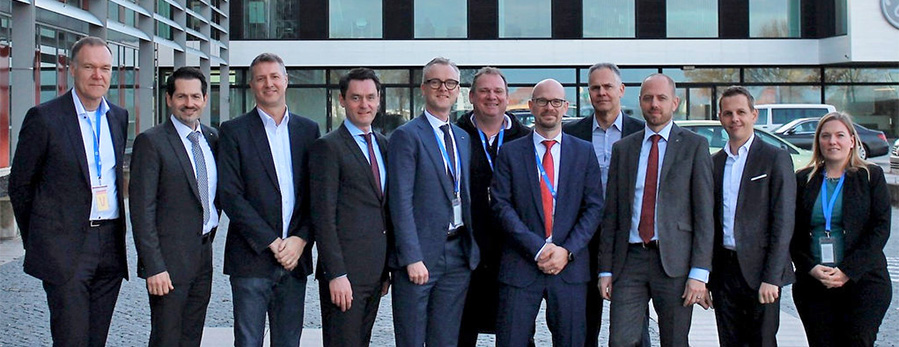
From left to right: Dr. Sven Hicken (Business Unit Head, Oerlikon AM), Prof. Dr. Thomas Hofmann (President, TUM), Jason Oliver (President and CEO, GE Additive), Dr. Wolfgang Dierker (CEO, GE Germany), Dr. Christoph Laumen (Executive Director R&D, Linde AG), Prof. Dr. Michael Suess (Chairman of the Board of Directors, Oerlikon Group), Dr. Christian Haecker (Head of Industrialization, Oerlikon AM), Dr. Andreas Lessmann (Managing Director, GE Additive Germany GmbH, Senior Leader, Legal Operations), Dr. Christian Bruch (Executive Vice President & CEO, Linde Engineering), Andreas Rohregger (Head of Global Properties, GE Additive), Dr. Alice Beck (Deputy Director, TUM ForTe)
The Technical University of Munich (TUM), Oerlikon, GE Additive and Linde are collaborating to create an additive manufacturing cluster. This cluster is a grouping of companies and organizations that will conduct research on and develop additive manufacturing technology from a single hub location.

3D printing is changing the way we manufacture

  • The initiative aims to accelerate the broad use of additive manufacturing (AM) in various industries through integrated research and development initiatives.
  • The cluster underlines Bavaria’s reputation as a leading location for technology innovation.
  • The new Additive Manufacturing Institute is aimed at cross-disciplinary AM research.

The collaborative efforts will help integrate AM into the manufacturing process and enable companies to use the technology in their production. The open cluster also includes academic institutions (TUM) researching and educating on AM and regulatory authorities responsible for overseeing and regulating the use of the technology in industries. The cluster will be open to additional participants in the future.

“By having all of the players located in a single hub, we are accelerating the development and application of the technology for the various industries,” commented Prof. Dr. Michael Suess, Chairman of the Board of Directors of the Oerlikon Group. “Bavaria is the perfect place for us to house this initiative as it promotes energy and production efficiency, which supports Germany’s sustainability goals and the country’s desire to incorporate new technologies.”

“The project is an excellent example of close collaboration between industry, academia and politics to innovate and industrialize a technology like additive manufacturing,” commented Dr. Roland Fischer, CEO of the Oerlikon Group. “AM is a technology that supports our aim of providing sustainable solutions for all industries.”

Additive manufacturing technology, commonly known as 3D printing, allows for layer-by-layer printing of metal components during the manufacturing process. TUM, Oerlikon, GE Additive and Linde all play different roles in the additive manufacturing process. Additive manufacturing completely transforms the production process. It requires change in every aspect of manufacturing – supply chain, production, employee training, quality inspection, product validation and regulation.

Jason Oliver, President and CEO of GE Additive, added: “Bavaria already enjoys a stellar reputation as a global hotspot for additive technology – with a thriving ecosystem and a rich seam of talent. We’re excited to be part of this initiative from the very beginning and look forward to building on that solid foundation and driving tangible impact both for the region itself and further afield.”


“We see this opportunity to collaborate as a win for the companies and TUM, as well as for the region,” said Dr. Christian Bruch, Executive Vice President & CEO of Linde Engineering. “We expect the new hub will bring jobs to the area, while also delivering new technologies and capabilities to the companies located here.”

New Additive Manufacturing Institute

As one of the first initiatives enabled by the AM cluster, Oerlikon and TUM are creating a new research institute. The Additive Manufacturing Institute will focus on interdisciplinary research in raw material powders, optimized AM production and end-to-end process integration, including automation and AM digitalization. Oerlikon engineers and scientists will work hand in hand with researchers and students at various TUM faculties (mainly mechanical engineering, but also chemical engineering, the physics department and informatics) to address all aspects of AM research and production. This will include the verification and qualification of products and the development of new AM business models.

“An integrated collaboration between powerful partners from industry and science is necessary for the industrialization of additive manufacturing processes,” explains Prof. Dr. Thomas Hofmann, President of TUM. “This is the only way we will be able to overcome technological obstacles and find answers to unresolved issues in the field of standardization.”

Like the cluster, the research institute will also be open for research cooperation with academia and industry once the initial frameworks have been established. The aim is to broaden the international network and encourage an architecture of open partnership.

The new additive manufacturing cluster and research institute are being highlighted at the Munich Technology Conference (MTC3), which is currently taking place at the Technical University of Munich in Germany (October 8-10, 2019). The conference this year addresses the industrialization of additive manufacturing and features top speakers from the industry, academia and political sectors.
More News from Oerlikon Textile GmbH & Co. KG

#Nonwovens / Technical Textiles

Crimper repair workshop begins operations

Since the beginning of the year, Oerlikon Textile Inc. has been offering a crimper repair service, making it the company's first location worldwide to do so. The workshop in Charlotte specializes primarily in Fleissner and Neumag crimpers.

#Spinning

Oerlikon Manmade Fibers Solutions hosted successful Technology Day 2025 in India

Oerlikon Manmade Fibers Solutions recently hosted its highly anticipated Innovation and Technology Day at the Deltin Hotel in Daman by end of January 2025. The event attracted over 300 participants, including industry experts, partners, and stakeholders, who gathered to explore the latest advancements and trends in the manmade fibers industry in India.

#Spinning

Industrial yarn producer sees growth potential in tire cord sector

The Chinese Junma Group has expanded its HMLS capacities by 20 positions, hence becoming one of the largest tire cord manufacturers in China. At present, the company has 64 positions of HMLS systems, all of which are from Oerlikon Barmag.

#Spinning

Oerlikon reports third quarter 2024 results, highlights strong execution in a challenging market landscape

In the third quarter of 2024, Oerlikon reported a stable operational Group EBITDA margin, despite challenging market conditions, thanks to a focus on pricing, cost management, and efficiency across both divisions. Group order intake saw a 4% year-over-year decline at constant FX, attributed to temporary market softness in Surface Solutions, while orders in Polymer Processing Solutions showed signs of stabilization.

More News on Additive Manufacturing

Latest News

#Raw Materials

New study shows low environmental impact by Cotton made in Africa Organic Cotton from Tanzania

Today, the Aid by Trade Foundation (AbTF) is announcing the results of a comprehensive life-cycle analysis (LCA) for cotton produced in Tanzania under the Cotton made in Africa Organic (CmiA Organic) standard. The study emphasises the small ecological footprint of CmiA Organic verified cotton. This can largely be traced back to the absence of synthetic pesticides, artificial fertilisers, and artificial irrigation. Consequently, CmiA Organic cotton can help the textile industry meet regulatory requirements as well as science-based targets. The results also show that the consequences of climate change threaten the livelihoods of these cotton farmers, even though the type of agriculture they practise barely contributes to climate change.

#Raw Materials

Better Cotton Initiative strengthens regenerative focus in standard update

The Better Cotton Initiative (BCI) has strengthened the regenerative focus of its field-level standard with the launch of a new version of its Principles & Criteria (P&C), which marks the next step in the organisation’s journey to becoming a regenerative standards system.

#Man-Made Fibers

Selenis and Kintra Fibers partner to scale 100% bio-based synthetic fiber technology

Selenis, a leading global specialty polyester manufacturer, today announced a strategic manufacturing partnership with materials science company Kintra Fibers to scale Kintra’s patented fiber-grade PBS resin - a 100% bio-based and biodegradable material designed for textile applications.

#Functional Fabrics

PERFORMANCE DAYS proves its relevance as the industry’s key meeting point

Held on March 18–19, 2026, PERFORMANCE DAYS once again confirmed its position as a leading international platform for functional textiles. A total of 3.366 trade visitors and around 560 exhibitors gathered in Munich, with the event already kicking off successfully on DAY 0, which received highly positive feedback for its interactive format. Despite challenging conditions caused by the public transport strike in Munich, the event saw strong attendance and a consistently high level of activity across both exhibition days.

TOP