[pageLogInLogOut]

#Dyeing, Drying, Finishing

World's largest denim manufacturer Tavex installs Montex 6500 stenter in Mexican factory

(c) 2012 Monforts
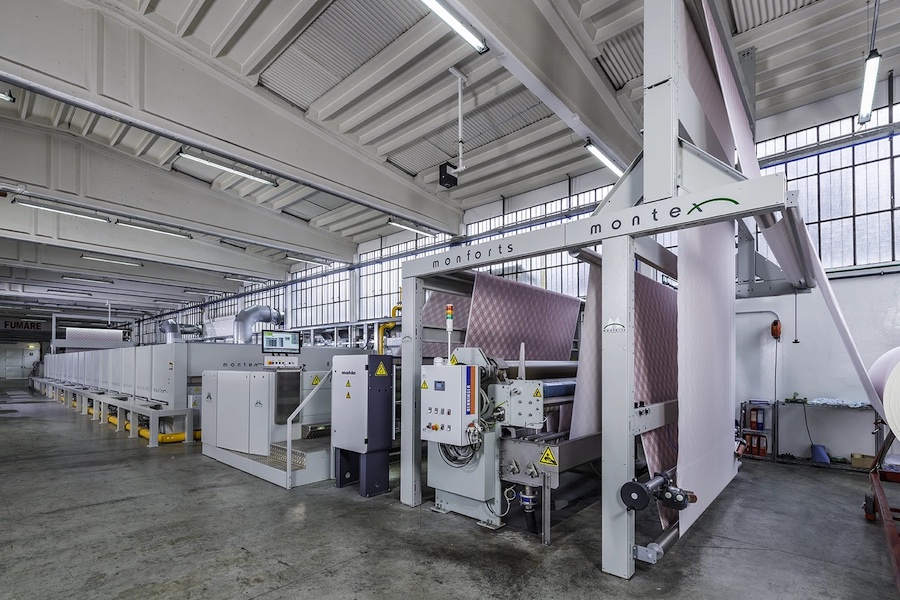
Tavex Corporation, which recently acquired Mexican denim manufacturer Acotex, is upgrading its manufacturing facilities in Mexico to increase sales to the US market and has installed a new Monforts Montex 6500 stenter for the production of stretched denim.

Spain-based Tavex Corporation, the world's largest manufacturer of denim, has installed a new Monforts Montex 6500 stenter at its Tlaxcala factory in Mexico for the purpose of increasing its production of stretched denim.

Tavex Corporation acquired Mexican denim manufacturer Acotex four years ago. With its plants in Puebla and Tlaxcala it was a move designed to increase access to the US market. Tavex, founded more than 150 years ago, also has denim manufacturing plants in Spain, Morocco, Brazil and Argentina.


Adalberto Avendano, Tavex's manager for dying and finishing at Tlaxcala, says that the installation of the Montex was part of the company's programme to upgrade facilities at the factory, which is devoted to denim production.

"We already have two Monforts Sanforisors here at Tlaxcala, and there are Monforts stenters at other plants within the group," he says. "We are therefore familiar with the technology and maintenance support.

"There is one stenter here from another manufacturer, which dates back to the time when this was an Acotex factory, but our familiarity with Monforts meant that we were happy to invest in a Montex to extend our production range."

Stretch denim is the biggest volume trend in the market and in Mexico Tavex is putting considerable emphasis on expanding the stretch business. The strategy is, says Mr Avendano, to emulate the premium European stretches but manufactured much closer to the US market.

The Montex 6500 is an eight-chamber machine able to handle material to a width of 200 cm and was delivered and installed in 2011 by Sattex, the Monforts distributor for Mexico.

Mr Avendano adds that the Montex 6500 has features which make the machine particularly suitable for denim manufacture, allowing the elimination of several traditional process steps.

"This really is a stenter that is perfect for denim," he says. "Monforts and Sattex installed and commissioned the machine, and trained our operators and maintenance staff. Now the machine is practically handling itself."

The Montex is handling materials widths of between 170 and 180 cm, at weights that range between 290 gm/m2 and 460 gm/m2.

"We decided to split the production of denim types between our existing stenter, which is producing standard denim, and the Montex, which is producing stretched denim," says Mr Avendano.

"The machines are working Monday to Thursday on a 24-hour basis, with two 12-hour shifts, and on Friday, Saturday and Sunday they are not working.

"On this basis, the two machines between them are processing at the rate of 17 million metres of denim per year. During the period March to December 2011, starting from the time the Montex came on-line, it processed 6 million metres of stretched denim. So on a yearly basis, production is evenly divided between the two."

Mr Avendano says that 90% of Tavex's Mexican production is going to the US, the world's largest market for denim. Tavex's total denim capacity at its Mexican plants is more than 20 million metres per year.
More News from A. Monforts Textilmaschinen GmbH & Co. KG

#ITM 2026

New Monforts systems deliver round-the-clock production for Kipaş

As a valued Monforts customer for many years, Türkiye’s Kipaş Textile has just installed a new Thermex dyeing range and a Monfortex sanforizer at its new dyeing and finishing plant in Kahramanmaraş.

#ITM 2026

Monforts sees growing potential for technical textiles in Türkiye

For many years now, Türkiye has been one of the most important markets for textile finishing, coating and continuous dyeing equipment, making ITM 2026 from June 9-13 a key event for Germany’s Monforts. At the Istanbul exhibition at stand 1117D in Hall 11, the company will put the emphasis on its machines which continue to lead the field in conventional dyeing and finishing, and also highlight the strong opportunities for Turkish textile manufacturers in the growing field of technical textiles.

#Dyeing, Drying, Finishing

Monforts unveils interactive digital platform for textile finishers

Monforts has launched a new digital platform designed to give textile manufacturers faster, more intuitive access to the company’s finishing technologies, technical expertise and aftersales support worldwide.

#Techtextil 2026

Monforts to showcase advanced coating solutions at Techtextil 2026

Over the past few years Monforts has significantly advanced its technologies for coating, with the successive introductions of the MontexCoat, coaTTex and VertiDry systems combining flexibility, precision and energy efficiency for the technical textiles market.

More News on Dyeing, Drying, Finishing

#ITM 2026

SETEX turns dyeing and finishing data into daily production control

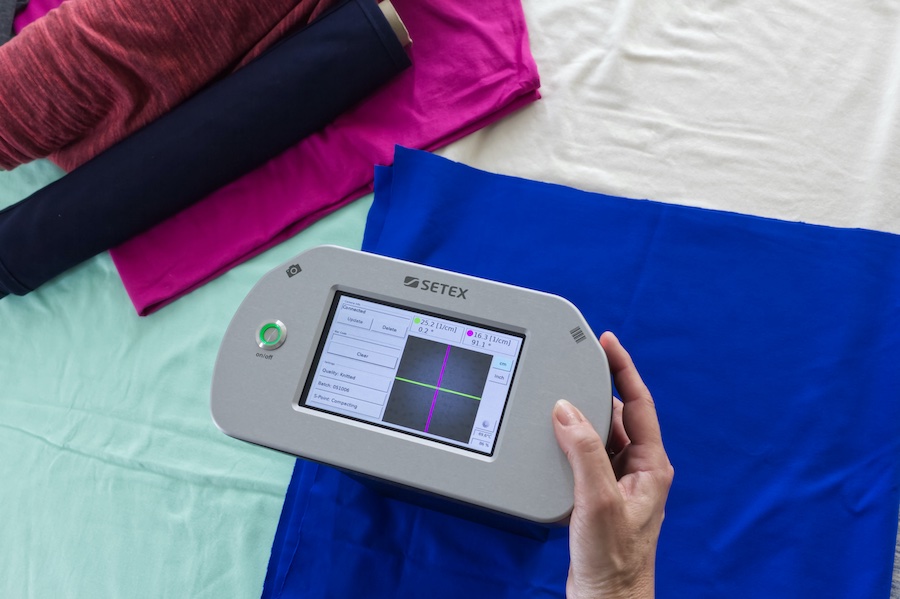
At ITM 2026, SETEX will show how textile mills can use machine, recipe, quality and energy data for more reliable daily production decisions — not as another reporting layer, but as part of the running dyeing and finishing process. With OrgaTEX X3 MES, E390x/C390x controllers, CamCOUNT and FabricInspector Portable, SETEX connects planning, machine execution and fabric-related quality insight within existing mill structures.

#Dyeing, Drying, Finishing

Tradition and Innovation – Phoenox Textiles Ltd. relies on state-of-the-art carpet back-coating line from Brückner

For more than 70 years, Phoenox Textiles Ltd. has been synonymous with quality, reliability, and inno-vation in the textile industry. Founded in 1954 in Huddersfield (Yorkshire, UK), a region with a long tradition in textiles, this family-owned business has continued to evolve without losing sight of its roots. Today, in its fourth generation under the leadership of the Mosley family, Phoenox successfully combines decades of experience with a clear, forward-looking corporate strategy.

#Dyeing, Drying, Finishing

Smart Quality Control for Technical Textiles

In the end, what matters is the result: a filter that performs reliably, a membrane that remains stable in storm conditions, a composite material with precisely defined properties. But the path to achieving this is demanding. In the production of technical textiles, numerous parameters interact – and even the smallest deviations can have major consequences.

#ITM 2026

The address for environmentally friendly dyeing and finishing systems: ITM 2026

Dyeing and finishing technologies, one of the most critical and value-added areas of the textile sector, have gained strong growth momentum on a global scale. Technologies that are pioneers of this transformation focused on sustainability, quality and efficiency will meet with sector professionals at the ITM 2026 International Textile Machinery Exhibition. Dyeing and Finishing Hall (11–12) will host the latest technologies that increase efficiency, optimize resource use and reduce environmental impact in textile finishing processes.

Latest News

#ITM 2026

Sweden targets Türkiye’s textile future at ITM 2026

Following the opening of its new showroom and test centre in Sweden, imogo will be introducing its groundbreaking new Dye-Max spray dyeing technology to Türkiye’s textile manufacturers at ITM 2026 in Istanbul from June 9-13.

#Knitting & Hosiery

TM WEFT, 270" – More width, more design freedom for the fashion world

KARL MAYER is expanding its successful TM WEFT series with an innovative model that opens up new possibilities, particularly in the fashion & apparel sectors. With a working width of 270", this new machine with weft-insertion not only offers significantly higher output than its narrower counterparts but is also specifically tailored to the demands of dynamic clothing market – particularly in China and Türkiye. A well-thought-out upgrade also ensures even greater design versatility.

#Research & Development

“Production is a product”

From technical textiles and AI-driven robotics to the limitations of textile circularity: Professor Dr Thomas Gries looks back on more than two decades of development at ITA Aachen. In the interview, he explains why production technology remains a decisive success factor, discusses international collaborations and innovation ecosystems, and shares his views on the transformation of production landscapes and the challenges facing an increasingly regulated industry.

#Knitting & Hosiery

“We need to move away from the price trap and return to a value-driven mindset.”

With its new Textile Innovation Center, KARL MAYER is sending a strong signal for innovation, collaboration, and the future of textile applications. In this interview, Karl Josef Mayer discusses new opportunities in warp knitting, the processing of staple fibres, recycling, the changing role of machinery manufacturers, and why the textile industry must once again focus more strongly on the value of textiles. by Oliver Schmidt

TOP