RHL’s major Chinese viscose plant, and more new developments for ITMA Asia visitors
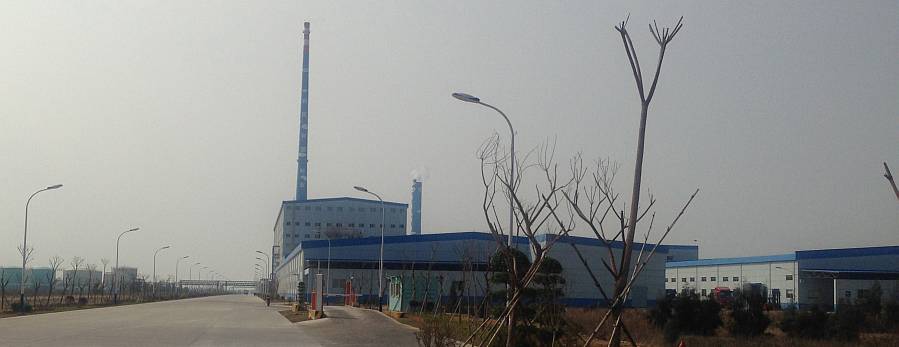
The new Sateri viscose staple fibre plant at Fujian, China. 8c) 2014 Richard Hough
World-leading technology at ITMA Asia + CITME and a prestige installation at a brand new viscose plant in China provide further evidence of significant growth in these key markets by Richard Hough Ltd. (RHL), the specialist producer of dewatering, squeezing and calendering rolls.
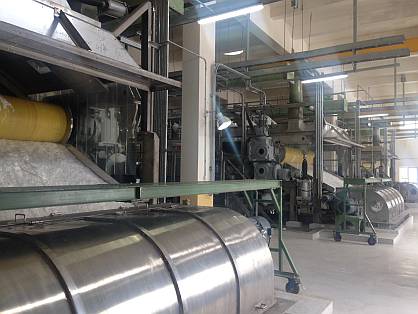
At the Shanghai exhibition in June, the UK-headquartered company (Hall E7 / Stand E12)will feature the latest version of its world-famous Roberto roll, the first name in nonwovens squeezing for several decades, and now incorporating two notable innovations. Show visitors will also see the novel Syncast polyamide calender sleeves, based on pioneering polymer technology. ITMA Asia + CITME also comes as Richard Hough announces a massive coup with the commissioning of a viscose staple fibre plant in Fujian, China, in which all four production lines are equipped with the company’s industry-leading Nollap dewatering rolls. Fujian is a greenfield site operated by Sateri, one of the world’s biggest producers of textile cellulosics. Its capacity of 200,000 tonnes per year adds to existing Sateri facilities in China and will spearhead a competitive drive into wider markets, including speciality nonwovens. Three of the 3.6 metre process lines are already in use, and Sateri reports good progress in throughput volumes and capacity utilisation. Says RHL managing director Anthony Ashton: “The Nollap rollers specified by Sateri are part of the Roberto equipment family and are able to reduce residual moisture from 120% down to nearer 110% before the viscose fibre is presented to the dryers. This represents a huge saving in energy costs, conservatively estimated at Euros 100,000 per year for each line.” There is also a major quality advantage over the use of conventional stainless steel lines at the dewatering nip, which tends to crush and shine the viscose fibres, making further processing more difficult. “With Nollap technology, only the highest quality viscose fibres can be produced,” says Mr Ashton.
Richard Hough is now working with a new agent, James Wen, said to be the leading Chinese expert in nonwovens roll applications, who will present the company’s products at ITMA Asia + CITME. Show highlights will include two new features with the Roberto roll. Firstly, technical improvements to the roll provide a 100% increase in chemical resistance, mark resistance and elasticity. Secondly, the Roberto is now offered in sleeve form, an option which will be seen in public for the first time at this show. The sleeve simply slides over the existing shaft to replace an old sleeve or damaged area and users can easily stock their own spare sleeves. The new sleeves are also cost-effective for airfreighting.
For calendering applications, RHL will exhibit the Syncast polyamide calender sleeve, made on the world's most technically-advanced centrifugal casting machine. Syncast is the ‘roll of choice’ for most of the world’s leading calender OEMs, offering top performance and fast payback, and avoiding the need for major calender rebuilds. The Syncast rolls and sleeves are based on a highly-elastic thermoplastic polymer, specially developed for textile calender rolls. The level of elasticity is vital, ensuring minimal surface marking and shape distortion, as well as excellent runability and maximum service life. China and the whole of Asia are key elements in RHL’s commercial and technological focus, with record sales levels in several countries supported by participation in the main trade shows. “Our expansion plans are founded on continuing technical innovation, which is increasingly appreciated by some of the major textile and nonwovens producers in the region,” says Anthony Ashton. “We are confident that our developments on show at ITMA Asia + CITME, as well as future new product launches, will be equally well received.”
Pic: View of the three Sateri viscose lines equipped with RHL Nollap dewatering rolls.